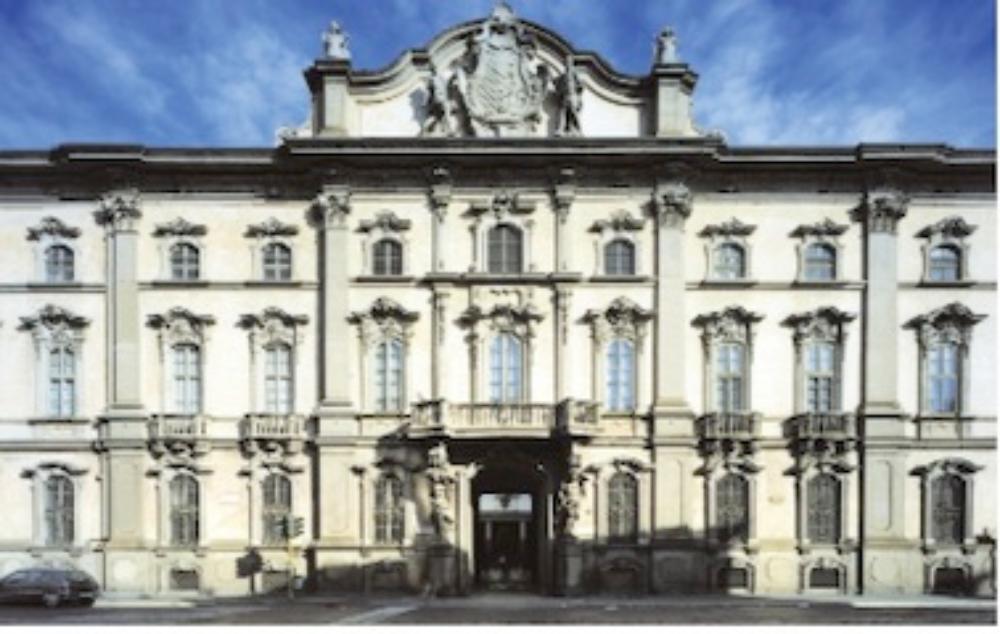


Le Extra-European Collections of the Sforza Castle in Milan are the result of the merging of several historic ethnographic collections belonging to various Milanese public institutions.
Since 1858 the Civic Museum of Natural History has had a section called “Ethnography and Archaeology Collection,” which has been regularly augmented with objects and artifacts from different parts of the world.
In 1892, thanks to a donation made to the Patriotic Museum of Archaeology, another public ethnographic collection was formed, following which prehistoric and ethnographic works were transferred from the Museum of Natural History to the Patriotic Archaeological Museum.
With the establishment of the Museums of the Sforza Castle, the collection of the Patriotic Museum of Archaeology was moved to the Castle and further enriched in 1929 by another transfer of objects from the Museum of Natural History. In August 1943, a bombing caused the destruction of most of the ethnographic objects in the Castle, reducing the collection almost exclusively to the American and Asian core.
With the progressive specialization of expertise within the different sections of the Sforza Castle in Milan, the Ethnographic Collection became part of the Civic Collections of Applied Art, then Artistic Collections, taking the name of Extra-European Collections.
Considering the growing importance of the Collection (about 6300 works to date), displayed in a minimal part at the Sforza Castle (in the Rocchetta Courtyard, in rooms 30 and 36), in 2000 it was decided to design a dedicated museum, the Ansaldo Milan Space – Center of World Cultures, which is currently under construction at the former industrial area of Ansaldo in the Porta Genova district. The project is scheduled for completion by 2015.