

The history of the AMERICAN WEST involved the broadest spectrum of human activities. It is a complete assortment of racial, national, economic class, age, and lifestyle identities as evident at the time of the “Frontier” and in the western saga that it generated. The West highlighted a human and stylistic capital, not just myths nor exclusively of gender, a universally male world. Women were fundamental and participated tenaciously in every single aspect of life in the West.
Buffalo Bill Center of The West
A visit to the Buffalo Bill Center of The West museum in Cody, highlights some unique stories of women who played a role in the West: in art and history. The museum is undoubtedly a remarkable museum complex strongly inspired by the American West: “We believe in a spirit, definable and intellectually real, called ‘The Spirit of the American West.‘” It consists of 5 museums and a research library with western art and artifacts: the Buffalo Bill Museum, the Plains Indians Museum, the Whitney Western Art Museum, the Draper Natural History Museum , and the Cody Firearms Museum. It is the most notable museum of the American West and at the same time a Smithsonian Affiliate.
Whitney Art Museum
The Whitney Art Museum is the expression of the West in art. The first woman we mention is ROSA BONHEUR, a painter who admired Buffalo Bill and his Wild West Show in Paris in 1889, so much so that she invited Colonel Cody to visit the Château de Fontainebleau where she painted his portrait. To her, Buffalo Bill embodied the freedom and independence of the United States. The portrait – one of Buffalo Bill’s most famous – painted by a woman is housed in the Whitney Western Art Museum where paintings, sculptures, and prints depict women or were created by women, although fewer in number compared to those of men and done by men. Women rarely had access to training to become artists. Rosa Bonheur was an exception thanks to her French artist family committed to women’s rights.

Another female artist, GERTRUDE VANDERBILT WHITNEY, created the first artwork purchased for this museum: the monumental bronze statue depicting Buffalo Bill on horseback, displayed outside the museum. Vanderbilt – belonging to one of America’s wealthiest families – had financial resources to pursue her artistic interests. Often regarded as a socialite of the upper class, her professional artist career was sometimes not taken seriously. Therefore, the commission to commemorate Buffalo Bill challenged her, and she responded with this remarkable statue featuring a fiery equestrian portrait. Women sometimes appear as symbols. In the Frontier artistic narrative by William Tylee Ranney in the painting Advice on the Prairie, the immigrant mother woman with child in arms symbolizes the promise of the future for settlers.

The independent-spirited woman is instead portrayed by N.C. Wyeth in The Lady Wins: the adventurous nature of women in the early 20th century led them to take roles in work, education, social movements, art, and literature, reflecting changes through the inclusion of energetic female characters like this skilled horsewoman. Women artists appear more numerous in contemporary times, bringing new perspectives.
DONNA HOWELL-SICKLES, a contemporary Texan artist, chooses the cowgirl as her subject who becomes an ideal figure: active, accomplished, and also charming, as in the painting A Matter of Choice. The artist identifies with the self-sufficient and hardworking spirit of the cowgirl. In her portraits, she presents all the glory of the cowgirl.
Cody Firearms Museum
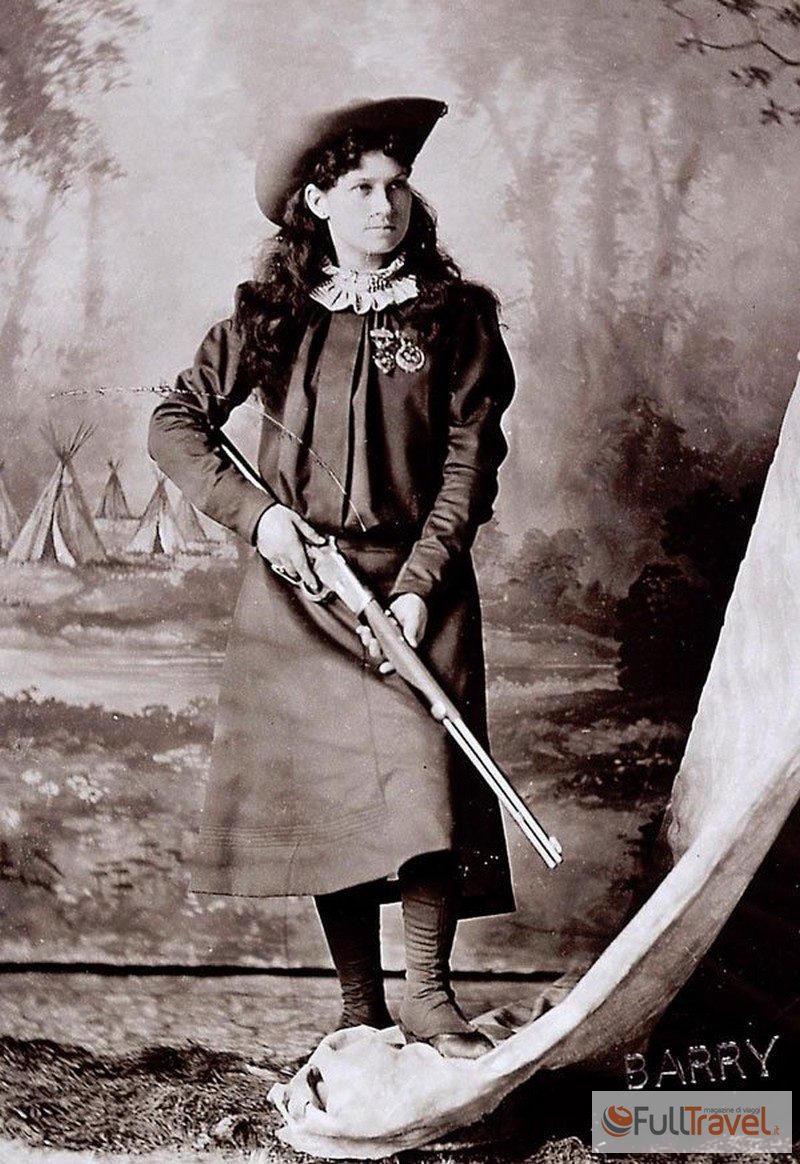
At the Cody Firearms Museum is exhibited the world’s largest collection of American firearms: over 10,000 Western guns! Who has never heard of the sharpshooter ANNIE OAKLEY? Phoebe Anne Moses gained experience hunting in her native Ohio, and in 1876 adopted the stage name Annie Oakley, performing with her husband in a shooting show at age 16. Eight years later, she joined Buffalo Bill’s Wild West Show where she remained a star for over 15 years.
Many of Annie’s guns are exhibited in the museum, including the Marlin M1893 rifle. Her reputation inspired many imitators: a mural photo from the late 1800s depicts her with a group of female sharpshooters. Western women – including the famous CALAMITY JANE – were very familiar with firearms: at the museum are rifles used by two pioneer women of Cody, the Winchester M1894 of IRMA CODY, Buffalo Bill’s daughter to whom her father dedicated the Irma Hotel of Cody; then the Savage M1899 used by WYNONA THOMPSON, another woman who contributed to Cody’s cultural tradition.
Buffalo Bill Museum
At the Buffalo Bill Museum women of the West are depicted in the challenge with the Frontier. MARY LAYCOCK CODY – Buffalo Bill’s mother – for example, very educated, gave up her career and stability to move west and, like other women, became responsible for the family’s economic support after her husband’s death.
The dancer GIUSEPPINA MORLACCHI refused the domestic role and traveled to the United States performing in numerous cities with the Morlacchi Ballet Troupe in a series of popular shows. At the height of fame and success, she was hired as the protagonist in the western show Scouts of the Prairie, together with Buffalo Bill and Texas Jack Omohundro.

In the section dedicated to jewelry, the family has furniture, accessories, and clothing of women such as LOUISA FREDERICI CODY, wife of William F. “Buffalo Bill” Cody and his daughters and sisters-in-law. She remained in a rocky relationship for 51 years until Cody’s death in 1917. If women influenced entertainment and fashion, politics, and the economy, they also had to face tragedy. Mrs. Cody’s mourning dress represents the personal hardship she endured.
Plains Indian Museum
At the PLAINS INDIAN MUSEUM the collections of art and artifacts of the Native American Plains – among the largest in the United States – illustrate stories and traditions of the Indians of the West. The popular image presents the classic warrior with the eagle feather headdress riding a painted horse. But women are also recognized for their strength, skill, and contributions in creating and maintaining the native Plains culture. At least half of the items displayed in the museum were created by women. In buffalo hunting or on special occasions, Crow women decorated their horses with beaded saddles, bridles, breast collars, and still continue this tradition in parades and other events.
Women made Tepees from tanned buffalo hides until 1870, when the great herds had not yet been exterminated by white men. They used various tools to work for hours on leather treatment until soft enough to create clothing and moccasins, as well as quivers and other containers. Skilled with beadwork and porcupine quills, they created clothing for their families to identify each tribe.
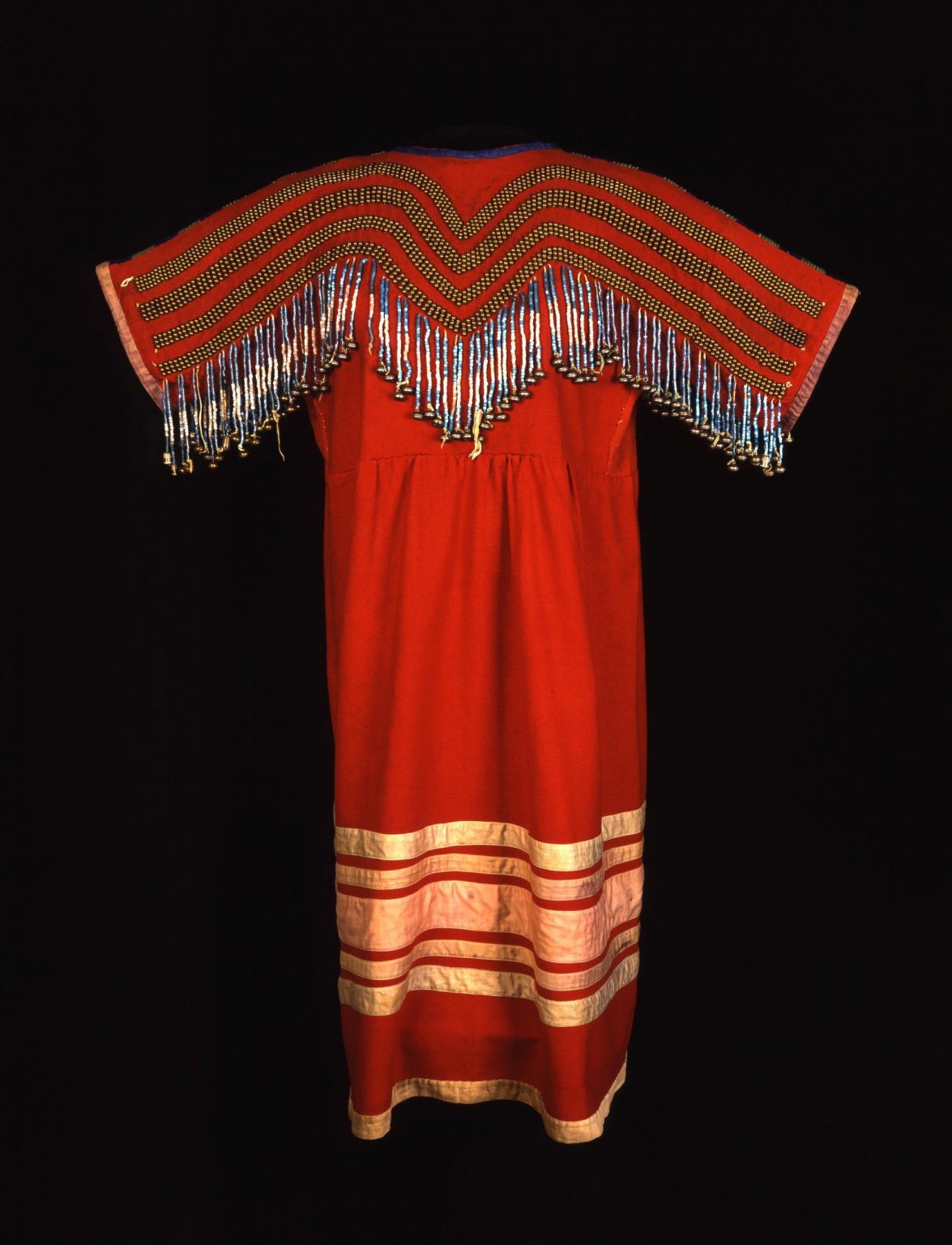
The color red is symbolic for multiple cultures and movements; often associated with the Missing and Murdered Indigenous Women (MMIW) movement raising awareness of violence indigenous women suffer. Red is thought of as the color of violence. But, conversely, for many native cultures red is a color that spirits can see, recognizing the people who wear it on Earth.
An object from the past dating back to 1890, a red dress of the Blackfeet Indian tribe of Montana links to the contemporary movement: thus maintaining the meaning. The museum collection is not only related to the past but conveys a meaning for the future.
©Thema Nuovi Mondi