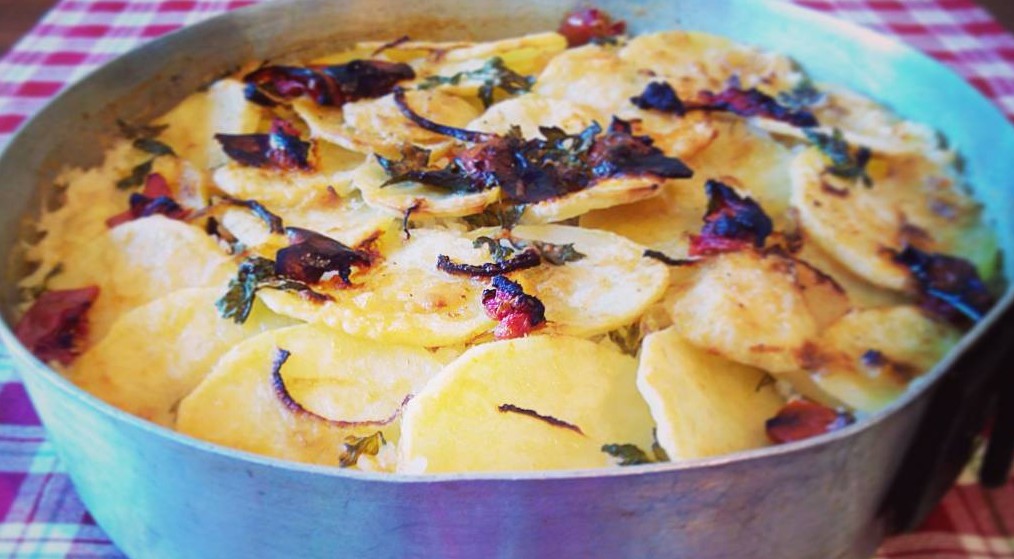


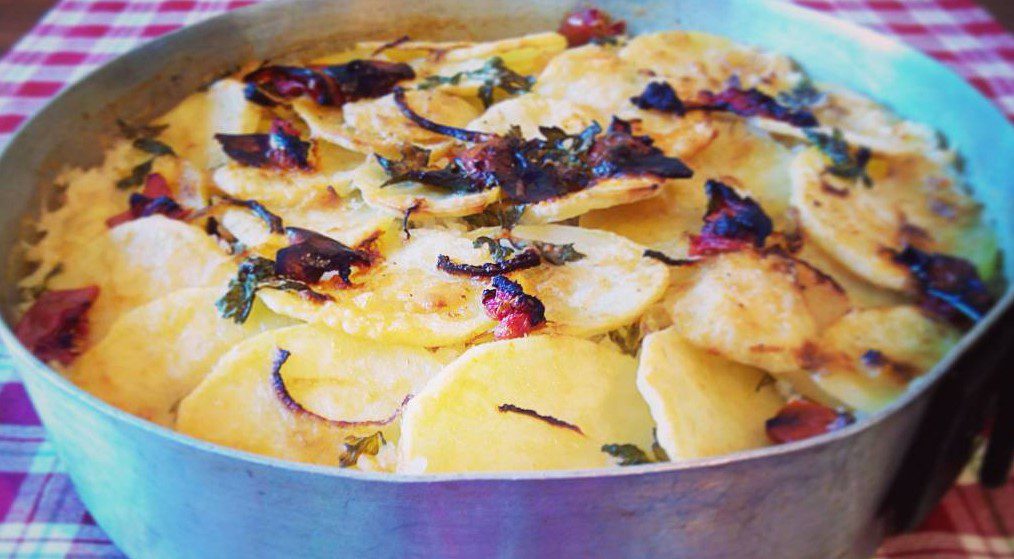
Cavatelli with clams and beans, chicory and fava bean purée, Bari tiella (rice, potatoes, and mussels), the essential orecchiette, invention of the housewives of the old town, dressed with turnip tops, anchovies and garlic or with braciola sauce; fresh seafood and fish, cooked in a thousand ways, continue to be the undisputed stars on restaurant tables, offered simply and traditionally or gently revisited and lightened. But always accompanied by the unique extra virgin oil and the generous Apulian wines. These are just suggestions on what to eat in Bari but the variety of Bari cuisine offers many other typical dishes.
Restaurants in Bari
Ristorante Ai 2 Ghiottoni
On the nearby via Putignani, just steps from the dark red silhouette, braced by scaffolding, of the Teatro Petruzzelli (which burned down about 15 years ago and, much to the regret of the people of Bari, has not yet been restored), the doors of Ai 2 Ghiottoni open, a well-known Bari restaurant with a thirty-year reputation, always very busy both at lunch and dinner. The interiors are very bright and elegant, thanks to the interplay of the white vaults, the Lecce tuff on the walls, and the Trani stone floors. Hosting the guests are Mario De Napoli, his wife Rosa, and their son Francesco, helped by a large team of collaborators in the dining room and kitchen. The fresh fish counter, just past the entrance, is a highlight, where customers can choose from large groupers, sea bass, gilthead bream, sargos, penfish (very tasty small sharks), langoustines, and huge lobsters. Alfredo Mesiti, the head chef, signs dishes that masterfully interpret Apulian tradition: “cavatelli with shrimp and clams on a bed of fava bean purée,” “risotto ai 2 Ghiottoni,” sumptuous mixed grills, sea bass and gilthead bream baked in salt, and among the desserts, a stunning “chocolate soufflé,” a house specialty.
Ristorante Piccinni 28
A few blocks away, still in the heart of the Murattiano district, stands Piccinni 28, a restaurant which, for the people of Bari, is synonymous with exquisite cuisine, impeccable service, and soft, refined atmospheres. During the week, at tables set with romantic rustling tablecloths and delightful porcelain, there are often managers, politicians, businessmen, for whom work conversations continue between courses; while on weekends, more couples and small groups gather, eager to honor the delicacies of chef Francesco Buttiglione, served to the pleasant notes of a piano. Small masterpieces include “swordfish rolls with pennyroyal,” “wild chicory with fava bean purée in extra virgin olive oil,” “homemade maccheroncini with fresh fava beans and toasted almond flakes” or “with fresh grouper and olives,” “stuffed baby cuttlefish Apulian style,” “turbot fillet alla acqua pazza.” The wine list is important and very carefully curated, dominated by Apulian wines, followed by national and some foreign labels. In the beautiful season, you can dine in a surprising internal garden, amongst yuccas, chikas, dracaenas, and bamboo, a small green lung amid the concrete of the buildings.
One cannot leave the old town area, of medieval origin, without a look at the most significant monuments, pride and boast of the whole city: the imposing Norman-Swabian-Aragonese castle, the Basilica of Saint Nicholas, patron saint of Bari, and the fabulous Cathedral of Saint Sabinus, and, naturally, the picturesque maze of alleys, little squares, courtyards, votive shrines, and symbols against the evil eye and slanders.
A few steps away, behind the ruins of the Teatro Margherita, lies the small harbor, meeting place of old and new sea wolves, with the Molo San Nicola and the famous ‘nderr alle lanze, the spot where fishing boats dock with their haul of seafood, which also supplies the restaurants and stalls of the nearby market. One could spend hours watching the fishermen “arricciano” the octopuses, beating them vigorously on the ground or with a sturdy wooden paddle, to tenderize the meat before cooking.
Ristorante il Pepe Finto
A few hundred meters away, right at the beginning of via Nicola de Nicolò, hides a little restaurant with a curious name and interesting cuisine: Il Pepe Finto, an elegant but unpretentious place, with a territory-based kitchen gently lightened and revisited, and excellent service. The menu, crafted by the friendly chef Patrizio Mele, offers delicate appetizers like vegetable couscous, tuna meatballs, zucchini rolls; first courses with legumes (“cavatelli in bean cream,” “fava bean and chicory purée with onion and fried bread cubes,” “pasta scraps with chickpeas”…), with vegetables (“spaghetti with chicory tops, fava bean purée and cheese”; “fresh orecchiette with turnip tops and anchovies”; “pennette with cherry tomatoes and Swiss chard”…), with seafood or bottarga. Meanwhile, the main courses feature grilled langoustines, grilled scampi and prawns, rock fish cooked in various ways, and monumental lobsters. For those who prefer meat, there is Angus steak and fillet, “sliced sirloin with arugula and cherry tomatoes,” “salt and pepper lamb baked,” and much more. Specialties to enjoy seated at light wood tables, with stylized lines, set with yellow gold fabric strips instead of the classic tablecloth and white porcelain, with an eye on the large wall entirely occupied by bottles, revealing a rich and carefully selected wine list.
Ristorante Alberosole
Leaving the seafront and entering the elegant corso Vittorio Emanuele, the dividing line between the old and new city, one arrives within minutes at Alberosole, a very welcoming little restaurant, housed on the ground floor of a 14th-century building, with interiors marked by tuff vaults and chianca floors, the typical local stone. The tables are set with Lecce linen tablecloths and artisanal ceramic plates, each different from the others. This was the wish about ten years ago of the two owners, Antonio D’Amico and his wife Alessandra, who wanted not only to respect seasonality and territoriality of the dishes but also to enhance and enrich them with creative inputs born from careful research of ingredients and combinations. Thanks to the skill of the two chefs, Nicola Mastrolonardo and Pasquale Laudizio, a simple “chicory and fava bean purée” becomes an enticing “bundle filled with chicory served on dried fava bean cream” and the ubiquitous orecchiette acquire the flavor and aroma of buckwheat and are seasoned with scorpion fish pulp, fresh ricotta cream, and basil. The loyal clientele, made up of entrepreneurs, managers, freelancers, employees, but also couples and families in the evenings or on weekends, is welcomed warmly and friendly directly by the owners and attended in the dining room by Patrizia Ferrulli.
A short walk along the right-angled streets of the Murattiano district leads to the heart of the commercial city: via Sparano, Bari’s most elegant street, with sparkling shop windows full of refined goods, but also places rich in history and culture, such as the Laterza Bookstore, housed in the former premises of the glorious publishing house, which also collaborated with Benedetto Croce, as commemorated by a plaque on the building.
Taverns in Bari
Osteria delle Travi Il Buco
On the edge of the charming old town, which in recent years has seen a strong revival thanks to European funds from the Urban Plan, there is Osteria delle Travi Il Buco, one of the oldest establishments not only in Bari, but in all of Puglia, where, among centuries-old vaults, rustic furnishings, and lithographs of ancient Bari, you can savor an authentic cuisine of origins: orecchiette with horse meat ragù or “alla cardinale” (with tomato, basil, and the typical ricotta marzotica, grated), cavatelli with clams and beans, tiella or “tiedda” (rice, potatoes, and mussels) on Fridays, the indispensable “braciola” (a horse meat roll with cheese, parsley, and garlic), roasted or grilled fish, and tasty paranza-style fried seafood. At lunch, employees, bankers, officials from the nearby prefecture, sales agents, students, and workers arrive; while in the evening at dinner, families, couples, and small groups create a warm and informal, almost festive atmosphere. Taverns in Bari are generally of good quality; we recommend a stop among those that exalt the dishes of Bari’s tradition.
How to reach the restaurants selected by FullTravel
Osteria delle Travi Il Buco
Largo Chiurlia 12, Bari Tel. 339.1578848 Closed Sunday evening and Monday Seats 100 Private parking no Credit cards no Bill 20 euros, including house wine.
Il Pepe Finto
Via N.de Nicolò 33, Bari Tel. 080.522.79.90 Closed Tuesday Seats 50 Private parking no All credit cards Bill 40 euros, wine excluded.
Alberosole
Corso V.Emanuele 13, Bari Tel. and Fax 080.5235446 Closed Monday Seats 40 Private parking no All credit cards Bill 35-40 euros, wine excluded.
Ai 2 Ghiottoni
Via Putignani 11, Bari Tel. 080.5232240 Closed Friday Seats 180 Private parking no All credit cards Bill 40-45 euros, wine excluded.
Piccinni 28
Via Piccinni 28, Bari Tel and Fax 080.5211227 Closed Sunday Seats 60+60 outside Private parking no All credit cards Bill from 28 euros for tasting menus; 40 euros à la carte, wine excluded.