

Every year over six million people enter the Vatican Museums, ready to walk through the seven kilometers of wonders that wind through the heart of Vatican City. A journey through art, faith, and history that begins well before the famous Sistine Chapel and Raphael Rooms, and continues through galleries, unique collections, and immortal masterpieces.
- What to See in the Vatican Museums: A Journey Through History and Papal Collections
- Visiting the Sistine Chapel and Other Wonders of the Vatican Museums
- How to visit the Vatican Museums: rules and useful tips
- What is not allowed to bring into the Vatican Museums
- What is allowed inside the Vatican Museums
- Opening hours, evening openings and map of the Vatican Museums
- Opening hours
- Night visits
- Closing days
- Route of the Vatican Museums and PDF map
- Vatican Museums Map
- Tickets for the Vatican Museums: costs and useful information
- Ticket costs:
- Reduced prices and free entry to the Vatican Museums
- Reduced ticket:
- Reduced ticket for schools:
- Free entry to the Vatican Museums
- 1. Free entry days:
- 2. Special categories:
- 3. Other admitted categories:
- Where to Buy Tickets for the Vatican Museums
- Where the Vatican Museums are Located
- Vatican Museums Contact
Visiting the Vatican Museums means coming into contact with centuries of beauty, from the power of Michelangelo’s Last Judgment to the refined geometries of the Gallery of Maps. But what is really worth seeing? How to best organize the visit? Where to find the PDF map and what are the opening hours and available tickets?
This guide takes you step by step inside the Vatican Museum, one of the most visited and fascinating in the world.
What to See in the Vatican Museums: A Journey Through History and Papal Collections
Behind the walls of Vatican City lies a world of artistic wonders that come to life among the Renaissance palaces designed by Bramante. The Vatican Museums, as we know them today, were born thanks to the vision of the Renaissance Popes, starting with Julius II, who began the collection by displaying classical statues in the Courtyard of the Statues, now known as the Octagonal Courtyard.
Over the centuries, new spaces and collections were added: in the 18th century, Popes Clement XIV and Pius VI created the Pio-Clementine Museum, one of the most important cores of the entire complex. The 19th century saw the birth of the Gregorian Etruscan Museum, thanks to artifacts from Etruria, and the Gregorian Egyptian Museum, established in 1839 on the initiative of the Egyptologist Father Ungarelli.
This was followed by the Pio Christian Museum, dedicated to ancient Christian sculpture, and at the beginning of the 20th century, the Jewish Lapidary and the transfer of some museums from the Lateran Palace to the new building commissioned by Pope John XXIII were added.
For this reason, the history of the Vatican Museums is, in fact, a layering of art, archaeology, and faith that gave rise to one of the most extensive and valuable museum complexes in the world, safeguarding artworks and sculptures of inestimable value.
Visiting the Sistine Chapel and Other Wonders of the Vatican Museums
The Vatican Museums do not end with the Sistine Chapel: on the contrary, they contain an extraordinary network of galleries, rooms, and collections that tell centuries of art and spirituality. Among the must-see stops is the Gallery of Tapestries, which houses precious textile artifacts from the 16th and 17th centuries, and the scenic Gallery of Maps, frescoed during the pontificate of Gregory XIII and restored in the Baroque period by Urban VIII.
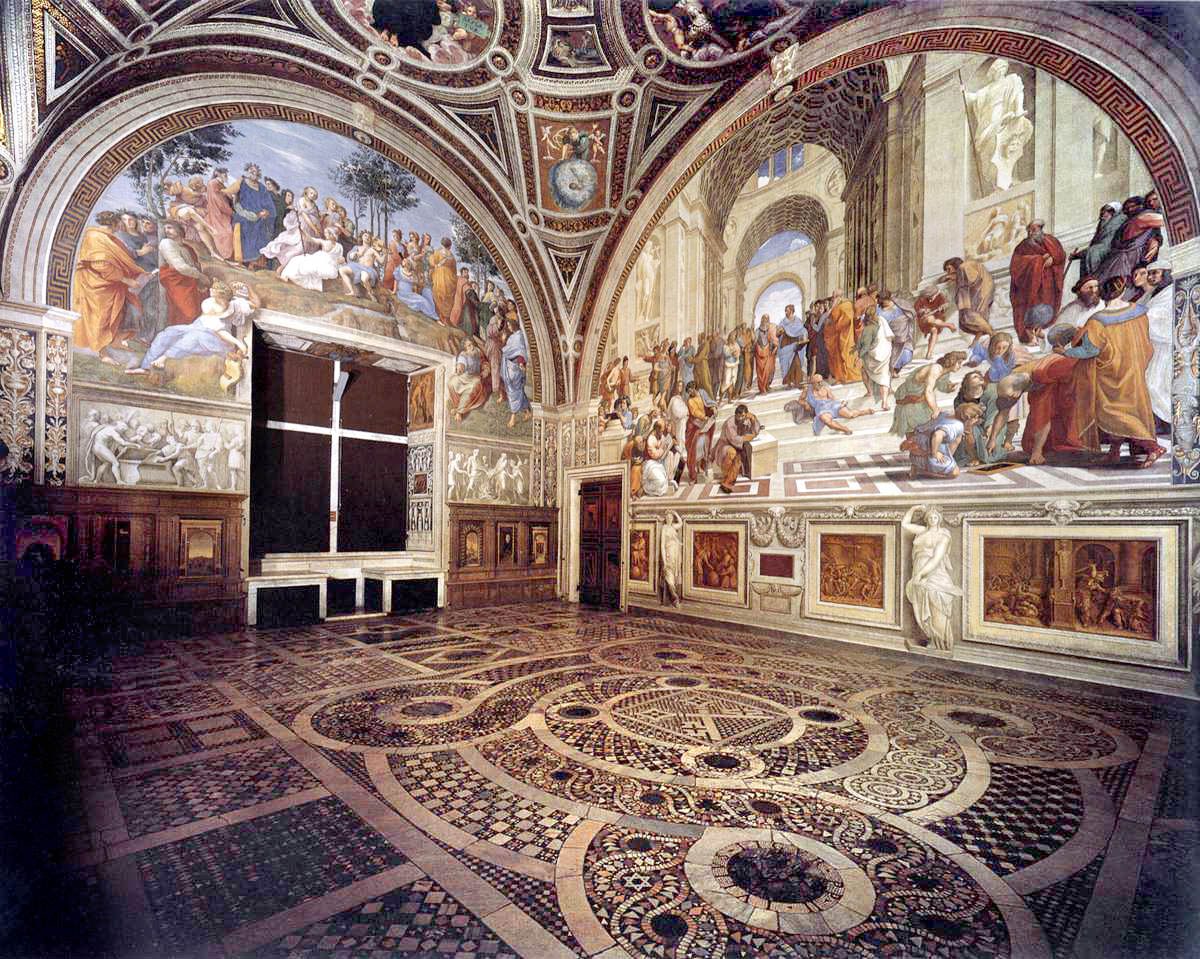
Among the most evocative rooms are the Sobieski Room and the Room of the Immaculate Conception, as well as the famous Raphael Rooms, frescoed between 1513 and 1521 commissioned by Popes Julius II and Leo X. Each environment is a world unto itself, but it is the Sistine Chapel that captures the attention of visitors from around the world: built by the will of Pope Sixtus IV (not Sixtus IX), it represents the artistic and spiritual heart of the entire complex, with Michelangelo’s majestic Last Judgment dominating the altar.
The tour continues with the Borgia Apartment, the Vatican Pinacoteca, the Missionary-Ethnological Museum, and the more modern sections, such as the Collection of Modern and Contemporary Religious Art, inaugurated by Paul VI in 1973. In the same year, the Historical Museum was also established, transferred in 1987 to the Papal Apartment of the Lateran Palace, where relics, portraits, and documents related to the popes and ancient pontifical offices now abolished are kept.
Visiting the Sistine Chapel is only part of a broader experience: every corner of the Vatican Museums deserves to be discovered slowly and attentively, to grasp the full richness of one of the most extraordinary places in world culture.

How to visit the Vatican Museums: rules and useful tips
The Vatican Museums are one of the most sought-after destinations in the world, and to enjoy the experience fully, it is important to know some fundamental rules before entering. The exhibition route is wide and complex, and the constant flow of visitors requires good planning.
The best way to avoid long waits is to buy tickets for the Vatican Museums online, choosing the option with priority “skip the line” access. Some guided tours also include an audio guide or reserved access to special sectors of the Vatican museum.
What is not allowed to bring into the Vatican Museums
For security reasons and protection of artwork, the following are prohibited:
- Alcoholic and spirit drinks (to be left at the wardrobe);
- Food and drinks of any kind (can be collected before closing time);
- Suitcases, large backpacks, parcels, and containers larger than 40x35x15 cm;
- Large umbrellas, sticks, tripods, signs, and banners;
- Knives, scissors, and dangerous metal objects;
- Selfie sticks and professional photographic equipment (without authorization);
- Flash use, photography, and video recording in the Sistine Chapel.
Decent clothing is mandatory: shorts, tank tops, miniskirts, or hats are not allowed.
Inside the Sistine Chapel, talking or giving explanations, even with radio systems, is not allowed. Guides can explain the meaning of the frescoes only on the outer panels along the route.
What is allowed inside the Vatican Museums
Although the rules are strict, there are several things visitors can do inside the Vatican Museums to enjoy the experience comfortably and inclusively.
- Using the mobile phone: allowed in all areas except in the Sistine Chapel, where silence is mandatory. However, limited use is recommended to enhance contemplation of the artworks.
- Taking photos: it is possible to take photos of the rooms and artworks with handheld cameras, without flash or professional equipment.
- Using strollers: baby strollers are allowed throughout the museum route.
- Access with guide dogs for the visually impaired, equipped with leash and muzzle.
- Bringing therapeutic support animals, certified for pet therapy. In both cases, it is mandatory to send notification at least 24 hours before to:
accoglienza.musei@scv.va
Remember: for a comfortable and stress-free visit, you can always buy the priority access ticket online, avoiding queues at the entrance.
Opening hours, evening openings and map of the Vatican Museums
Opening hours
The Vatican Museums are open from Monday to Saturday, from 9:00 AM to 6:00 PM.
The last entry is allowed by 4:00 PM, to allow a complete visit of at least 2 hours. If you also choose the route in the Vatican Gardens, the average duration rises to about 3 hours.
Night visits
During the summer months, it is possible to visit the Vatican Museums in the evening: every Friday, from the beginning of May until the end of September (excluding the month of August), special night openings are organized, with limited entries and a more intimate and suggestive atmosphere.
Closing days
The Vatican Museums are closed every Sunday, except for the last Sunday of the month, when admission is free from 9:00 AM to 12:30 PM (closing at 2:00 PM).
However, this does not apply in the case of major religious holidays.
Official closing days 2024–2025:
- January: 1, 6
- February: 11, 22
- March: 19, 28
- June: 29 (SS. Peter and Paul)
- August: 15
- November: 1
- December: 8, 25, 26
It is always advisable to check the updated calendar on the official website before your visit.
Route of the Vatican Museums and PDF map
The route of the Vatican Museums follows a marked itinerary that allows you to cross the main sections and galleries up to the Sistine Chapel.
To better orient yourself, you can download the official PDF map by clicking on the link or the image.
Download the Vatican Museums map in PDF
Vatican Museums Map

Tickets for the Vatican Museums: costs and useful information
The entrance ticket to the Vatican Museums also includes access to the Sistine Chapel and is valid exclusively for the selected day at the time of booking. Once issued, the ticket is non-refundable and cannot be modified. Some areas of the museum complex, usually not open to the public, can be visited on special request, through authorized tours.
Ticket costs:
- Full price: €16
- Reduced: €8 (for students, teachers and other categories)
- Schools: €4 (for organized school visits)
To avoid long waits, it is advisable to purchase the ticket online, choosing the option with priority access. The service is available on the official website or through authorized portals.
Reduced prices and free entry to the Vatican Museums
Reduced tickets for the Vatican Museums are available for certain categories of visitors. Here are the details on reductions and free entries:
Reduced ticket:
- Children from 6 to 18 years old.
- Students up to 25 years old with an updated International Student Card, university booklet, or other document proving enrolment for the current year.
- University institutions: students up to 25 years old with a request letter on the institution’s letterhead, stamped and signed by the Dean or Rector. The reduced ticket is valid for one student and one teacher/accompanying person per 10 students; additional teachers/accompanying persons must pay the full ticket. No free admissions are granted.
- Priests, religious brothers and sisters (with official documentation).
- Pilgrimages: free entry for the accompanying priest upon presentation of the celebret.
- Employees of the Holy See and the Vatican City and their family members (spouses, children, parents, brothers, sisters) upon simple identification.
Reduced ticket for schools:
- Elementary, middle and high schools (excluding universities) are entitled to a special reduced ticket upon presentation of an official letter from the Principal, with the institution’s stamp and signature, specifying the number of students, teachers, and accompanying persons.
- A free admission is provided for one teacher per 10 students; excess teachers or accompanying persons must purchase the full ticket.
Free entry to the Vatican Museums
Entry to the Vatican Museums is free for the following categories of visitors:
1. Free entry days:
- Last Sunday of the month: free entry from 9:00 to 12:30 (closing at 14:00).
- World Tourism Day (September 27): free entry.
2. Special categories:
- Children up to 5 years old.
- Directors of museums, superintendencies, and bodies responsible for the protection of archaeological, artistic, and historical heritage.
- Disabled visitors with a disability certificate over 74% and their accompanying person (only if the visitor is not self-sufficient). Free tickets for disabled persons and their companions cannot be booked online and are issued directly at the “Special Permits” counters or at the Reception of the Vatican Museums, upon presentation of documentation.
3. Other admitted categories:
- Journalists authorized by the Museums Directorate, upon recommendation from the Holy See Press Office or the Foreign Press Association.
- Holders of the ICOM card (International Council of Museums) and ICOMOS (International Council on Monuments and Sites) updated.
- Donors of works, benefactors, and members of the “Patrons of the Arts” of the Vatican Museums.
- University professors of Archaeology, Art History, Architecture, and Ethnology. It is possible to occasionally hold specialized lessons in certain sectors of the museums, upon authorization and written request to the Museums Directorate. In case of continuing the visit outside the sectors of competence, it is necessary to purchase a new ticket.
Where to Buy Tickets for the Vatican Museums
The tickets for the Vatican Museums can be purchased in three main ways:
- At the ticket office: direct purchase at the ticket counter located at the entrance of the Vatican Museums.
- Official website: visit the official website of the Vatican Museums to buy tickets in advance, with the option of priority entry to avoid long waits.
- Specialized sites: some online platforms offer ticketing services for the Vatican Museums, with the possibility of skip the line.
It is always recommended to purchase tickets online to guarantee access and save time. Booking Vatican Museums tickets is particularly useful during peak periods.
Where the Vatican Museums are Located
The Vatican Museums are located in Vatican City, in the heart of Rome, precisely on Viale Vaticano, just a few steps from the St. Peter’s Basilica.
Vatican Museums Contact
Phone: 06 69884676 – 06 69883145
For further information, you can contact the call center of the Vatican Museums directly by phone.
FAQ – Frequently Asked Questions about the Vatican Museums
1. What are the opening hours of the Vatican Museums?
The Vatican Museums are open Monday to Saturday from 9:00 AM to 6:00 PM, with last entry at 4:00 PM. Every Friday during the summer months, there is an evening opening until 10:00 PM (except the month of August).
2. When can I visit the Vatican Museums for free?
Entrance to the Vatican Museums is free on the last Sunday of the month from 9:00 AM to 12:30 PM, except on special holidays. In addition, World Tourism Day (September 27) offers free admission.
3. How can I buy tickets for the Vatican Museums?
You can purchase tickets online on the official Vatican Museums website, through authorized ticketing sites, or directly at the ticket office. It is recommended to buy tickets online to avoid long queues.
4. What can I photograph in the Vatican Museums?
You can take photos of the displayed objects and rooms, except the use of flash. Photography in the Sistine Chapel is prohibited, as are video recordings.
5. What can I not bring into the Vatican Museums?
It is forbidden to bring alcoholic beverages, large bags, pointed umbrellas, knives, and professional photographic equipment. Visitors must wear appropriate clothing, avoiding tank tops, shorts, and miniskirts.
6. Can I bring my dog to the Vatican Museums?
Only guide dogs for the visually impaired, equipped with leash and muzzle, and therapeutic support animals are allowed, with prior notification to the email address accoglienza.musei@scv.va.
7. How long does it take to visit the Vatican Museums?
A visit to the Vatican Museums usually lasts about 2 hours, but if you decide to include the Vatican Gardens tour as well, the duration can extend to about 3 hours.
8. How can I get a discounted ticket for the Vatican Museums?
Discounted tickets are available for students up to 25 years old, young people aged 6 to 18, and certain professional categories such as priests, pilgrims, and university professors. Check the official website for full details.