

In der Provinz Pavia ist Vigevano zweifellos eine der Städte in der Lombardei, die man besuchen sollte. Bekannt für seine Piazza Ducale, die oft auch als Kulisse für Werbespots und Filme genutzt wird, ist Vigevano ein idealer Ort, um ein Wochenende zu verbringen.
- Vigevano Sehenswürdigkeiten
- 1 Piazza Ducale
- 2 The Vigevano Cathedral
- 3 Museum of the Treasury of the Vigevano Cathedral
- 4 Vigevano Castle and Ducal Palace
- Vigevano places of interest
- 5 Vigevano City Museums
- 6 Bramante Tower of Vigevano
- 7 National Archaeological Museum of Lomellina
- 8 Other Places of Interest in Vigevano
- 9 Eating in Vigevano
- 10 Where to sleep in Vigevano
Seit mehreren Jahren ist die Stadt ein Bezugspunkt für die Schuhhandwerkskunst. Verschiedene Sehenswürdigkeiten von Vigevano sind in diesem Führer gezeigt.
Vigevano Sehenswürdigkeiten
1 Piazza Ducale
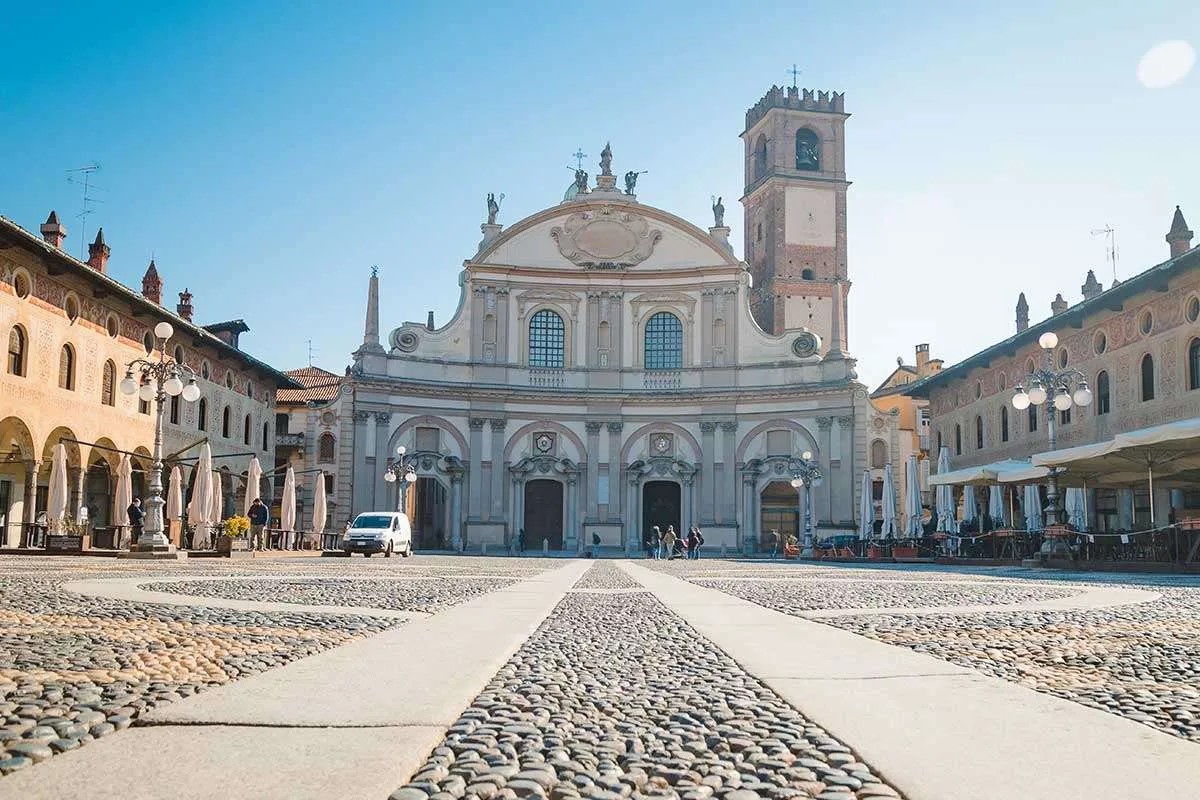
Our event on things to see in Vigevano could only start with its masterpiece Piazza Ducale. In Renaissance style, Piazza Ducale was opened in 1492 by the Moro who wanted it specifically in a noble style. The architectural harmony of Piazza Ducale led several scholars to believe that there was a (not confirmed) collaboration between Bramante and Leonardo Da Vinci himself. The square features arcades, columns, capitals, vaults, all expertly blended. In 1680 the square was renovated by order of then Bishop Caramuel. Over the centuries, the square has been the meeting place for tournaments and festivals and was surrounded by merchants’ shops selling fabrics. Today it is a destination for tourists coming to the city and the inhabitants of Vigevano themselves (over 60 thousand) who frequent this place of interest at various times of the day.

2 The Vigevano Cathedral
The Vigevano Cathedral (Cathedral of Saint Ambrose) is another place of interest in the city. Rebuilt in 1531 on the site of a Gothic church, it became the symbol of the newly established episcopal city. The facade of the Cathedral was commissioned in 1680 by Bishop Caramuel. In this way, he corrected the misaligned perspective of the Cathedral in relation to Piazza Ducale, which it overlooks. The Vigevano Cathedral features three naves in a Latin cross plan.
3 Museum of the Treasury of the Vigevano Cathedral
Inside the Vigevano Cathedral is the Museum of the Treasury. Access is located in the Canons’ Sacristy. The Museum features interesting collections, including: illuminated manuscripts, choir books, Flemish tapestries. Most of the items preserved within the Cathedral Treasury are the result of the donation (1534) of Francesco II Sforza to the newly established Diocese of Vigevano.

4 Vigevano Castle and Ducal Palace
The Vigevano Castle was built over several years, from 1345 to the end of the 15th century. It features the keep, in the center and with several buildings all around, closing off the semicircular courtyard and the elevated road that connects the old Rocca. The keep is also known as the Ducal Palace and has undergone several transformations over the centuries. Today it appears without the drawbridge and the moat. The courtyard contains the Stables, three 15th-century two-story buildings. The stables house the “Civic Museums.”
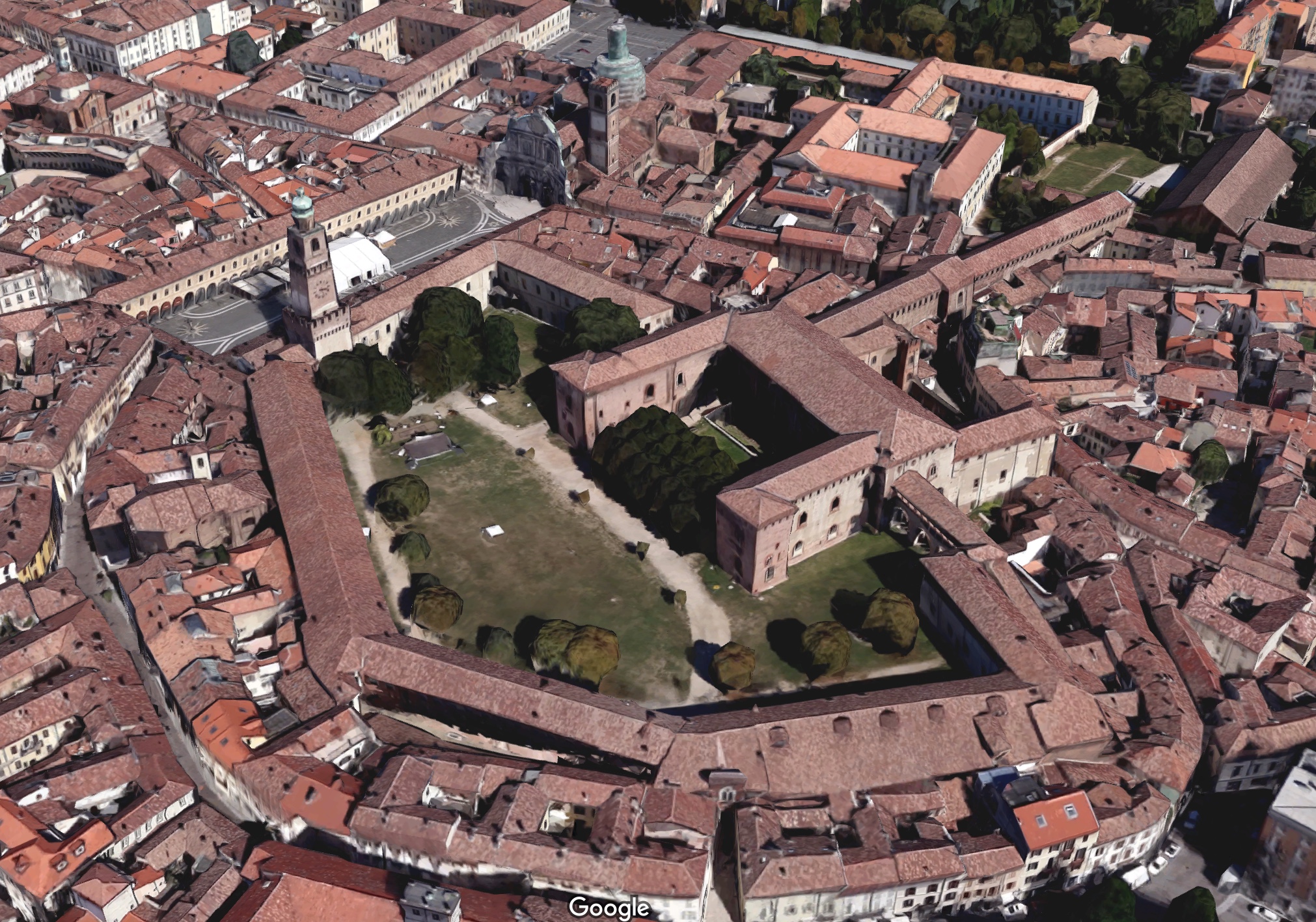
Vigevano places of interest
5 Vigevano City Museums
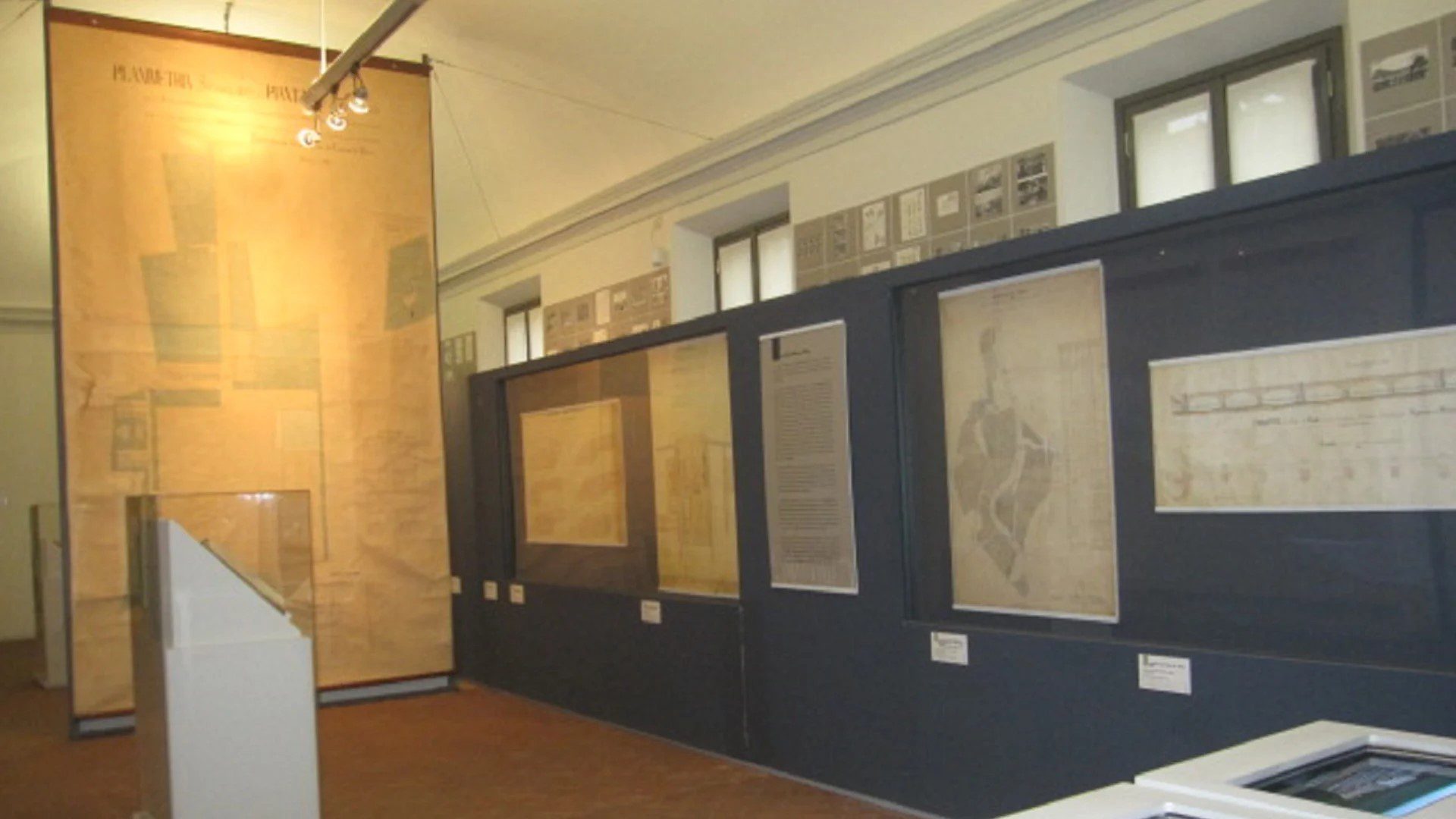
The Vigevano City Museums “Luigi Barni” include the Civic Art Gallery named after the Vigevano painter Casimiro Ottone, the Shoe Museum named after the entrepreneur Pietro Bertolini (located at the Stables of the Sforza Castle of Vigevano, first floor) and the Vigevano Entrepreneurship Museum (located in the rooms of the former Merula orphanage, in Via Merula 40, Vigevano). The entire core of the City Museums is dedicated to Luigi Barni (October 1, 1877 – May 28, 1952), a man of great foresight and passion who significantly contributed to the birth and growth of the art collections now on display. Opening hours of the Vigevano City Museums. Winter: from Tuesday to Friday 2:00 PM/5:00 PM; Saturday and Sunday 10:00 AM/5:30 PM; Summer: from Tuesday to Friday 2:00 PM/5:00 PM; Saturday and Sunday 10:00 AM/6:00 PM.
6 Bramante Tower of Vigevano
The Bramante Tower was built in several periods. Completed at the end of the 15th century, the tower can be visited up to the first battlements. The access is via steep stairs but the view over the square in front and the entire city rewards the arduous climb.

7 National Archaeological Museum of Lomellina
The National Archaeological Museum of Lomellina is located in the Sforza Castle of Vigevano. It collects archaeological evidence from excavations or occasional recoveries in the area. In the first room, some funerary equipment from the late La Tène and Roman period is exhibited; in the second room, artifacts from the late antique and early medieval ages; in the third room, materials coming from the territory of Vigevano.
The Lomellina is an archaeologically rich territory. The findings, mostly accidental, are linked to intensive land use, especially to land leveling for the creation of rice fields. The first sporadic traces of settlement date back to the Mesolithic and Neolithic. The documentation becomes progressively more abundant for the subsequent ages of the Bronze and Iron, in which the Celtic culture was established, and especially for the Roman age, while it decreases for the late antique and early medieval periods.
8 Other Places of Interest in Vigevano
Vigevano features several points of artistic and cultural interest. If you have decided to spend a day in Vigevano, you have plenty of time to get to know the Christian places of worship in this town in the province of Pavia.
- Church of San Pietro Martire, in 14th-century Gothic style;
- Church of San Francesco, from the Sforza period;
- Teatro Cagnoni, dating back to the 19th century.
9 Eating in Vigevano
The culinary tradition of Vigevano is influenced by the tradition of Lombard cuisine. In Vigevano, in fact, there are several restaurants and trattorias that offer ancient recipes and traditions of Lomellina. The typical dishes of Vigevano are prepared with local ingredients. These include Figadej, a salami made from pork liver, the Cent Franc biscuit, and the La Viginuna cake. The Dolce Riso del Moro is a dessert often served in the local establishments, and it is the result of an ancient recipe from the Sforza era.

10 Where to sleep in Vigevano
In the city, as well as in the rest of the region, it is not difficult to find accommodation. Vigevano offers various options. From the cheapest B&B, to holiday homes, through Liberty-style villas, up to hotels for all budgets. It is only a matter of budget and interest, because sleeping in Vigevano does not imply any compromise.