

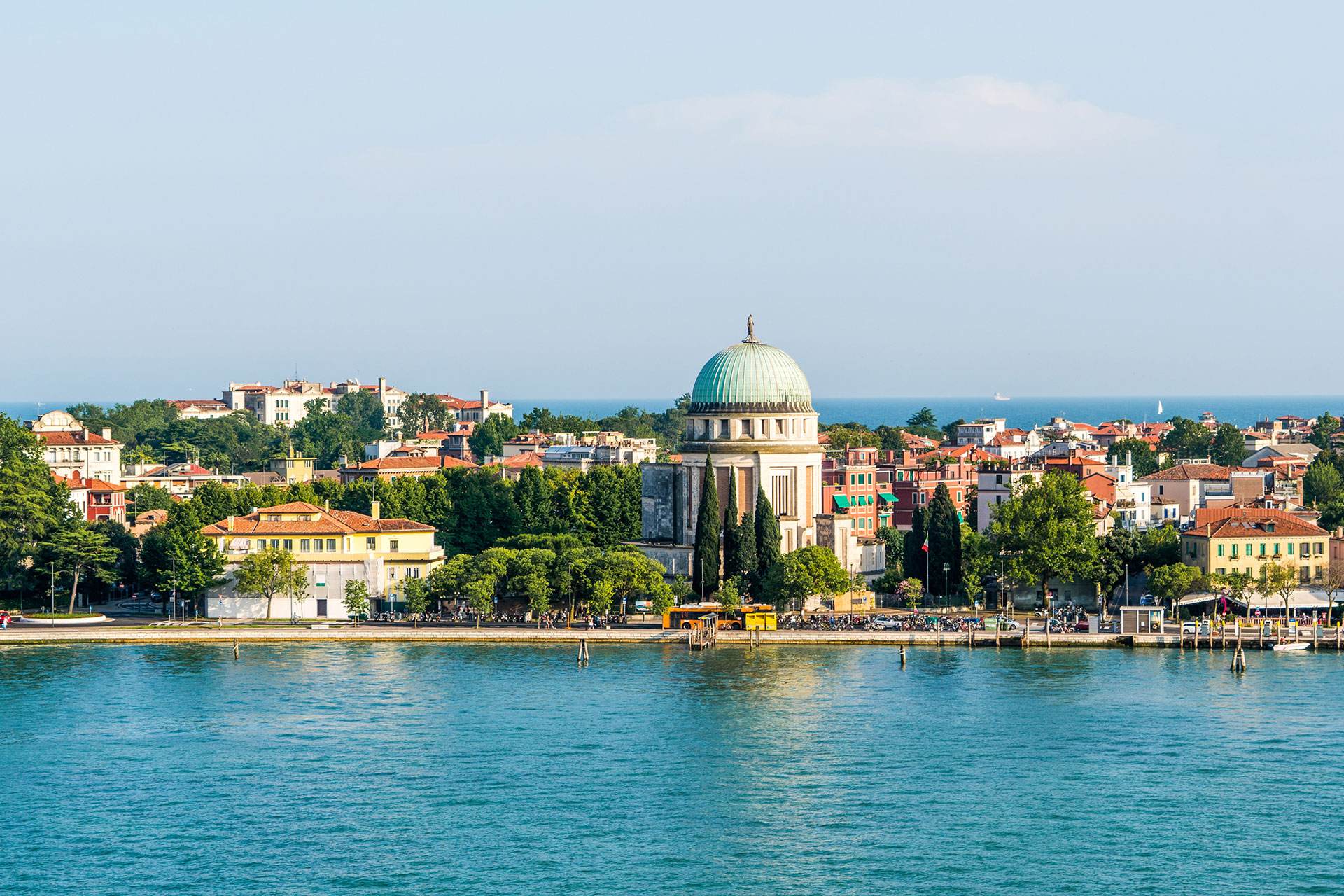

Il Lido di Venezia is a strip of land 12 km long and one wide, which ignites only once a year, on the occasion of the Mostra Internazionale del Cinema and then returns to its usual pace, sly and discreet, as loved by Gorge Byron, Thomas Mann and Herny James and as desired by its inhabitants, for whom the Lido is a kind of warm and reassuring maternal womb, a muffled patch of good living, which they would never trade for the mainland.
Living the Venice Lido
The symbols of past worldly splendors are naturally all there (from the famous bathing establishments of the lungomare Marconi to the luxurious hotels that, in the Belle Epoque, hosted crowned heads and illustrious figures), but at the Venice Lido it is also pleasant to come to take part in the small daily rituals of those who live there and discover its genuine flavors, gifted by the sea, the lagoon, and the large gardens, which the Murazzi defend from the storm surges.
Speaking of rituals, the one of spritz also reigns here, as in Venice, the typical aperitif of red or orange color, which every bartender prepares according to their small secrets (the base is still white wine and seltzer) and serves with large and fleshy olives, to soften the alcoholic strength. One of the best can be sipped comfortably seated at the tables of the caffè Garbisa, on Gran Viale, peeking at the relaxed coming and going of this, which is the most elegant street on the island.
What to see in Lido di Venezia
The Riviera San Nicolò, on the eastern tip, is not far away; with the church and the millenary monastery immersed in greenery, it silently watches over the lagoon, while opposite, on the island of Sant’Andrea, the imposing structure of the 16th-century fort tells of the defensive skill and cunning of the Serenissima.
From the pier begins Sandro Gallo street, which runs longitudinally across the island for a very long stretch, opening up a scenery of Art Nouveau villas, small marinas, rows of plane trees and canals, up to Malamocco. A magnificent walk also for those who love cycling. Along the first stretch, there is the fragrant bread shop of Cristina Serafin, where, alongside golden loaves and common rolls, sourdough breads of vegetable fiber, like malted rye bread; kummel-flavored breads; with whole grains, flaxseeds and sunflower seeds, flat unleavened breads and much more are proudly displayed and sell out quickly.
Lido di Venice where to eat
In front, there is the Bar Trento, one of the oldest places in the Lido, almost a century old, the undisputed temple of cicheto, which consists of a series of small but succulent tastings of traditional foods, accompanied by the indispensable ombra of wine drawn from the barrel. Hosting the place are Stefano Capitanio, his brother Guido and their wives, who never fail to provide their loyal clientele with stewed cuttlefish and baby octopuses, octopus salad with shrimp, fried or saor sardines, creamed cod, stewed artichoke bottoms, musèto (boiled cotechino) and increasingly rare specialties to find, such as barbusa and tettina calda, respectively, boiled cow chin and udder; bull pendants macerated in milk, breaded and fried and sguazzetto alla bechera, a soup prepared with about a dozen different types of meat, each boiled separately.
All of this is washed down with strictly Venetian wines, such as Merlot, Malbech, Lison, Prosecco and Vin da Mar, a rosé perfect with cod. The place, once frequented mainly by fishermen and clam collectors, has maintained a warm atmosphere, aided by cheerful Scottish tablecloths, napkins with a comic strip drawn by Hugo Pratt (the creator of Corto Maltese), who was a regular, and hanging on the walls, a large brass propeller from a topa sampierotta (a fishing boat) and painted gondola pieces that illustrate ancient Venetian proverbs.
Lido di Venezia beaches
Heading towards the southern coastline, bordered by the famous golden sandy beaches, and passing through via Dardanelli, one is almost captivated by the scent of fragrant fugasse, a sweet similar to a low panettone, naturally leavened, that emanates from the Pasticceria Maggion workshop, known for over 40 years and managed by Matteo Maggion, with the help of his father Sergio. Also exquisite are the savory pies, prepared with organic vegetables from the family garden, and the abundant assortment of typical cookies and sweets: buranei shortcrust cookies, pavane with cinnamon and candied fruit, and pevarini flavored with ginger and black pepper.
A few blocks away is La Battigia, a cozy family-run trattoria, where the traditional cuisine reigns, proposed by Mrs. Maria Dorotini, helped by her son Gian Luca, who attends to customers in the dining room. Not to be missed, schie with polenta (a type of gray shrimp, caught from December to April); “Saltata alla Battigia”, the restaurant’s signature dish made with peoci (mussels) and caparossoi (veracious clams) sautéed in a pan and seasoned with a very flavorful sauce; “spaghetti alla busera”, gnocchi with scampi, sumptuous mixed fried dishes or moéche (tiny peeled crabs), monkfish tails, grilled sea bass and much more.
At the Lido, however, there are also those who innovate and add a pleasant creative touch to traditional dishes, such as the La Favorita restaurant, behind the nearby d’Annunzio promenade, housed in an old building enhanced by a beautiful vine pergola and managed for over twenty years by Luca Pradel. In the nice season, you can eat outside, under a large gazebo overlooking a small evergreen garden. The menu is almost entirely based on first-choice local products and offers delicacies like “sea bass carpaccio with pink pepper”, raw tuna or scampi appetizer, oysters and sea truffles, “pumpkin gnocchi with scorpion fish and radicchio”, “bavette with baby squid and eggplants” and much more.