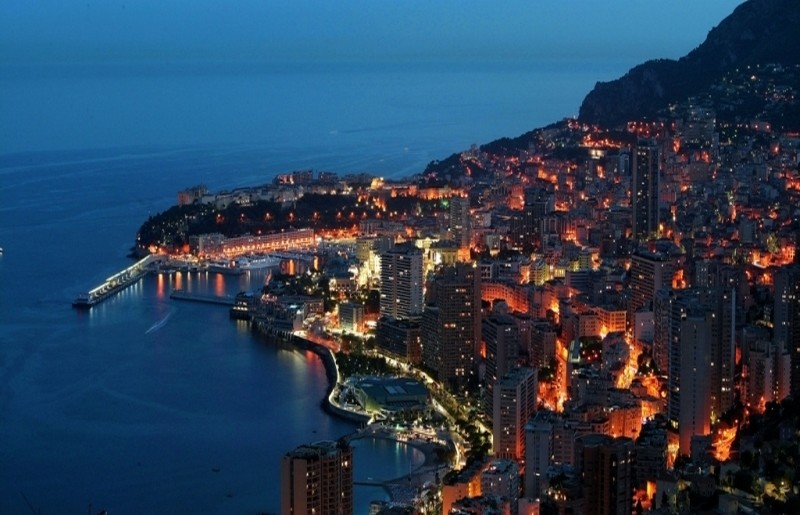
When the white and red flag flies on the palace, it means that the prince is present and the public is not allowed for visits. A spectacle that always attracts many curious people is the changing of the guard at 11:55 sharp, when the prince’s French carabinieri parade in perfect sync in front of the entrance. The palace was built where a Genoese fortress from 1215 stood, and its current form is the result of a renovation that took place in the nineteenth century. Visitors can see the galleries decorated with sixteenth-century mythological frescoes, which lead to the sumptuously decorated representative apartments, the throne room, the Mazarino hall, and the Louis XV hall, the honor court, quadrangular and in Italian style, with a double flight of Carrara marble stairs, which during the beautiful season serves as a backdrop for concerts; the seventeenth-century palace chapel and the Ste-Marie tower. In one wing there is also the Musée Napoléonien and the Monegasque Archives. The Palace is open to the public between June and September from 9:30 a.m. to 6:30 p.m. From the outside, there is a beautiful view of Port de Fontvieille, one of the Principality’s industrial areas. Always under the Palace, the new stadium and Princess Grace’s rose garden can be seen, which counts no less than 3,500 plants of 150 different varieties. A pleasant walk through the old district leads to the Cathedral and the exotic gardens. The former, in Romanesque-Byzantine style, was built in 1884 with white stone from La Turbie. The most precious pieces are found in the Chapelle des Princes, where the Grimaldis are buried. Princess Grace’s tomb is nearby and is always adorned with fresh roses. In the nearby Town Hall square there is also the chapel of the Miséricorde from 1638.
Monaco, il palazzo dei Principi
A Monaco vi aspetta la città vecchia con le viuzze medievali collegate da passaggi a volta. Da place d’Armes si raggiunge il Palais des Princes, residenza canonica dei Grimaldi, annunciato dal piazzale su cui troneggia una batteria di cannoni del XV secolo.
Al je reizen in één app: vluchten, hotels, cruises, treinen, taxi’s, vakanties en huwelijksreizen.
We vergelijken realtime de prijzen van meer dan 100 bureaus om de beste deals te vinden, zonder extra kosten.
FullTravel App is een gratis metazoekmachine: lowcost en lijnvluchten (700+ maatschappijen), hotels (Booking, Airbnb…), cruises, treinen, bussen, taxi’s, fietsen, vakanties, huwelijksreizen en nog veel meer.