


It is popular for being the city of love, thanks to the tragic love story of Romeo and Juliet by Shakespeare, inspired precisely by those places and the main source of Verona tourism. But this wonderful city is also much more. In this brief guide, we will explain what to see in Verona illustrating the places of interest of the Veneto city.
- Verona: what to do and what to visit
- What to See in Verona
- 1 Arena of Verona
- 2 Verona, Piazza Bra
- 3 Verona, House of Juliet
- 4 Piazza dei Signori in Verona
- 5 Piazza delle Erbe
- 6 Museum of Frescoes Cavalcaselle
- 7 Early Christian basilicas and Roman Domus
- 8 Castelvecchio Museum
- 9 Remains of the curia and a cult complex
- 10 Radio Museum of Verona
- 11 Hypogeum of Santa Maria in Stelle
- 12 MA African Museum
- 13 How to get to Verona and how to get around
- 14 Verona, nightlife
- 15 Where to stay in Verona
Verona: what to do and what to visit
What to See in Verona
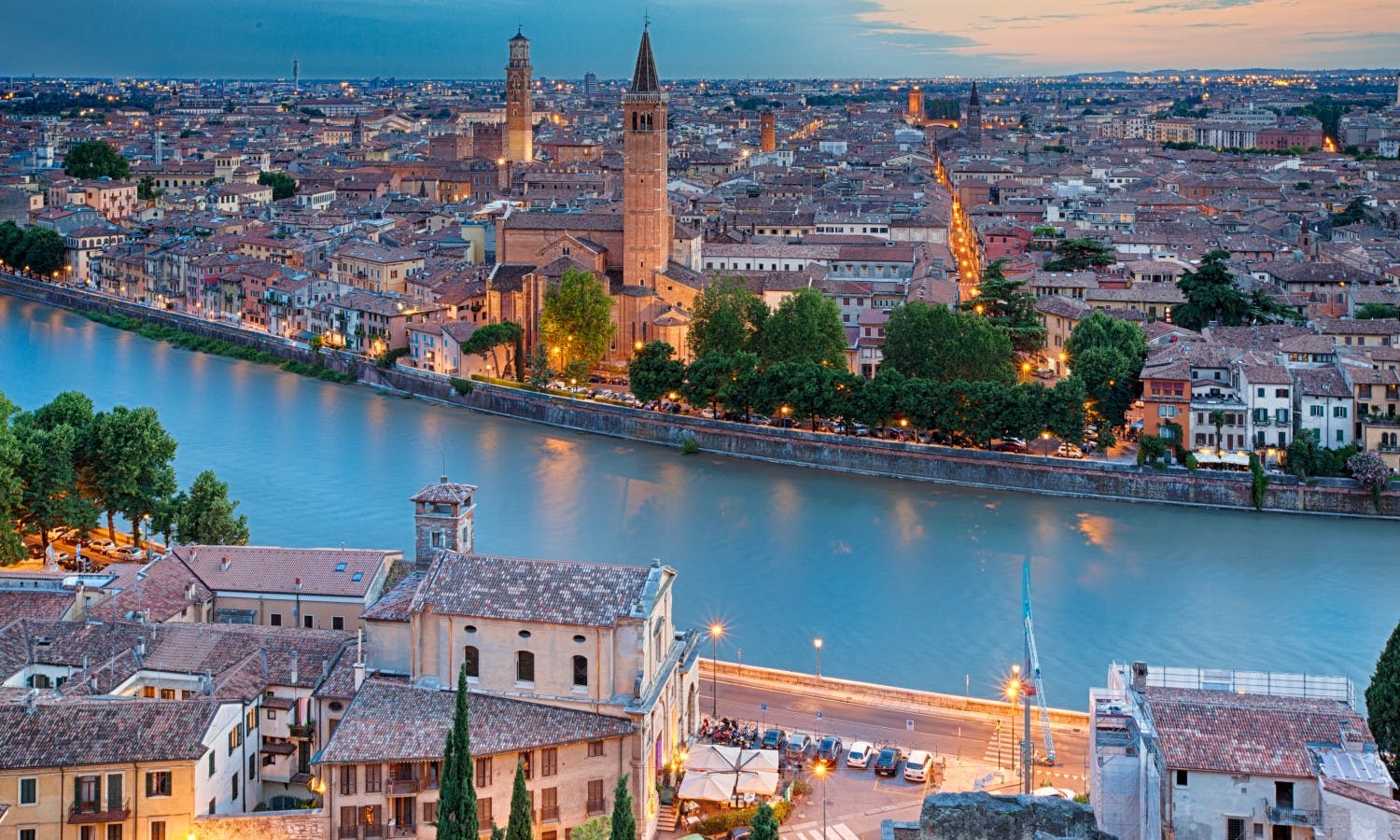
That the city of Verona was a place suitable for romantic walks is evident right away. The very ancient and well-preserved historic center, picturesque corners, wells and courtyards, porticoes, are examples. And then there is the Adige, the river that crosses the city. To connect one part of the city to the other, some undoubtedly beautiful bridges have been built, including the Ponte Scaligero and the Ponte Pietra. All around you can admire ancient palaces and bell towers. And then the squares. Piazza delle Erbe, which is the heart of the city, Piazza Bra, and Piazza Mercato Vecchio.
Verona is also the city of the Arena, the largest opera theater in the world built twenty centuries ago. The summer opera season represents one of the greatest global attractions for enthusiasts of this musical branch. In this open-air theater with perfect acoustics echo the notes of Aida and its triumphant march.
Verona is the homeland of Pandoro but also Italian gastronomy. Those who go to Verona cannot miss tasting the Pastissada de Caval, the Bollito with Pearà, the risotto di Isola, the tortellini di Valeggio, all washed down with a glass of Valpolicella, Recioto, Custoza, Soave, and Bardolino.
Getting to Verona is not difficult. Its central position makes it reachable from the major Italian road and railway arteries. You may have wondered what to do in Verona, what to visit. Here is a short list of Verona’s places of interest and things you absolutely must not miss.
1 Arena of Verona
The Arena of Verona is the Roman amphitheater key symbol of the city together with the house of Juliet. Built in the 1st century BC and used for gladiator shows, it is currently the venue for concerts and performances by various Italian and international artists.

2 Verona, Piazza Bra
Piazza Bra in Verona is the heart of the city, where you can enjoy an excellent aperitif admiring the Arena, the Palazzo della Gran Guardia, which today hosts exhibitions and conferences, Palazzo Barbieri and the Museo Lapidario Maffeiano. It is the center of Verona and it is really very characteristic.

3 Verona, House of Juliet
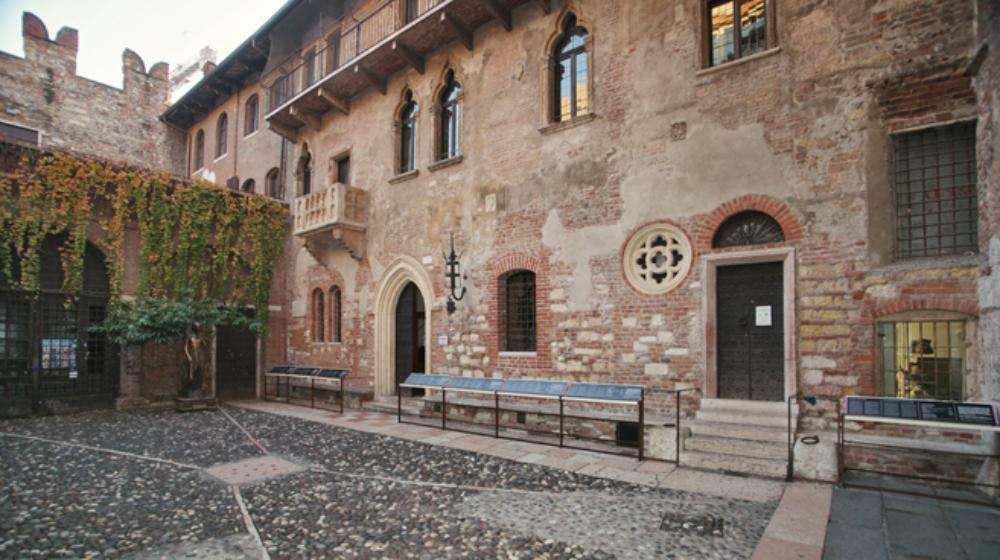
Together with the Arena the House of Juliet is the most frequented building by tourists. It is located at via Cappello, 23. Its Gothic style is an attraction for art lovers. You will find it impossible not to recognize it, as on your arrival you will find the walls papered with love messages written on post-it notes and letters. You can visit the house and the famous balcony, symbol of Shakespeare’s love story. Don’t forget to capture the moment by taking a photo with the statue of Juliet, placed just under the balcony. Touch her right breast, it seems to be a help for romantic success. You never know!
4 Piazza dei Signori in Verona
Piazza dei Signori in Verona: from Juliet’s house, moving towards the Arco della Costa, you will reach this square. From its arch hangs a whale rib. It is said it will detach when a pure soul passes underneath. Try passing by!

5 Piazza delle Erbe
It is the oldest square in Verona and is located right above the area of the Roman Forum. It was the center of political and economic life; over time the Roman buildings have given way to medieval ones. Piazza delle Erbe is also simply called Piazza Erbe.

6 Museum of Frescoes Cavalcaselle
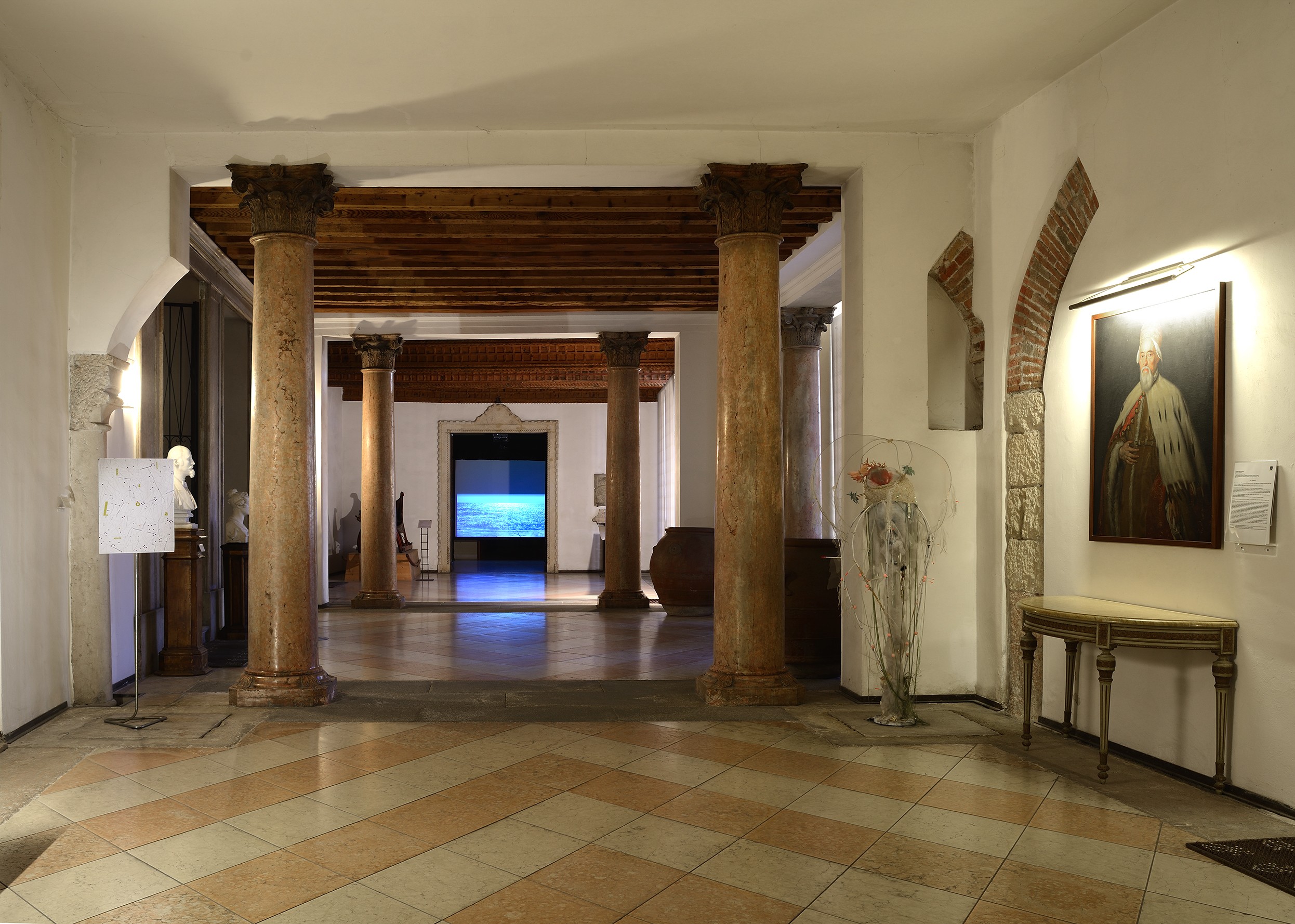
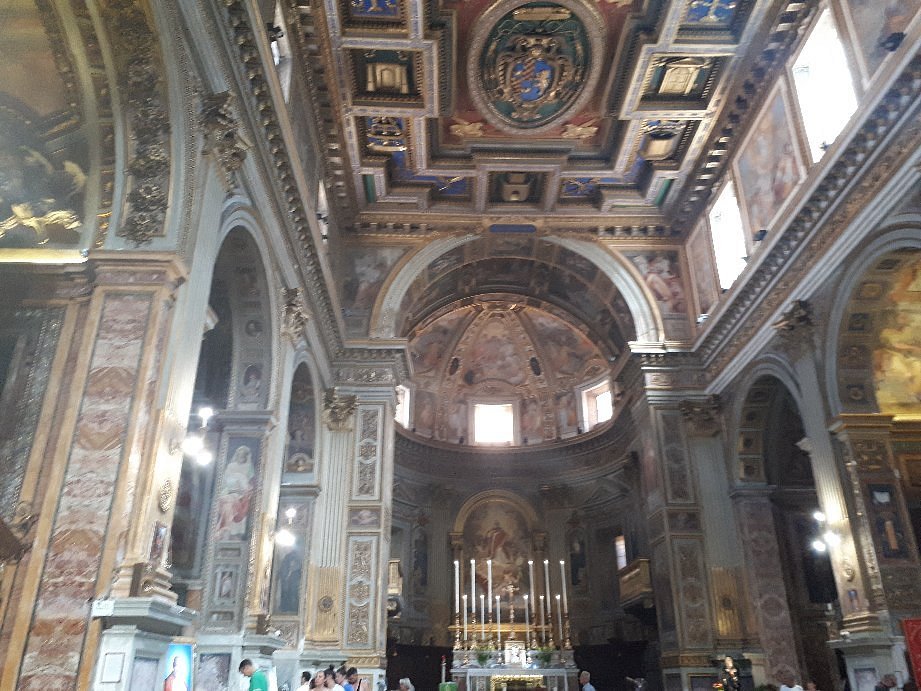
The convent complex of San Francesco al Corso dates back to the 13th century. In 1935 Antonio Avena, then Director of the Civic Museums, opened to the public the so-called “Tomba di Giulietta,” that is the place where the ark that, according to legend, housed the bodies of Romeo and Juliet was placed, making it a tourist attraction. In the attached Museo degli Affreschi “G.B. Cavalcaselle,” inaugurated in 1975, fresco cycles from Veronese buildings from the Middle Ages to the 16th century and 19th-century sculptures are exhibited, while the church of San Francesco houses large canvas works from the 16th to the 18th century. In the basement, a storage of Roman amphorae from the 1st century AD found in excavations in the area is located. In the courtyard, medieval and modern stone material (architectural and sculptural) is stored in anticipation of setting up a lapidarium.
7 Early Christian basilicas and Roman Domus
Under the floor of the church of Sant’Elena and the cloister of the Capitolare, the remains of two early Christian basilicas are visible, the oldest and smaller one from the mid-4th century AD, the larger and more recent from the mid-5th century AD, with beautiful mosaic floors.
In the large room beneath the bank offices, the remains of the Roman domus are visible, very well preserved with mosaic and beaten floors arranged around a small courtyard with a peristyle.

8 Castelvecchio Museum
The Castelvecchio Museum houses important collections of medieval, Renaissance, and modern art (up to the 18th century):
– 29 exhibition rooms of paintings, sculptures, archaeological finds, weapons with 622 works on display
– Specialized cabinets: about 90,000 coins and medals, 2,650 drawings, 8,000 prints, 800 photographic plates
– in storage: 2,500 paintings, about 500 sculptures and bronzes, about 800 furniture and decorative art objects, 300 weapons and 200 pieces of ethnographic collections
Besides the exhibition halls, the Drawing and Print Cabinet, and the Numismatic Cabinet, there are: management, administrative and technical offices, general archive, photo library, room for temporary exhibitions, catalog sales point, artisanal support workshops.
The restoration, started at the end of the 1950s, saw a close collaboration between director Licisco Magagnato and designer Carlo Scarpa both in planning a philological restoration of the spaces and in choosing and placing works functionally and emotionally closest to the idea of the museum as a total work of art. Since then, the Castelvecchio Museum has become a reference point.

9 Remains of the curia and a cult complex
Accessible from the 12 Apostoli restaurant and from a private house, a section of the west side of the curia podium, part of the paving of a cardo, the base of a tower house, and for 37 meters the outer side of the eastern wall of the portico that closed the supposed imperial cult complex are visible.
10 Radio Museum of Verona
The museum illustrates the history of the Radio, from the first scientific equipment, ranging from the early 20th century to the design of the 1950s, through 700 devices from 7 countries.

11 Hypogeum of Santa Maria in Stelle
From an 18th-century access next to the parish church, you enter a corridor opening onto two mosaic-paved rooms, one of which has beautiful and well-preserved paintings with scenes from the Old and New Testament dating back to the 5th century AD. However, the hypogeum is older and was originally built with the function of water collection; in the last stretch beyond the halls it still retains this function and with a narrow passage reaches a spring.
12 MA African Museum
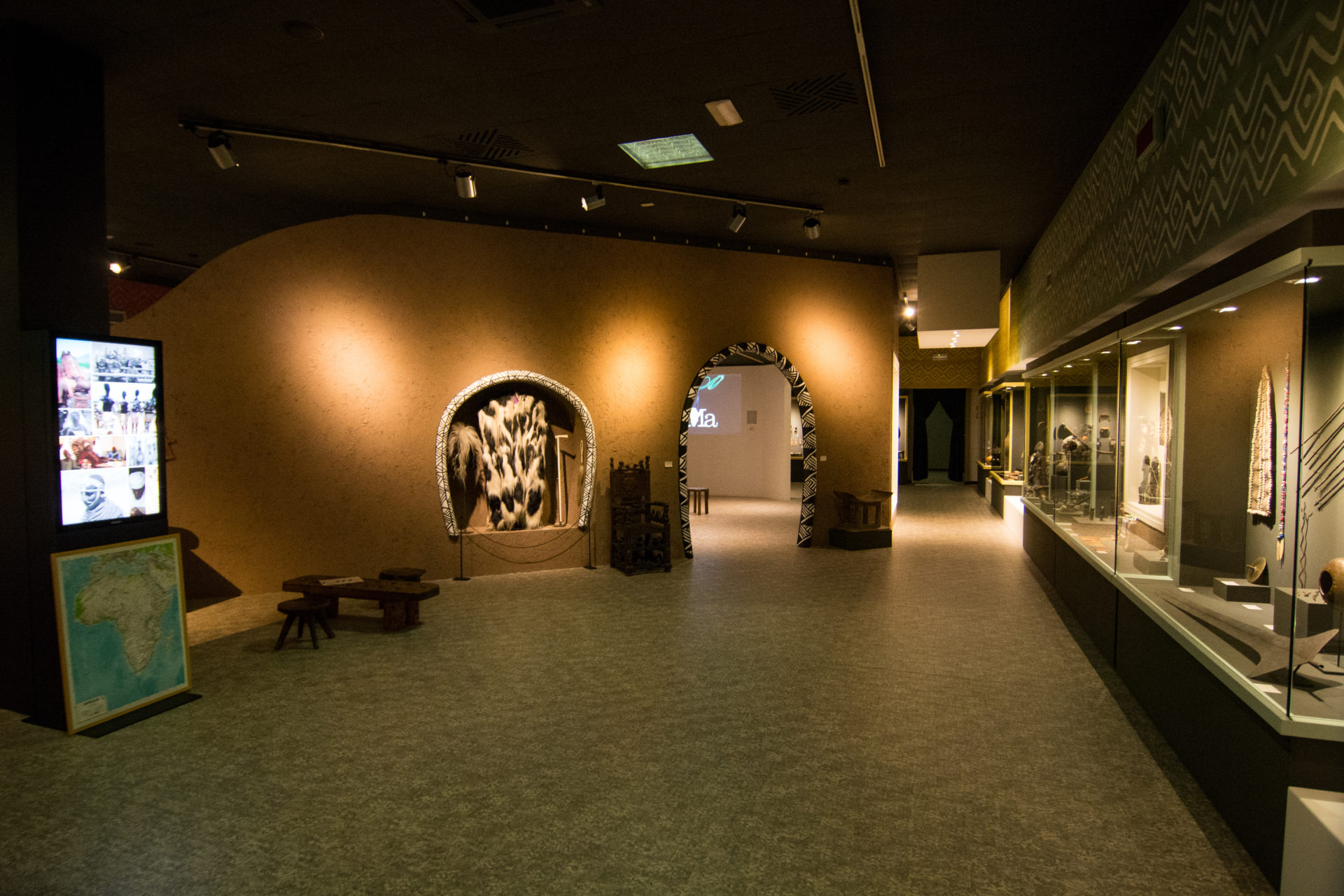
The Ma – African Museum, with an exhibition of artistic objects from traditional Africa. “Life in Africa” is narrated by sculptures, handicrafts, utensils, clothing, work tools, musical instruments, and much more, through the reconstruction of the fundamental stages of existence from birth to death. African populations highlight with special celebrations the different phases of human life with rites of passage and with symbolic representations and festivities, which vary from one ethnic group to another, depicted in artisanal and artistic objects.
Verona in brief: how to get there, where to stay, nightlife
13 How to get to Verona and how to get around
If you decide not to travel by car, the best options to reach Verona are two. Arriving by train, at the Verona Porta Nuova station, you can reach the center in 15 minutes on foot or in less than 5 minutes by car. If you think of arriving by plane, Verona Airport is the one you should refer to. It is 12 km from the center and is well served by shuttles and buses. To avoid making your stay too expensive, we recommend purchasing the Verona Card, so you can enter various museums, monuments for free and travel for free with urban transport. Another piece of advice we want to give you is to walk aimlessly through the characteristic alleys of Verona; it is the best way to experience this fabulous city.
14 Verona, nightlife
Verona is a dynamic city both day and night. Thanks especially to the many events and shows held downtown, it is also very lively at night. There are countless restaurants, pubs, and venues where you can entertain yourself until late at night.

15 Where to stay in Verona
Verona, where to stay: it is not an inexpensive city, but certainly, by booking well in advance, you will be able to find hotels in Verona at advantageous prices. Our advice is to stay in the center so you can enjoy proximity to the main attractions.