


Visiting Budapest means being enveloped by a fascinating blend of history and Central European charm. Divided by the Danube into two distinct souls — Buda, the ancient and hilly part, and Pest, lively and modern — the capital of Hungary is a true jewel of Europe, capable of enchanting from the very first glance. With its historic buildings, monumental bridges, legendary thermal baths, and the romantic atmosphere felt among its squares and avenues, Budapest captivates and conquers.
- Budapest: a journey through history, thermal baths, and romance
- What to visit in Budapest: must-see attractions
- The 12 main attractions of Budapest
- Budapest Parliament
- Fisherman’s Bastion
- Buda Castle
- Chain Bridge
- Széchenyi Baths
- Great Market Hall
- Andrássy Avenue
- Margaret Island
- Dohány Synagogue
- Shoes on the Danube Bank Memorial
- Heroes’ Square
- Matthias Church
- What to see in Budapest: places to visit without hesitation
- 1 Buda and Pest
- 2 What to see in Buda: the historic heart of Budapest
- Buda Castle
- Fisherman’s Bastion
- Matthias Church
- Castle District
- 3 Pest District
- 4 Budapest Thermal Baths
- 5 Danube, Budapest
- 6 Parliament Building, Budapest
- 7 Budapest Royal Palace
- 8 Chain Bridge
- 9 St. Stephen’s Basilica
- 10 The Great Synagogue
- 11 Margaret Island
- 12 The House of Terror
- 13 The Shoes on the Danube
- 14 What to do in Budapest: unique experiences in the Hungarian capital
- 15 Practical Tips for Your Trip to Budapest
- 16 When to go to Budapest
- Quick facts about Budapest: where it is located, how to get there, where to stay, what to eat.
- 17 How to get to Budapest
- 18 How to get around Budapest
- 19 Where to Eat in Budapest
- 20 Where to Sleep in Budapest
- Budapest will stay in your heart
- Frequently Asked Questions about Budapest
In this article, we will guide you through the discovery of what to see in Budapest, suggesting the 20 places of interest not to be missed, among famous icons, hidden gems, and panoramic views. Ideal for a weekend or a longer holiday, Budapest will surprise you with its beauty and vibrant spirit. Are you ready to set off to discover what to do and see in Budapest?
Budapest: a journey through history, thermal baths, and romance
Budapest is one of the most fascinating capitals in Europe, where imperial elegance meets contemporary vitality. Between historic palaces, breathtaking views of the Danube, and thermal atmospheres, this video gives you a first taste of the wonders not to be missed during your visit.
What to visit in Budapest: must-see attractions
The course of the Danube marks the life and rhythms of beautiful Budapest, born from the union of the towns of Buda and Pest. The capital of Hungary is imposing, elegant, and sumptuous, full of discoveries for its wealth of palaces and the emotions it can awaken. How much is Eastern influence and how much Western influence is difficult to determine with absolute precision because here, like the waters of the great river that runs through it, everything that has passed has left a trace, in a suggestive mix testified by the spectacular palaces that populate the city.
The Budapest attractions and monuments to visit in this city are many. Moreover, Hungary is well suited for family holidays and is a great attraction during the Christmas season with the colorful Markets. This is why we have created a guide to help you during your stay in Budapest: what to see in the Hungarian capital.
The 12 main attractions of Budapest
Budapest is a magnetic city, suspended between East and West, where every building tells a piece of history. Here are the 12 unmissable attractions to start exploring the Hungarian capital and discover what to do in Budapest.
Budapest Parliament
Area: Pest, along the Danube
Type: Institutional / Historical
Fisherman’s Bastion
Area: Buda, Castle Hill
Type: Panoramic / Architectural
Buda Castle
Area: Buda
Type: Historical / Museum
Chain Bridge
Area: Buda-Pest connection
Type: Symbolic / Panoramic
Széchenyi Baths
Area: Városliget Park
Type: Thermal / Relaxation
Great Market Hall
Area: Pest
Type: Gastronomic / Traditional
Andrássy Avenue
Area: Pest
Type: Historical / Shopping
Margaret Island
Area: Central Danube
Type: Green / Relaxation
Dohány Synagogue
Area: Jewish Quarter
Type: Religious / Historical
Shoes on the Danube Bank Memorial
Area: Pest riverside
Type: Memorial / Commemorative
Heroes’ Square
Area: End of Andrássy Avenue
Type: Historical / Symbolic
Matthias Church
Area: Buda Hill
Type: Religious / Architectural
What to see in Budapest: places to visit without hesitation
1 Buda and Pest
What is commonly known is that Buda can be defined as the more orderly part, while Pest is more bustling. However, both are very beautiful and indeed it is no coincidence that entire areas of Budapest have been listed and included among UNESCO World Heritage sites. Connecting the two sides of the same coin are eight imposing bridges of great artistic and architectural value, true attractions of Budapest.

2 What to see in Buda: the historic heart of Budapest
The Buda district is the oldest part of the city, rich in history and medieval charm. Destroyed several times over the centuries, it has always been rebuilt, preserving its unique character. Here are some must-see places in this area:
Buda Castle
The Buda Castle Budapest, also known as the Budapest Royal Palace, is the beating heart of the historic district. This imposing complex, which dominates Buda hill, offers breathtaking views over Pest and the Danube. Inside the castle you can visit:
- The Széchenyi National Library: a treasure of Hungarian culture and history
- The Hungarian National Gallery: hosting a vast collection of Hungarian art
- The Budapest History Museum: to delve deeper into the rich history of the city
Don’t miss the Matthias Fountain, depicting scenes from the Chronica Hungarorum, and the Turul, the mythical Hungarian eagle guarding the castle entrance.

Fisherman’s Bastion
The Fisherman’s Bastion is one of the most spectacular panoramic points in Budapest. This neo-Gothic and neo-Romanesque complex, with its seven towers representing the seven Magyar tribes, offers an unmatched view of the city and the Danube. From here you can admire the Buda panorama in all its splendor.
Matthias Church
The Matthias Church, dedicated to Our Lady, is an architectural gem combining Gothic and Baroque elements. Famous for its colorful tiled roof and richly decorated interiors, the church has hosted several royal coronations, including that of King Matthias Corvinus.
Castle District
Walking through the cobbled streets of the Castle District will take you back in time. Here you can admire perfectly preserved medieval houses, picturesque small squares, and panoramic views over the city. Don’t miss the Royal Chapel and the Palatine Crypt, testimonies to Hungary’s rich history.
To comfortably reach Castle Hill, you can take the historic funicular, a unique experience that will offer you spectacular views during the ascent.
3 Pest District
The Pest District is the heart of modern Budapest. In stark contrast with the old part, it is the contemporary soul of a European capital. It is in this district that you will also find the lively Budapest nightlife.
4 Budapest Thermal Baths
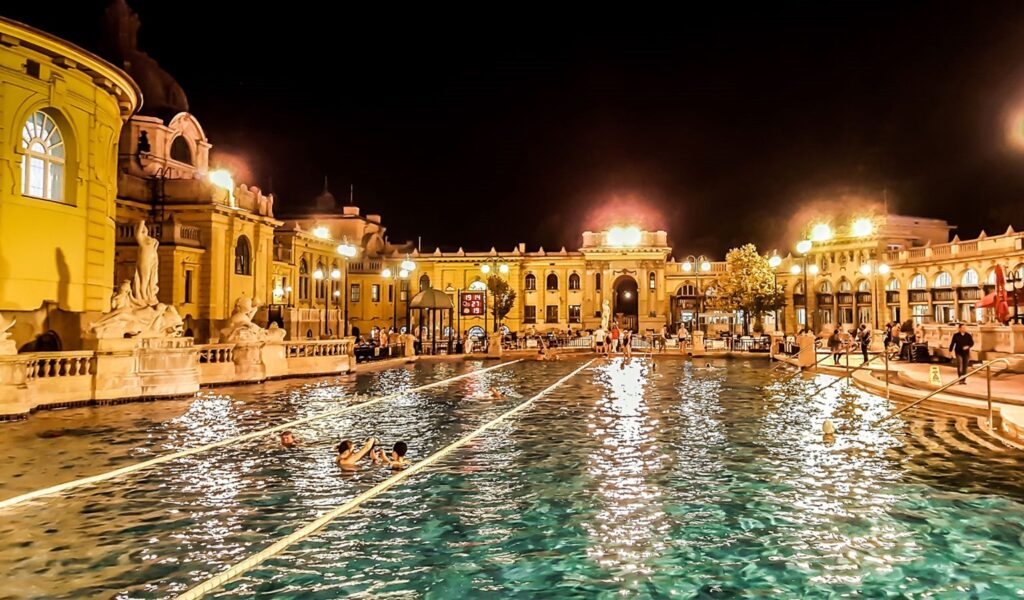
Budapest, the charm of an Eastern capital. There are 22 thermal springs in Budapest, many of which are concentrated in the Viziváros district, also known as the “City of waters.” During the Roman Empire, the thermal baths of Buda and Pest were frequented by the upper bourgeoisie. Since 1956 and throughout this post-Stalinist era, intellectuals have also found a space to meet and discuss in full relaxation immersed in the warm pools of the Lukács Baths. Meanwhile, chess players prefer to peacefully challenge each other in the waters of the Széchényi Baths. You cannot visit this city without trying one of its thermal baths, which contribute to making it famous throughout Europe.
5 Danube, Budapest
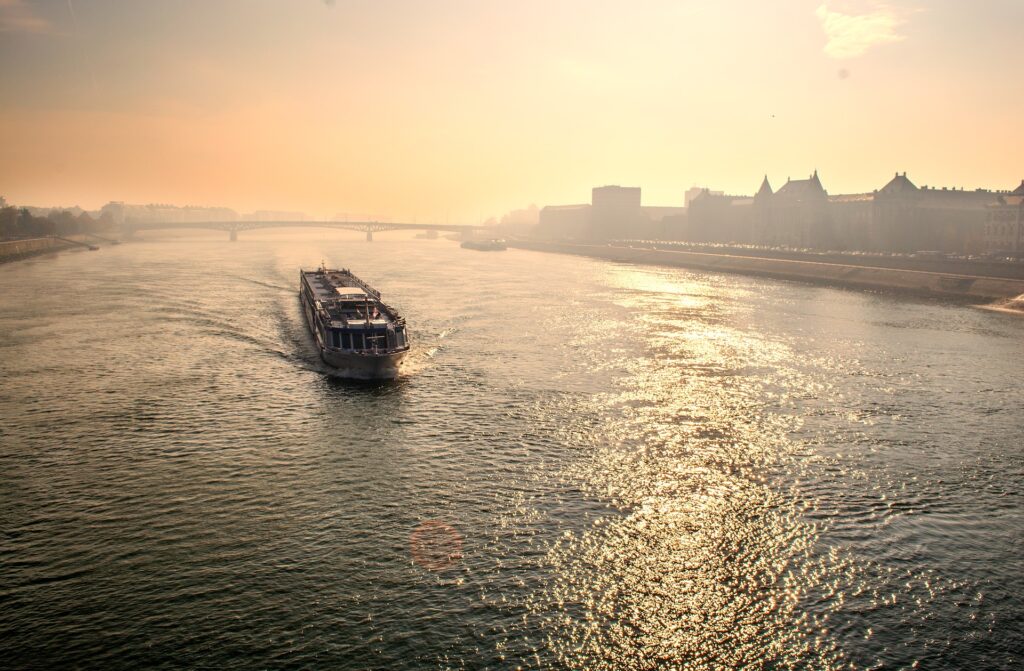
But aside from the baths, in Budapest there is truly something for all tastes. The city is divided by the Danube, which here more than elsewhere is truly blue. The river clearly separates the old, aristocratic, imperial city of Buda, from the political, commercial, and bubbly Pest. Two cities united by a single way of life, seemingly fatalistic and vigorously oriented towards the future, the Hungarian government has managed to enter the European Community. Not an easy feat, given the galloping inflation.
6 Parliament Building, Budapest
The Parliament Building is located in the Pest district and is perhaps the most famous building in Budapest, the one most photographed by tourists. The Baroque and Renaissance style of the interiors contrasts with the Gothic exterior, making it a very special building that we recommend adding to your “What to see in Budapest” list.
7 Budapest Royal Palace
At the foot of the Buda hill is the Royal Palace which enjoys a fantastic view over Pest; to see the beauties of the city, just walk and look up, thus encountering the magnificence of the Postal Savings Bank decorations, whose roof is finely decorated with bee motifs. The Budapest Royal Palace dominates the city from the Buda district. It is today the seat of the President of the Hungarian Republic. We recommend visiting it at noon to witness the daily changing of the guard.

8 Chain Bridge
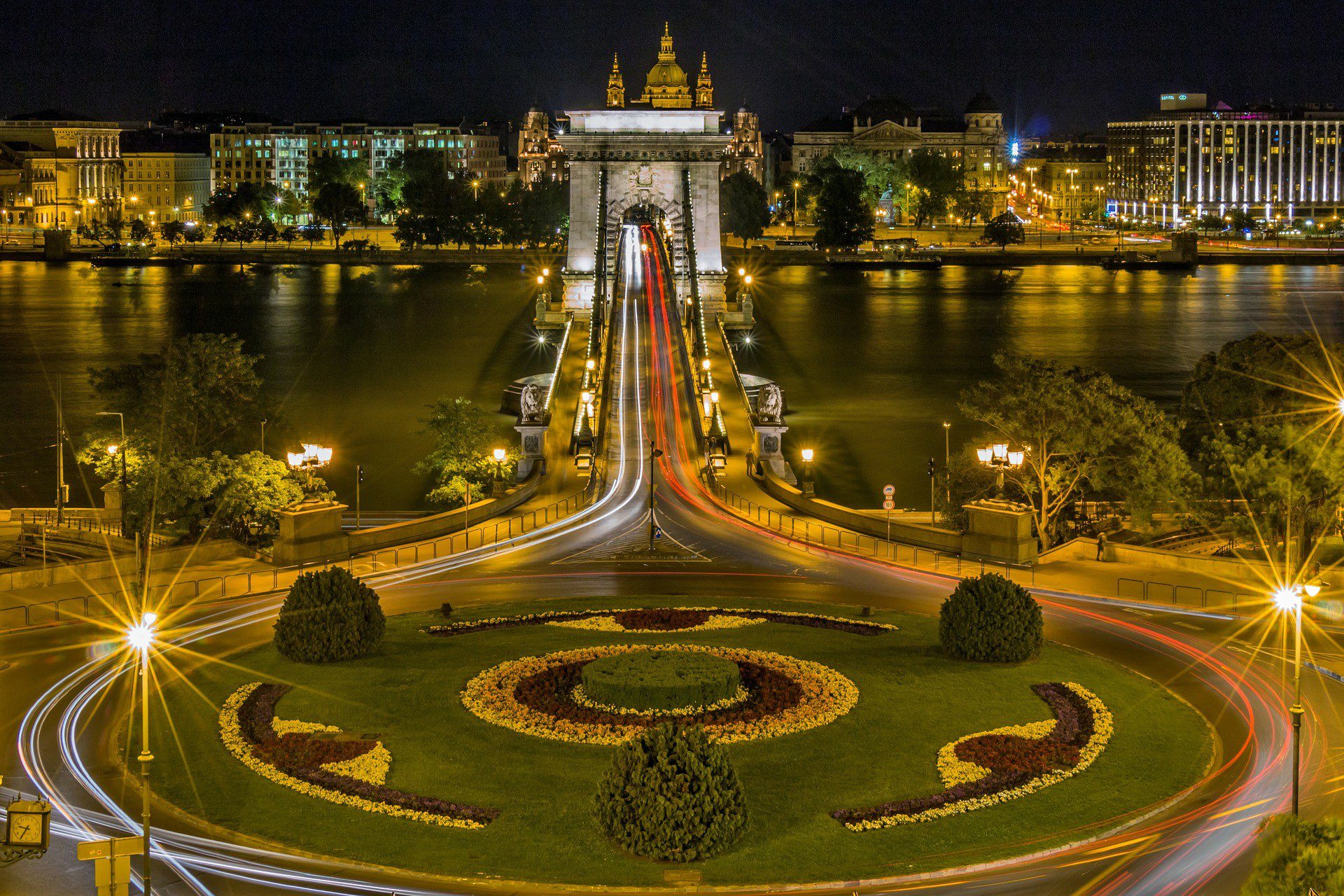
The Chain Bridge is an old bridge connecting Buda to Pest. At night, illuminated, it is even more fascinating and evocative. The ideal place, if you are a couple, for a romantic walk. Crossing the Chain Bridge you can easily access from one side the Castle and from the other Belváros where the medieval city within the “Small Circuit” extends, a dense set of ancient streets. Not far away is the Budapest shopping area, namely Vaci Ut, while to the northeast of the city you can visit the Heroes’ Square, the epicenter of artistic beauties of inestimable value. Here also stands the Museum of Fine Arts.
9 St. Stephen’s Basilica
The St. Stephen’s Basilica is a neoclassical style church, a real pride for the city of Budapest thanks to its mosaics and precious marbles, which contribute to its charm. It is undoubtedly to be included in your list “Budapest: what to visit.”

10 The Great Synagogue
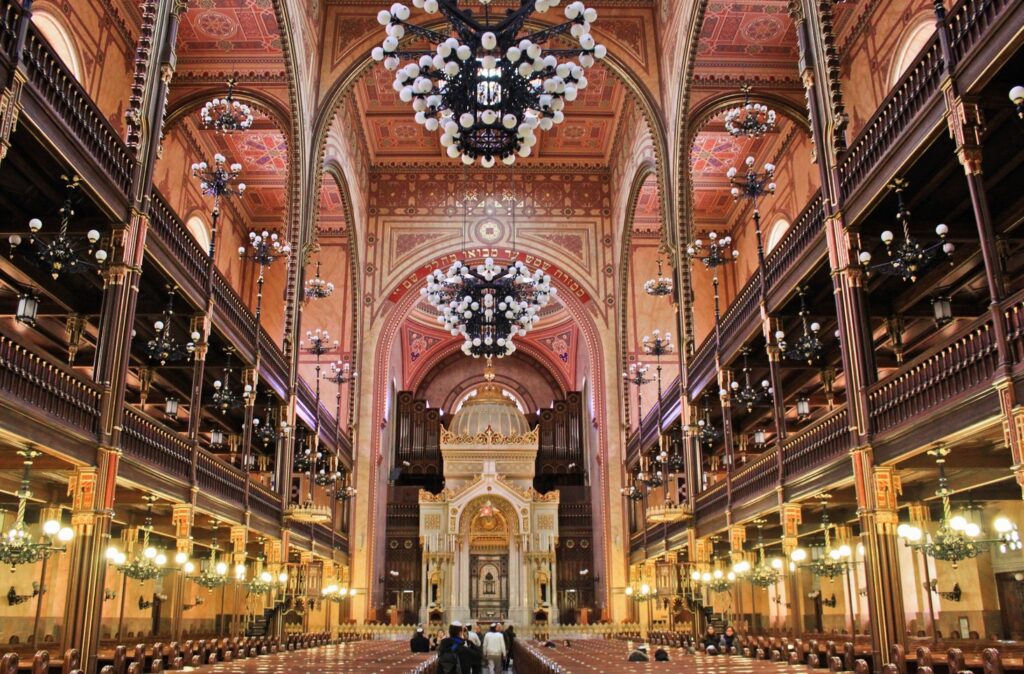
The Great Synagogue is an unmissable stop during your trip to Budapest. It is the largest synagogue in Europe. Worth mentioning is the “Tree of Life,” a monument commemorating the Jews killed by the Nazis.
11 Margaret Island
Margaret Island Budapest: it is a small island in the center of the Danube. If you have a bit of time, we recommend including in your list “Budapest: what to do” a tour of the island, among wonderful gardens and parks. An area perhaps less touristy – it is indeed very frequented by the inhabitants of Budapest – but absolutely full of charm.
12 The House of Terror
The House of Terror is a place to visit, a place that definitely gives chills but makes you reflect a lot on the tragic events of Nazi-Communist history and on the atrocious practices carried out within those walls by both the Nazi and Communist regimes. Today a museum, it is both a remembrance of the victims and a stronghold of historical memory.

13 The Shoes on the Danube
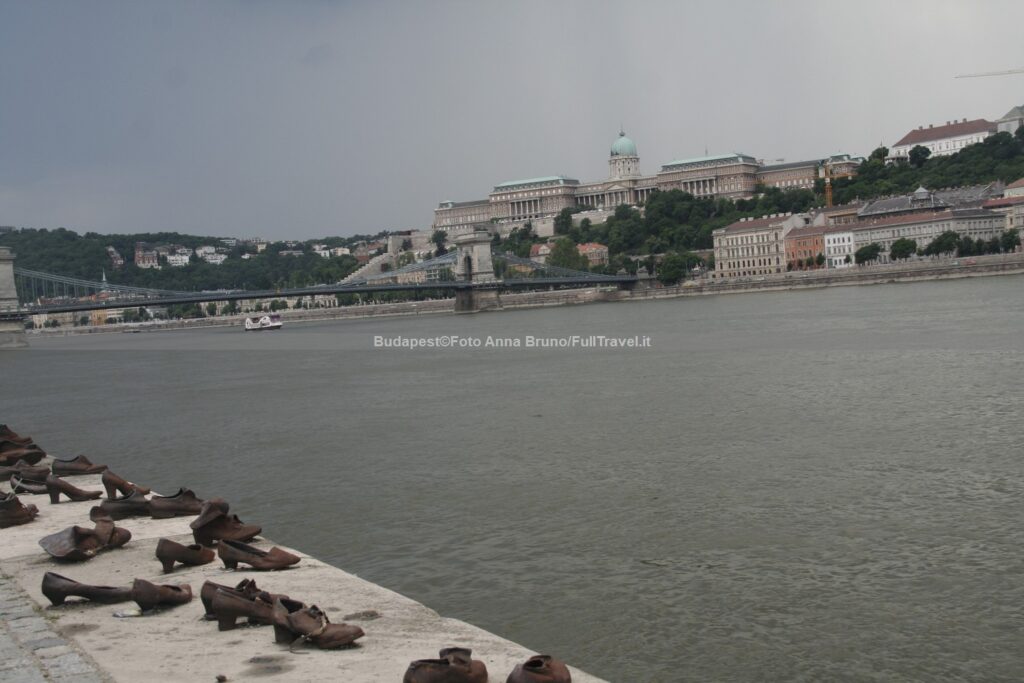
The shoes of Budapest are located along the Danube. They are bronze shoes that at first glance seem really real because the dimensions are actual size. They remember the victims of the Nazis and the Holocaust. The work is by director Can Togay and sculptor Gyula Pauer. And even if the shoes are fake, I imagine them really worn by someone who is no longer here.
14 What to do in Budapest: unique experiences in the Hungarian capital
At this point, to relax a bit and catch your breath, nothing beats a walk in the Varosliget City Park or perhaps an evening at the National Opera House. To survive in Hungary, a double or triple job is necessary. However, the accommodating and kind nature of the Magyar people, along with the warmth of the thermal baths and the goulash soup, manage to warm even the freezing salaries. The good cuisine, music everywhere, and Opera at 5-10 dollars a ticket, make Budapest a contender to become the future European capital of good living and pleasure.
There is a growing focus on nature conservation and environmental protection, a culture of good cuisine is widespread everywhere, and the thermal baths, gypsy music, and literary cafés are valid reasons for a trip to Hungary. And perhaps, not least, the curiosity of finally being able to enter a former communist country. Budapest is not just monuments and architecture, but also offers unique experiences that will let you fully live the city’s atmosphere. Here are some ideas on what to do in Budapest:
- Relax in the thermal baths: Budapest is famous for its thermal baths, a legacy of the Roman and Turkish eras. The most famous Budapest baths are the Széchenyi Baths, but do not miss the Gellért Baths with their splendid Art Nouveau architecture.
- Take a cruise on the Danube: admire the illuminated city monuments from a unique perspective, sailing on the Danube at sunset.
- Explore the ruin pubs: these unique bars, set in abandoned buildings and decorated eclectically, are the heart of Budapest’s nightlife.
- Visit the Great Market Hall: immerse yourself in the scents and flavors of Hungarian cuisine in this historic market.
- Climb Gellért Hill: reach the Citadel to enjoy a breathtaking panoramic view over the entire city.
- Stroll on Margaret Island: a green oasis in the heart of the city, perfect for a picnic or a relaxing run.
- Visit the Parliament: admire the sumptuous interiors of one of the world’s largest parliamentary buildings.
- Explore the Jewish Quarter: discover the history and culture of Budapest’s Jewish community by visiting the Great Synagogue and the numerous kosher cafés and restaurants in the area.

15 Practical Tips for Your Trip to Budapest
To help you better organize your trip, here are some practical tips on what to do in Budapest in 4 days and how to get around the city:
- Day 1: explore the Budapest city center and its main monuments such as the Parliament, St. Stephen’s Basilica, and the Chain Bridge.
- Day 2: dedicate the day to the Buda Castle district, visiting the Royal Palace, Matthias Church, and Fisherman’s Bastion.
- Day 3: relax at the Széchenyi thermal baths and explore Városliget Park with Heroes’ Square.
- Day 4: visit the Jewish Quarter, shop along Andrássy Avenue, and end with an evening cruise on the Danube.
To get around the city, use the convenient public transport network, which includes the metro, trams, and buses. Consider purchasing a Budapest Card, which offers free transport and discounted admission to many attractions.
Budapest is a city that knows how to win the hearts of visitors with its beauty, history, and vibrant atmosphere. Whether you are interested in art, history, gastronomy, or simply relaxing, this city has something to offer every type of traveler. Prepare for an unforgettable experience in the pearl of the Danube!
16 When to go to Budapest
If you decide to go to Budapest in spring, you will also have the opportunity to fully experience the Budapest Spring Festival, however the city events are numerous throughout the year and, even braving the cold in winter, you can enjoy an excellent holiday in Budapest. The capital of Hungary is recommended all year round because every period is the right one.
Quick facts about Budapest: where it is located, how to get there, where to stay, what to eat.
17 How to get to Budapest
The easiest and fastest way to reach the Hungarian capital is by plane. Once you arrive at Budapest Airport, Airport Budapest Ferihegy, to get to the center, which is about 28 km away, you can use the train service (30 minutes), the bus service (70 minutes), or a taxi (the fastest but more expensive option).
18 How to get around Budapest
Walking is always the best choice to admire the city. Alternatively, you can move between the various places of interest in Budapest using trams, local buses, and the subway, developed on 3 lines and active until 11:15 PM.

19 Where to Eat in Budapest
The best area to eat in Budapest, to taste Hungarian cuisine, is definitely Pest. You will find many places that will satisfy your palate and your curiosity about typical dishes. On your list “Budapest: what to eat” do not forget porkolt, a typical Hungarian salami, the goulash, a beef-based soup, and chestnut purée, the typical dessert.

20 Where to Sleep in Budapest
The best area to look for your hotel in Budapest is undoubtedly the Pest district, lively at any hour of the day and night. Alternatively, if you want to spend little to sleep in Budapest, it is recommended to read the article on which districts of Budapest are recommended. If you prefer, you can also compare offers on Booking.com.
Budapest will stay in your heart
Budapest is a city that surprises from the first glance, with its Austro-Hungarian elegance, its historic buildings overlooking the Danube, and the bridges that connect two souls into one heart: Buda and Pest. Walking through its streets rich in history, you will breathe the strength of a capital capable of reinventing itself, proudly preserving its roots. Whether you are looking for art and culture, relaxation at the thermal baths, romantic views, or authentic flavors of Hungarian cuisine, you will find in Budapest an answer to every travel desire.
From the majesty of the Parliament to the rejuvenating waters of the Széchényi baths, from lively markets to literary cafés, every experience will make you fall more and more in love with the city. And then the view from Buda Castle, the grandeur of St. Stephen’s Basilica, the nights in Pest’s ruin pubs, concerts, cruises on the Danube, the bold flavors of goulash: every detail will contribute to creating an unforgettable memory.
If you are looking for a romantic, cultural, accessible, and surprising destination, then Budapest is the perfect place for you. Organize your trip with this complete guide and truly discover what to see in Budapest, what to do, where to eat, and where to sleep to experience the Hungarian capital in all its beauty. And if you have in mind a short but intense getaway, don’t miss our itinerary for a low-cost weekend in Budapest: many ideas to discover the city spending little, without giving up emotions. Budapest awaits you, ready to become one of the most loved cities in your traveler’s heart.
Frequently Asked Questions about Budapest
Do you still have doubts about what to see in Budapest or how to organize your trip? Here are the answers to the most common questions to best experience the capital of Hungary.
❓ What to see in Budapest in one day?
Even in just one day it is possible to capture the essence of Budapest. Start your visit at the majestic Parliament Palace and admire the view from the Chain Bridge. Then climb to Buda Castle for a panoramic view of the city, visit St. Stephen's Basilica, and relax at the Széchényi thermal baths. If you can, end with a Danube river cruise at sunset for an unforgettable experience.
❓ What is the best time to visit Budapest?
Budapest is enchanting all year round, but the most appreciated seasons are spring and the Christmas period. In spring, the city fills with events and blossoms, while in December it is colored with magic thanks to the markets and lights. Summer is also ideal for enjoying festivals and open-air concerts, while winter is perfect for relaxing in the famous thermal baths.
❓ What are the most beautiful thermal baths in Budapest?
Budapest's thermal baths are among the most famous in the world. The Széchényi, with their outdoor pools and neo-baroque architecture, are an icon of the city. The Gellért baths are elegant and historic, perfect for a more refined experience. The Lukács baths are loved by locals and ideal for those looking for an authentic and less touristy atmosphere.
❓ Where to stay in Budapest on a budget?
For those who want to save without giving up a central location, the Pest district is the ideal choice. It is lively, well served by public transport, and rich in hotels, hostels, and affordable B&Bs. Areas like Erzsébetváros and Józsefváros offer welcoming accommodations, typical local venues, and a strategic location to visit the main sights.
❓ What to definitely eat in Budapest?
Among the unmissable dishes are goulash, a spicy and hearty meat soup; porkolt, similar to a stew; and lángos, a fried flatbread served with sour cream and cheese. Don't forget the sweet chestnut purée and typical Hungarian salamis. Covered markets, like Nagycsarnok, are perfect for trying local specialties.