

The Czech Republic was born on January 1st, 1993, from the more than peaceful split of the old Czechoslovakia. Today it is a republic with a landlocked territory, with all well-defined land borders: Poland to the north and Austria to the south; Germany to the west and Slovakia to the southeast.
The backbone is made up of regions that have preserved their great heritage of history, customs, and traditions: Bohemia to the west; Moravia to the east. And a part of Silesia to the north.
The population (about ten million souls with a density of 132 inhabitants per square kilometer) consists of two groups from the same Slavic root: the Bohemians, who are the majority, and the Moravians, about 30%, settled in the homonymous region. From a tourist perspective, Prague, the capital, a millennial city with magnetic and inexhaustible charm, remains undoubtedly the country’s number one asset, but not the only one, considering that among the long list of UNESCO World Heritage sites, there are as many as 12 sites and monuments located in the Czech Republic.
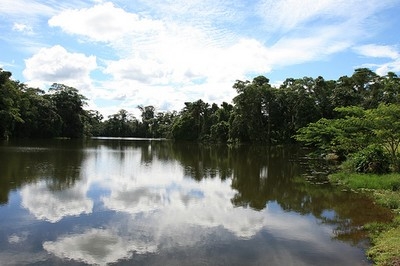
A record for such a small country! It is also worth noting that, in recent years, local tourism authorities have worked hard to showcase the country’s diverse faces, promoting various forms of tourism. From nature and environmental tourism, thanks to pristine territories dotted with bodies of water, like those in South Bohemia, to spa and golf tourism (there are about ninety golf courses throughout the Czech Republic,). From tourism that leads to discovering smaller cities (Brno, Ostrava, Olomouc, Cesky Krumlov…), whose historic centers have been preserved exemplary, to tourism that allows you to savor the great musical tradition (Smetana, Dvorak, Janacek are just some of the great composers), cultural, folkloric, and gastronomic heritage.
Prague, Capital of the Czech Republic
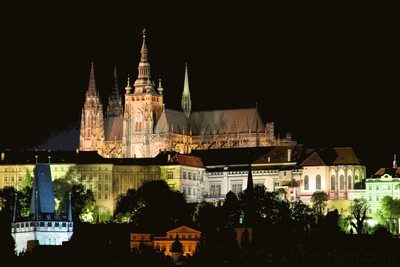
Prague is and remains the crown jewel of a trip to the Czech Republic. Its ancient quarters, UNESCO Heritage sites, are considered masterpieces of art and architecture. It is hard not to be enchanted. Nestled on the banks of the Vltava River and built on nine hills, the historic center, over a thousand years old, covers an area of 866 hectares and showcases an incredible mosaic of architectural styles: Romanesque rotundas and Gothic towers; Renaissance mansions and palaces; Baroque and Neo-Gothic churches; Jewish synagogues and Christian monasteries; Art Nouveau buildings and modern constructions.
All connected by a lacework of alleys and narrow streets; by squares and romantic open spaces, sometimes touching. Old Town Square with the Astronomical Clock; the splendid Charles Bridge, under which it is delightful to cruise by boat admiring so much beauty from the water. The hill with the Castle and all the other iconic monuments (St. George’s Basilica, St. Vitus Cathedral, Baroque Church of St. Nicholas, Museum of Fine Arts…) make even a short trip to Prague an experience not easily forgotten.
Also helped by the liveliness of the city fabric, with its numerous cafés, several of which are historic or named after Czech writers and intellectuals; restaurants, pubs, dance halls, theaters, markets, and many other social and cultural gathering places. If you are interested in what to see in Prague in 3 days, we have created a must-see guide to the Czech capital. For more details, see what to see in Prague, regardless of how much time you have to visit the capital.
If your desire is to discover the typical Czech cuisine, we refer you to a specific feature with several traditional dishes from both Prague and the entire Czech Republic.
Czech Republic Fact Sheet
- Country: Czech Republic
- Area: 78,866 Km²
- Capital: Prague
- Population: 10 million inhabitants
- Language: Czech
- Religion: majority atheist, minority Catholic and other religions
- Government system: parliamentary republic
- Major cities: Prague, České Budějovice, Brno, Karlovy Vary, Hradec Králové, Liberec, Ostrava, Olomouc, Pardubice, Plzen, Ústí nad Labem, Jihlava, Zlín
Useful Information About the Czech Republic
- Currency: Czech Crown (1 euro = 27.70915 CZK)
- International dialing code: +420
- International vehicle registration: CZ
- Driving side: right
- Entry documents: Identity Card or Passport
- Vaccination required: No
- Electricity: 230 Volts/50 Hz
- Units of measurement: metric decimal
- Time zone: same time as Italy
- Fixed-date public holidays: January 1: New Year’s Day; March-April: Good Friday; March-April: Easter; March-April: Easter Monday; Pentecost: 7th Sunday after Easter; May 1: Labor Day; May 8: National Day; July 6: Day of the Coronation; August 15: Assumption; October 28: St. Wenceslas Day, patron prince and martyr – Czechoslovakia Independence Day; November 1: All Saints’ Day; December 8: Immaculate Conception; December 25: Christmas; December 26: St. Stephen’s Day
- Climate: temperate climate, with harsh winters and pleasantly warm summers
- Average temperatures: summer highs range from about 16°C to 25°C, winter from -7°C to 2°C
- Transport: National airline Czech Airlines plus many others operating flights to and from the Czech Republic: Alitalia, Easyjet, Ryanair, SkyEurope, etc. Czech Railways connect the country with major European cities
- Airports: Prague and Brno