


Albacete owes its name to Al-Basit, or “the plain”, a name the Muslims gave to a small rural settlement. Having become independent from Chinchilla in 1375, this charming Spanish city began to grow thanks to subsequent royal grants.
When Queen Isabella II granted Albacete city status in 1862, the railway had already reached these lands. Together with its appointment as provincial capital thirty years earlier, this was decisive in consolidating the urban, administrative, social, and economic development that the city would experience in the future.
What to see in Albacete
1 Historic buildings and landmarks
The many historicist and modernist buildings lining the streets of Albacete testify to this progress. Notable examples include the provincial government building and the striking properties found along via Tesifonte Gallegos and Marqués de Molins. Don’t miss the elegant and bustling Pasaje de Lodares with its neobaroque touches. Also unique is the Teatro Circo, the heart of Albacete’s cultural life. Today, the Depositos del Sol, once used to store the city’s drinking water, host a modern public library.

2 Archaeological Museum of Albacete
A visit to the provincial archaeological museum is highly recommended. The building, constructed around fifty years ago in Abelardo Sánchez Park, features daring contemporary architecture that complements its surroundings. Don’t miss the collection of paintings by Benjamín Palencia, master painter from Barrax and founder of the Vallecas School, housed inside the museum.

3 Municipal Museum of Albacete
Located on Piazza dell’Altozano, the Municipal Museum of Albacete is housed in the former city hall building. Inside, you’ll find an impressive folk art exhibit from around the world, curated by collector Ramírez de Lucas. In the garden stands the monument to the knife maker. Behind it rises the modernist profile of the Grand Hotel.

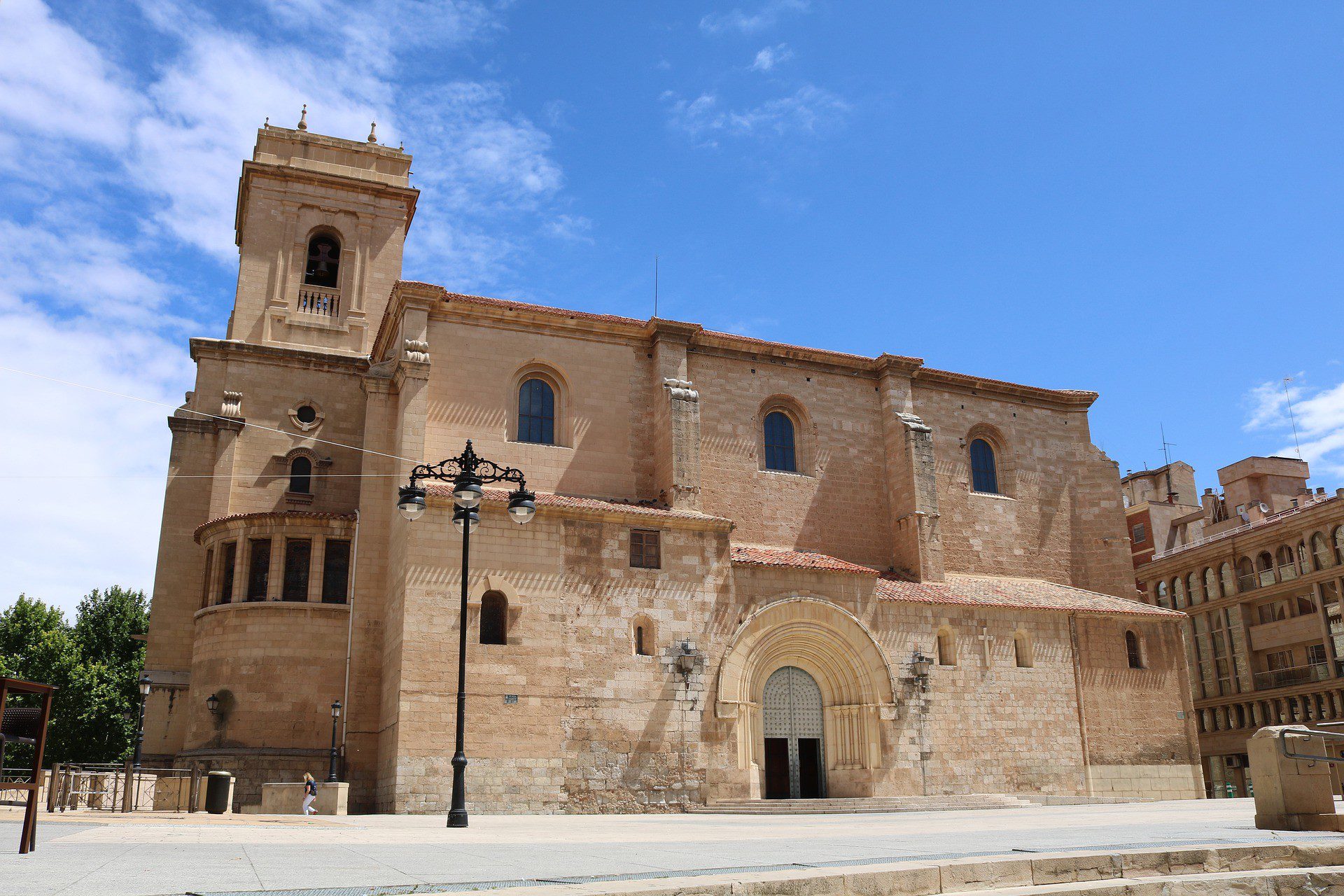
4 Cathedral of San Juan in Albacete
In the cathedral square stands the church dedicated to San Juan Bautista (St. John the Baptist), built in the 16th century and home to the chapel of the Virgen de los Llanos, patroness of the city. Next to it you’ll find the modern city hall, clad in Salamanca stone and topped by a prominent clock.
Things to do in Albacete
Albacete is a modern, cosmopolitan city, open to the world. This is evidenced by its thriving commercial activity, vibrant student scene, and the development of its industrial park and science and technology park. Visit the Castilla-La Mancha Botanical Garden on the university campus, a center dedicated to the research and protection of the region’s biodiversity. Here, traditional and experimental crops grow alongside rare plants cultivated in the greenhouse. The Pulgosa Greenway is a great route for walking, cycling, or running.
From 7 to 17 September, Albacete welcomes its famous local fair in honor of the Virgen de los Llanos. To experience ten unforgettable days of joy, fun, and great food, plan your visit for these dates. The fair dates back over three centuries and its site is singular, known as “la sartén” (the frying pan). The fairground, a classic example of neoclassical popular architecture, was built during the reign of Charles III in 1783.
During the fair, the atmosphere throughout the city is festive. Enjoy its rich program of events and take part in one of Spain’s most important festivals, declared of International Tourist Interest. And don’t miss the traditional bullfights at the neo-Mudejar-style arena designed by architect Julio Carrilero.
Albacete is the great gateway to a province with landscapes ranging from La Mancha and La Manchuela to Campo de Montiel, the Sierras of Alcaraz and Segura, and the valleys of the Júcar and Cabriel rivers. Here you’ll find rolling hills and mountains, unexpected scenery, and vast plains once traveled by Don Quixote.

What to buy in Albacete
A trip to Albacete means discovering the city’s centuries-old tradition of knife making. The Knife Museum, located in the modernist Casa del Hortelano on Plaza de la Catedral, celebrates this artisanal craft—one of the city’s main treasures. Don’t leave without buying a fine example; quality and beauty are always a given. And remember an old tradition: “The knife of Albacete is never gifted—sell it to a friend for a symbolic sum, so your friendship will never be ‘cut’.”

What to eat in Albacete
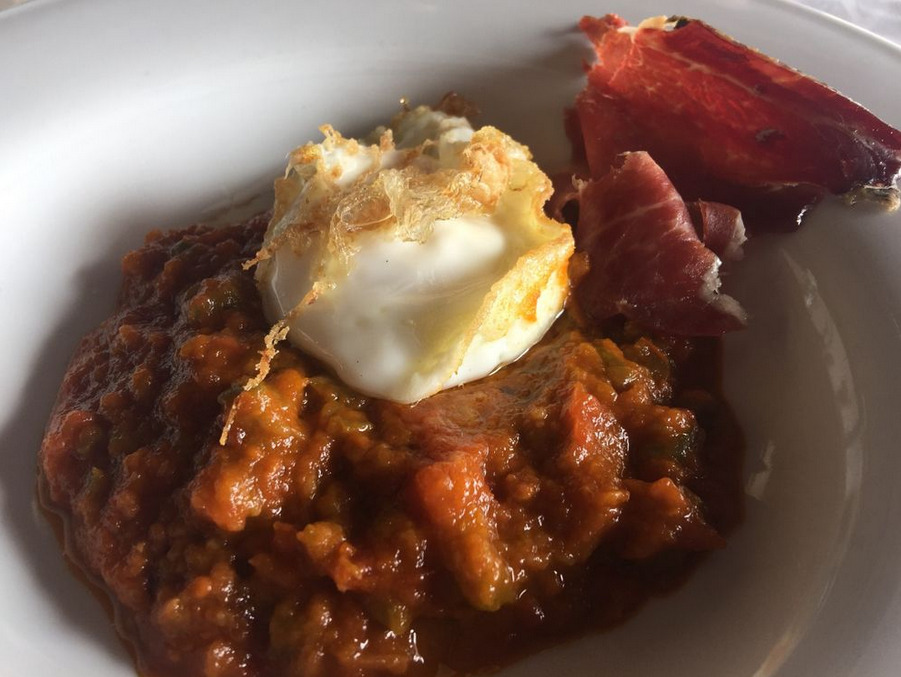
The feria days are a fantastic opportunity to enjoy regional cuisine. Albacete’s culinary tradition stands out, with gazpacho manchego as its most iconic dish. The menu offers tempting local flavors: galianos, atascaburras, migas ruleras, marinated partridge, gachas, lamb stew, lomo de orza, ajo mataero, pisto, asadillo, game, and cheeses.
For dessert, try miguelitos de La Roda, panecillos dulces, delicias de Almansa, borrachos de Minaya, or flores en sartén. Pair it all with excellent wines from La Mancha, Manchuela, Almansa, and Jumilla, all boasting prestigious designations of origin.



, a name given by the Muslims.)