


Albacete owes its name to Al-Basit meaning “the plain,” which Muslims used to designate a small rural colony. Having become independent from Chinchilla in 1375, this charming Spanish city began to grow thanks to subsequent royal grants.
When in 1862 Queen Isabella II granted Albacete the title of city, the railways had already arrived in these lands. Together with its designation as the provincial capital thirty years earlier, this was decisive in consolidating the urban, administrative, social, and economic development that Albacete has experienced subsequently.
What to see in Albacete
1 Historical buildings and locations
The numerous historicist and modernist buildings that can be found in the streets of Albacete attest to such development. Here you will find the province seat palace or the striking buildings that can be admired on Tesifonte Gallegos street or Marqués de Molins. Without forgetting, of course, the elegant and commercial Pasaje de Lodares, with neo-baroque touches. Also unique is the Circo theater, the central hub of cultural activity in Albacete. In the Depósitos del Sol, where water destined for city consumption was once stored, today there is a modern public library.

2 Albacete Archaeological Museum
A visit to the provincial archaeological museum is highly recommended. Its building, constructed about fifty years ago in Abelardo Sánchez Park, features a bold design to fit into the environment. Don’t miss the painting collection by Benjamín Palencia, the great painter from Barrax, founder of the Vallecas school, which is housed in the museum.

3 Albacete Municipal Museum
The Albacete municipal museum, located in Altozano Square, is housed in a building that was once the old city hall. Its rooms feature an exhibition of popular art from around the world, created by collector Ramírez de Lucas. In its gardens stands the cutler’s monument. Behind it, the modernist profile of the Grand Hotel stands out.

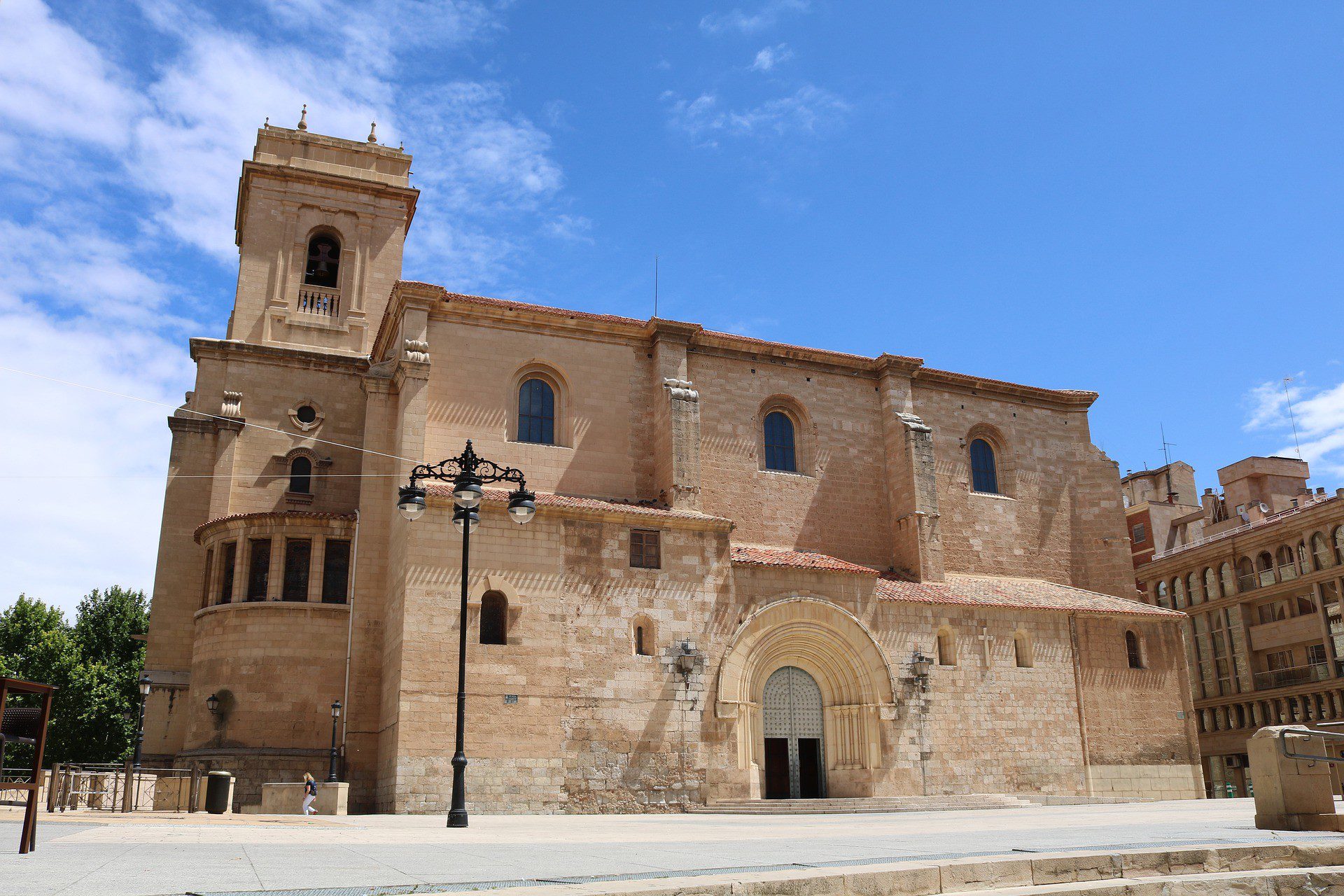
4 Cathedral of Saint John in Albacete
In the cathedral square you can visit the temple dedicated to Saint John the Baptist, built in the 16th century, which houses the chapel of the Virgin of the Llanos, patron saint of the city. Nearby you will find the modern building housing the current city hall, made of Salamanca stone and crowned by a large clock.
What to do in Albacete
Albacete is a modern, cosmopolitan city open to the world. This is evidenced by its dynamic commercial activity, its student environment, and the development of its industrial estate and its technological and scientific park. Visit, in its university campus, the Castile-La Mancha Botanical Garden, a place open to researching the region’s biodiversity. There, traditional and experimental crops coexist alongside the exotic plants grown in its greenhouse. A good route to take on foot, by bike, or running is the greenway of the Pulgosa.
From September 7 to 17, in honor of the Virgin of Los Llanos, Albacete celebrates its famous city fair. If you want to experience unforgettable days full of joy, fun, and good gastronomy, choose this period to visit it. You cannot miss it. Its origin dates back more than three hundred years, and its location is truly unique: “the frying pan.” The fairground, a characteristic example of popular architecture in the neoclassical style, was built during the time of Charles III, in 1783.
During the fair days, the atmosphere is incredible. Participate in its intense program of activities and be a protagonist in these celebrations declared of international tourist interest, which are one of the most important fairs in Spain. Ah!… and don’t miss its traditional bullfights held in the neo-Mudejar style coliseum designed by the architect Julio Carrilero.
Albacete is the great gateway to a province whose lands are divided between La Mancha, La Manchuela, the Campo de Montiel, the sierras of Alcaraz and Segura, and the valleys of the Júcar and Cabriel rivers. You can travel through flat and steep mountainous territories encountering unique and surprising places or head toward the wide plains where Don Quixote rode.

What to Buy in Albacete
Visiting Albacete means getting close to the traditional art of cutlery. In the plaza de la Catedral, in the modernist palace known as Casa del Hortelano, there is a museum dedicated to this artisan industry, one of the city’s main heritage sites. Get yourself a good piece, the quality is guaranteed, as is the beauty. And remember that what matters is tradition: “the knife of Albacete is not given as a gift, it is sold to a friend at a symbolic price so that friendship is not pierced.”

What to eat in Albacete
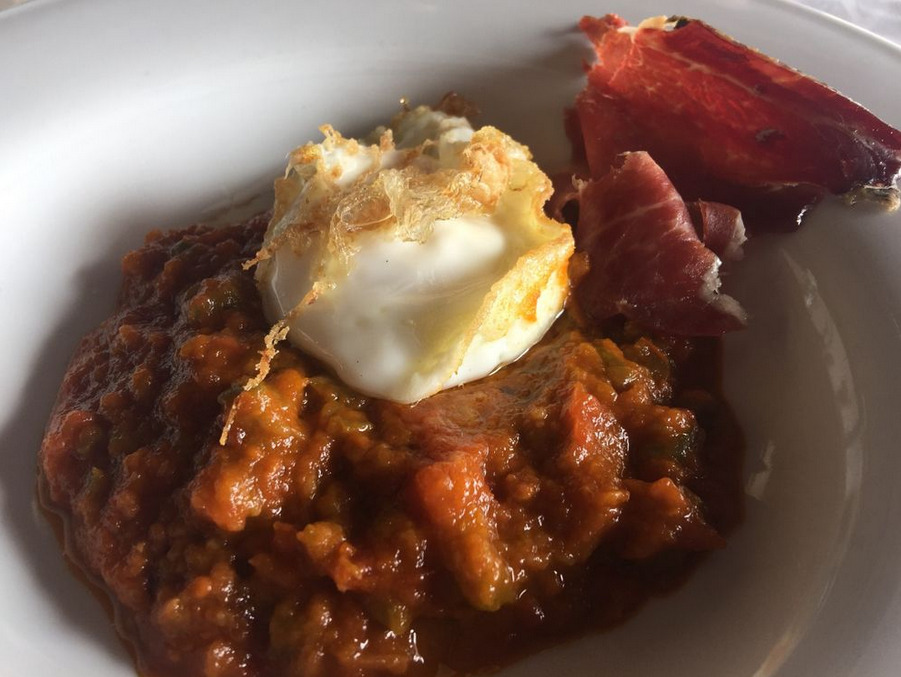
The fair days are an exceptional opportunity to taste the gastronomy of this land. The cuisine of Albacete is marked by tradition: shining brightly within it is the Mancia gazpacho. The menu to choose from is extensive and evocative: galianos, atascaburras, migas ruleras, marinated partridge, gachas, lamb stew, lomo de orza, ajo mataero, pisto, asadillo, game, cheeses.
For dessert miguelitos de La Roda, sweet rolls, Almansa delights, borrachos de Minaya or fried flowers. All of this is of course washed down with good wines from La Mancha, Manchuela, Almansa or Jumilla, denominations of origin into which the renowned vineyards of the province are divided.



, the name Muslims used for a small rural settlement.)