


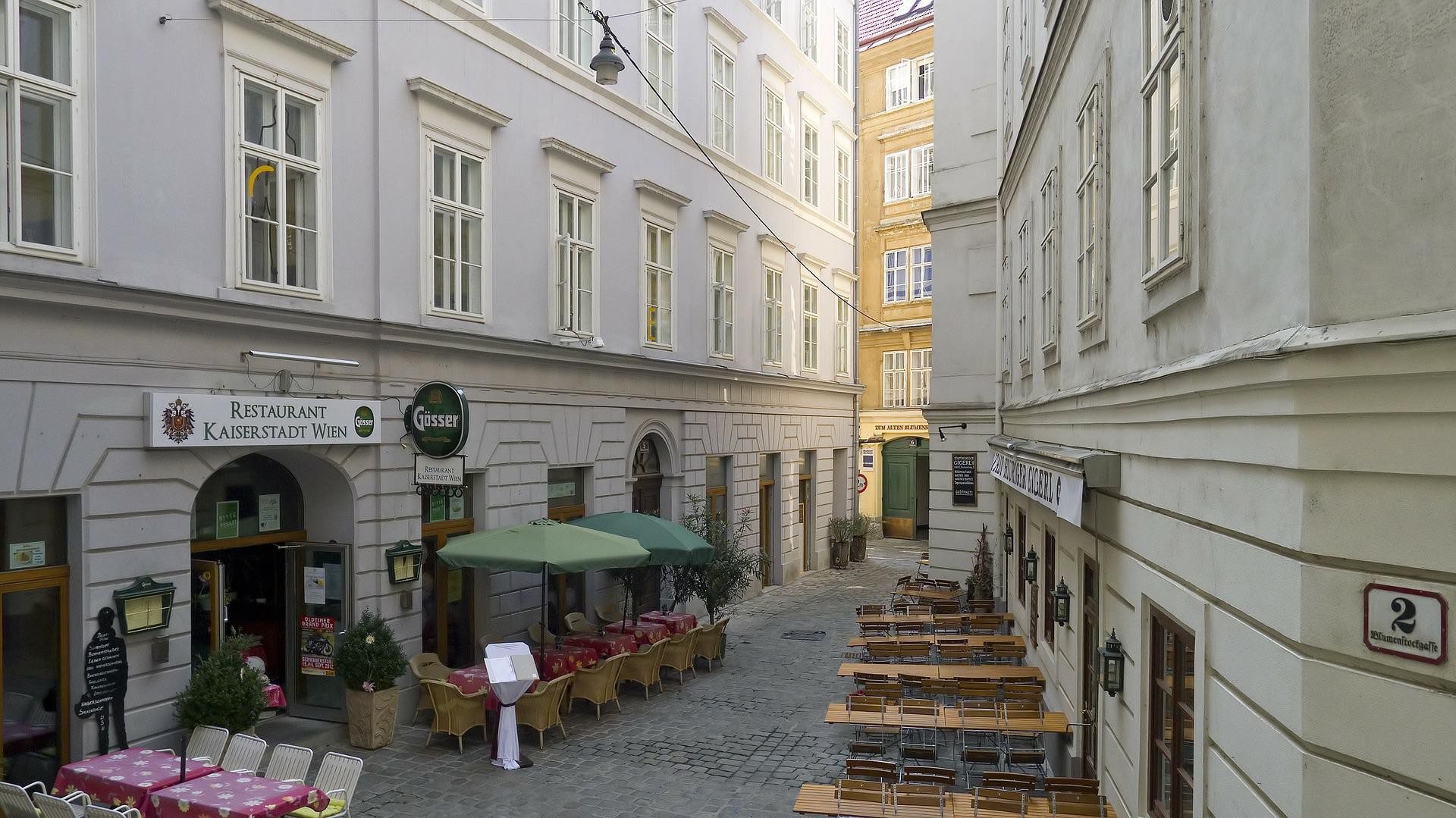
Vienna is a wonderful city, romantic and full of art, an ideal destination for a weekend full of beauty. Every corner of the historic center is delightful, so aside from the most famous monuments, simply looking around satisfies both the eyes and the spirit.
Spending a few days in Vienna, even just for a weekend, is a pleasant way to unwind. To enjoy it fully, you only need two things: book a hotel in the center, preferably in the Innere Stadt, and wear comfortable shoes, because Vienna allows you to see so much on foot without the need for long and exhausting transfers.
If you have never been to Vienna, you cannot miss its main monuments, the St. Stephen’s Cathedral and the Hofburg.
St. Stephen’s
St. Stephen’s has medieval origins and its Gothic forms are clearly visible outside. Its roof, characterized by zigzag patterns of colored tiles, is one of the city’s landmarks. The interior decoration has had successive layers and is predominantly Baroque. Just outside the Cathedral, at the beginning of the elegant Graben, you will find the Pestsaule, a monumental column commemorating the victims of the 1679 plague.

Hofburg: the Habsburg winter palace
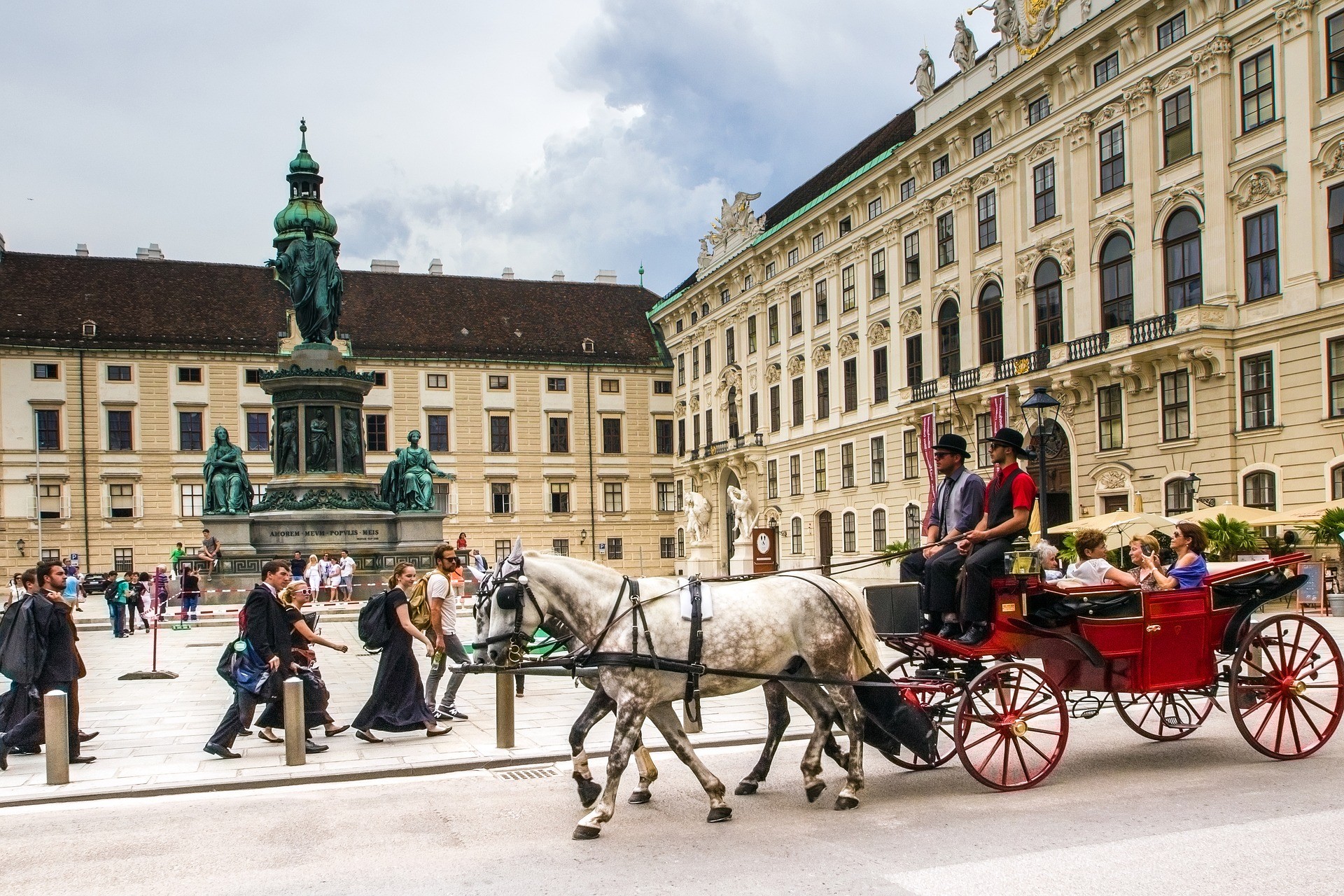
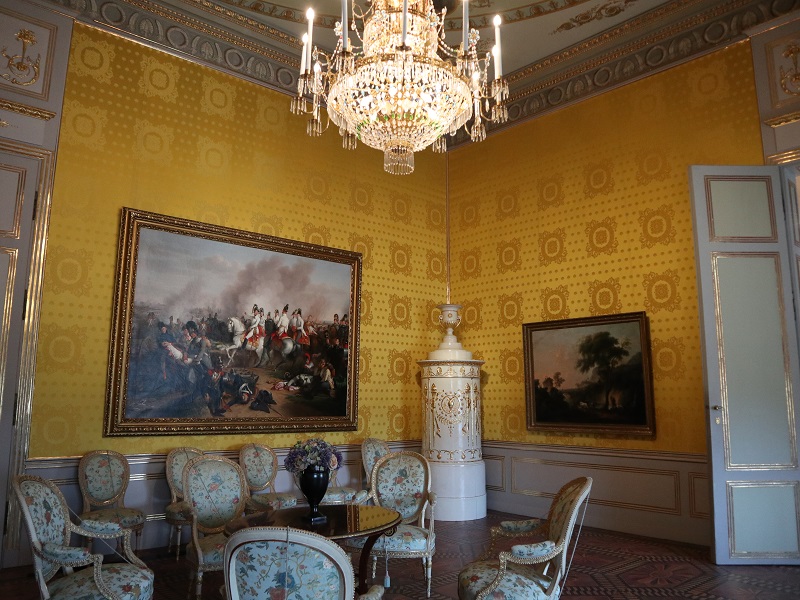
The Hofburg is the Habsburg winter palace. Its visit is essential to learn more about the lives of the legendary Franz Joseph and his wife Elisabeth of Bavaria, better known as Sissi. The tour begins with the Sissi Museum, where clothes, jewelry and writings belonging to the empress are displayed, and then leads us to the imperial apartments. Next to the representative rooms, including the beautiful dining hall set up as for an official banquet, there are more intimate rooms like Franz Joseph’s study and Sissi’s bedroom.
A curiosity: the empress was a great health enthusiast, so her room is equipped with gym tools for daily exercises. Inside the Hofburg, visitors can deepen their knowledge of the imperial world with visits to the silver collection, the State Library, and the Spanish Riding School, where the beautiful Lipizzaner white horses are trained.
The Ring is the ring of roads following the perimeter of medieval fortifications. It encloses the Innere Stadt, literally “inner city,” the oldest core of the city. A walk along the five kilometers of the Ring boulevards allows you to admire numerous monuments and relax in the greenery of adjacent parks.
Starting from the Schottenring, at the corner with the Danube bank, you encounter the Stock Exchange building. Founded by Empress Maria Theresa in 1771, the Vienna Stock Exchange is one of the oldest in the world. At the corner with Universitatsring, the Votivkirche imposes itself on our view, a Neo-Gothic church built by Archduke Maximilian as a votive offering for the failure of the assassination attempt against his brother Franz Joseph. Inside, there is a four-meter-high candle that could stay lit perpetually for a hundred years.
The next avenue, Universitatsring, owes its name to the presence of the main campus of the University of Vienna. Continuing, you find the Rathaus, the Neo-Gothic city hall, in front of which the Christmas market is held in December. Opposite the Rathaus is the Burgtheater, the city’s most important theater after the Staatsoper. The ceiling of the grand staircase is frescoed by Gustav Klimt, who, together with his brother Ernst and Franz Matsch, early in his career earned a solid reputation as a painter of monumental public interiors.
Continuing on the Doktor Karl Renner Ring, you can admire the Neoclassical Parliament building, while on the opposite side you can relax in the Volksgarten, a public park opened in the 19th century.

Burgring
The Burgring is one of the most majestic parts of the Ring: on the right, you can admire the twin buildings of the museums at Maria Theresien Platz, while on the opposite side opens the spacious Heldenplatz with the Hofburg buildings, followed on the Opernring by the Burgarten, a park characterized by a large Art Nouveau greenhouse. The visitor has no respite because right after appears the majestic facade of the Vienna State Opera, one of the most important opera houses in the world.

Kartner Ring
Along the Kartner Ring are some of the city’s historic luxury hotels, while on the right side of the entire Parkring stretches the Stadt Park, crossed by a canal fed by the Danube. The final boulevard of the Ring, Stubenring, is devoted to applied arts. On it, there is the University of Applied Arts, but especially the MAK, Museum fur Angewandte Kunst, with its valuable collections of furniture, furnishings, and textiles from the Middle Ages to today.
The boulevard that closes the Ring along the Danube is the Franz Joseph Kai. You can choose to walk it or enter here the Wolfgang Schmitz Promenade, the pedestrian promenade along the river.
Just beyond the Ring, but still walkable, there are other places worth visiting. Just outside the Opernring, you can easily access the Secession, the pavilion created by members of the eponymous art movement to exhibit their works. Inside you can see the Beethoven Frieze, created by Gustav Klimt as a visual accompaniment to the Ninth Symphony by the great German composer.
Just beyond opens the Karlsplatz, characterized by the beautiful Baroque Karlskirche, and surrounded by important monuments and museums, such as the Kunsthalle, the Albertina Modern, and the Wien Museum, not to mention the Musikverein, the music association whose theater hosts the famous New Year’s Concert every year.

Continuing beyond Karlsplatz, you reach the Belvedere, the Baroque imperial palace that hosts a beautiful art collection, whose highlight is the collection of Klimt paintings, the most important worldwide, including The Kiss and Judith.

If you don’t want to miss visiting at least one museum, Vienna offers a wide choice. The MAK and the Belvedere have already been mentioned. In Maria Theresien Platz, two large twin buildings house the Kunsthistorisches Museum and the Naturhistorisches Museum, respectively. Both founded by Franz Joseph, the first is dedicated to art history, from antiquity to the 20th century, organized into five areas: Egyptian-Oriental antiquities, classical antiquities, Kunstkammer (art objects), painting gallery, and numismatics. Here too, the frescoes on the main staircase are by the Klimt brothers and Franz Matsch. The Naturhistorisches Museum is dedicated to natural history and hosts, among others, the Venus of Willendorf, a mother goddess created about 25,000 years ago.
The Albertina is a museum created from the collection of graphic works by Duke Albert. Its collection, which recently added a photography section, is so vast that most works are presented in rotation, often in thematic exhibitions. Recently, twenty rooms of the original residence have been restored and opened.
Just outside the Ring, the Museums Quartier was recently created where stand out the Leopold Museum, with its collection of Viennese 20th century artists, including a large selection of works by Egon Schiele, and the Mumok, the Museum of Contemporary Art focused on 20th-century artistic movements.
Even those who love smaller and specialized museums will not be disappointed. I like to recommend the Papyrus Museum, unique in its kind, where, among other things, you can admire a very rare Greek musical score of a chorus from Euripides’ Oresteia.
A pleasant weekend can also include some shopping and time spent dining. The elegant shopping streets of Vienna are mainly those near the Cathedral: Kartner Strasse, the Graben and Kohlmarkt. Just outside the Ring, starting from the Museums Quartier, there is the Mariahilfer Strasse, where you can find the most common high street fashion names.
Among Vienna’s most typical products are the precious Augarten porcelain and chocolate and sweets. Vienna has a real cafe culture and this experience cannot be missed. One of the best Viennese cafes is the Cafe Central, in the elegant Palais Ferstel. You can also taste the national cake, the Sacher, where it was born, at the Cafe of the Hotel Sacher, near the Opera House.

Regarding cuisine, the most Viennese dish of all is the Wiener Schnitzel, a fried veal cutlet similar to the Milanese. Very popular are also Tafelspitz, beef cooked in wine with spices and vegetables, and dishes of Hungarian origin, such as goulash. These are true culinary staples that can be enjoyed everywhere without ever being disappointed by the results.