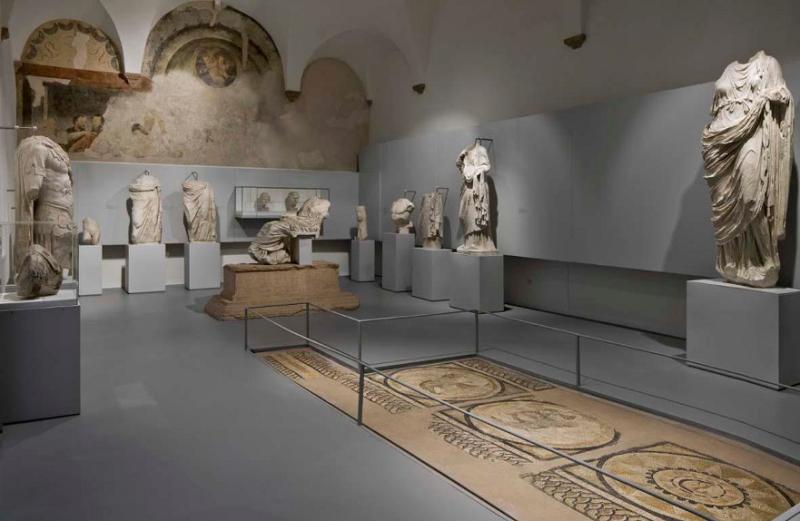


This museum tells the story of a land between water and earth, transformed over the centuries by natural phenomena and human activities. The exhibition begins with objects that reveal the intense trade relations in the lagoon dating back to the Mycenaean era (2nd millennium BC), and leads visitors through Venetian, pre-Roman, Roman, Byzantine, and early medieval finds, up to the splendors of the Serenissima and into the 19th century.
The Archaeological Section brings together artifacts discovered in the lagoon area and the Altinate hinterland, in addition to pieces from private collections such as its group of Egyptian bronze and ceramic statuettes, offering a timeline from the Paleolithic era to late Roman times. There is a remarkable assortment of Greek, Italiote, and Etruscan ceramics from the 7th to the 4th centuries BC, showcasing a variety of decorative techniques and styles.
The Roman ceramics collection, although modest in size, stands out for its quality: it includes funerary tableware, kitchenware, goblets and cups, as well as a range of oil lamps. Protohistoric human and animal-shaped bronzes, of Etruscan, Italic, and Paleovenetian origin, were used for religious and funerary purposes, alongside items of personal use and adornment such as fibulae and mirrors. Sacred Roman bronzes from household shrines, tableware, everyday tools, as well as decorated plaques and antefixes from sanctuaries in central and southern Italy also feature in the museum.
Thanks to Venetian collectors, the museum houses small-scale Greek sculptures, Roman copies, and reinterpretations of Greek originals, as well as funerary monuments and portraits from the Altinate area. Roman-era urns, altars, and grave markers complete the archaeological sculpture section.
The Medieval and Modern Section showcases works and documents dating from the 6th century to the 1800s. Stone materials and architectural fragments highlight deep cultural and artistic ties with the Byzantine Empire, both through imported masterpieces such as the splendid 6th-century holy water stoup and a variety of bronze enkolpions, medals, and fibulae, and in the enduring influence of Byzantine decorative motifs in locally made objects. From Torcello’s basilica, the museum preserves beautiful wall decoration fragments and a 13th-century gilt silver altar piece—one of the few surviving examples of its kind in the lagoon area.
The local wood carvings, Byzantine icons, and 14th-15th century panel paintings on sacred subjects reach their peak in the gilded and polychrome bas-relief “Pietà” and the painting of Christ on the Cross, which displays clear Tuscan influences. The memory of lost Torcello and its demolished churches is preserved in works such as the Annunciation, the Adoration of the Magi, monochrome panels with stories from the Virgin’s life, and the narrative of Saint Christina by the school of Veronese, all originally from the Church of St. Anthony in Torcello.
Echoes of the social and working life on Torcello and the now-submerged islands remain in everyday pottery shards, coins, glassware, cooking tripods, and factory waste—testimony to the island’s artisan workshops and busy kilns.