




Nearby, the Rome mint later arose, named precisely “Moneta” because it was built next to a staircase with a column adjacent to the temple: hence the name “moneta” which we still use for money. The Mint, perhaps following the fire of 80 AD, was rebuilt at the foot of the Caelian Hill: its remains have been identified beneath the current basilica of St. Clement. From Capitoline Hill square, two staircases built according to Vignola’s design between 1547 and 1552 lead, respectively, to the “Capitolium” and to the church of Santa Maria in Aracoeli.
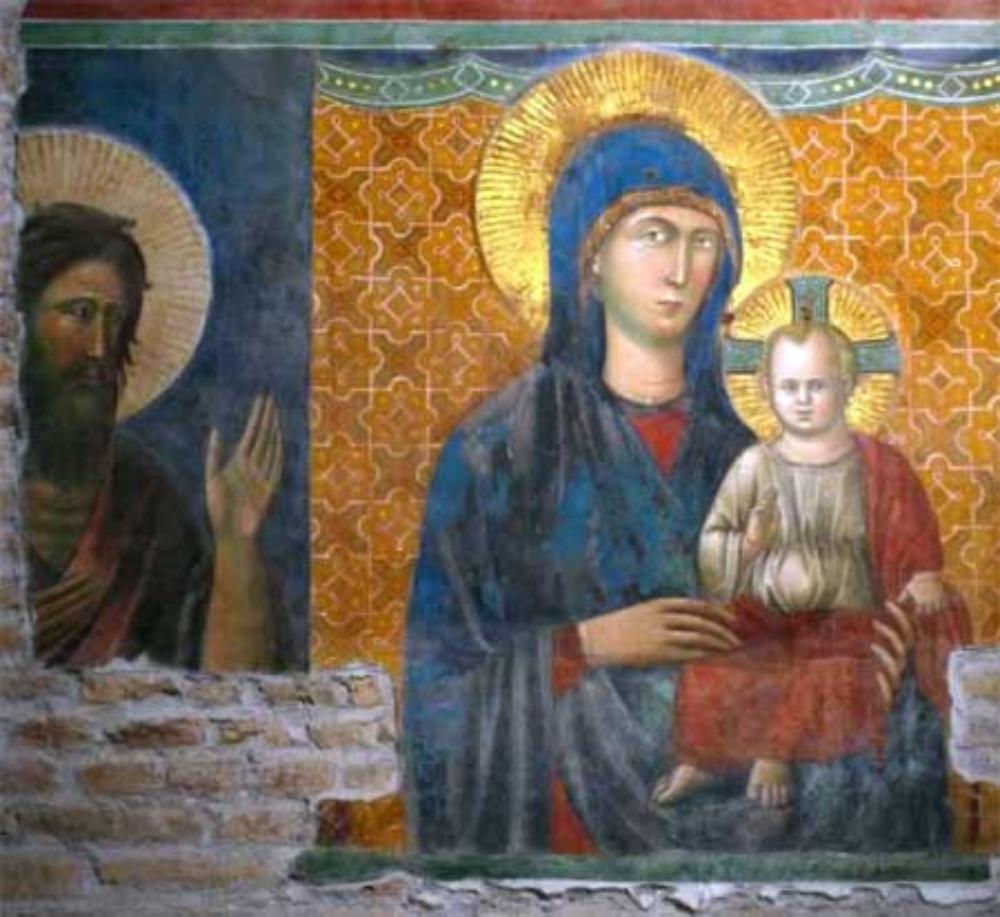
At the top of the staircase, a column with a Corinthian capital and cross was erected to commemorate the earthquake of 1703 that caused much fear but few damages. Little is known about the origin of Santa Maria in Aracoeli, but as early as 880 it was remembered as “S. Maria in Capitolio” (the term “in Aracoeli,” a Romanesque corruption of Arx Capitolina, appeared only in the 14th century); it was even said to have been founded by Gregory the Great in 590. Certainly, a Romanesque style church was built in the mid-12th century with the entrance facing the Asylum, featuring the beautiful fresco of the “Madonna and Child between two Angels.”
The new orientation was the work of the Franciscans, and the new Gothic-style church was inaugurated in 1348 together with the staircase. In the Middle Ages, the church became almost the new forum of Rome: Cola di Rienzo spoke to the people there; Charles of Anjou held meetings with Romans; the Guelphs of Rome defended themselves there against Emperor Henry VII; city Caporioni elections were also held there. Its civic and religious character was profaned during the French occupation and the Republic of 1797, when the church was desacralized and used as a stable.
It was rehabilitated at the end of Napoleonic Rome, but after 1870 it was at the center of demolition works for the construction of the Vittoriano and barely survived, while the ancient sacristy, the convent, and the Tower of Paul III behind it were demolished. The façade, with its vast surface of naked brick, was once covered in mosaics and frescoes, unfortunately lost; there were also three rose windows above the portals, but the central one, in the Jerusalem cross shape, was removed during Pope Urban VIII’s pontificate (1623-44) to insert a stained glass window featuring the Barberini bees, as we can still admire today.
The clock is also missing, the first installed in Rome in December 1412, created by master Ludovico da Firenze, who built its mechanism, and master Pietro da Milano, who installed the bell. This was so important that a special office called “moderatores horologii” was established, entrusted to the brothers Domenico and Fabio della Pedacchia.
Originally, it was located on the left side of the façade, then in the center, and finally moved to the façade of the Palazzo Senatorio in 1806: its display remained until 1886 but today only the hole remains. The 122 columns dividing the church interior into three naves were recovered from various ancient buildings: the inscription on the third column from the left, “a cubicolo Augustorum,” suggests it came from the emperor’s bedroom on the Palatine Hill, where the imperial palace was.
The ceiling, decorated with naval motifs, commemorates Marcantonio Colonna’s victory at the Battle of Lepanto in 1571 and was created under the papacy of Gregory XIII Boncompagni, whose family crest, the dragon, is visible at the altar’s end.
The church is accessed via a staircase of 124 steps (122 if ascending from the right side), inaugurated, according to legend, by the tribune Cola di Rienzo in 1348 and made by Lorenzo di Simone Andreozzi at the expense of the Roman people, as thanks to the Virgin for saving the city from the plague; it reportedly cost 5000 florins. The church, however, is especially famous for the “Holy Child” — a wooden sculpture from Monte Oliveto baptized in the Jordan River, according to tradition.
Since 1591, this popular legend has excited the people because the Child is believed to possess miraculous powers.



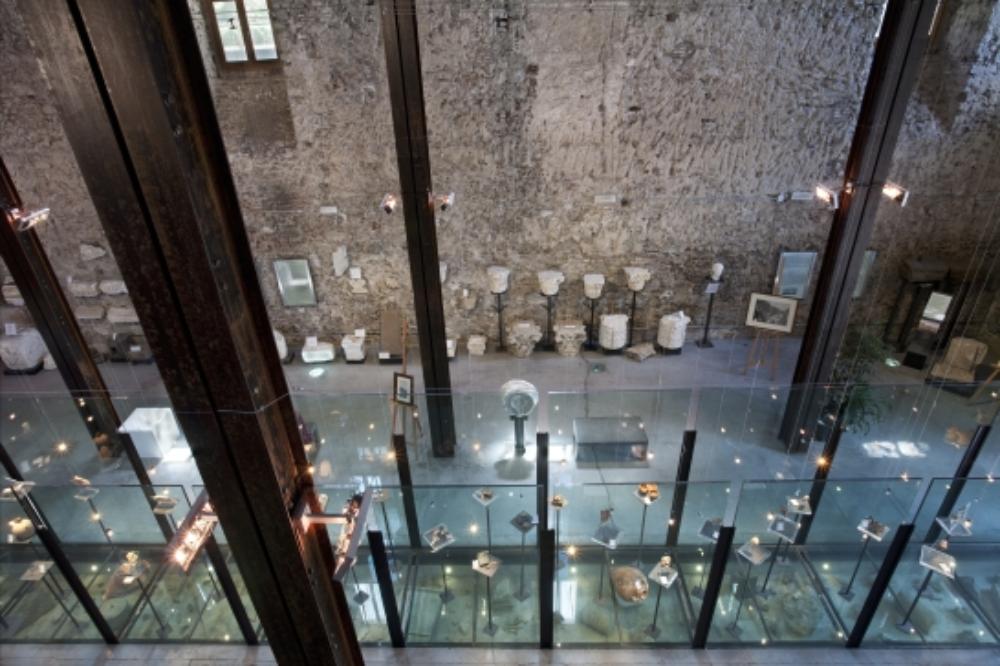
, where the ancient temple of Juno Moneta (meaning "warner") once stood. The temple dates back to 343 BC and was founded by Camillus after a victory against the Aurunci.)