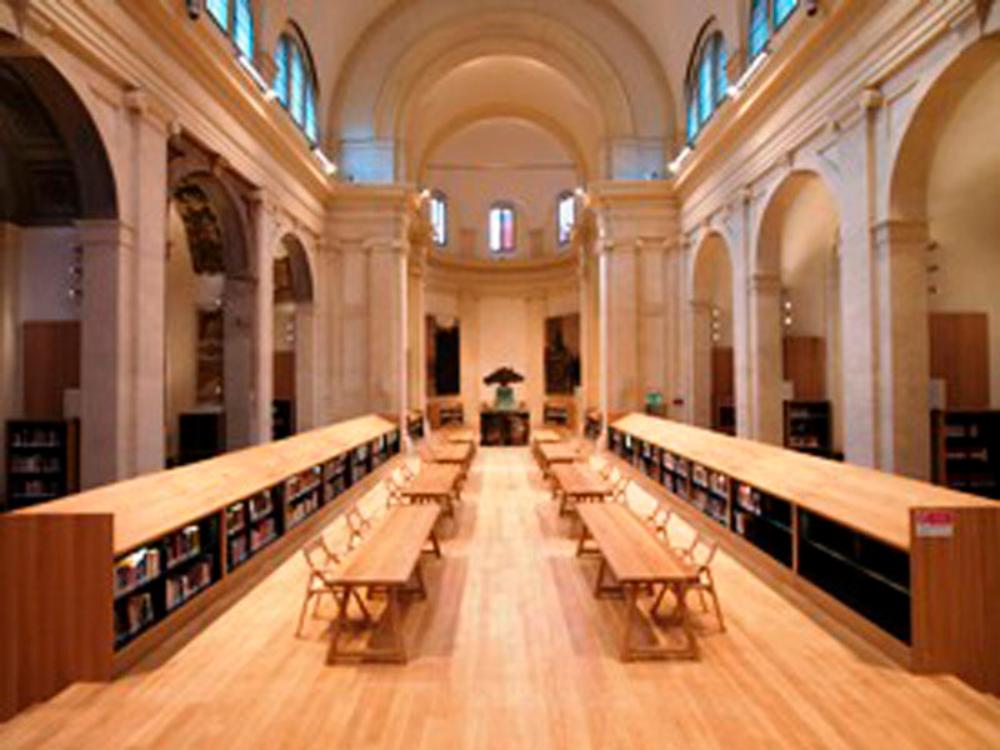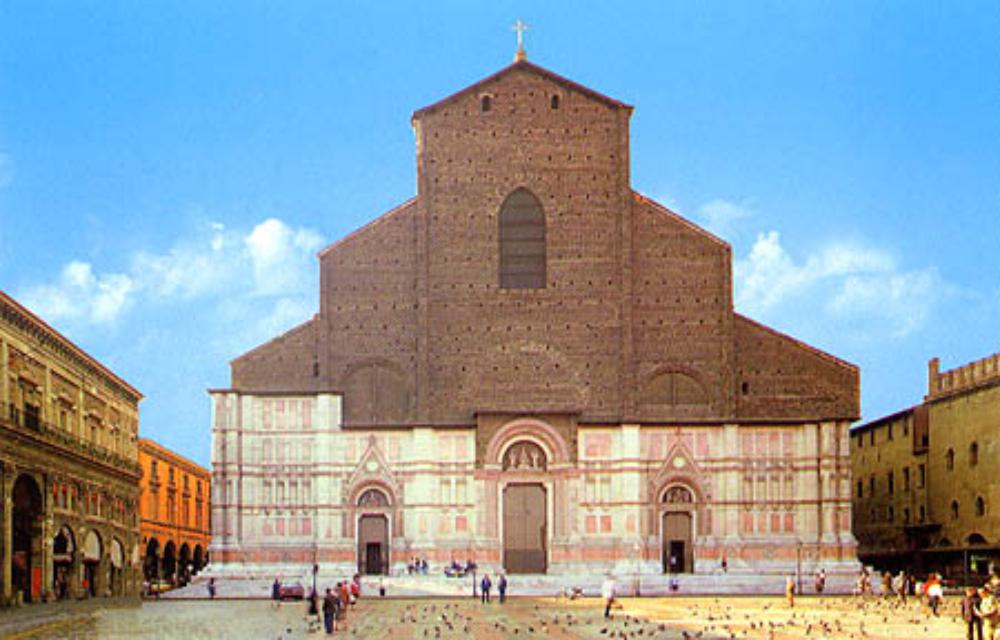


The museum’s collection was arranged by Tito Azzolini in 1894 in two rooms on the ground floor of the Fabbriceria of the Basilica of San Petronio, where in the 16th century the original core of the collection had been displayed, consisting of the designs for the completion of the facade proposed by Peruzzi, Giulio Romano, Vignola, Cristoforo Lombardi, Domenico Tibaldi, Palladio, and Terribilia.
The same section included the wooden model by Arriguzzi from 1513, the two wooden and stucco models for the central vault, made by Floriano Ambrosini in 1592. In addition to documentation on the San Petronio construction site, the museum preserves artworks, liturgical objects, illuminated graduals, and antiphonaries.
Particularly valuable are the choir books of Martino da Modena, G.B. Cavalletti, and Taddeo Crivelli (15th-16th centuries); four reliefs by Properzia de Rossi (1525), the marble statue of ‘St. Proculus’, with the upper part attributed to Alfonso Lombardi, and the instruments for the Cassini sundial (1655), restored by Eustachio Zanotti.
Among the most interesting goldsmith works are two caskets from the Embriachi workshop (15th century) and a silver repoussé processional cross by the Bolognese artist Battista del Gambaro (1547), as well as precious reliquaries, including the Reliquary of Saint Rosalia and Saint Anthony of Padua. On the first floor of the Fabbriceria is the archive of the famous Musical Chapel of St. Petronio, with manuscripts from the 16th to the 19th centuries. On the second floor are preserved two panels by Simone dei Crocefissi, fragments of frescoes, and a plan of the basilica attributed to Arriguzzi.