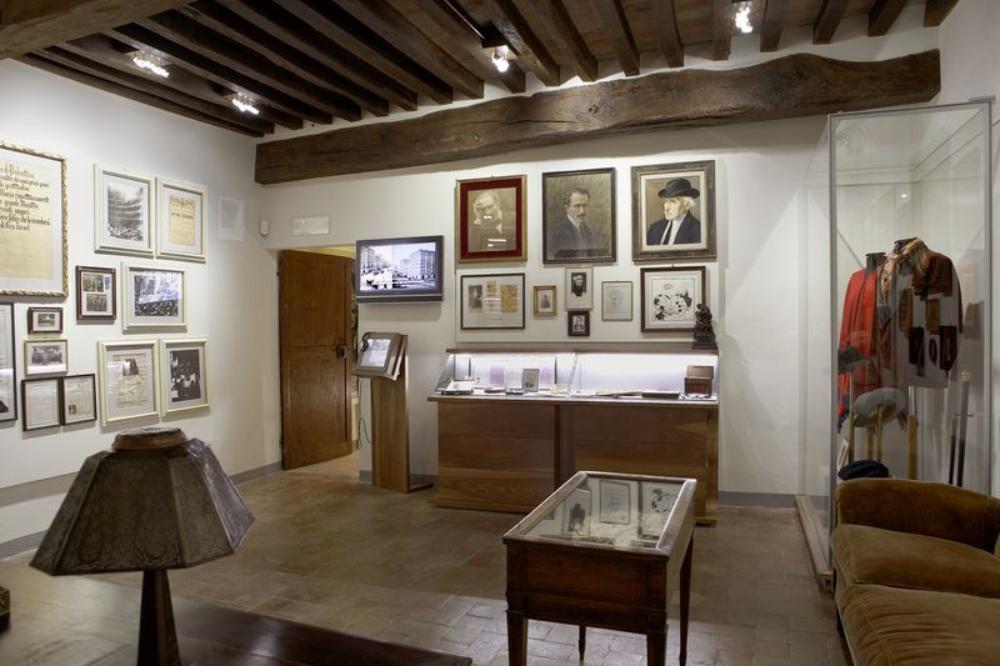
Originally established in 1966 at Palazzo Salina Brazzetti on via Barberia in the historic center of Bologna following the founding of the homonymous Association, since 1990 it has been located in the neoclassical Villa Spada. The collection of precious artifacts, started by the founder, Cavalier Vittorio Zironi in 1946, just after the end of the Second World War, clearly reflects the founder’s great sensitivity toward everything that at that time escaped the protection of the relevant authorities; after twenty years of diligent research, the collection was exhibited to the public in the first museum location. The original core of the collection, expanded by Cavalier Zironi himself until the late 1990s, has also been enriched by important donations made by public entities and private collectors, who thus aimed to ensure adequate preservation for these precious artifacts. Through ten rooms, the exhibition route is arranged into various sections dedicated to different types of fabrics of Italian and French production from the 16th to the 19th century, including lace, embroidery, sacred vestments, garments, flags and banners, leather, trimmings, looms, and upholstery tools. Inside, there is also a restoration laboratory and a library with a study center. The heritage consists of a vast collection of fabrics for furnishings and clothing, equipment and looms (the large Lombard loom from the 1700s, transformed in 1801 into the Jacquard system, and a very rare 1370s galloon loom), 17th-century oak wooden blocks for embossing leather, and various furnishing accessories, all organized by type in the museum rooms. Thanks to many public and private donations, the banners of ancient Bolognese guilds that adorned Piazza Maggiore, entrusted by the Municipality of Bologna, are present; the archetypes used along with designs and works made by the Romeyne Ranieri di Sorbello school, donated by the Uguccione Ranieri di Sorbello Foundation; the complete archive of the Bolognese artist Guido Fiorini (1879-1960), decorator, painter, and graphic artist of Aemilia Ars, delivered to the museum by his nephew and complemented by the historical documentary archive of Aemilia Ars, a donation from Mrs. Flavia Cavazza, heir of the founder. The oldest core of the collection, the very rare set of 64 Coptic fabric fragments, is instead the result of patient research and acquisitions made by founder Cavalier Vittorio Zironi, enriched in 1990 by a donation from architect Erminia Rubini.
Information about the Vittorio Zironi Upholstery Museum
Via Casaglia, 3,
40121 Bologna (Bologna)
0516145512
museotappezzeria@iperbole.bologna.it
Source: MIBACT