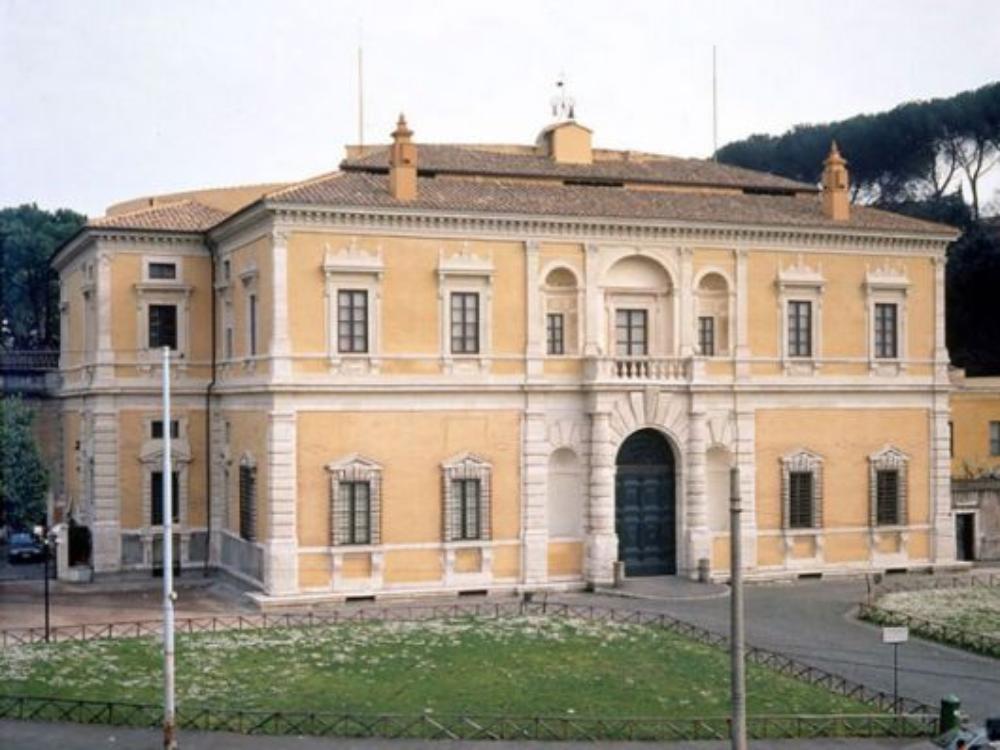


The project and realization involved the greatest artists of the era: Giorgio Vasari, Jacopo Barozzi da Vignola, and Bartolomeo Ammannati. Since 1889, it has housed the Villa Giulia Museum which, originally established as the Museum of Pre-Roman Antiquities, particularly of the Faliscan culture, can today be defined as the most representative Etruscan Museum, rich in artifacts from Southern Etruria, that is, the territory between the Tiber River and the Tyrrhenian Sea (northern Lazio).
It contains some of the most important examples of Etruscan art alongside highly refined Greek creations, imported into Etruria between the 8th and 4th centuries BC. The exhibition of the works follows a topographical criterion: alongside major Etruscan centers such as Vulci, Cerveteri, Veii, there are also represented smaller sites of pre-Roman Italy (Agro Falisco, Latium Vetus, Umbria).
The exhibition also boasts extensive antique collections formed by the core of the 17th-century Kircherian Museum, materials from the Barberini, Pesciotti Collections, and especially from the extremely rich Castellani collection composed of ceramics, bronzes, and the famous ancient and modern goldsmith works, the latter made by the Castellani themselves, jewelers among the most renowned in Rome in the second half of the 19th century.
Famous worldwide are the Sarcophagus of the Spouses from Cerveteri (6th century BC), the terracotta statue of Apollo from Veii (6th century BC), the bas-relief and gold tablets in Etruscan and Phoenician languages from Pyrgi (5th century BC), the Apollo of the Scasato from Falerii (4th century BC), the Centaur in nenfro stone from Vulci (6th century BC), and the Orientalizing complexes from Palestrina (7th century BC).