


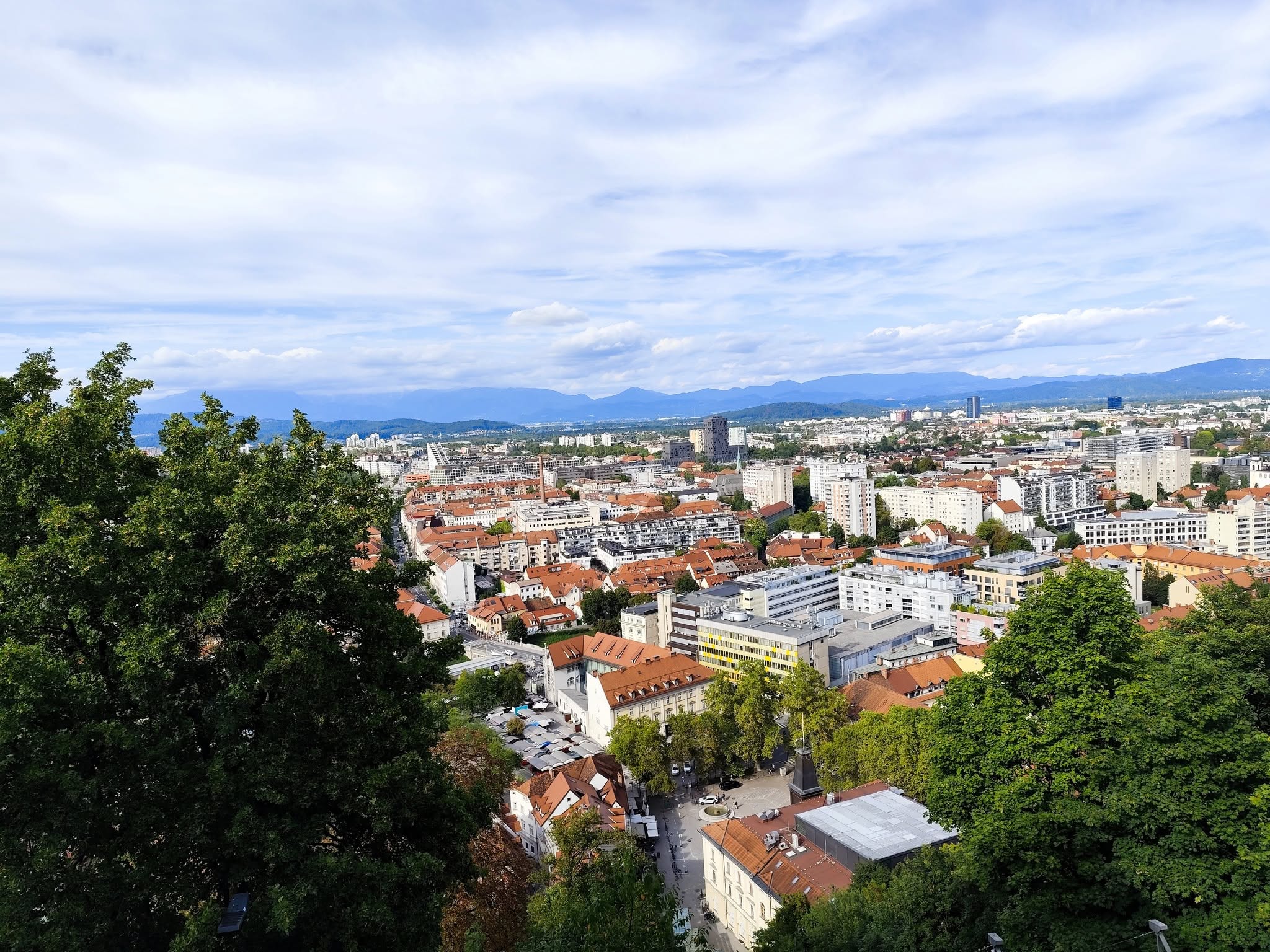


Ljubljana in 2 days is one of the best ideas for anyone looking for an alternative European weekend—easy to plan and able to combine history, nature, a slow-paced atmosphere, and a surprisingly high quality of life. The Slovenian capital is compact, green, elegant without being overly monumental, and lively without being chaotic. It’s easy to explore on foot, invites you to slow down, and has that small-scale dimension that lets you truly enjoy it even with little time.
- Ljubljana in 2 days: why it’s the perfect weekend getaway
- How to plan a 2-day itinerary in Ljubljana
- Ljubljana in 2 days: a quick itinerary
- Day 1 in Ljubljana: Old Town, bridges, and the Castle
- Morning: Prešeren Square and the Triple Bridge
- The Old Town along the Ljubljanica
- St. Nicholas’s Cathedral and the Central Market
- The Dragon Bridge, a photography icon of the city
- Lunch break in the Old Town
- Afternoon: Climb to Ljubljana Castle
- Evening: Dinner and stroll along the Ljubljanica River
- Day 2 in Ljubljana: markets, creative districts, museums, and parks
- Morning: Leisurely breakfast and a return to the market
- Metelkova: Ljubljana’s alternative side
- Museums and culture: what to choose if you’re short on time
- Tivoli Park: Ljubljana’s green side
- Last hours in the city: coffee, shopping, and riverside views
- If you have more time: what to see beyond Ljubljana
- Lake Bled, the classic excursion from Ljubljana
- Postojna Caves and Predjama Castle, if you love spectacular scenery
- Piran, if you want to reach the Slovenian sea
- Maribor, if you want to discover another Slovenian city
- Where to stay in Ljubljana for a 2-day itinerary
- How to get around Ljubljana in 2 days
- When to go to Ljubljana for a weekend
- Ljubljana in 2 Days with Children
- Ljubljana in 2 Days if It Rains
- Ljubljana in 2 Days: A Romantic Itinerary
- How Much Does a Weekend in Ljubljana Cost?
- Practical Tips for Visiting Ljubljana in 2 Days
- Ljubljana in 2 Days: Is It Worth It?
Two days are certainly not enough to discover all of Slovenia, but they are plenty to get into the rhythm of Ljubljana: strolling along the Ljubljanica, crossing the Triple Bridge, climbing up to the Castle, stopping at the market, exploring creative neighborhoods, enjoying a coffee outdoors, and letting yourself be surprised by a capital seemingly designed to be savored without haste.
This itinerary is ideal for first-time visitors to Ljubljana who want to make the most of a weekend, but also for those including the city in a wider tour of Slovenia. If you want to delve deeper into the capital’s main attractions, neighborhoods, and landmarks, check out our complete guide on what to see in Ljubljana. If you have more time, you’ll find a broader itinerary in the article dedicated to Slovenia in 7 days: DIY itinerary.

Ljubljana in 2 days: why it’s the perfect weekend getaway
Ljubljana is a perfect city for a short trip because it packs so many experiences into a relatively small area. The historic center is compact, largely pedestrian, cut through by the river and dotted with bridges, squares, cafes, markets, and picturesque views. There’s no need to rush from one place to another: the beauty of the city lies in walking, stopping, observing, and moving on at your own pace.
The Slovenian capital has a unique identity. It doesn’t have the theatrical grandeur of Vienna or Prague, nor the hustle and bustle of large European capitals. Its charm is more understated: it comes from pastel-colored facades, riverside cafes, Art Nouveau details, Jože Plečnik’s architecture, open-air markets, the dragons guarding the bridges, and the ever-present greenery.
Visiting Ljubljana in two days means planning a balanced itinerary: the first day can be dedicated to the historic heart of the city, the Castle, and the riverside walk; the second day can be spent exploring museums, parks, alternative neighborhoods, and—with some extra time—excursions outside the city. The important thing is not to turn your weekend into a race. Ljubljana is best enjoyed at a slow pace.
How to plan a 2-day itinerary in Ljubljana
To visit Ljubljana in 2 days, it’s wise to choose accommodation in the city center or at least within easy walking distance of the historic core. Getting around the city is straightforward: many of the main attractions are clustered around Prešeren Square, the Triple Bridge, the Cathedral, the Central Market, Dragon Bridge, the Castle, and the riverside along the Ljubljanica.
If you’re arriving by car from Italy, it’s a good idea to plan parking and traffic in advance. Slovenian highways require knowledge of the e-vignette rules—for this, check our guide to the Slovenia motorway sticker and our in-depth article on the vignette for traveling in Slovenia.
If you’re arriving by train or bus, the city center is easily accessible and you won’t need a car to explore. Ljubljana is a people-friendly capital: the historic center is almost entirely walkable, and you can reach the Castle either by funicular or on foot if you want to add a bit of activity to your itinerary.
Our advice is to divide the weekend into two distinct moods. The first day should be devoted to classic, scenic Ljubljana: squares, bridges, the market, the Castle, and an evening walk along the river. The second day can be slower and more personal: Metelkova, museums, Tivoli Park, cafes, off-the-beaten-path neighborhoods and, for those with more time, perhaps an excursion to other parts of Slovenia.

Ljubljana in 2 days: a quick itinerary
Before diving into the details, here’s a simple outline for planning your weekend.
Day 1: Prešeren Square, Triple Bridge, Old Town, St. Nicholas’ Cathedral, Central Market, Dragon Bridge, Ljubljana Castle, dinner and a stroll along the Ljubljanica river.
Day 2: slow breakfast in the city center, Metelkova district, museums or galleries, Tivoli Park, and last views along the riverfront. Alternatively, if you have more time or Ljubljana is just one stop on a longer itinerary, you might consider Bled, Postojna, Piran, or Maribor.
Day 1 in Ljubljana: Old Town, bridges, and the Castle
The first day in Ljubljana is when you first encounter the city. It’s the perfect time to stay in the Old Town, explore on foot, and create a seamless route through squares, bridges, markets, and riverfronts. There’s no need to fill your itinerary with too many stops: the heart of Ljubljana is best discovered slowly, taking time for breaks along the way.
Morning: Prešeren Square and the Triple Bridge
The best place to start a two-day itinerary in Ljubljana is Prešeren Square, the city’s most recognizable square. It’s an open, lively space, constantly crossed by people entering and leaving the Old Town, stopping for a photo or heading towards the river.
From here, you immediately spot one of Ljubljana’s most iconic landmarks: the Triple Bridge. More than just a crossing, it’s a charming urban scene. It connects the modern part of the city to the ancient center and perfectly captures Ljubljana’s character: tidy, pedestrian-friendly, harmonious, built around the relationship between architecture and everyday life.
Stopping here in the morning lets you experience the city as it comes to life. The Ljubljanica riverbanks begin to fill up, cafés open, people cross the bridges, and the colorful facades are lit by the morning sun. It’s a simple but effective start, focusing right away on what makes Ljubljana different from many other European capitals: its human scale.
The Old Town along the Ljubljanica
After the Triple Bridge, the itinerary can continue along the river. The Ljubljanica is not just a geographic feature: it’s the city’s narrative thread. Walking along its banks, you’ll encounter viewpoints, small squares, cafés, boutiques, bridges, and facades that constantly change perspective.
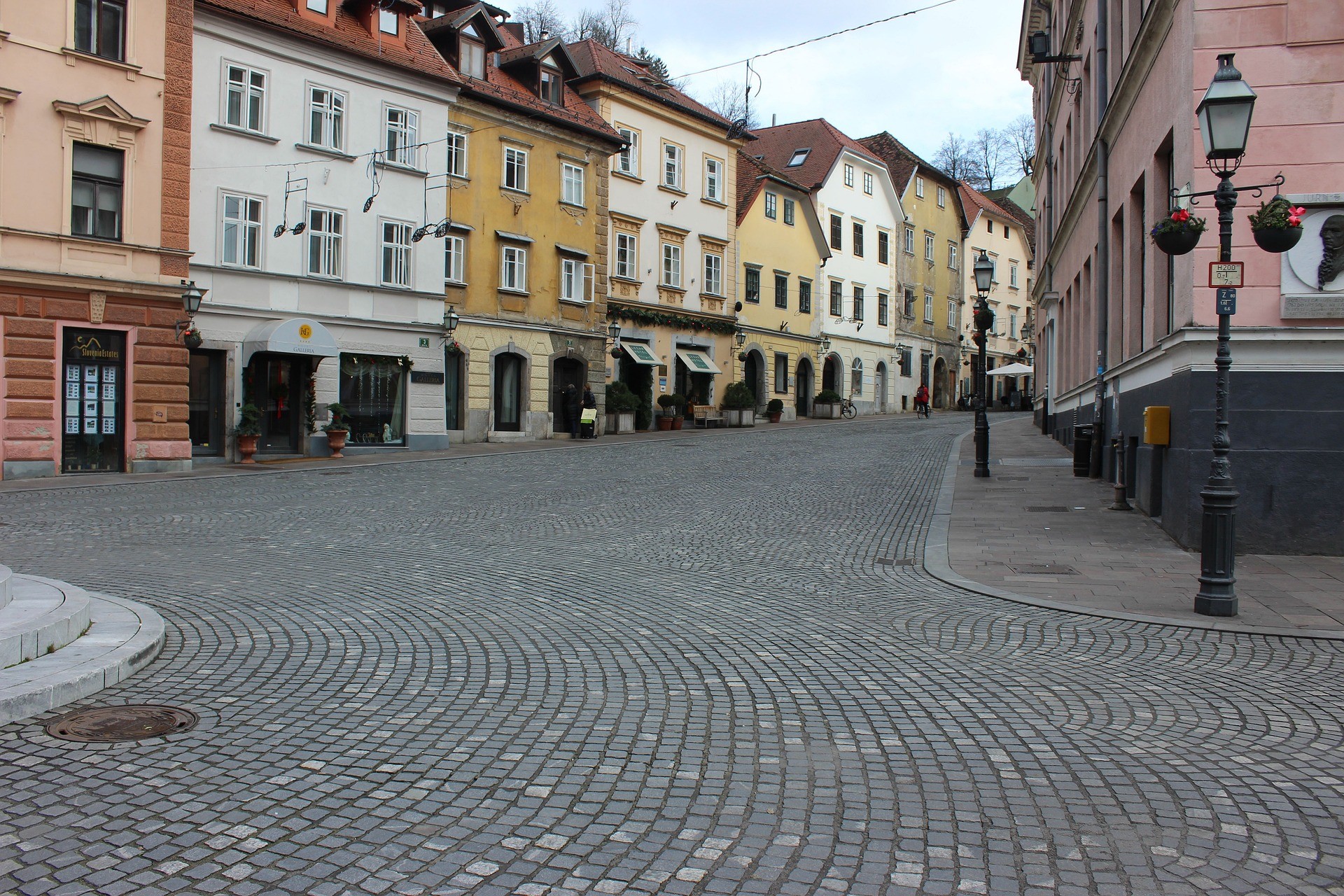
The walk can follow Mestni trg, Stari trg e Gornji trg, three areas of the Old Town that maintain a cozy and pleasant atmosphere. Here, Ljubljana reveals its most elegant side: narrow houses, subtle colors, discreet signs, hidden courtyards, and an urban life that never feels overwhelming.
It’s an area to enjoy without rushing. Photography lovers will find many interesting details: windows, doorways, glimpses of the Castle, reflections on the water, and bridges seen from different angles. Those who simply prefer walking can just follow the river and the natural continuity of the center.
In this first part of the day, it’s best not to head straight into museums or plan lengthy visits. Your first impression of Ljubljana should remain outdoors, among its streets and bridges. For more details on each site, you can also check the guide dedicated to what to see in Ljubljana.

St. Nicholas’s Cathedral and the Central Market
From the Old Town, you can easily reach St. Nicholas’s Cathedral, one of the city’s most important religious buildings. The visit can be brief, but it’s worth a stop as it adds depth to your urban route. Ljubljana isn’t only about leisurely strolls: it also preserves symbolic sites that recount its religious, cultural, and civic history.
A short walk away is the Central Market, one of the most enjoyable stops on your first day. Here, the city feels more lived-in. Stalls, local products, flowers, fruit, vegetables, scents, and voices offer a less touristy, more authentic image of Ljubljana. Even if you don’t plan on buying anything, it’s worth walking through to observe the local rhythm of life.
The market is also a good spot for a break. Depending on the time, you can pause for a snack, a coffee, or just sit and people-watch. On a two-day itinerary, these moments are just as important as the main attractions: they allow you to experience the city as more than just a checklist of sights.
The Dragon Bridge, a photography icon of the city
From the Central Market, it’s an easy walk to the Dragon Bridge, one of the most photographed spots in Ljubljana. Dragons are part of the city’s imagination—they appear in the coat of arms, local legends, and souvenirs. The bridge is short but iconic: often, just crossing it or stopping at its sides shows you why it has become one of Slovenia’s most recognizable symbols.
This is a quick stop, but it fits nicely in your route by bringing the morning dedicated to Ljubljana’s bridges to a close. After Prešeren Square, the Triple Bridge, the riverfront, and the market, the Dragon Bridge adds a more narrative, almost fairytale element to the city’s character.

Lunch break in the Old Town
For lunch, it’s best to stay in the Old Town or along the Ljubljanica. Ljubljana offers a wide range of options, from simple eateries to restaurants serving contemporary Slovenian cuisine, and from informal cafés to thoughtfully curated spots. You don’t have to venture far: staying in the center makes it easy to continue your itinerary without losing momentum during the day.
If the weather is nice, choosing an outdoor table along the river can be one of the highlights of your weekend. The view of the Ljubljanica, the constant flow of people, the Old Town facades, and the intimate city atmosphere make your break a true part of the travel experience.

Afternoon: Climb to Ljubljana Castle
The afternoon of your first day can be dedicated to Ljubljana Castle, which overlooks the city from above. The ascent is one of the most beautiful moments of the itinerary because it allows you to change perspective: after crossing the historic center, you’ll look down on Ljubljana and better understand its compact shape, its relationship with the river, and the greenery surrounding the city.
You can take the funicular, which is quick and convenient, or walk up if you prefer a slower approach. The choice depends on your available time, the season, and your desire to walk. In both cases, the Castle deserves a visit not just for its history, but especially for the panoramic view over the city.
The best time to go up is in the afternoon, when the light starts to soften. If the weather is good, arriving around sunset can make the experience even more evocative. From above, Ljubljana appears neat, green, and bright, with the old town nestled at the foot of the hill and the mountains, on clear days, seeming much closer to the city.
The visit to the Castle can be tailored to your interests. If you’re short on time, you can limit yourself to the outdoor spaces and viewpoints; if you’d like to explore further, you can spend more time inside, visiting exhibitions and historical routes. During a weekend, however, it’s best to avoid packing too many indoor visits into the same day: the Castle should remain a highlight, but not take up the entire afternoon.

Evening: Dinner and stroll along the Ljubljanica River
After visiting the Castle, the best way to end your first day in Ljubljana is to return to the riverside. The city takes on a new look in the evening: the lights reflect on the water, venues fill up, bridges become lively thoroughfares and gathering spots, and the historic center adopts a more intimate atmosphere.
Dining in the center or along the Ljubljanica lets you stay in sync with the city’s rhythm without needing to plan any more relocations. After dinner, it’s well worth taking another stroll. This is when Ljubljana reveals one of its finest qualities: it’s not a tiring city, but one that gently accompanies you.
Your first day can end just like that, without the need to add more stops. In a two-day itinerary, an evening along the river is almost a must—not because there’s something specific to see, but because it allows you to experience the Slovenian capital at its most relaxed.
Day 2 in Ljubljana: markets, creative districts, museums, and parks
Your second day in Ljubljana should have a different pace from the first. After seeing the historic heart, the main bridges, the Castle, and the riverside, it’s time to dive into a slower, more everyday, and contemporary Ljubljana. There’s no need to repeat the same itinerary as before: use the morning to return to the city’s more vibrant spots, then branch out to creative neighborhoods, museums, and green spaces.
This second day is designed for those who want to stay in the city and get to know it better, without turning the weekend into a race. In fact, Ljubljana isn’t a capital to simply tick off monuments and snap photos—it’s a city that works even during quieter moments: a slow breakfast, a market visit, a stroll in the parks, a museum break, an alternative district, one last coffee on the Ljubljanica.
Morning: Leisurely breakfast and a return to the market
Start your second day at a relaxed pace, perhaps wandering back toward the Old Town and the market. Even if you already walked through the day before, seeing it in the morning lets you better appreciate its daily rhythm. Ljubljana changes a lot depending on the time of day: mornings are more local, tidier, and less touristy.
Stopping for breakfast or coffee before heading off again is a great idea, especially if your first day was busy. In two days in Ljubljana, don’t feel the need to “do everything”: an important part of the experience is simply giving yourself time to observe and naturally soak up the city.
The area around the market and the banks of the Ljubljanica is perfect for this slow start. You can see the Triple Bridge in a different light, pass by the Cathedral, stroll back towards the Dragon Bridge, or simply walk with no fixed destination. The second day also serves to cement the city’s image in your mind, not just to add new stops.

Metelkova: Ljubljana’s alternative side
After breakfast, one of the most interesting detours is Metelkova, Ljubljana’s alternative and creative district. It’s a very different place from the historic center: less elegant, rougher, colorful, adorned with murals, installations, cultural spaces, and urban vibes. Don’t see it through the same lens as the Castle or the Triple Bridge: here, it’s the contrast that matters.
Metelkova reveals a younger, more experimental, and less orderly Ljubljana. It’s a spot that will appeal to street art fans, lovers of independent culture, and anyone interested in places that aren’t picture-perfect. By day, it’s worth visiting primarily for its visual impact, photographs, and the curiosity of discovering a side of the city far from the classic postcard image.
It’s not a must-see for everyone, but it’s great if you want to add a contemporary twist to your itinerary. After all, Ljubljana isn’t just historic centers and elegant architecture: it also has creative spaces that showcase a freer, alternative side to Slovenia’s capital.
Museums and culture: what to choose if you’re short on time
If the weather isn’t ideal or you want to add a cultural stop on your second day, Ljubljana offers plenty of museums and galleries. The choice depends on your time and interests. During a weekend, it’s best not to overdo indoor visits: pick one, maybe two at most, and leave time for the city. The National Gallery is a great option for those who want to get into Slovenian art history and experience a more institutional side of city culture. The Museum of Modern Art will appeal to those who prefer more contemporary expressions. The city museums are also useful for understanding Ljubljana’s urban evolution and its place in national history.
The rule for a two-day itinerary is simple: museums should enrich your trip without replacing your experience of the city. If you’re short on time and the sun is shining, you can stick to just one visit. If it’s raining, the museums become a precious resource to keep enjoying Ljubljana without missing out on the pleasure of travel.
Tivoli Park: Ljubljana’s green side
On your second day, it’s worth including Tivoli Park, the city’s main green space. After bridges, squares, markets, and streets in the center, Tivoli lets you see another essential aspect of Ljubljana: its relationship with nature. Ljubljana is often perceived as a green city not just in atmosphere, but thanks to its many parks, pedestrian paths, and accessible outdoor areas.
Tivoli Park is ideal for a leisurely stroll, especially if your weekend falls in spring, summer, or early autumn. It doesn’t need to be a long visit—even an hour’s break is enough to unwind from the old town and soak up a more laid-back vibe. It’s also a great stop if you have kids, as it breaks up sightseeing and allows some movement.
In a two-day itinerary, Tivoli also completes the picture: it enhances Ljubljana’s image as a slow-paced, livable, orderly, and people-friendly capital. After the Castle and riverside walk, Tivoli adds the green touch that makes the city such a pleasure to visit.

Last hours in the city: coffee, shopping, and riverside views
The last hours in Ljubljana shouldn’t be overly scheduled. After visiting the old town, the Castle, the market, Metelkova, a museum or Tivoli Park, the best way to bid farewell to the city is to head back to the Ljubljanica. That’s where Ljubljana finds its most recognizable balance.
You can take advantage of this time for one last coffee, a bit of shopping, to photograph familiar corners in new light, or to sit along the river with nothing to do. On a short trip, it’s often these final moments that linger in your memory: not the race to squeeze in one more sight, but the feeling of having found the city’s rhythm for a few hours.
If your return is in the afternoon or evening, keep this part of your second day light. Ljubljana is a city best left slowly: one last bridge, one last stroll, one last glance at the Castle from the riverbank.
If you have more time: what to see beyond Ljubljana
Two days are enough to explore Ljubljana at your leisure, but the Slovenian capital can also be the gateway for a broader journey through the country. If your weekend extends or Ljubljana is just a stop on a longer itinerary, it’s worth looking beyond the city.
Slovenia is a relatively small but highly varied country: in just a few days, you can go from the capital to alpine lakes, karst caves to the Adriatic coast, natural parks to historic towns. That’s why Ljubljana works well both as a weekend destination and as a launchpad for a more complete trip.
If you’re putting together a longer itinerary, you can find inspiration from our dedicated guide to Slovenia in 7 days: DIY itinerary, designed specifically to link Ljubljana to other highlights of the country.

Lake Bled, the classic excursion from Ljubljana
Among the destinations outside the city, Lake Bled is one of the first places to associate with Ljubljana. It’s the most iconic image of Slovenia: the lake, the island with its small church, the castle perched on the rock, and mountains in the background. If you have an extra day, or if you want to add a nature stop after the capital, Bled is an outstanding choice.
However, it shouldn’t be seen as just a quick addition to tick off in a few hours. The lake deserves time, especially if you want to walk around its shores, hike up to panoramic viewpoints, visit the castle, or simply stop and enjoy the scenery. For those spending two full days in Ljubljana, Bled can be a great extension only if the second day is truly free or if the trip continues beyond the city.

Postojna Caves and Predjama Castle, if you love spectacular scenery
Another very popular extension is the trip to the Postojna Caves and Predjama Castle. This detour offers a completely different vibe from Ljubljana’s urban rhythm: here, your journey enters the karst world, featuring monumental caves, underground landscapes, and architecture set into the rock.

This option is perfect for those who want to add a breathtaking, completely different stop to their weekend. Even in this case, it’s important to weigh your options: if you only have 48 hours, it risks taking too much time away from Ljubljana. But if your trip is longer, it becomes one of the most fascinating experiences to combine with the city.

Piran, if you want to reach the Slovenian sea
Piran isn’t exactly next door to Ljubljana, so it shouldn’t be considered a simple half-day excursion. Still, it’s one of the most beautiful stops to add to a broader itinerary in Slovenia. After the capital, reaching the coast lets you discover a different side of the country: more Mediterranean, bright, and maritime.
Piran’s historic center is compact and charming, with narrow alleys, views of the Adriatic, elegant squares, and atmospheres that recall the Venetian history of the coastline. This is a place that easily remains in your memory, especially for its light, its relationship with the sea, and that feeling of a border city between different cultures.
If you’re planning a trip of several days, Piran is truly worth it. It’s not the most convenient choice for those staying just a weekend in Ljubljana, but it’s perfect if you want to turn your visit to the capital into a more complete Slovenian itinerary.

Maribor, if you want to discover another Slovenian city
Maribor is another possible extension, though it should be approached with the right perspective. It isn’t an immediate stop to add for a short weekend, but it can really make sense if you want to explore eastern Slovenia and experience a city different from Ljubljana.
Maribor is closely tied to wine, the Drava River, and the story of the Old Vine. It’s less touristy than other well-known Slovenian destinations and lets you broaden your view of the country, showing that Slovenia isn’t just about the capital, Bled, and the coast. For more details, you can also read our guide on Maribor, the city of the Old Vine.
If Ljubljana tells the story of the more compact, green, and Central European side of Slovenia, Maribor offers a different perspective: less immediate for those staying just two days, but interesting for anyone looking to create a richer itinerary.

Where to stay in Ljubljana for a 2-day itinerary
For a short stay, choosing the right area to sleep in is important. If you only have two days, the most convenient option is to stay in the historic center or its immediate surroundings. This way, you can walk almost everywhere, easily return to your hotel during the day, and enjoy the evening without having to rely too much on transport.
The area around Prešeren Square and the Triple Bridge is perfect for first-time visitors to Ljubljana. You’re close to the river, the main attractions, restaurants, cafés, and the city’s buzzing evening vibe. It’s the most practical choice if you want to make the most of your time, with the city quite literally outside your door.
The old town is ideal for a romantic weekend or anyone looking for an atmospheric stay. Sleeping among ancient streets and the riverbanks lets you experience Ljubljana in its most peaceful hours, when tourist crowds thin out and the city becomes more intimate.
The area near Tivoli Park can be a good alternative if you prefer a quieter setting, but still want to be near the center. It’s suitable for those who love walking, want a less touristy experience, and like having green spaces nearby.
If you’re arriving by car, you might consider staying just outside the center, but only if parking is easy and connections are good. For a two-day trip, though, trying to save too much on location can be counterproductive: time is short and it’s better spent exploring the city rather than constantly getting in and out of the center.
How to get around Ljubljana in 2 days
Ljubljana is perfect for getting around on foot. That’s one of the reasons why it works so well for a weekend break: there’s no need for complicated logistics, no long internal transfers, and you can link many sights with short, pleasant walks.
The historic center is mostly pedestrian and the main attractions are all close together. Prešeren Square, the Triple Bridge, the Central Market, the Cathedral, the Dragon Bridge, and the Ljubljanica riverbanks can all be included in a single itinerary, without the need for public transport.
To get to the castle, you can choose between the funicular and the walking route. The funicular is handy, especially if you’re short on time or traveling with children. Walking up is slower, but really lets you enjoy the transition from the city center to the hill.
If you’re driving from Italy, remember that for using Slovenian highways you’ll need to check information on the electronic vignette. Before you go, it’s worth reading the guide on Slovenian highway toll sticker and the article about the vignette for traveling in Slovenia.

When to go to Ljubljana for a weekend
Ljubljana can be visited year-round, but each season brings a different character to your trip. Spring is one of the best times: days get longer, the weather is more pleasant, outdoor cafés fill up again, and the city shows off its green side.
Summer is lively and ideal if you love experiencing the city outdoors, especially in the evenings along the river. It can be busier, so it’s a good idea to book your accommodation in advance and plan your days well, avoiding the hottest hours for climbs or more demanding visits.
Autumn is perhaps the most atmospheric season, perfect for those who love a slower pace, warm colors, and less crowded trips. Ljubljana in autumn is great for a relaxing weekend of walks, museums, cafés, and riverside views.
Winter has a different charm, especially during the Christmas season, when the center lights up and the city feels cozier. The days are shorter and the weather can be cold, but for an urban weekend, Ljubljana remains a very pleasant destination.
Ljubljana in 2 Days with Children
Ljubljana is well suited for a weekend with children. The short distances, pedestrian center, presence of the river, the Castle, and Tivoli Park make it easy to customize your itinerary. However, it’s best not to overdo the sightseeing: alternate short visits with breaks and outdoor spaces.
The Castle can be one of the most exciting experiences for families, especially if you take the funicular up. The Dragon Bridge is also a hit with kids, adding an imaginative element to your stroll. Tivoli Park is ideal for letting the kids move around after exploring the historic center.
For a family trip, the second day should be even more relaxed: market, riverbanks, park, maybe one indoor visit, and plenty of breaks. Ljubljana doesn’t require a hectic pace, making it a more manageable capital to visit with children.

Ljubljana in 2 Days if It Rains
If you encounter rain during the weekend, you can easily adapt your itinerary without missing out on the visit. Ljubljana’s compact size helps: getting around is quick, and you can easily reach most sites even with uncertain weather.
When it’s rainy, you can spend more time in museums, the Cathedral, the Castle, historic or contemporary cafés, and the covered sections of the market. The riverside remains pleasant even under gray skies, as long as the rain is not too heavy, since the city’s atmosphere changes and becomes more peaceful.
The best approach is to keep the plan flexible. If it rains on your first day, you can move museums and indoor visits forward, saving bridges, the Castle, and Tivoli Park for drier moments. On a short weekend, flexibility is usually more valuable than a strictly scheduled timetable.
Ljubljana in 2 Days: A Romantic Itinerary
Ljubljana is also a wonderful choice for a romantic weekend. The charming old town, picturesque bridges, evening lights reflected on the river, outdoor cafés, and the walk up to the Castle all create an intimate atmosphere without the need for grand gestures.
For a couples’ itinerary, the first day can follow the classic route: Prešeren Square, Triple Bridge, old town, market, and Castle, ending with dinner along the Ljubljanica River. The second day can be slower: breakfast in the center, a stroll in Tivoli Park, some shopping, a leisurely museum visit, and a final drink on the riverside.
Ljubljana’s real strength is its scale. It isn’t overwhelming, demands no complicated logistics, and allows you to enjoy a lovely weekend without scheduling every hour.
How Much Does a Weekend in Ljubljana Cost?
The cost of a weekend in Ljubljana depends a lot on the season, the location of your accommodation, and your travel style. In general, for two days you’ll need to consider the main expenses: hotel or apartment, meals, entrance fees, transport, parking, and, if arriving by car, the Slovenian motorway vignette.
Staying in the city center may cost more, but for a short stay it’s usually worth it. Saving by choosing accommodation too far away can cost time and make your schedule less convenient. For meals, Ljubljana offers a variety of options: you can eat simply and informally or choose more refined restaurants, especially in the central areas and along the river.
Sightseeing can be flexible. Many key experiences are outdoors: bridges, squares, riverbanks, the market, historic center, and Tivoli Park. Entry fees mainly apply to the Castle, museums, and specific attractions. That’s why Ljubljana is also suitable for those who want to keep an eye on their budget without sacrificing an interesting weekend.
Practical Tips for Visiting Ljubljana in 2 Days
The first tip is to bring comfortable shoes. Ljubljana isn’t tiring, but walking is the best way to explore. In two days you’ll cross the historic center, walk along the riverbanks and bridges multiple times, and you’ll probably climb up to the Castle or stroll through Tivoli Park.
The second tip is not to overpack your schedule. Ljubljana is best enjoyed when you leave space for breaks: a coffee, a stroll through the market, a photo stop, a walk with no destination, or a pause by the riverside. If you turn the weekend into a list of attractions, you’ll miss an important part of the city’s charm.
The third tip concerns the car. If you’re arriving from Italy, check in advance about the motorway vignette, accommodation location, and parking. The city center is best explored on foot, so the car is only useful for arriving or if you’re heading to other Slovenian destinations, but you don’t need it to get around Ljubljana.
Lastly, if you have more days, don’t stop at the capital. Ljubljana is beautiful, but Slovenia deserves a longer trip: lakes, caves, coast, nature parks, and cities like Maribor add depth to your journey. For those who love nature and the outdoors, it’s also helpful to read the guide to Slovenia’s natural parks; for a freer trip, there’s also the guide to camping in Slovenia.
Ljubljana in 2 Days: Is It Worth It?
Yes, Ljubljana in 2 days is definitely worth it. It’s an ideal capital for a weekend as you don’t have to face vast distances, it isn’t exhausting, and it doesn’t require complicated logistics. In 48 hours, you can see the old town, cross its most famous bridges, climb up to the Castle, enjoy the riverside, visit the market, stroll through green spaces, and soak up the city’s relaxed vibe.
Of course, two days aren’t enough to discover all of Slovenia. But they are enough to understand why Ljubljana is one of the most pleasant European capitals to visit: small without being dull, elegant without being aloof, lively without being chaotic. It’s a city that doesn’t rely on the wow factor, but rather on the quality of the experience.
If you’re looking for an easy, green, romantic European weekend that’s different from the busiest destinations, Ljubljana is a truly convincing choice. If you have more time, it can also become the start of a broader journey among lakes, caves, the Adriatic coast, and Slovenian natural landscapes.