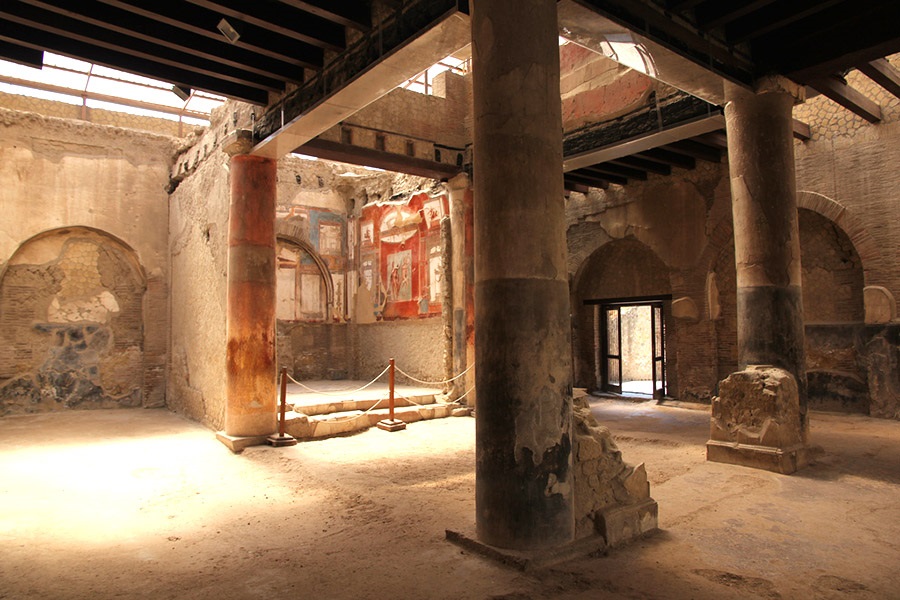


What to see at the Herculaneum excavations
Visiting the Herculaneum excavations is an act of love for history and art. The archaeological park of Herculaneum, although only partially uncovered, includes many unmissable attractions. Here is what to see at the Herculaneum Excavations, what not to miss among noble villas, common houses, shops and baths.
- What to see at the Herculaneum excavations
- Herculaneum excavations map
- History of the Herculaneum excavations
- Only part of the city of Herculaneum has emerged
- The arrival of the Romans
- The farmer Ambrogio Nucerino discovers Herculaneum
- The Bourbons initiated open-air excavations
- Herculaneum excavations in the 1960s
- Herculaneum excavations in the 1990s
- Excavations in the 2000s: Villa of the Papyri and thermal complex
- Main Decumanus of Herculaneum
- How to buy tickets for the Herculaneum Excavations
- Rules for visiting the Herculaneum excavations
- Herculaneum Excavations ticket prices
- Herculaneum Excavations opening hours
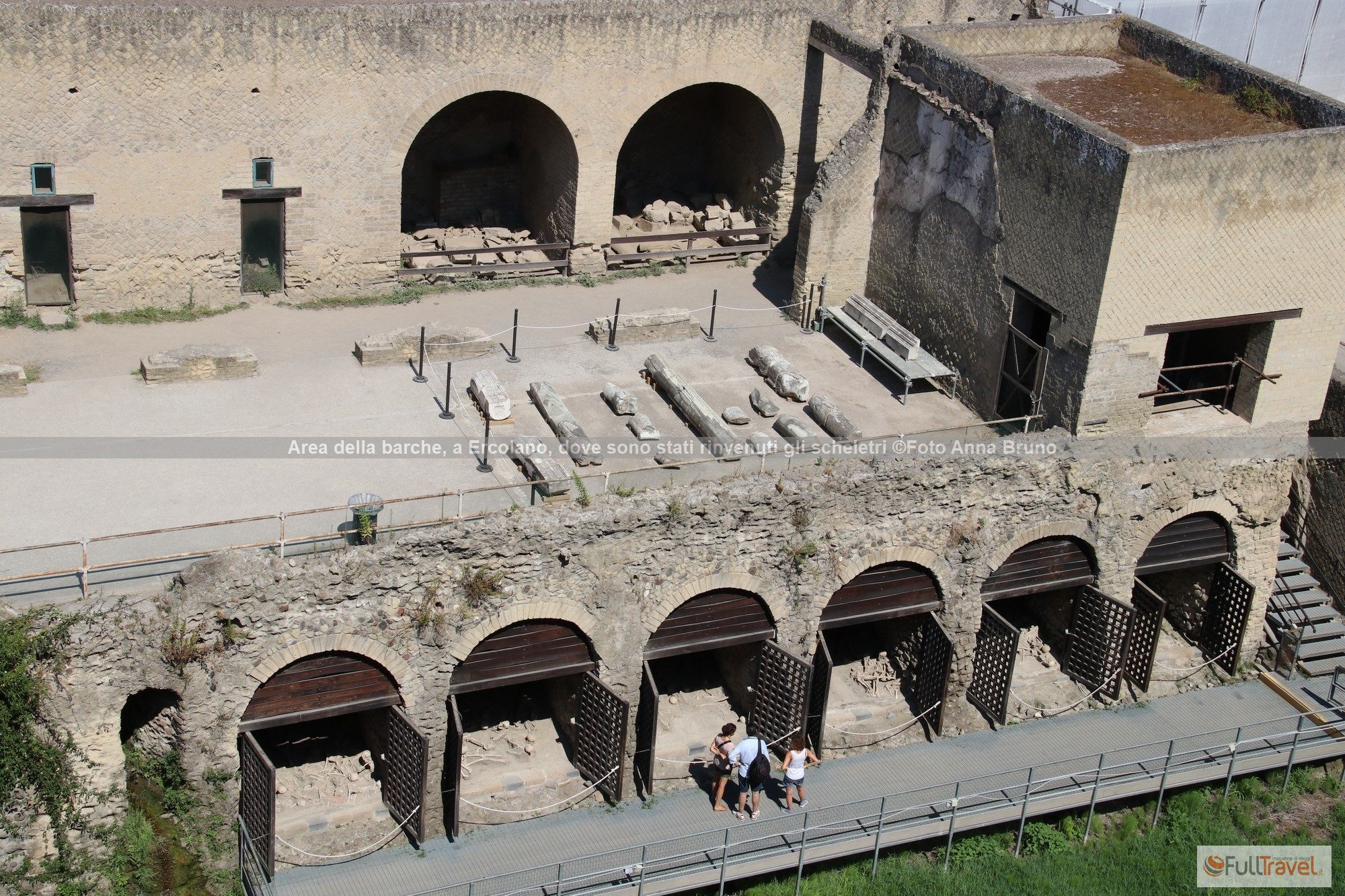
- Fornices: shelters for boats and warehouses
- Terrace of M. Nonio Balbo: large square in front of the baths area
- Suburban Baths: excellently preserved complex
- Sacred Area: two temples side by side, west of the Southern Terrace, where the college of the Venerii met
- Sacellum of Venus: temple dedicated to Venus
- Sacellum of the Four Gods: dedicated to Minerva, Neptune, Mercury and Vulcan
- House of the Relief of Telephus: three-level house, the second largest
- House of the Deer: servant quarters on the upper floor
- Priapus Taberna: with a basement hearth where walnuts and a storeroom were found
- Great Taberna: tavern with marble counter
- Vasaria Taberna: on the lower decumanus
- Gymnasium: large room intended for recreational and sports activities
- House with Garden: house without particular decorations but with a large garden
- House of the Great Portal: with a very beautiful portal with half-columns
- Pistrinum and Workshop of Sex Patulcius Felix: civic 8 of cardo V
- House with Corinthian Atrium: among the oldest
- Plumbarius Workshop: belonged to a blacksmith
- House of the Black Hall: with black mosaic floor
- Ad Cocumas Workshop: entrance pillar with four depicted jugs
- Workshop: with wooden mezzanine and carbonized beam
- House of the Tuscan Colonnade: house later incorporated with an adjacent one
- Thermopolium: refreshment place
- Sacellum: overlooks the main decumanus
- Seat of the Augustales: where commercial and religious life took place
- House of the Two Atriums: on the door the terracotta mask of Medusa
- Male Baths: divided between male and female baths
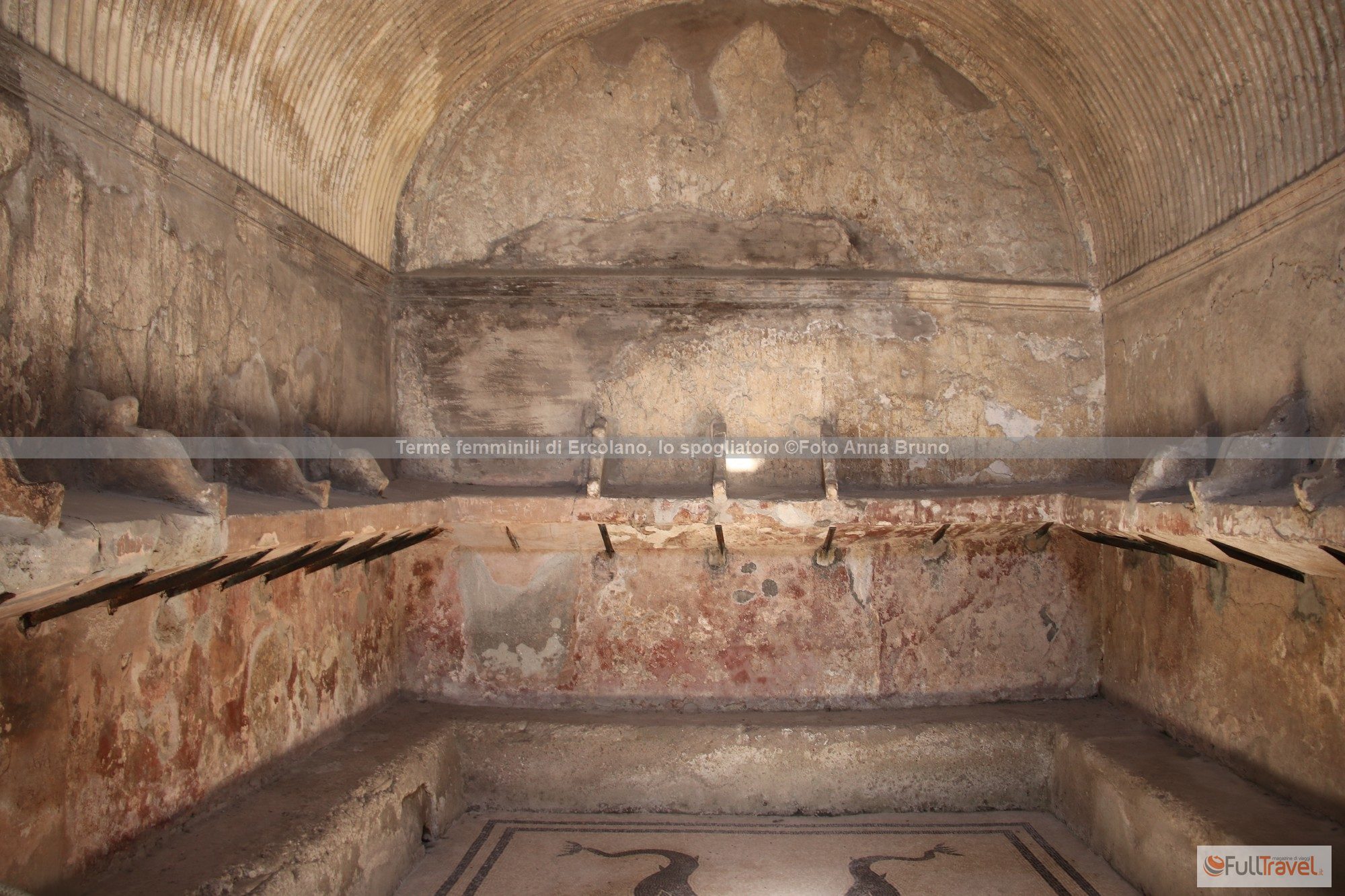
- Female Baths: very beautiful with seats and furnace for heating
- House of the Beautiful Courtyard: structure dating back to the mid 1st century AD
- House of Neptune and Amphitrite: named after the beautiful mosaic on the wall depicting Neptune and Amphitrite
- Workshop: grocery attached to the House of Neptune
- Samnite House: repeatedly renovated house with original foundation from the 2nd century BC
- House of the Alcove: double entrance due to the annexation of two houses
- House with Mosaic Atrium: very elegant noble house
- House of the Bronze Herm: small dwelling with opus sectile floor
- Half-timbered House: rental house with upper floor for multi-family use
- House of the Wooden Partition: house with two seats for waiting
- Lanarius Workshop: adjacent to the Wooden Partition house, it was the shop of a wool seller
- House of the Genius: accessible only from the back, the front has not yet been uncovered
- House of Argo: main entrance on Cardo II still not found
- House of Aristides: first building on cardo II
- House of the Skeleton: a skeleton was found in this house, hence the name
- House of the Inn: presumably was an inn due to the baths and size
- Villa of the Papyri and Northern Insulae: recently discovered with the new millennium excavations
Herculaneum excavations map

History of the Herculaneum excavations
The Roman city of Herculaneum (called Resina until 1969), near Naples, destroyed and buried by the eruption of Mount Vesuvius in 79 AD, came back to historical attention in the eighteenth century thanks to the Bourbon explorations. Equipped with modest walls, the settlement was built on a volcanic plateau overlooking the sea at the foot of Vesuvius, bounded on the east and west sides by two streams; two river inlets formed natural and safe harbors.
The city size was actually quite modest: it is estimated that the total area enclosed by the walls was about 20 hectares, of which about 4.5 hectares are now visible in the open, housing about 4,000 inhabitants.
Only part of the city of Herculaneum has emerged
Despite its long history, the excavations have brought to light only a portion of the ancient city of Herculaneum, so much of ancient Herculaneum remains buried underground, preserving among others the entire forum area, the sacred and civil buildings with their precious furnishings and decorative elements.
Currently, most of the archaeological park open to the public is composed, except for the baths and gym, of private houses from the imperial age, characterized by great typological variety: houses with traditional plans, multi-family dwellings, large residences that developed part of their quarters in a dominant position over the sea and along the walls.
Despite the limits of the uncovered city, the urban layout seems to have been structured on at least three decumani (only two excavated in the open: the lower and the main decumanus, partly pedestrianized with the four-front arch to the west and the access to the Magna Mater temple to the east) crossed by five cardines (of which only three are open-air), perpendicular to the decumani and the coastline.
The southern limit of the city is also sufficiently known, with its powerful vaulted substructures (fornices), the terraces with the suburban baths above and the large private domus, also structured on multiple levels. Dionysius of Halicarnassus attributes the mythical foundation of the city to Heracles returning from Iberia, while Strabo reports the city was first in the hands of the Opici-Osci, then the Etruscans and the Pelasgi, and finally the Samnites.
If you want to skip the line and visit the Herculaneum excavations with an archaeological guide, we suggest you buy the ticket online.

The arrival of the Romans
Like Pompeii and Stabiae, Herculaneum must have joined the Nucerian confederation. After rebelling against Rome during the Social War, it was attacked and conquered in 89 BC by the legate of Lucius Cornelius Sulla, Titus Didius, and then underwent the Roman municipalization process that affected southern-central Italy. The city’s life was finally abruptly ended by the Vesuvius eruption in 79 AD.
The farmer Ambrogio Nucerino discovers Herculaneum
Over time, the memory of the ancient Roman city’s location was lost, and only in 1710 did a farmer, Ambrogio Nucerino, digging a well to irrigate his garden, recover many precious marble fragments that were later understood to belong to the ancient city’s theater. Upon learning of the discovery, the noble Emanuel-Maurice of Lorraine, prince of Elboeuf, bought the well and for nine months conducted costly tunneling excavations, recovering nine statues with which he paid tribute to the powerful of his time.
The Bourbons initiated open-air excavations
Only in 1738, by order of King Charles III of Bourbon, systematic tunnel explorations of the ancient site began. In 1828, during the reign of Francis I of Bourbon, open-air excavations were undertaken for the first time, continuing until 1875. After a long interruption, work resumed in 1927 under Amedeo Maiuri until 1958, but by 1942 almost the entire area constituting the current archaeological park had been uncovered, restored, and covered.

Herculaneum excavations in the 1960s
Between 1960 and 1969 further works were conducted in the northern sector of Insula VI and along the main decumanus, while in the last twenty years the ancient beach was explored, coinciding with the southernmost part of the archaeological area. In this zone, twelve rooms with arched entrances (the fornices), boat shelters and warehouses were uncovered, where many Herculaneans sought refuge during the eruption.
Herculaneum excavations in the 1990s
Between 1996 and 1998, open-air excavations were carried out in the area conventionally called “New Excavations,” connected to the main archaeological park by a narrow and deep trench that, merging near the House of Aristides, continues with a gallery under the modern Vico Mare.
Excavations in the 2000s: Villa of the Papyri and thermal complex
New excavation, restoration, and enhancement works were carried out by the Superintendency from 2007 to 2009 thanks to funding from the European Community. Currently, structures belonging to the Villa of the Papyri (atrium district, lower first floor and sea terrace), previously explored through underground tunnels in the 18th century, as well as part of a thermal complex of the northwestern Insula and a luxurious residential building of Insula I, are visible. None of these sites has been fully uncovered since most structures lie beneath lands not yet expropriated.
Main Decumanus of Herculaneum
A system of hydraulic pumps must continuously control the water table rising due to the sinking of the ancient coastline caused by the 79 AD eruption and related phenomena. The reopening of the Main Decumanus – the main road of ancient Herculaneum – marks the final handover of the Roman streets to visitors and concludes an important chapter related to works involving shops along the North slope and some of the most interesting Roman houses of the site, including the House of the Double Portal, now finally accessible in all its splendor with its exceptional entrance, columned portico, and wooden elements still intact, while important restoration work is underway in the famous House of the Bicentenary. Furthermore, additional extraordinary maintenance on infrastructure and restorative conservation of ancient buildings is ongoing, as well as archaeological research as part of the inter-institutional project Herculaneum Conservation Project, conducted with co-financing from the Packard Humanities Institute, in collaboration with the British School at Rome and other Italian and foreign universities.

How to buy tickets for the Herculaneum Excavations
Besides on site, where it is possible to buy entrance tickets with credit card (Visa and MasterCard circuits) and debit card.
If you want to skip the line and visit the Herculaneum excavations with an archaeological guide, we suggest you buy the ticket online.
Alternatively, it is possible to purchase tickets online by connecting to the site and choose whether to receive tickets at home, print them and present them directly at the entrance turnstiles, or pick them up at a dedicated point in Herculaneum and Pompei Porta Marina.
Rules for visiting the Herculaneum excavations
- It is not allowed to stand on the edges of the excavations or climb on the walls
- Photography and video recording are allowed only for private use. For commercial filming and with tripods, kindly contact the Herculaneum Archaeological Park offices
- Bulky items such as backpacks, umbrellas, bags, etc., must be deposited in the cloakroom
- No smoking allowed
- No entry with animals
- Visitors must behave respectfully: no shouting, no graffiti on walls, and use proper waste containers
- Tour guide service must be conducted by qualified personnel
- Comfortable clothing and low-heeled shoes are recommended
Herculaneum Excavations ticket prices
If you want to skip the line and visit the Herculaneum excavations with an archaeological guide, we suggest you buy the ticket online.
- Full price € 11.00
- Reduced € 5.50
- Free on the first Sunday of each month, under 18.
Herculaneum Excavations opening hours
From April 1 to October 31
- 08:30 – 19:30 (last admission at 18:00)
From November 1 to March 31
- 08:30 – 17:00 (last admission at 15:30) – from November 1 to March 31
The Herculaneum archaeological park is closed on December 25 and January 1.