


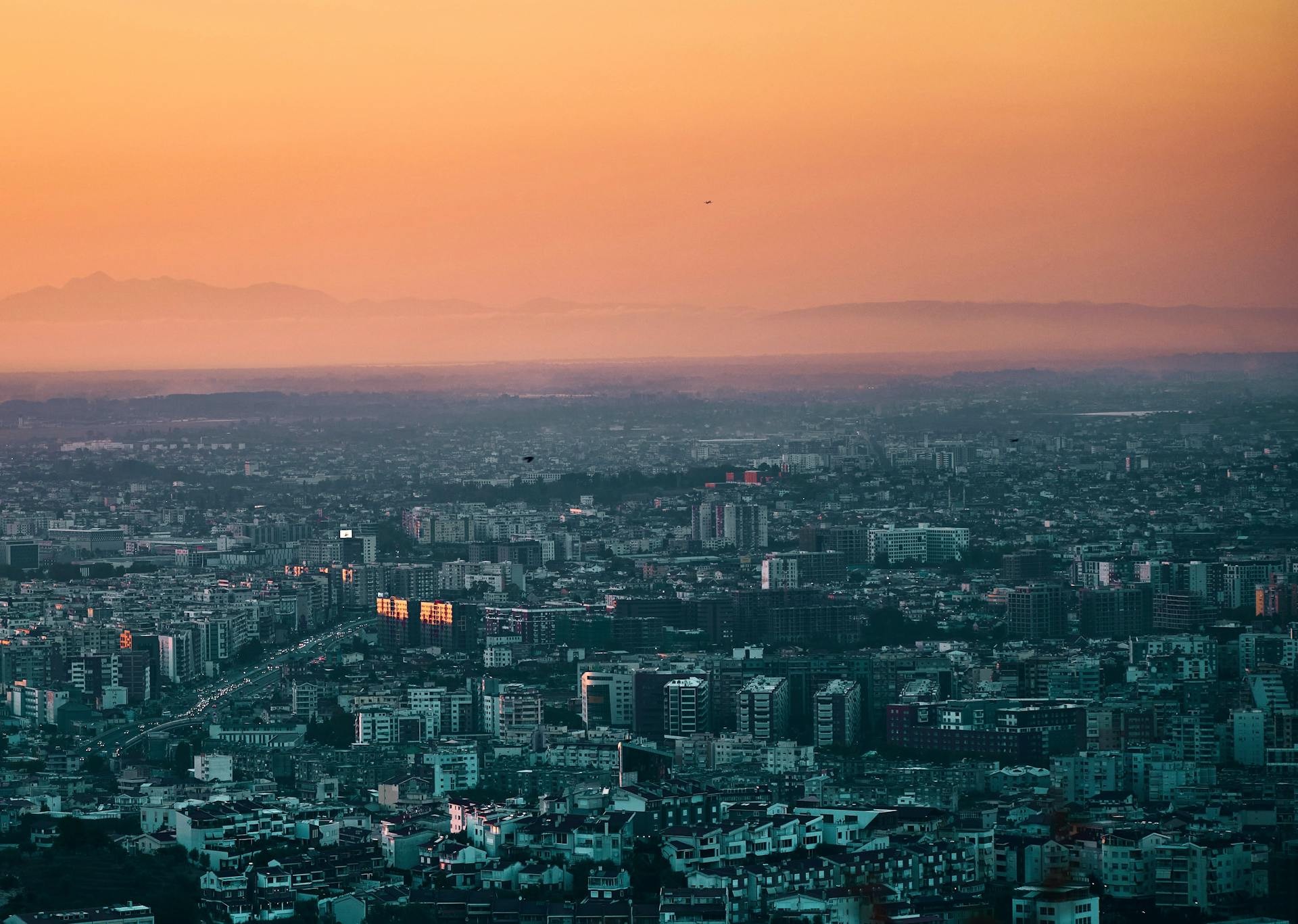


What to see in Tirana is a question that still surprises many travelers today. The capital of Albania, for decades one of the most closed and isolated countries in the world, has reinvented itself at an extraordinary pace, becoming one of the most interesting emerging destinations in the Balkans. Tirana welcomes visitors with brightly painted facades, a culinary scene in full swing, museums that openly recount the weight of the communist dictatorship, and a cosmopolitan youth that has transformed the Blloku district into one of the liveliest open-air lounges in Southeastern Europe. Three days is the ideal time to explore the center on foot and venture out to the surrounding areas, with the possibility of pairing your stay in the city with a few days on the Albanian coast.
- Skanderbeg Square: the beating heart of Tirana
- Et’hem Bey Mosque: an Ottoman gem that survived the regime
- Clock Tower and surroundings of Skanderbeg Square
- National History Museum: Albania’s memory in a building
- The Pyramid of Hoxha: from regime monument to cultural space
- Bunk’Art 1 and Bunk’Art 2: inside the dictatorship’s bunkers
- House of Leaves: the surveillance museum
- The Blloku district: from power enclave to the heart of nightlife
- National Art Gallery: socialist realism in all its glory
- Bulevardi Dëshmorët e Kombit: the avenue of symbols
- The Grand Mosque of Tirana: the largest in the Balkans
- The Grand Park and the Artificial Lake: where Tirana relaxes
- Mount Dajti and the cable car: Tirana from above
- Pazari i Ri Market: scents, flavors, and daily life
- The Resurrection of Christ Cathedral
- The 12 sights to see in Tirana
- Recommended itinerary: 3 days in Tirana
- Day 1: The historic center
- Day 2: The museums of memory
- Day 3: Mount Dajti and surroundings
- Where to stay in Tirana
- Practical information for visiting Tirana
- How to get there
- When to go
- How much does it cost
- How to get around
- Frequently asked questions about Tirana
- How many days do you need to visit Tirana?
- Is it worth visiting Tirana?
- Is Tirana a safe city?
- What is the best time to visit Tirana?
- What to see in Tirana in one day?
- Where is it best to stay in Tirana?
- How do you get around in Tirana?
- Is Mount Dajti worth it?
If you’re in a hurry. With just one day available, focus on Skanderbeg Square and the Et’hem Bey Mosque in the morning, then head to the Pyramid of Hoxha and the Blloku district in the afternoon. In the evening, a stroll down Bulevardi Dëshmorët e Kombit wraps up your tour of the city’s symbols between history and contemporary life, all easily walkable from the city center. We recommend you book a city tour which allows you to optimize your time and enjoy a more in-depth visit.
Skanderbeg Square: the beating heart of Tirana
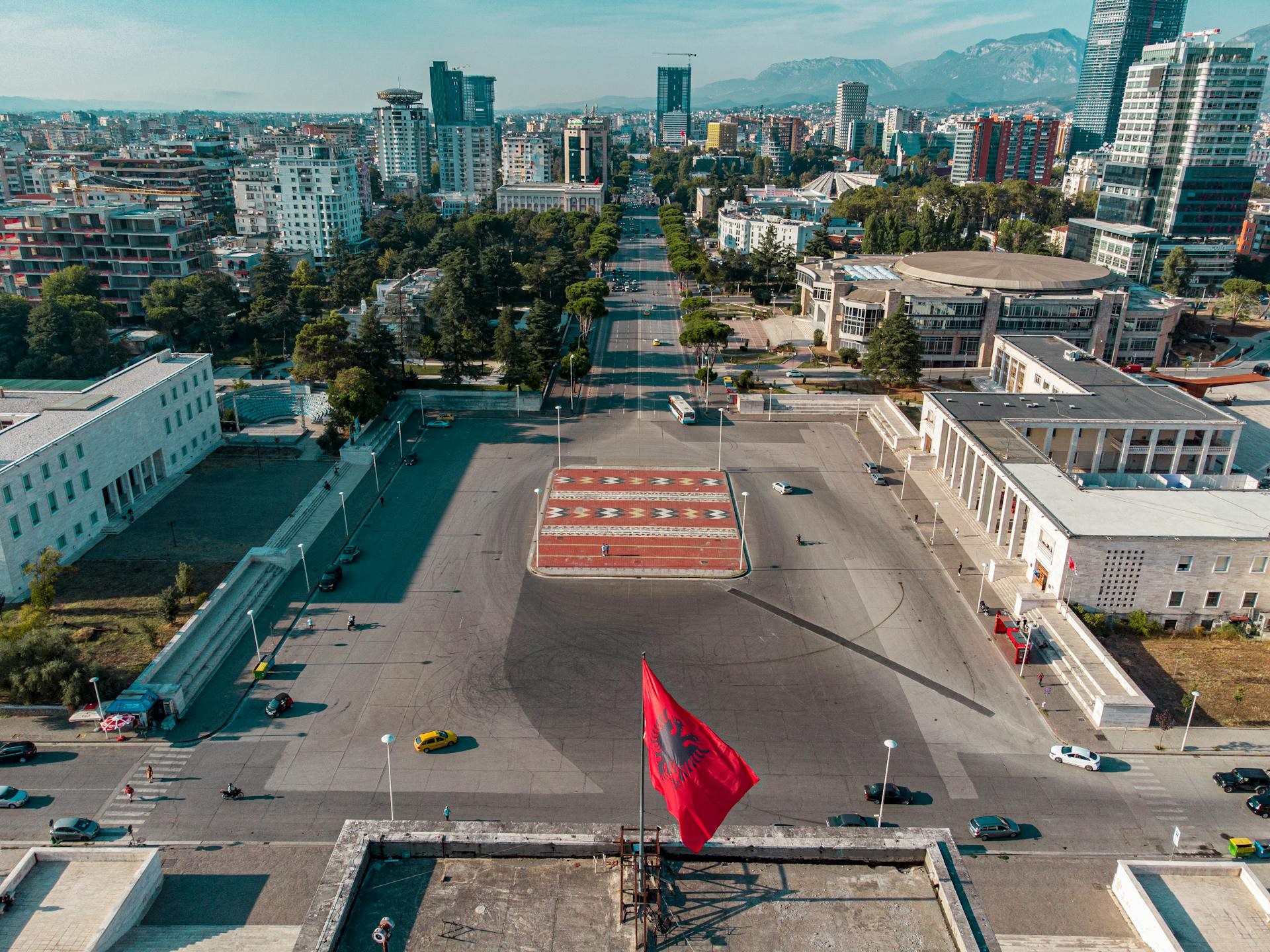
Any visit to Tirana inevitably starts from Skanderbeg Square, the largest square in the Balkans and the true nerve center of the city. In the center stands the equestrian statue of Gjergj Kastrioti Skanderbeg, the Albanian national hero who in the fifteenth century resisted the Ottoman advance for decades. Until 1991, that statue shared the space with a monument to dictator Enver Hoxha, which was then torn down by crowds during the fall of the regime. Today, the square is an open space with fountains, benches, and stone paving that glows with warm reflections at sunset. All around are institutional buildings, the bell tower of the Clock Tower, and the minaret of the Et’hem Bey Mosque, creating an overlap of eras that perfectly sums up the complex identity of this city.
Et’hem Bey Mosque: an Ottoman gem that survived the regime
Built between 1789 and 1823, the Et’hem Bey Mosque is one of Tirana’s most beloved monuments and one of the rare places of worship that survived the atheist fury of Hoxha’s regime, which in the 1960s banned all religious practice and converted churches and mosques into warehouses, gyms, or museums. The building impresses with the delicacy of its frescoes that adorn the outer walls—landscape scenes, trees, and waterfalls, unusual in traditional Islamic iconography—and the lightness of the entrance portico. The interior is sober and elegant. The mosque is still fully functioning and open to visitors outside prayer times: an unexpectedly peaceful spot in the midst of the city’s noisiest square.
Clock Tower and surroundings of Skanderbeg Square
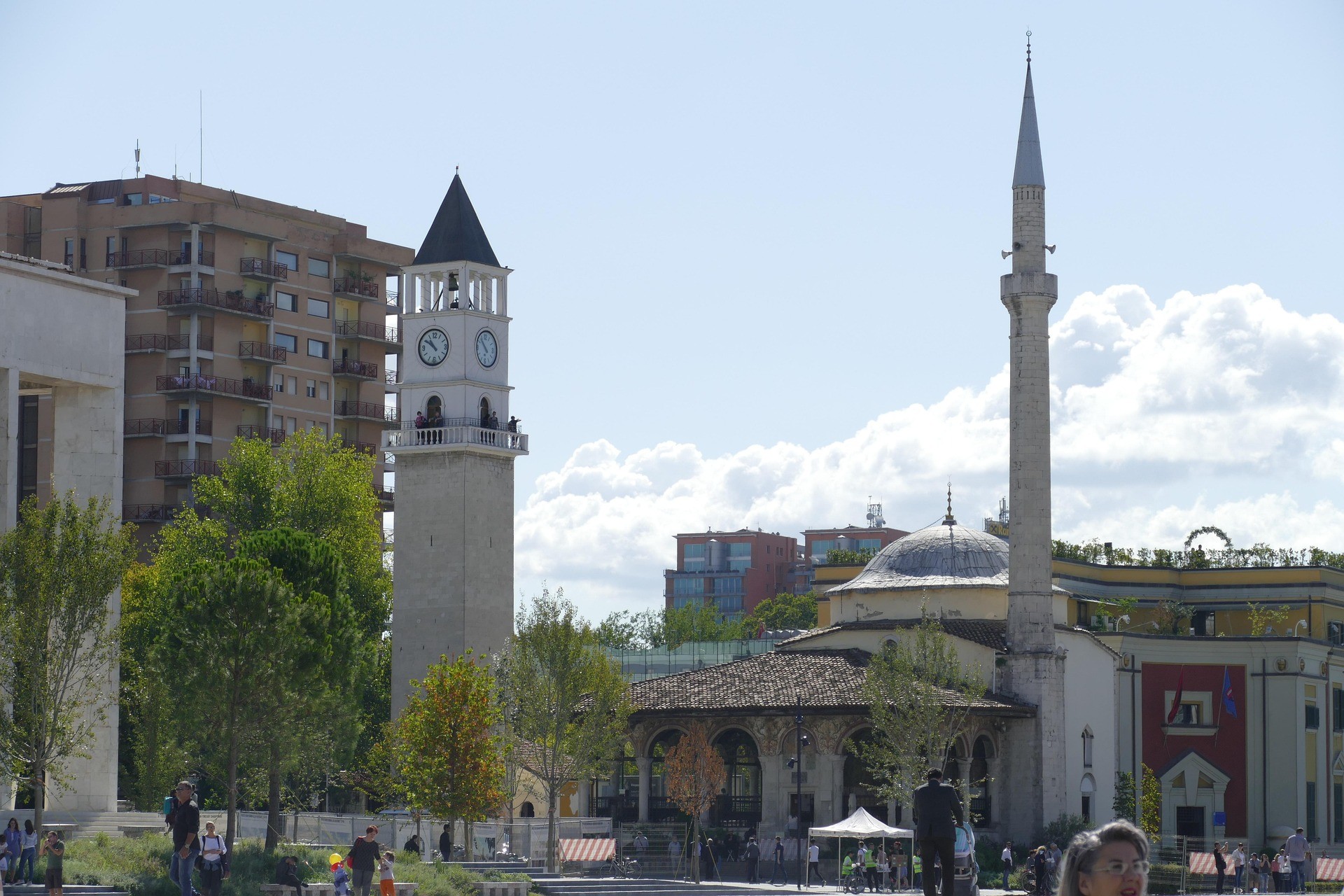
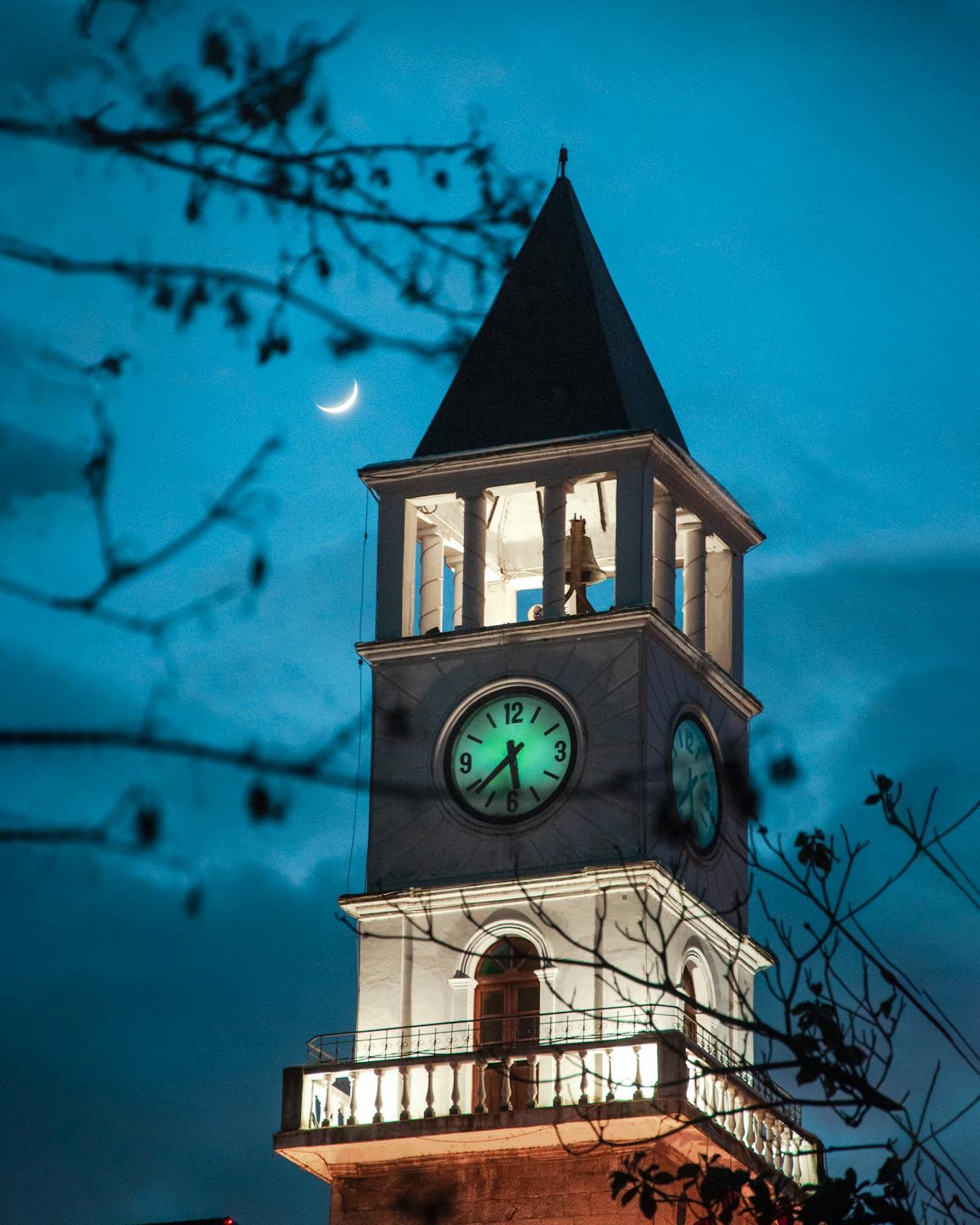
Right next to the mosque, the Clock Tower is one of the oldest buildings in Tirana, built at the beginning of the nineteenth century during the Ottoman period. Approximately twenty meters high, its stone and brick structure is one of the few tangible signs of the pre-communist past in the city center. Not far away is the former Palace of Culture, now home to theaters and galleries, and the City Hall. Taking a slow walk around the square in the early hours of the morning, before Tirana’s chaotic traffic hits its peak, is one of the simple yet authentic pleasures of this trip.
National History Museum: Albania’s memory in a building
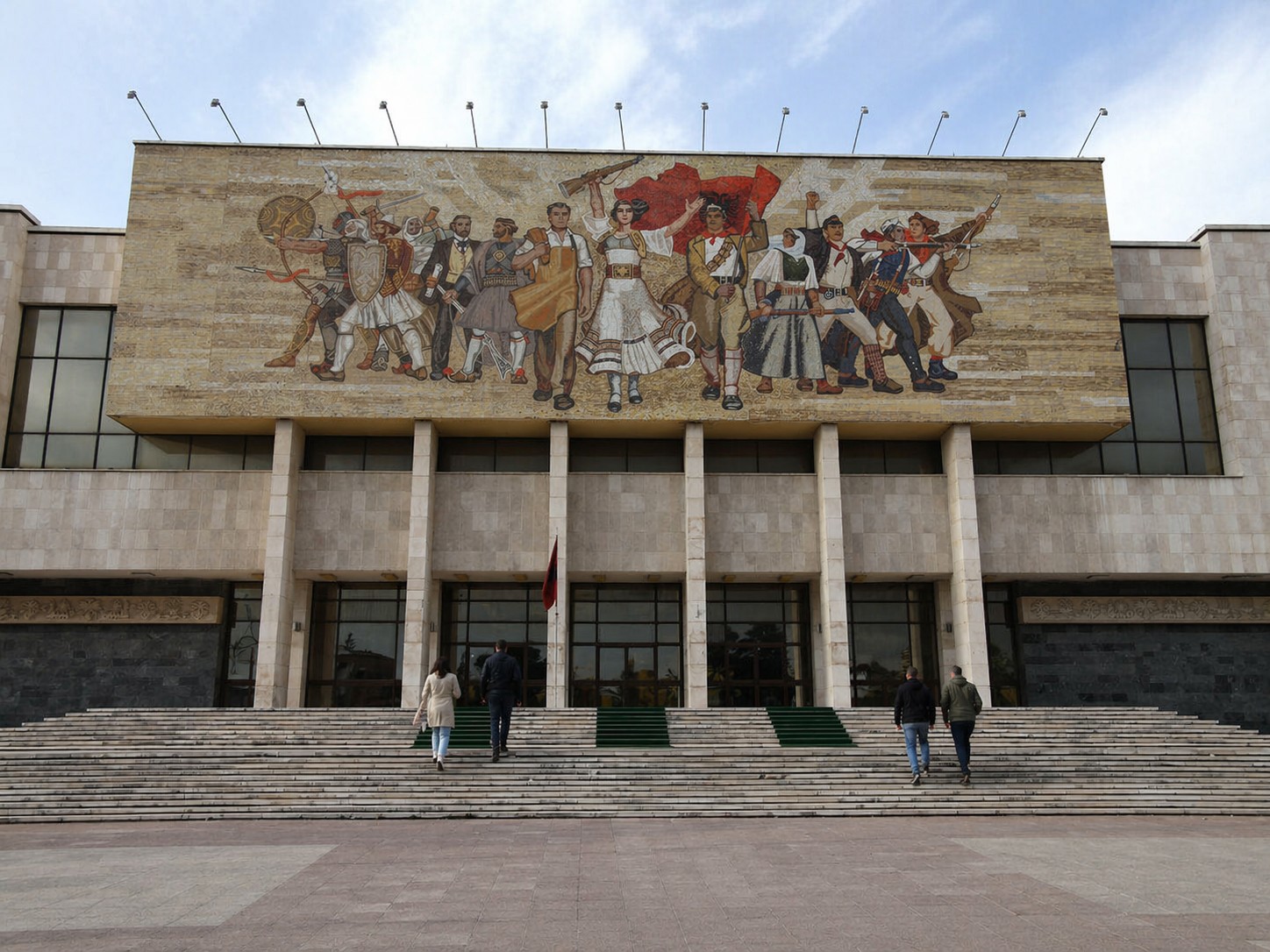
On the north side of Skanderbeg Square stands the National History Museum, the largest museum in Albania, inaugurated in 1981 during the regime. The façade is dominated by a huge mosaic depicting the country’s history from its Illyrian origins up to the socialist era: the portrayed figures—warriors, farmers, workers—still convey the visual rhetoric of socialist realism today. Inside, over three thousand six hundred artifacts trace Albanian history from prehistory to the post-war period, with a particularly important section dedicated to the Communist Terror: photographs, documents, and direct testimonies of the persecutions suffered by the population.Note: at the time of writing, the museum is temporarily closed for renovation; please check reopening dates before visiting.
The Pyramid of Hoxha: from regime monument to cultural space
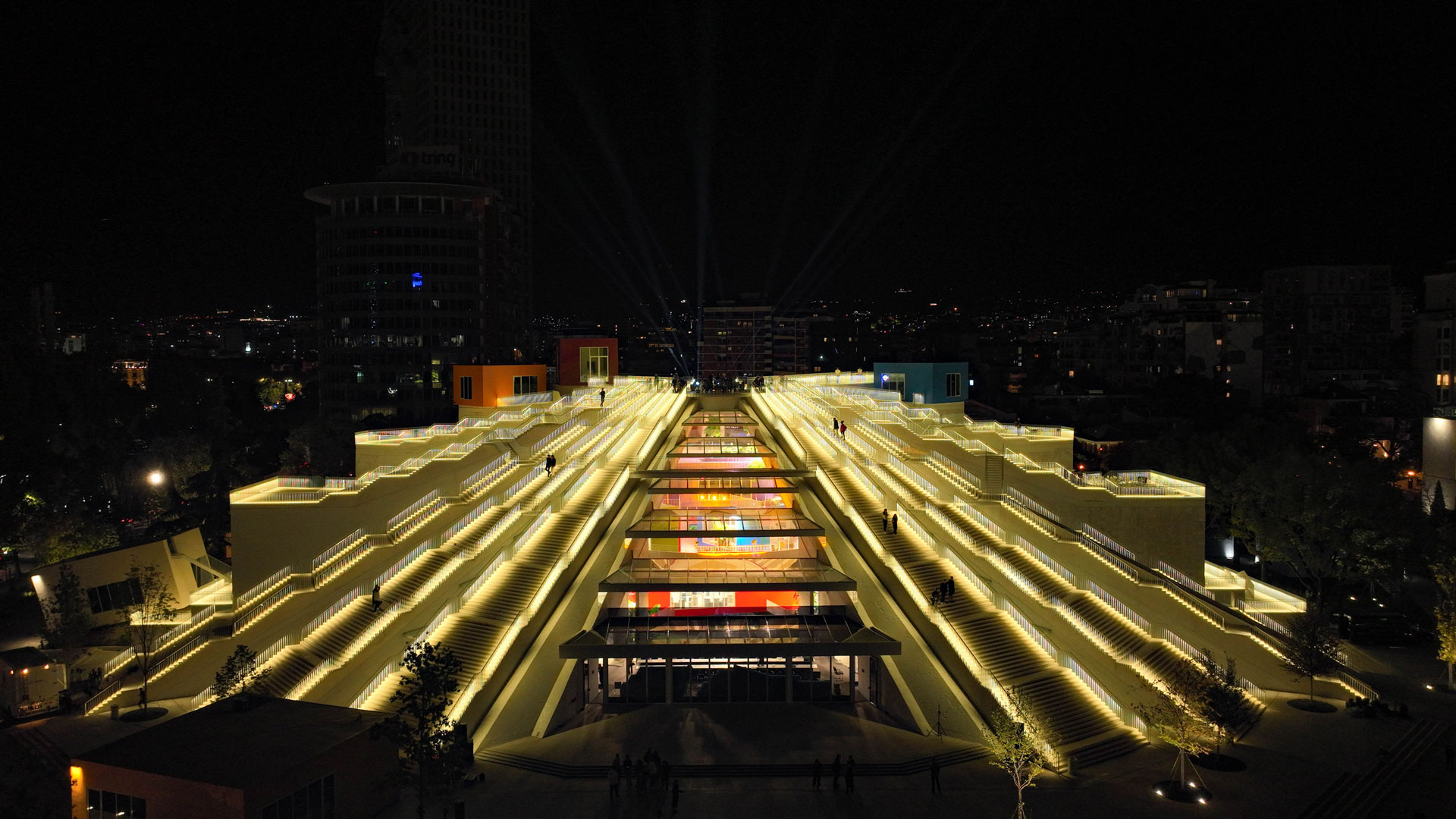
No attraction in Tirana is more discussed or photographed than the Pyramid. Built in 1988 as a mausoleum and museum dedicated to the dictator Enver Hoxha, it was abandoned after the fall of the regime and remained in a state of decay for years, transforming into the iconic climbable structure that generations of Tirana youths scaled. After a lengthy public debate about its fate—demolish it or preserve it?—the decision was made to turn it into a youth cultural center, TUMO Tirana, inaugurated in 2023: a space dedicated to the creative and technological training of new generations. The structure has been reinforced without erasing its history; traces of the past remain visible while workshops and classes take place inside. A symbol of transformation that says much about today’s Albania.For official information, visit the website.
Bunk’Art 1 and Bunk’Art 2: inside the dictatorship’s bunkers
Among the most original and intense experiences in Tirana are the two museums created inside bunkers built during Hoxha’s regime. The dictator had a total of around 750,000 bunkers constructed across the country—one for every four inhabitants—convinced of an imminent foreign invasion that never arrived. Bunk’Art 2 is located in the city center, underneath Skanderbeg Square, and is dedicated to the history of the Ministry of the Interior and the violence of the secret police: a claustrophobic journey through cells, interrogation rooms, and documents from the secret archives. Bunk’Art 1, on the other hand, is located at the foot of Mount Dajti, accessible by cable car or taxi: it’s a huge underground bunker built to shelter the government in case of nuclear attack, now transformed into a museum about twentieth-century Albania with artistic installations and documentaries. Both museums are powerful experiences, not to be underestimated emotionally.
House of Leaves: the surveillance museum
If you really want to understand how the Albanian police state operated during communism, the House of Leaves is the most revealing stop of all. It is an elegant villa from the 1930s, entirely covered by ivy and climbing plants—hence its name—that was home to the Sigurimi, the regime’s secret police. The original surveillance and wiretapping systems installed by the services are still intact: listening rooms, microphones hidden in the walls, and surveillance equipment. In 2020 it received the Council of Europe Museum Prize, an award certifying its value as a site of memory and historical testimony. The visit is less well-known compared to Bunk’Art, but it is no less important.
The Blloku district: from power enclave to the heart of nightlife
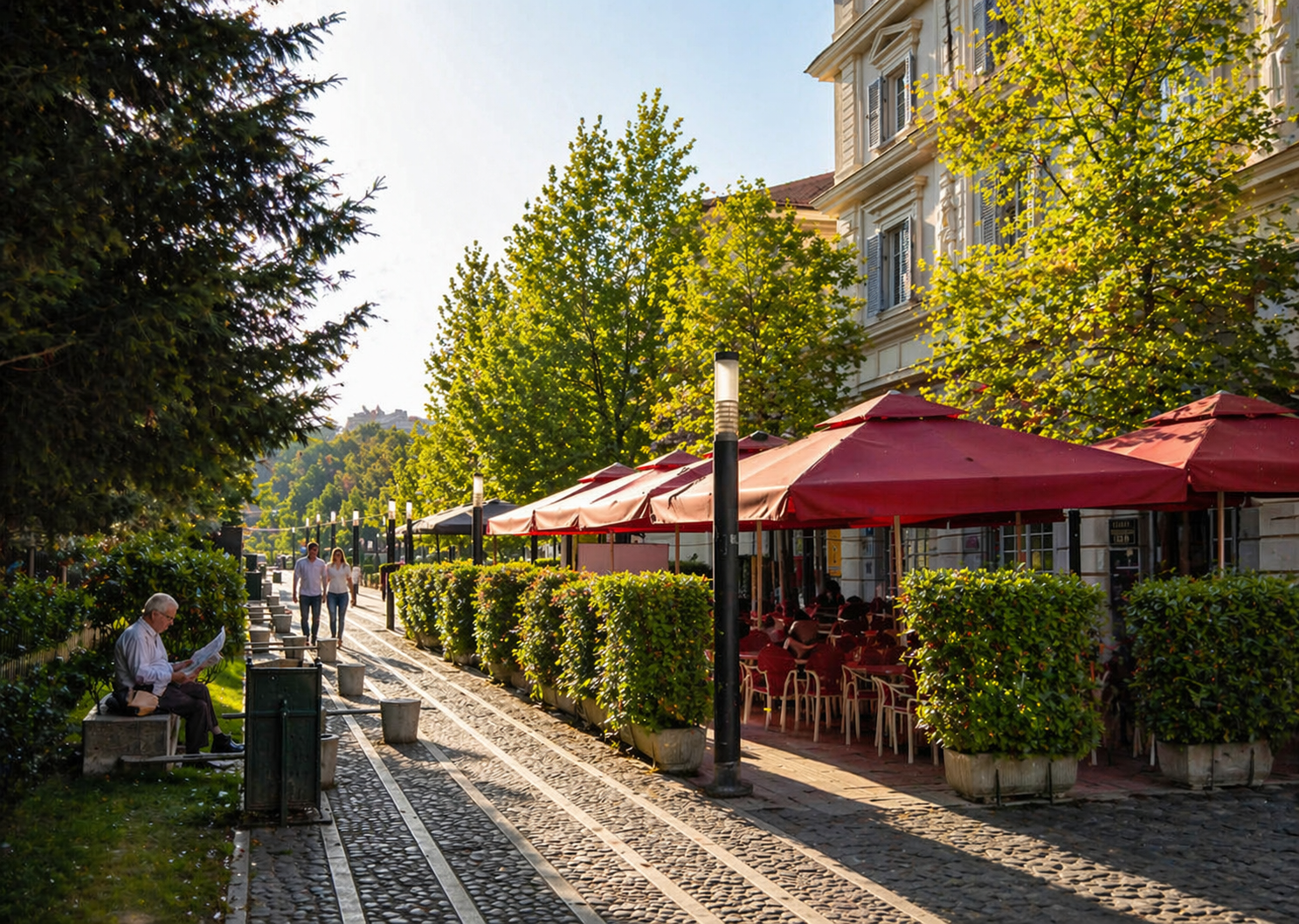
During the communist regime, the Blloku district was the forbidden place par excellence: here lived Hoxha and the leaders of the Albanian Party of Labour, surrounded by a security cordon that barred the population from entering. After 1991 the streets opened up, and Blloku was transformed into the most trendy and international area of Tirana. Today, it’s the district of cocktail bars, designer restaurants, independent boutiques, and art galleries. Wandering its streets is a pleasure, especially in the evening when Tirana’s nightlife is at its best. Look for Hoxha’s villa, still visible behind the gate: a surprisingly modest building for Europe’s most paranoid dictator.
National Art Gallery: socialist realism in all its glory
For those interested in 20th-century art—and in particular its propagandistic forms—Tirana’s National Art Gallery offers a one-of-a-kind collection. Alongside works retracing Albanian pictorial tradition from Byzantine icons onward, the gallery hosts a substantial collection of socialist realist paintings: huge canvases celebrating work in the fields, factory construction, and the triumphs of revolution. These are often works of high technical skill, produced by artists working under very strict ideological constraints. Viewing them today, just steps from the terraces of Blloku, is something surreal and fascinating.
Bulevardi Dëshmorët e Kombit: the avenue of symbols
The grand avenue that runs through Tirana from north to south, the Bulevardi Dëshmorët e Kombit, that is, the Boulevard of the Nation’s Martyrs, is the historic and urban backbone of the city. Designed during the Italian occupation in the 1940s, it links Skanderbeg Square to the Grand Park passing by the government buildings, the university, and the Parliament building. It’s a wide, tree-lined boulevard, built to impress, and indeed it still conveys a certain grandeur today. A stroll along the Boulevard early in the morning or after dinner is one of the best ways to experience the daily rhythm of Tirana.
The Grand Mosque of Tirana: the largest in the Balkans
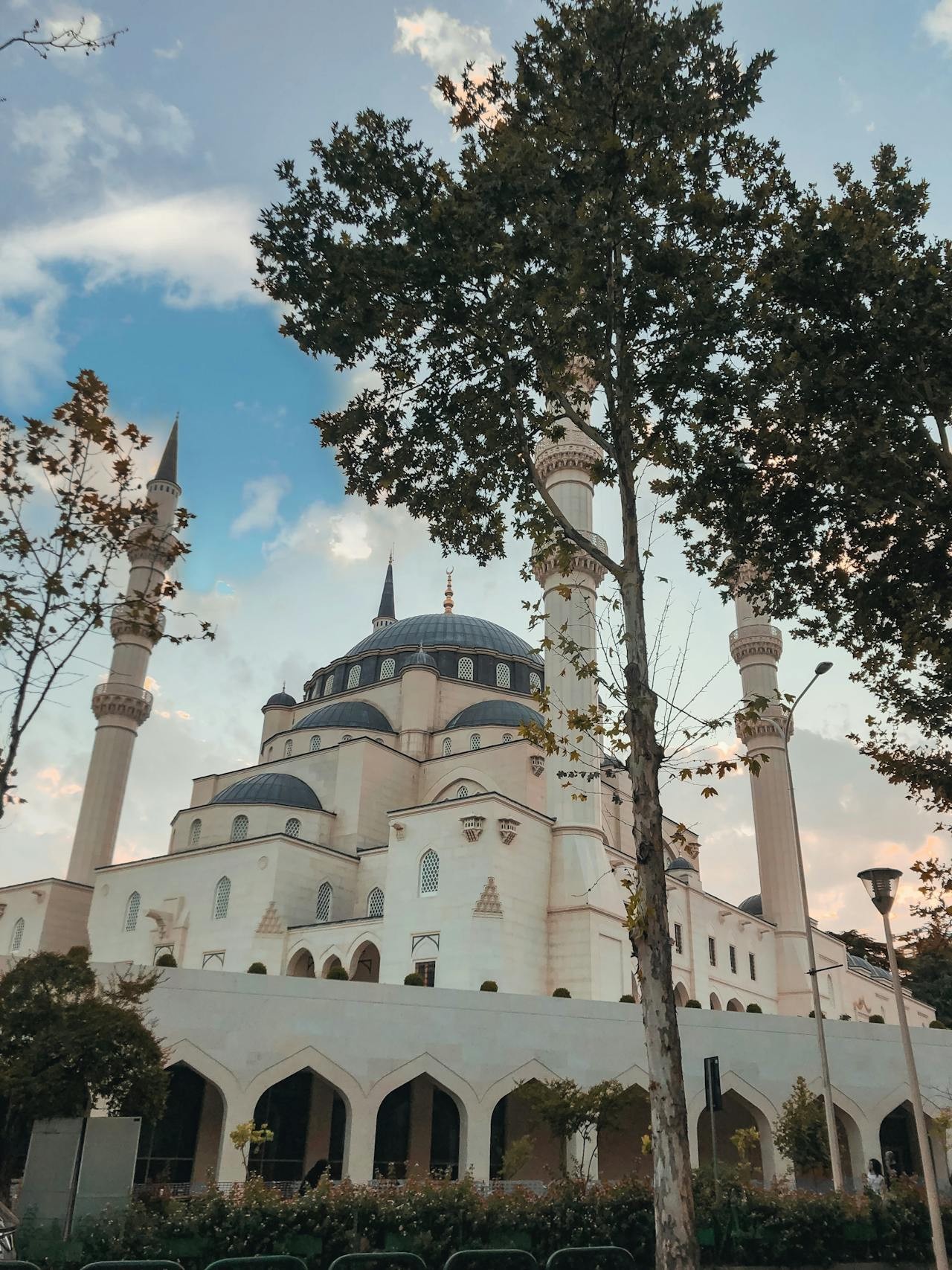
Inaugurated in 2024, the Grand Mosque of Tirana is the largest religious building in the Balkans, built with Turkish funding as part of a larger project that also includes an Islamic cultural center. The structure is imposing and features a contemporary design, with a towering minaret visible from various points in the city. Its construction sparked heated debates—urbanistic, political, and concerning identity—which speak volumes about the complexity of present-day Albania, a predominantly Muslim country with a strong secular tradition.
The Grand Park and the Artificial Lake: where Tirana relaxes
South of the center, along the Boulevard, the Grand Park of Tirana is the city’s green lung. Inside is an artificial lake dating back to the 1960s, where locals bring their children, rent pedal boats, and jog around the perimeter. On weekends, it’s a genuinely local spot, far from tourist circuits. Nearby is also the Palace of Brigades, a huge communist-era building recently repurposed. It’s well worth an afternoon stroll, especially if you’re traveling with children or want a break from the intensity of the historic center.
Mount Dajti and the cable car: Tirana from above
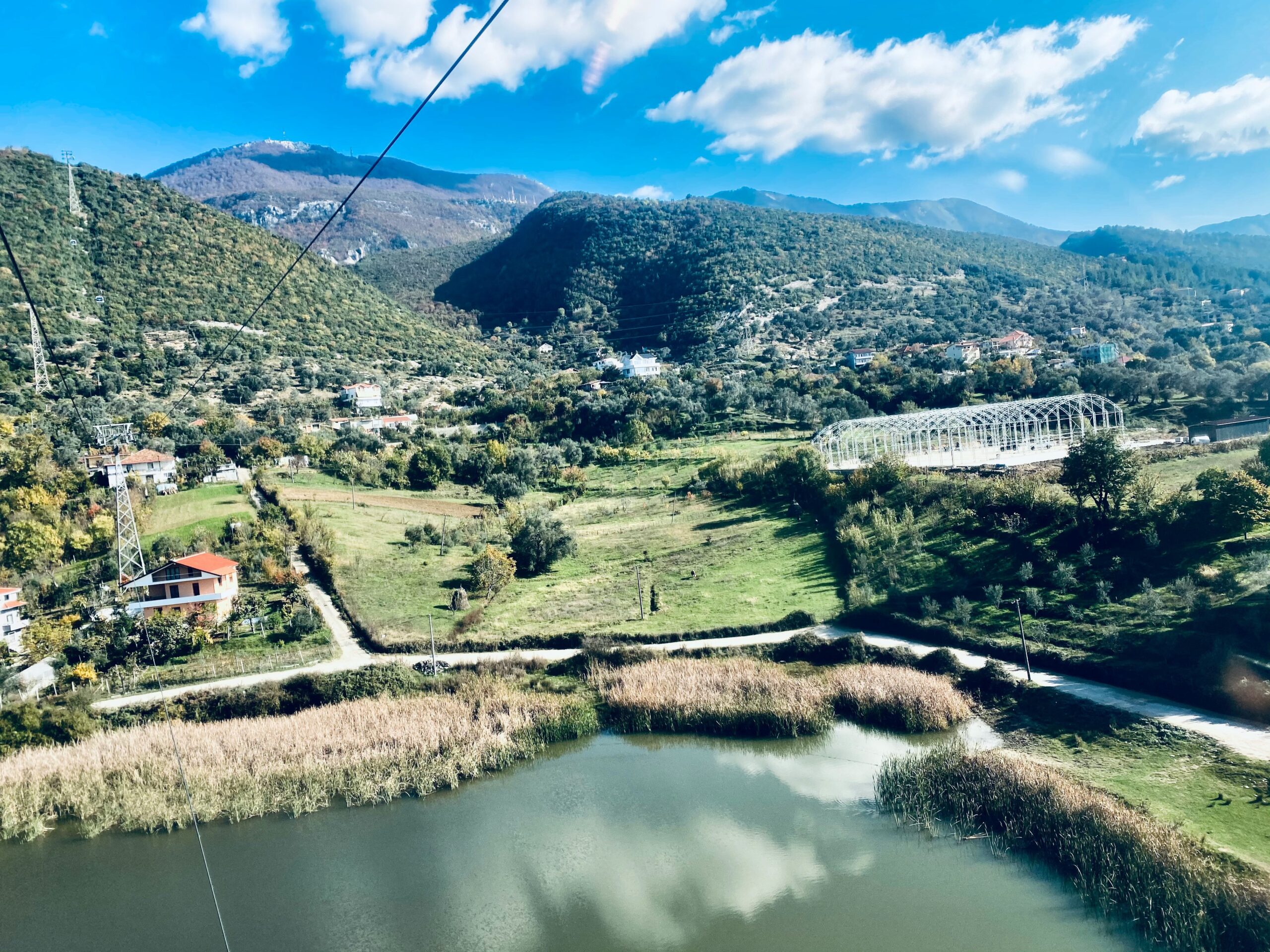
Just a handful of kilometers from the center, Mount Dajti—1,611 meters high—is the capital’s natural balcony. The Dajti Ekspres cable car gets you there in about fifteen minutes, with an aerial route that already offers spectacular views of Tirana’s urban sprawl and, on clear days, even the Adriatic. At the top, you’ll find hiking trails, a playground for children, traditional restaurants, and, hidden in the woods, the first of the two Bunk’Art. A visit to Mount Dajti is especially recommended in the warmer months, when city temperatures can be oppressive. It’s the ideal excursion for your third day.
Pazari i Ri Market: scents, flavors, and daily life
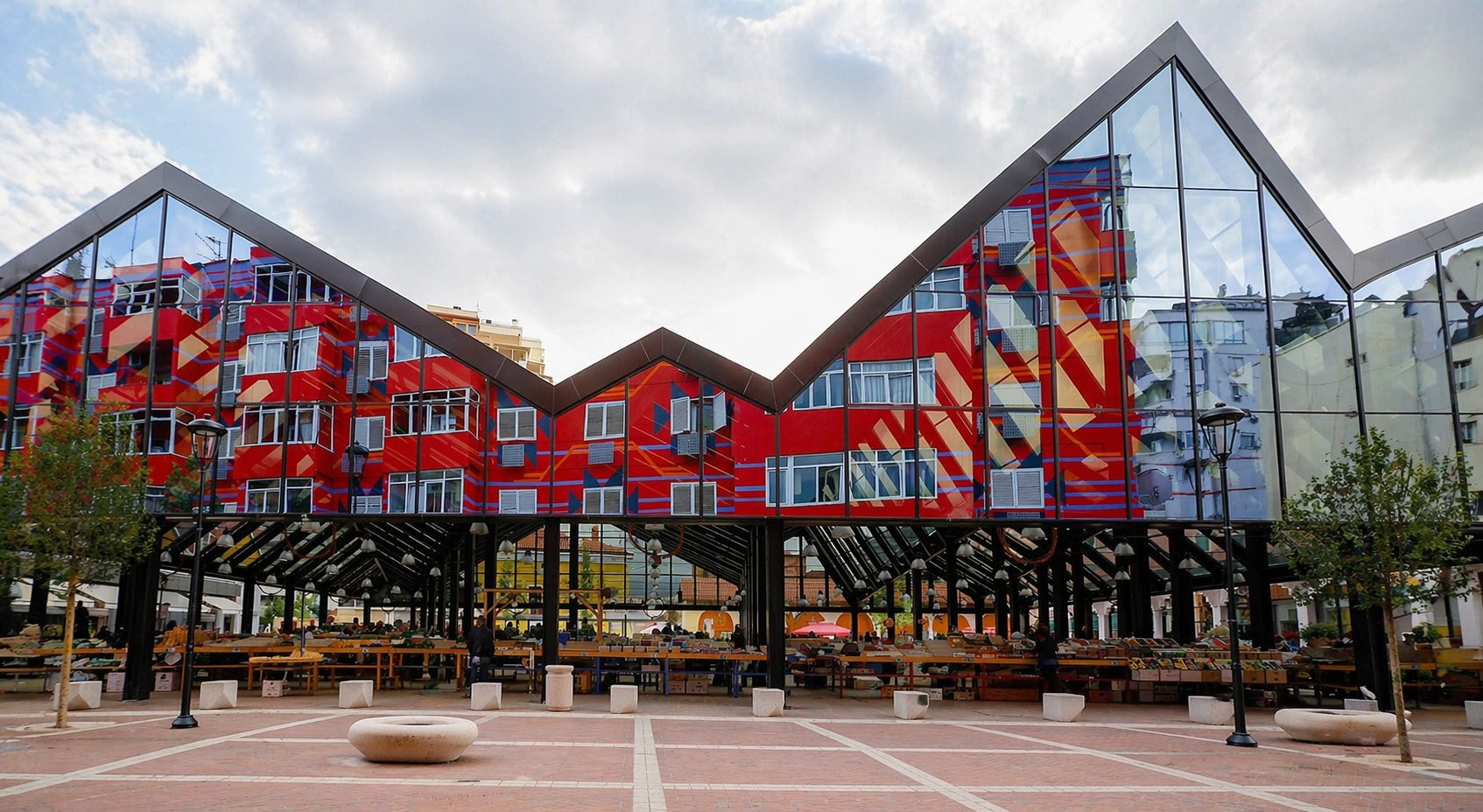
The covered Pazari i Ri market—literally the “New Bazaar”—was renovated in 2016, retaining the traditional layout of the old Ottoman market. Today it’s one of the liveliest and most authentic places in Tirana: stalls selling spices, local cheese such as djathë i bardhë (Albanian white cheese), mountain honey, olives in brine, seasonal fruit, and the first produce from the Tirana plain gardens. Around the perimeter of the market you’ll also find a number of restaurants and byrek-eries (pastry shops specializing in stuffed savory pies)—perfect for a local breakfast. Visiting in the early morning before it gets crowded offers a genuinely local experience.
The Resurrection of Christ Cathedral
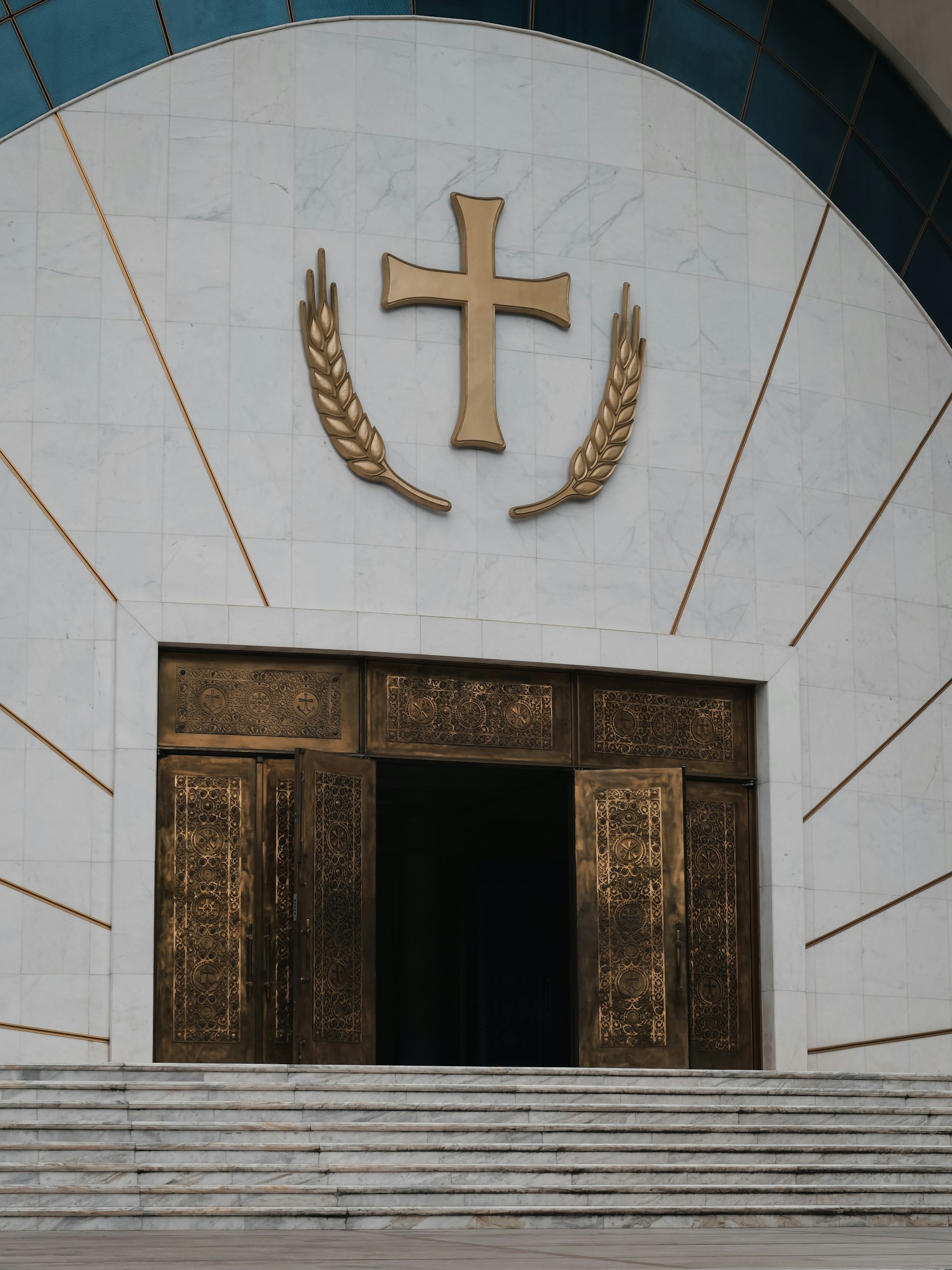
Not far from Skanderbeg Square, the Orthodox Cathedral of the Resurrection of Christ is one of the most recent and visually striking buildings in downtown Tirana. Built after 1991—during the regime, all religious buildings were banned—it is a symbol of the revival of Albania’s Orthodox community. The interior is decorated with mosaics and modern frescoes, vivid in color. The cathedral apparently coexists without difficulty with the Et’hem Bey mosque just a few hundred meters away: one of the many productive contradictions in this city.
The 12 sights to see in Tirana
If it’s your first time in Tirana, these are the must-see sights for a full experience of the city’s history, culture, and contemporary life.
Recommended itinerary: 3 days in Tirana
Day 1: The historic center
Start your visit with breakfast at one of the cafés around Skanderbeg Square, preferably in Pazari i Ri where the options are authentic and prices are reasonable. Dedicate the morning to the square, Et’hem Bey Mosque, the Clock Tower and, if reopened, the National History Museum. In the afternoon, head towards the Pyramid of Hoxha and continue to the Blloku district for a stroll among boutiques and cafés. In the evening, dine in Blloku: the quality of the restaurants is high and the prices, by European standards, remain low.
Day 2: The museums of memory
The second day is dedicated to more recent history. Start with Bunk’Art 2, in the center, and then head to the House of Leaves. In the afternoon, if you still have energy, visit the National Art Gallery and take a walk along the Boulevard to the Grand Park. In the evening, explore venues outside of Blloku, in the less touristy neighborhoods where the local nightlife thrives.
Day 3: Mount Dajti and surroundings
Take the Dajti Ekspres cable car early in the morning to avoid lines and enjoy the mountain top with its trails and, if you want to complete the bunker tour, Bunk’Art 1. Once back in the city, the afternoon is ideal for souvenir shopping at Pazari i Ri and for a final stroll downtown before you leave. If you have a fourth day, you can venture to Krujë, the ancient medieval capital of Skanderbeg, about an hour’s drive away.
Where to stay in Tirana
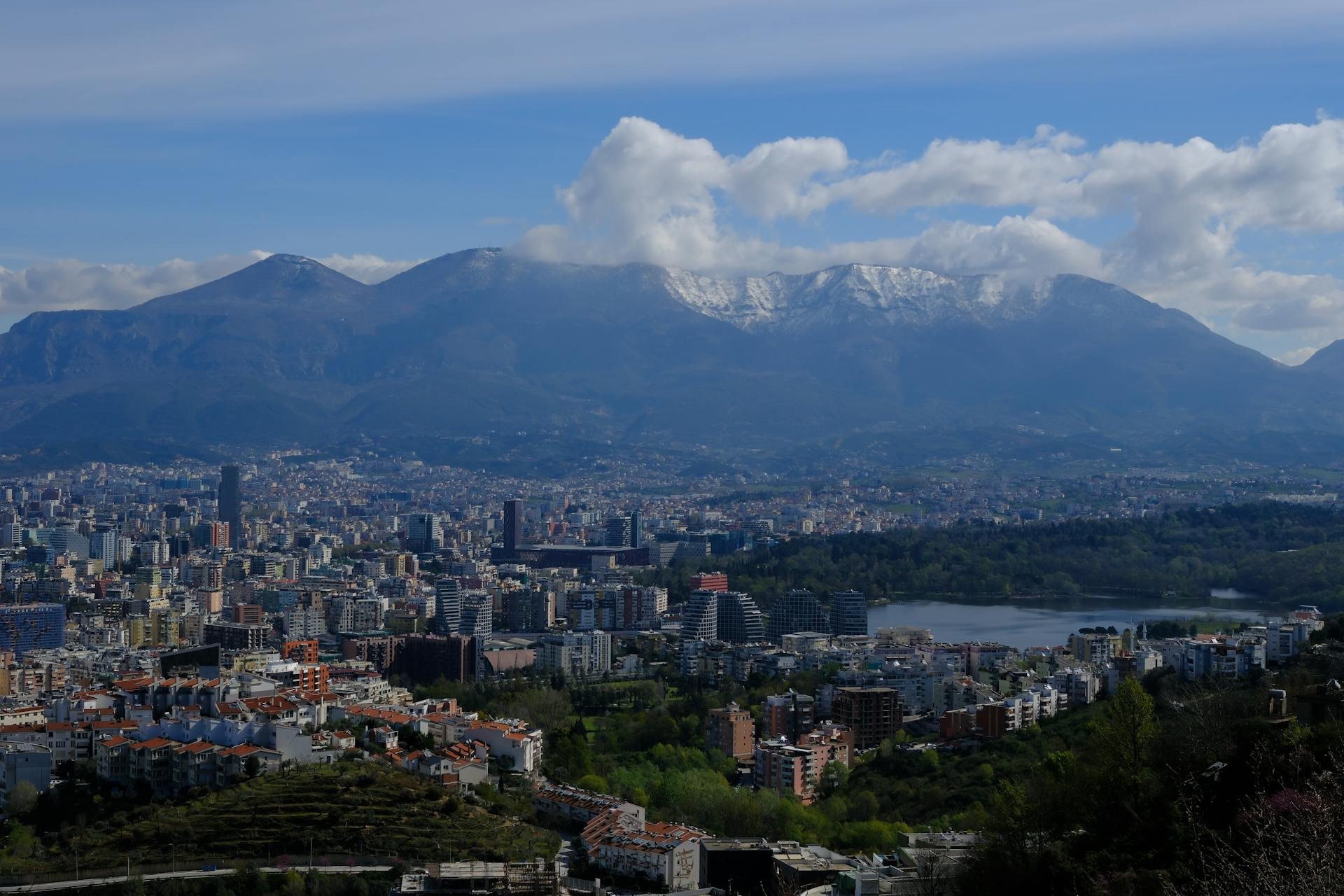
Understanding where to stay in Tirana is key to organizing your trip in the best possible way. The city is relatively compact, but choosing the right area can really make a difference, especially if you only have three days available. The best areas to stay are the historic center, around Skanderbeg Square, and the Blloku district, perfect for those who want to experience Tirana’s nightlife among restaurants and bars.
If you want a comfortable stay in the heart of the city, the Holiday Hotel Tirana is one of the best options. It’s a modern and elegant five-star hotel, with spacious rooms, wellness center, gym, and restaurant – ideal for those looking for a well-equipped and well-located accommodation.
For a good compromise between quality and price, the Sar’Otel Boutique Hotel is a very valid choice. The rooms are well-kept, bright and equipped with all essential comforts, with amenities like sauna, hammam and breakfast included. It’s perfect for those who want a convenient solution without spending too much.
Practical tip. To find the best deals and quickly compare prices and availability, you can check the selection of hotels in Tirana on FullTravel or check up-to-date rates on Booking.com.
Practical information for visiting Tirana
How to get there
Tirana International Airport Mother Teresa (TIA) is located about 17 km from the city center. Several low-cost airlines connect the main Italian cities to Tirana with direct flights. From the airport, you can reach the center by taxi (about 25-30 euros) or by public buses. Ferries from Bari and Ancona arrive at the port of Durres, about 35 km away.
When to go
The best time to visit Tirana is spring, between April and June, and autumn, between September and October. In summer, temperatures can exceed 35 degrees with high humidity; winter is mild but rainy. Spring offers the ideal climate to visit the city center on foot and for excursions to Mount Dajti.
How much does it cost
Tirana is one of the most affordable European capitals. A meal in a local restaurant costs between 10 and 20 euros per person, wine included; the main museums have tickets between 3 and 6 euros; the Dajti cable car costs about 1,500 Albanian lek (around 14 euros) for a round trip. Hotels in the historic center range from 40 euros per night for a good three-star to 80-120 euros for designer options.
How to get around
Tirana’s city center is entirely walkable: Skanderbeg Square, the Blloku, the Hoxha Pyramid, and the National Gallery are all less than a twenty-minute walk from one another. For longer distances, you can use taxis (always agree on the fare before getting in) or local apps like Bolt. For Mount Dajti, the most convenient option is the cable car plus a taxi to reach it.
- Currency: Albanian lek (ALL). Euros and credit cards are accepted in tourist spots in the center, less so in traditional markets.
- Language: Albanian. In the center, many people speak Italian, a legacy of years of cultural and television influence.
- Time zone: UTC+1 (the same as Italy).
- Visa: not required for Italian citizens.
- Local SIM: recommended for mobile data; easily purchased at the airport.
Frequently asked questions about Tirana
How many days do you need to visit Tirana?
To properly visit Tirana, you need at least two or three days. In one day, you can see the main attractions in the center, but with three days you can explore the city more leisurely, visit the museums dedicated to the communist period, and also go up Mount Dajti or take a short trip to the surroundings.
Is it worth visiting Tirana?
Yes, Tirana is definitely worth a visit, especially if you are looking for a European capital different from the usual ones. It’s not a monumental city in the classic sense, but it stands out for its energy, for the contrast between past and present, and for its ability to tell the recent history of Albania in a very direct way.
Is Tirana a safe city?
In general, Tirana is considered a fairly safe city for tourists. As in all capitals, it is still advisable to be careful in the busiest areas, on public transport, and late at night, especially if traveling alone. In the center and the most frequented areas, the atmosphere is usually calm.
What is the best time to visit Tirana?
The best times to visit Tirana are spring and autumn, particularly between April and June and between September and October. During these months the weather is more pleasant for walking and sightseeing. Summer can be very hot, while winter is more humid and less suitable for an active urban itinerary.
What to see in Tirana in one day?
If you have just one day available, it’s best to focus on Skanderbeg Square, the Et’hem Bey Mosque, the Clock Tower, Tirana’s Pyramid, and the Blloku district. If you manage your time well, you can also add Bunk’Art 2 or a stroll at Pazari i Ri.
Where is it best to stay in Tirana?
The most convenient areas to stay in Tirana are the historic center and Blloku. The center is perfect for visiting the main attractions on foot, while Blloku is ideal for those looking for restaurants, bars, and a livelier atmosphere even in the evening.
How do you get around in Tirana?
The center of Tirana is easy to explore on foot. For longer distances, you can use taxis, buses, and apps like Bolt. To reach Mount Dajti, the most practical solution is to take a taxi to the cable car and then go up with the Dajti Ekspres.
Is Mount Dajti worth it?
Yes, Mount Dajti is definitely worth it, especially if you have two or three days available. The cable car offers beautiful views over the city, and at the top you can walk, enjoy a meal with a view, and even visit Bunk’Art 1. It’s one of the most interesting experiences to have around Tirana.
{
“@context”: “https://schema.org”,
“@type”: “FAQPage”,
“mainEntity”: [
{
“@type”: “Question”,
“name”: “Quanti giorni servono per visitare Tirana?”,
“acceptedAnswer”: {
“@type”: “Answer”,
“text”: “Per visitare bene Tirana servono almeno due o tre giorni. In un giorno si riescono a vedere le attrazioni principali del centro, ma con tre giorni si può esplorare la città con più calma, visitare i musei dedicati al periodo comunista e salire anche sul Monte Dajti o fare una piccola escursione nei dintorni.”
}
},
{
“@type”: “Question”,
“name”: “Vale la pena visitare Tirana?”,
“acceptedAnswer”: {
“@type”: “Answer”,
“text”: “Sì, vale la pena visitare Tirana, soprattutto se cerchi una capitale europea diversa dal solito. Non è una città monumentale nel senso classico, ma sorprende per la sua energia, per il contrasto tra passato e presente e per la capacità di raccontare in modo diretto la storia recente dell’Albania.”
}
},
{
“@type”: “Question”,
“name”: “Tirana è una città sicura?”,
“acceptedAnswer”: {
“@type”: “Answer”,
“text”: “In generale Tirana è considerata una città abbastanza sicura per i turisti. Come in tutte le capitali, è comunque consigliabile fare attenzione nelle zone più affollate e sui mezzi pubblici. Nel centro e nelle aree più frequentate l’atmosfera è normalmente tranquilla.”
}
},
{
“@type”: “Question”,
“name”: “Qual è il periodo migliore per visitare Tirana?”,
“acceptedAnswer”: {
“@type”: “Answer”,
“text”: “I periodi migliori per visitare Tirana sono la primavera e l’autunno, in particolare tra aprile e giugno e tra settembre e ottobre. In questi mesi il clima è più piacevole per visitare la città a piedi. L’estate può essere molto calda, mentre l’inverno è più umido.”
}
},
{
“@type”: “Question”,
“name”: “Cosa vedere a Tirana in un giorno?”,
“acceptedAnswer”: {
“@type”: “Answer”,
“text”: “In un giorno a Tirana conviene visitare Piazza Scanderbeg, la Moschea Et’hem Bey, la Torre dell’Orologio, la Piramide e il quartiere Blloku. Se il tempo lo permette si può aggiungere anche Bunk’Art 2 o il mercato Pazari i Ri.”
}
},
{
“@type”: “Question”,
“name”: “Dove conviene dormire a Tirana?”,
“acceptedAnswer”: {
“@type”: “Answer”,
“text”: “Le zone migliori dove dormire a Tirana sono il centro storico e Blloku. Il centro è perfetto per visitare le attrazioni principali a piedi, mentre Blloku è ideale per ristoranti, locali e vita notturna.”
}
},
{
“@type”: “Question”,
“name”: “Come ci si sposta a Tirana?”,
“acceptedAnswer”: {
“@type”: “Answer”,
“text”: “Il centro di Tirana si visita facilmente a piedi. Per distanze maggiori si possono usare taxi, autobus e app come Bolt. Per il Monte Dajti è consigliata la funivia Dajti Ekspres.”
}
},
{
“@type”: “Question”,
“name”: “Il Monte Dajti vale la pena?”,
“acceptedAnswer”: {
“@type”: “Answer”,
“text”: “Sì, il Monte Dajti vale la pena soprattutto se si hanno due o tre giorni a disposizione. Offre panorami sulla città, sentieri nella natura e la possibilità di visitare Bunk’Art 1.”
}
}
]
}