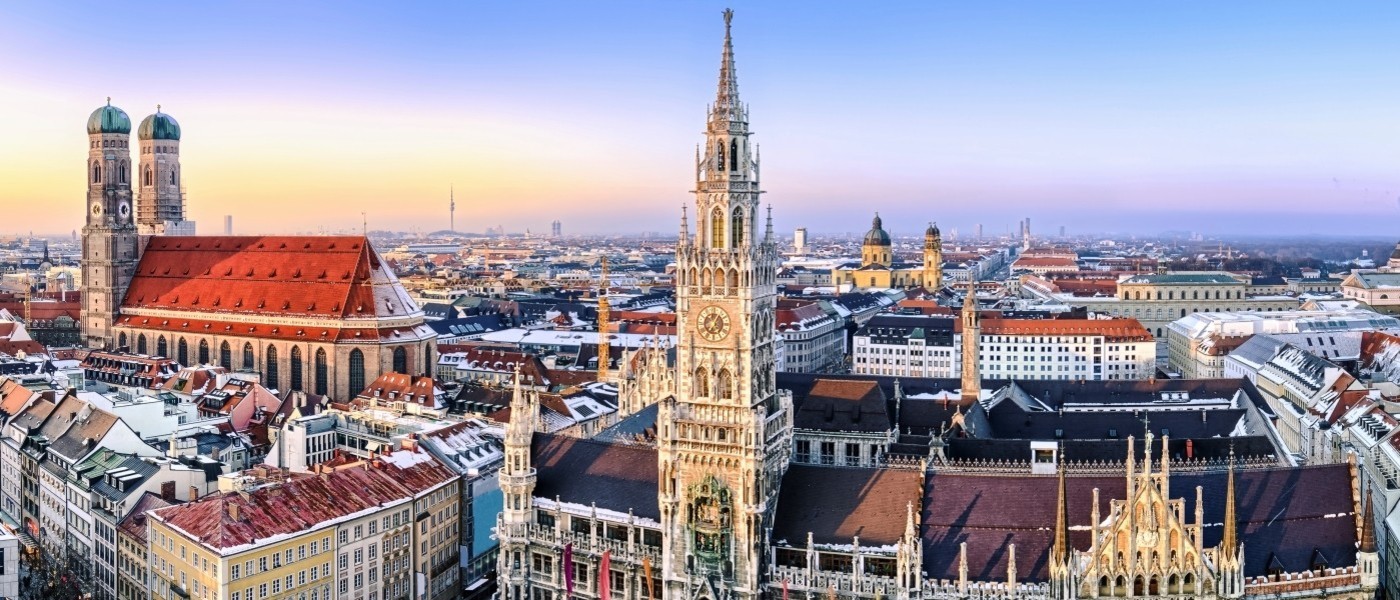


Munich’s Oktoberfest is the most famous folk festival in Bavaria, and one of the best-known events in the world. In Munich, it’s not just called Oktoberfest: for Bavarians, it’s especially known as the Wiesn, named after the Theresienwiese, the vast area where the event takes place every year.
- Oktoberfest essentials at a glance
- Oktoberfest Munich: What is the Wiesn and why is it so famous
- The origins of Oktoberfest
- The official opening: “O’zapft is!”
- Oktoberfest 2026: Schedule and key dates
- Saturday 19 September: Parade and tapping of the first keg
- Sunday 20 September: Traditional costume and marksmen parade
- Thursday 24 September: Oktoberfest Mass
- Sunday 27 September: Outdoor concert at the Bavaria statue
- Tuesday 22 and Tuesday 29 September: Family Days
- Sunday 4 October: Honor Salute at the Bavaria statue
- Where Munich’s Oktoberfest takes place
- Oktoberfest Map: tents, rides, and services
- Oktoberfest Tents
- Do you need a table reservation?
- Oktoberfest Breweries
- How much does it cost to enter Oktoberfest
- Oktoberfest 2026 Opening Times
- Festival grounds
- Opening day
- Last beer in the tents
- Oide Wiesn: the historical Oktoberfest
- What to eat at Oktoberfest
- What to wear to Oktoberfest
- Oktoberfest with children and families
- Entry rules: bags, backpacks, and security checks
- Accessibility at Oktoberfest
- How to get to the Theresienwiese
- Where to stay for Oktoberfest
- Practical tips for first-timers
- Oktoberfest Munich: FAQs
- When is Oktoberfest 2026?
- Where is Munich’s Oktoberfest held?
- Is entry to Oktoberfest free?
- How much does a beer cost at Oktoberfest?
- Do you need to reserve a table in the tents?
- What’s the best day to go to Oktoberfest?
- What does O’zapft is mean?
- What does Wiesn mean?
- Can you go to Oktoberfest with children?
- What bags can you bring to Oktoberfest?
- Oktoberfest Munich: why plan ahead
Here you’ll find massive beer tents, historic breweries, traditional parades, brass bands, Bavarian costumes, rides, stalls, local specialties, and millions of visitors. Oktoberfest is not just a beer festival—it’s a cultural cornerstone for Munich and the entire region of Bavaria, with its own rules, rituals, and time-honored traditions.
This guide covers all the essentials for planning your visit: updated dates, opening times, maps, tents, entry info, prices, Oide Wiesn, how to get there, where to stay, what to eat, what to wear, and which days are ideal for families.
In a nutshell: Munich’s Oktoberfest takes place every year at the Theresienwiese, from September through early October. The 2026 edition is scheduled from Saturday, September 19 to Sunday, October 4. Entrance to the main area and the tents is free; beer, food, rides, attractions, and access to the Oide Wiesn are charged separately.
Oktoberfest essentials at a glance
| 2026 Dates | From Saturday, September 19 to Sunday, October 4, 2026 |
| Where | Theresienwiese, Munich |
| Entry | Free for the main area and tents; separate fee for Oide Wiesn |
| Official Opening | Saturday, September 19 at noon, inside the Schottenhamel tent |
| Traditional phrase | “O’zapft is!”, meaning “It’s tapped!” |
| How to get there | Best reached by U-Bahn, S-Bahn or on foot; there is no visitor parking directly at Theresienwiese |
| Bags | Only bags and backpacks up to 3 liters, with maximum dimensions of 20 × 15 × 10 cm, are permitted |
| Family days | On Tuesdays, discounted prices at many attractions and stalls until 7:00 pm |
| Accessibility | The large tents, restrooms, and main paths have accessible entrances and facilities |
Oktoberfest Munich: What is the Wiesn and why is it so famous
The Wiesnis the name locals from Munich use for the Oktoberfest. The term comes from Theresienwiese, the large urban space where the event takes place. For visitors from elsewhere, Oktoberfest mainly means beer and large tents; but for Munich, the Wiesn is a popular, historical, and cultural event, deeply rooted in Bavarian identity.
The celebration takes over an entire area of the city for more than two weeks, with large and small tents, rides, food stands, attractions, services, entrances, information points, and dedicated zones. The Oktoberfest map is essential to navigate the Feststraße, Wirtsbudenstraße, Oide Wiesn, large tents, small pavilions, restrooms, ATMs, luggage storage, first aid points, and main entrances.
The atmosphere varies greatly depending on the day and time. In the morning and on weekdays, the visit is quieter; in the evening, on weekends, and holidays the tents fill up quickly and entry can be temporarily suspended if no seats are available.
The origins of Oktoberfest
The origins of Oktoberfest date back to 1810, when Munich celebrated the marriage of Crown Prince Ludwig of Bavaria, the future King Ludwig I, and Princess Therese von Sachsen-Hildburghausen. The celebration was so well received by the city’s residents that it was repeated in the following years, eventually evolving into a major public festival.
Theresienwiese is named after Princess Therese herself. At first, the event was tied to dynastic celebrations, horse races, and public events; today, it is the ultimate symbol of Bavarian festivity, balancing local tradition with global participation.
There are many beer festivals in Germany, both before and after Oktoberfest. However, Munich’s remains the main point of reference—for its scale, history, traditions, organization, and its ability to attract visitors from around the world.
The official opening: “O’zapft is!”
Each year, Oktoberfest is officially opened by the mayor of Munich. The ceremony takes place on the festival’s first Saturday, at noon, in the Schottenhameltent. The mayor taps the first beer barrel and proclaims the traditional phrase “O’zapft is!”—a Bavarian expression meaning “it’s tapped.”
Only after this moment can Oktoberfest beer be served in the tents. Until noon on opening day, the anticipation builds with parades, music, and already full tables, but the true start of the festival is symbolically marked by the first tapping.
The opening ceremony is one of the Wiesn’s most iconic moments, followed each year by visitors, the media, and the curious. Anyone wishing to experience it up close should plan well in advance, as the Schottenhamel tent is among the most sought-after places on the first day.
Oktoberfest 2026: Schedule and key dates
Oktoberfest 2026 takes place from Saturday 19 September to Sunday 4 October. In addition to the official opening, the program features parades, religious services, open-air concerts, family days, and traditions that repeat every year.
Saturday 19 September: Parade and tapping of the first keg
The opening day begins with the arrival of tent operators, brewers, marching bands, and decorated wagons heading towards the Theresienwiese. At noon, in the Schottenhamel tent, the mayor taps the first beer barrel and officially opens Oktoberfest with the traditional “O’zapft is!”
Sunday 20 September: Traditional costume and marksmen parade
The first Sunday of the Wiesn is dedicated to the grand parade of traditional costumes and marksmen. Folk groups, associations, marching bands, and floats make their way through the center of Munich, bringing Bavarian tradition out of Theresienwiese and into the city streets.
Thursday 24 September: Oktoberfest Mass
The traditional ecumenical religious service of Oktoberfest takes place in the Marstall tent. It’s a less touristy moment, more devoted to the Wiesn community, hosts, ride operators, and the people who work at the festival.
Sunday 27 September: Outdoor concert at the Bavaria statue
On the festival’s second Sunday, the tents’ orchestras gather for a grand outdoor concert at the foot of the Bavaria statue. It is one of the most charming moments to enjoy Bavarian music and experience the festival atmosphere even outside the tents.
Tuesday 22 and Tuesday 29 September: Family Days
Wiesn Tuesdays are especially suited to those traveling with children. On these days, many rides and stalls offer reduced prices until 7:00 pm. Some tents may also provide special deals for families.
Sunday 4 October: Honor Salute at the Bavaria statue
The final day of Oktoberfest is marked by honorary salutes at the foot of the Bavaria statue. The ceremony takes place at noon, though it doesn’t immediately end the event—the Wiesn continues into the evening, according to the planned schedule.
Where Munich’s Oktoberfest takes place
Oktoberfest is held at the Theresienwiese, a large area in the center of Munich. The location is easily accessible by public transport, but during the festival the crowds can be intense, so it’s best to avoid driving. The most convenient stops are those of the U-Bahn and S-Bahn near Theresienwiese. Among the most useful stations are Theresienwiese, Goetheplatz, Poccistraße, Schwanthalerhöhe, and Hackerbrücke, depending on your arrival point and which entrance you plan to use.
There are no parking facilities directly at Theresienwiese for visitors. The best advice is to use public transport, walk from the city center, or book a hotel with good subway connections.
Oktoberfest Map: tents, rides, and services
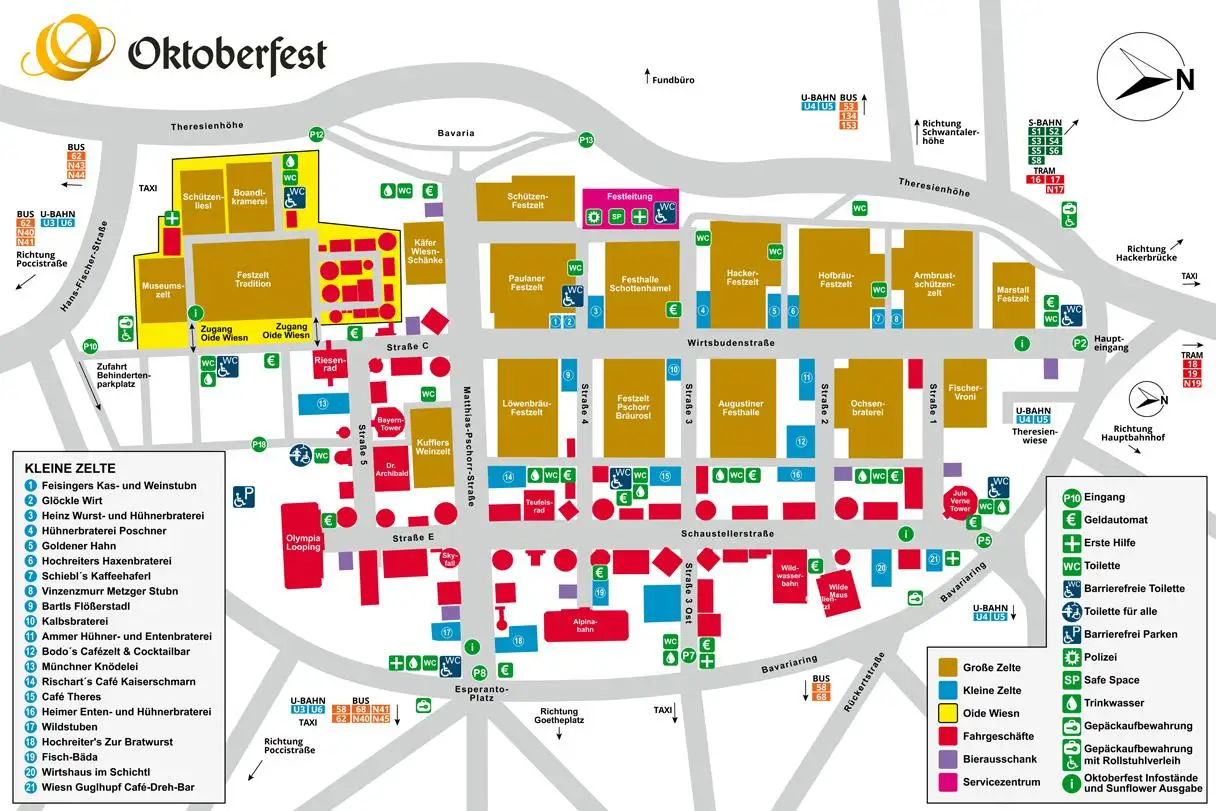
The Oktoberfest map is essential for finding your way around Theresienwiese. The area is vast and often very crowded, especially during the evenings and weekends. The map shows the large tents, small tents, rides, booths, the Oide Wiesn, entrances, internal routes, and all the main services. Before your visit, make sure to locate the most useful points: restrooms, public water fountains, ATMs, first aid points, info points, luggage storage, exits, taxi stands, and the entrances closest to public transport stations.
If you’re visiting Oktoberfest for the first time, check the map in advance and pick out the tent or area you’re most interested in. This will save you time and help you avoid getting lost among the crowds—especially handy if you have a reservation or want to reach a particular event.
Good to know: the Oktoberfest map shows the location of the tents, rides, Oide Wiesn, and the main services at Theresienwiese. It’s a good idea to save it on your phone before you visit.
Oktoberfest Tents
The tents are the heart of Oktoberfest. In 2026, the Wiesn will feature 17 large tents e 21 small tents, each with its own unique atmosphere. Some are more traditional, others cater to an international crowd; some are famous for their music, others for their food, local guests, or vibrant evening ambience. The large tents have thousands of seats, orchestras, indoor areas, and often outdoor spaces styled like a Biergarten. The smaller tents offer a cozier experience, with specialty foods, sweets, fish, meat, coffee, wine, and more unique options.
The best-known large tents include Schottenhamel, Augustiner-Festhalle, Hofbräu-Festzelt, Hacker-Festzelt, Löwenbräu-Festzelt, Paulaner Festzelt, Pschorr-Bräurosl, Ochsenbraterei, Armbrustschützenzelt, Schützen-Festzelt, and Käfer Wiesn-Schänke.
Do you need a table reservation?
You don’t have to reserve a table, but it can be very helpful during peak times. Reservations are managed directly by each individual tent, not through a single central system. In every tent, there are areas accessible without a reservation, both indoors and outdoors. Still, in the evenings, on weekends, and on holidays, tents can fill up quickly and entry may be temporarily suspended.
If you don’t have a reservation, it’s advisable to arrive early, choose a weekday, and keep flexible plans. If one tent is full, try another area of the Wiesn or return at a less crowded time.
Oktoberfest Breweries
Oktoberfest beer is produced by Munich’s historic breweries. The main players at the Wiesn are Augustiner, Hacker-Pschorr, Hofbräu, Löwenbräu, Paulaner e Spaten. These are the breweries traditionally associated with the festival. Beer is served in the Maß, the classic one-liter mug. Each tent serves beer from its partner brewery and offers a different experience in terms of food, music, and crowd.
In 2026, the price of a Maß is estimated to range from 14.80 to 15.90 euros. You’ll need to add extra for food, water, soft drinks, tips, and any booked services.
How much does it cost to enter Oktoberfest
Entry to the main Oktoberfest area and the tents is free. There’s no need to buy a ticket to enter Theresienwiese or access the tents, as long as there is space available and entry hasn’t been temporarily suspended for overcrowding.
However, you do pay for beer, food, rides, attractions, souvenirs, specific services, and entry to the Oide Wiesn. Anyone wishing to reserve a table must check the conditions directly with the chosen tent.
It is important not to confuse the free entry to the area with the total cost of the day. Oktoberfest can become expensive if you drink several Maß, eat in the tents, go on the rides, or spend many hours inside the festival.
Oktoberfest 2026 Opening Times
Oktoberfest hours vary depending on the day of the week, type of activity, and area. In general, the festival grounds open in the morning and close between 11:30 pm and midnight, with some exceptions.
Festival grounds
- Monday to Thursday: from 10:00 am to 11:30 pm
- Friday: from 10:00 am to midnight
- Saturday: from 9:00 am to midnight
- Sunday: from 9:00 am to 11:30 pm
- Public holiday on October 3: from 9:00 am to 11:30 pm
Opening day
- The tents open at 9:00 am
- From 10:00 am, non-alcoholic drinks and light dishes are available
- Beer is served only after the official tapping at noon
- The rides operate from noon to midnight
- The sales stands are open from 9:00 am to midnight
Last beer in the tents
In the large tents, beer service generally ends at 10:30 pm. In the small and medium tents, drink service and music continue until 11:00 pm. Käfer’s Wiesn-Schänke and Kuffler’s Weinzelt are exceptions and can serve drinks until 12:30 am, with closing time at 1:00 am.
Quick answer: in the large Oktoberfest tents, the last beer is usually served at 10:30 pm; in the smaller tents, service ends at 11:00 pm. Some special venues stay open longer.
Oide Wiesn: the historical Oktoberfest
The Oide Wiesn is the traditional area of Oktoberfest. Located in the southern part of the Theresienwiese, it offers a quieter, more traditional, and nostalgic atmosphere compared to the rest of the festival.
Here you’ll find historic rides, traditional tents, folk music, popular dances, and a more laid-back environment. It’s an interesting choice for families, lovers of Bavarian traditions, or anyone seeking a less hectic side of the Wiesn.
In 2026, entrance to the Oide Wiesn costs 4 euros for adults, while children up to 14 years old enjoy free entry. After 9:00 pm admission is free. The Oide Wiesn tents are open daily from 10:00 am to 11:30 pm; beer and music are available until 10:30 pm.
What to eat at Oktoberfest
Oktoberfest is also a grand journey into Bavarian cuisine. In the tents and at stands you’ll find traditional dishes such as roast chicken, pork knuckle, sausages, pretzels, cheese, potatoes, sauerkraut, sweets, toasted almonds, and local specialties. Some tents are particularly famous for their food: the Ochsenbraterei, for example, is known for its ox dishes, while other pavilions specialize in different fare—like fish, duck, chicken, desserts, or more elaborate plates.
There’s no need to stop at just one tent. Those who want to enjoy a lighter experience can wander between stands, sample different dishes, and alternate time in the tents with open-air attractions.You can also book a reserved seat here for lunch or dinner in a large beer tent or opt for a all-inclusive Oktoberfest tour in Munich.
What to wear to Oktoberfest
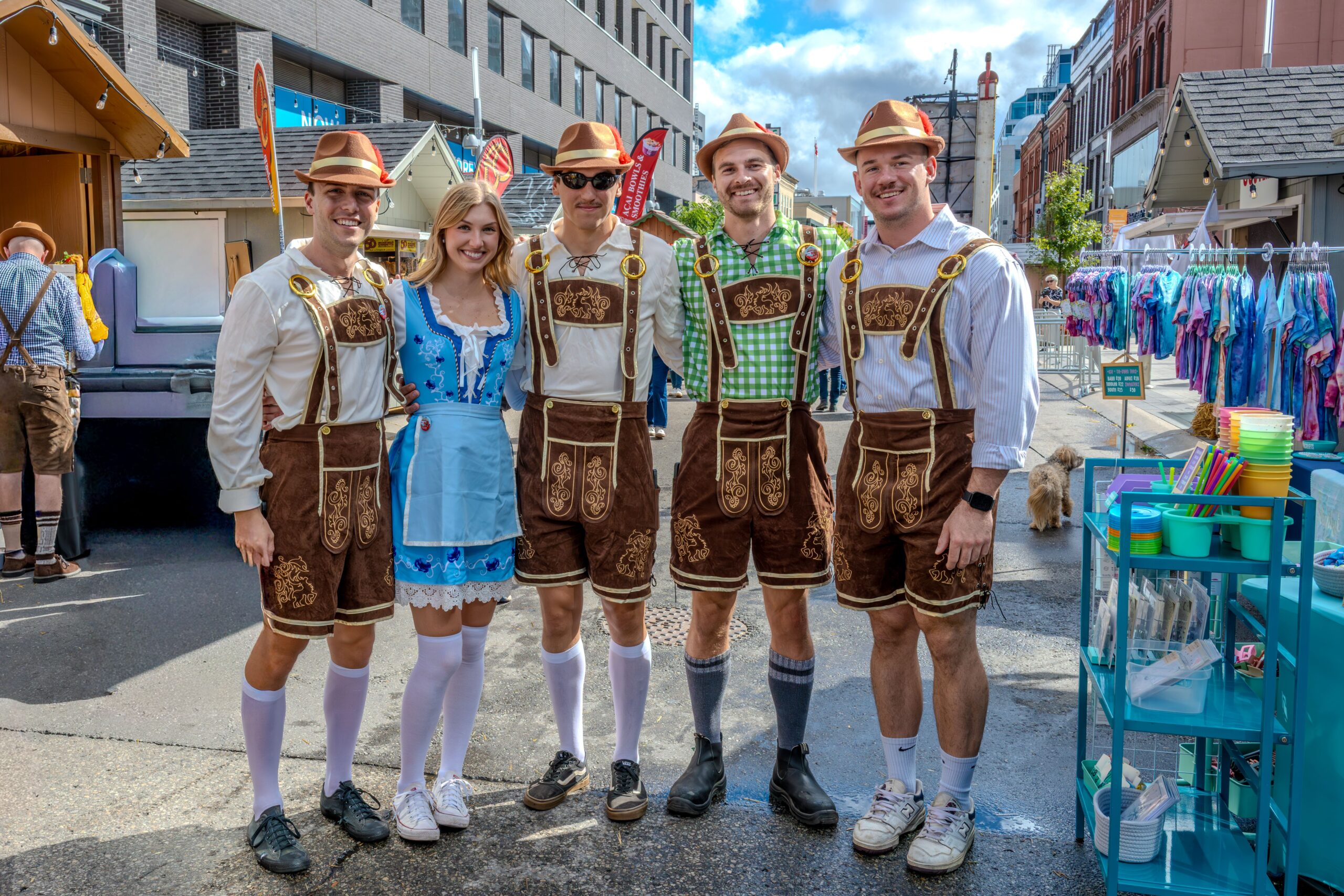
Many visitors wear traditional Bavarian clothing, though it’s not mandatory. The Dirndl is the traditional dress for women, while Lederhosen are the leather trousers typically worn by Bavarian men. Dressing in traditional style can make the experience more authentic, but it’s important to choose clothing that is both comfortable and respectful of tradition. It’s better to avoid overly caricatured costumes or generic party outfits: Oktoberfest is popular with tourists, but it remains deeply tied to Bavarian culture.
Comfortable shoes are essential. The Theresienwiese is large, you’ll do a lot of walking, and during peak times you may have to move between beer tents, entrances, attractions, and public transport stops.
Oktoberfest with children and families
Oktoberfest can be enjoyed with children as well, provided you carefully choose when to go. Mornings, weekdays, and family-focused days are the best times to enjoy a calmer Wiesn experience. In 2026, family days are scheduled for Tuesday, September 22 and Tuesday, September 29. On these dates, many attractions and stalls offer reduced prices until 7:00 pm. This is the ideal time for those who want to focus on rides, sweets, tradition, and atmosphere, while avoiding the evening crowds.
The Oide Wiesn is often a great choice for families, thanks to its cozier atmosphere and historic rides. As always, it’s best to arrive early and plan your visit to avoid peak crowds.
Entry rules: bags, backpacks, and security checks
Oktoberfest has strict security regulations. Allowed bags and backpacks can hold up to 3 liters and measure no more than 20 × 15 × 10 cm. Larger bags are not permitted within the festival grounds. It’s recommended to arrive with only the essentials: ID, phone, wallet, any necessary medications, and a few personal items. Those traveling with larger luggage should use authorized storage, if available, or leave their bags at the hotel or the station.
There may be security checks at entrances. During peak times, lines can form not only to enter the tents but also to access the festival area or pass through security.
Accessibility at Oktoberfest
Oktoberfest offers accessible facilities and services. The large tents, toilets, and main walkways all have entrances and features designed for people with disabilities or reduced mobility. However, the Theresienwiese is still a very crowded and expansive area. Anyone with specific needs should plan their route in advance, marking entrances, accessible restrooms, assistance points, and less crowded zones on the map.
Inside the tents, the availability of accessible seating can vary depending on the time, the tent, and attendance levels. It’s a good idea to check in advance and, if needed, contact the tent or official festival services directly.
How to get to the Theresienwiese
The best way to get to Oktoberfest is by public transportation. During the Wiesn, Munich is very crowded and the Theresienwiese area doesn’t have direct parking for visitors. The U-Bahn and S-Bahn are the most convenient options. The most useful stops depend on the entrance you choose: Theresienwiese is the closest, but during peak times it might be easier to use Goetheplatz, Poccistraße, Schwanthalerhöhe, or Hackerbrücke as alternatives.
If you’re staying in the city center, you can often reach the Wiesn on foot, especially if you’re near the main train station, Ludwigsvorstadt, Schwanthalerhöhe, or areas with good connections.
Where to stay for Oktoberfest
Staying near the Theresienwiese is convenient, but hotel prices rise sharply during Oktoberfest and availability sells out quickly. The best areas are those close to the festival or well served by U-Bahn and S-Bahn lines. Neighborhoods to consider include Ludwigsvorstadt, Schwanthalerhöhe, the city center close to the main train station, Sendling, Glockenbachviertel, and districts along metro lines with easy access to Theresienwiese.
Those on a budget can look for areas a little further out but with good connections. It’s important to check actual travel times, especially at night, rather than just relying on distance. Here you can find the right hotel for Oktoberfest.
Practical tips for first-timers
If you’re visiting Oktoberfest for the first time, don’t show up without at least a basic plan. The festival is huge, crowded, and very well organized: knowing where you want to go ahead of time helps you enjoy it more.
- Arrive early if you want to get into a tent without a reservation.
- Choose weekdays if you want to avoid the biggest crowds.
- Check the map before arriving at Theresienwiese.
- Bring a small bag, within the permitted limits.
- Use public transport, not your car.
- Don’t focus your visit solely on the beer: parades, music, rides, and the Oide Wiesn are all part of the experience.
- Book your hotel well in advance.
- Drink water and take breaks, especially if you plan on staying at the festival for many hours.
Oktoberfest Munich: FAQs
When is Oktoberfest 2026?
Oktoberfest 2026 takes place from Saturday, September 19 to Sunday, October 4 at the Theresienwiese in Munich.
Where is Munich’s Oktoberfest held?
Oktoberfest is held at the Theresienwiese, a vast area in the center of Munich, easily reached by U-Bahn, S-Bahn, and on foot from the city center.
Is entry to Oktoberfest free?
Yes, entry to the main festival grounds and the beer tents is free. You’ll pay for beer, food, rides, attractions, any booked services, and access to the Oide Wiesn.
How much does a beer cost at Oktoberfest?
In 2026, a Maß—the one-liter mug served in the beer tents—costs approximately between 14.80 and 15.90 euros, depending on the tent.
Do you need to reserve a table in the tents?
Reservations aren’t mandatory, but are recommended if you want to enter the tents during peak hours, especially in the evenings, on weekends, and on holidays. If you don’t have a reservation, it’s a good idea to arrive early.
What’s the best day to go to Oktoberfest?
For a first-time visit, weekdays and the morning or early afternoon hours are recommended. Family Tuesdays are ideal for those traveling with kids.
What does O’zapft is mean?
“O’zapft is!” is the Bavarian phrase spoken by the mayor of Munich during the official opening of Oktoberfest. It means “it’s tapped,” marking the start of beer service in the tents.
What does Wiesn mean?
Wiesn is the local term Munich residents use for Oktoberfest. It comes from Theresienwiese, the field where the festival takes place.
Can you go to Oktoberfest with children?
Yes, but it’s best to choose less crowded times and family-oriented days. In 2026, discounts on many attractions and stalls are available on festival Tuesdays until 7:00 PM.
What bags can you bring to Oktoberfest?
Only bags and backpacks with a maximum capacity of 3 liters and maximum dimensions of 20 × 15 × 10 cm are allowed. Larger bags are not permitted in the festival area.
Oktoberfest Munich: why plan ahead
Munich’s Oktoberfest is a beloved local festival, but it’s also a huge event with rules, schedules, crowds, and costs you should know before you go. Arriving prepared means choosing the best day, knowing your way around, avoiding unnecessary lines, finding seats in the tents more easily, and experiencing the Wiesn with greater awareness.
The key is not to reduce Oktoberfest to just beer. The festival is about rituals, history, music, food, costumes, rides, families, traditions, and symbolic moments. That’s why it’s worth exploring with curiosity, respect, and a bit of planning.
{
“@context”: “https://schema.org”,
“@type”: “FAQPage”,
“mainEntity”: [
{
“@type”: “Question”,
“name”: “Quando si svolge l’Oktoberfest 2026?”,
“acceptedAnswer”: {
“@type”: “Answer”,
“text”: “L’Oktoberfest 2026 si svolge da sabato 19 settembre a domenica 4 ottobre alla Theresienwiese di Monaco di Baviera.”
}
},
{
“@type”: “Question”,
“name”: “Dove si trova l’Oktoberfest di Monaco?”,
“acceptedAnswer”: {
“@type”: “Answer”,
“text”: “L’Oktoberfest si svolge alla Theresienwiese, una grande area nel centro di Monaco di Baviera, facilmente raggiungibile con U-Bahn, S-Bahn e a piedi dal centro.”
}
},
{
“@type”: “Question”,
“name”: “L’ingresso all’Oktoberfest è gratuito?”,
“acceptedAnswer”: {
“@type”: “Answer”,
“text”: “Sì, l’ingresso all’area principale della festa e ai tendoni è gratuito. Si pagano birra, cibo, giostre, attrazioni, eventuali servizi prenotati e l’accesso alla Oide Wiesn.”
}
},
{
“@type”: “Question”,
“name”: “Quanto costa una birra all’Oktoberfest?”,
“acceptedAnswer”: {
“@type”: “Answer”,
“text”: “Nel 2026 una Maß, il boccale da un litro servito nei tendoni, costa indicativamente tra 14,80 e 15,90 euro, a seconda del tendone.”
}
},
{
“@type”: “Question”,
“name”: “Serve prenotare un tavolo nei tendoni?”,
“acceptedAnswer”: {
“@type”: “Answer”,
“text”: “La prenotazione non è obbligatoria, ma è consigliata se si vuole entrare nei tendoni nelle ore più richieste, soprattutto la sera, nei weekend e nei giorni festivi. Senza prenotazione conviene arrivare presto.”
}
},
{
“@type”: “Question”,
“name”: “Qual è il giorno migliore per andare all’Oktoberfest?”,
“acceptedAnswer”: {
“@type”: “Answer”,
“text”: “Per una prima visita sono consigliati i giorni feriali e le ore del mattino o del primo pomeriggio. I martedì delle giornate famiglia sono adatti a chi viaggia con bambini.”
}
},
{
“@type”: “Question”,
“name”: “Cosa significa O’zapft is?”,
“acceptedAnswer”: {
“@type”: “Answer”,
“text”: “O’zapft is è l’espressione bavarese pronunciata dal sindaco di Monaco durante l’apertura ufficiale dell’Oktoberfest. Significa è spillata e indica l’inizio del servizio della birra nei tendoni.”
}
},
{
“@type”: “Question”,
“name”: “Cosa significa Wiesn?”,
“acceptedAnswer”: {
“@type”: “Answer”,
“text”: “Wiesn è il nome con cui i monacensi chiamano l’Oktoberfest. Deriva da Theresienwiese, l’area dove si svolge la festa.”
}
},
{
“@type”: “Question”,
“name”: “Si può andare all’Oktoberfest con i bambini?”,
“acceptedAnswer”: {
“@type”: “Answer”,
“text”: “Sì, ma è meglio scegliere gli orari meno affollati e le giornate dedicate alle famiglie. Nel 2026 sono previsti sconti su molte attrazioni e bancarelle nei martedì della festa fino alle 19:00.”
}
},
{
“@type”: “Question”,
“name”: “Che borse si possono portare all’Oktoberfest?”,
“acceptedAnswer”: {
“@type”: “Answer”,
“text”: “Sono ammesse solo borse e zaini con capacità massima di 3 litri e dimensioni massime di 20 × 15 × 10 cm. Borse più grandi non sono consentite nell’area della festa.”
}
}
]
}