


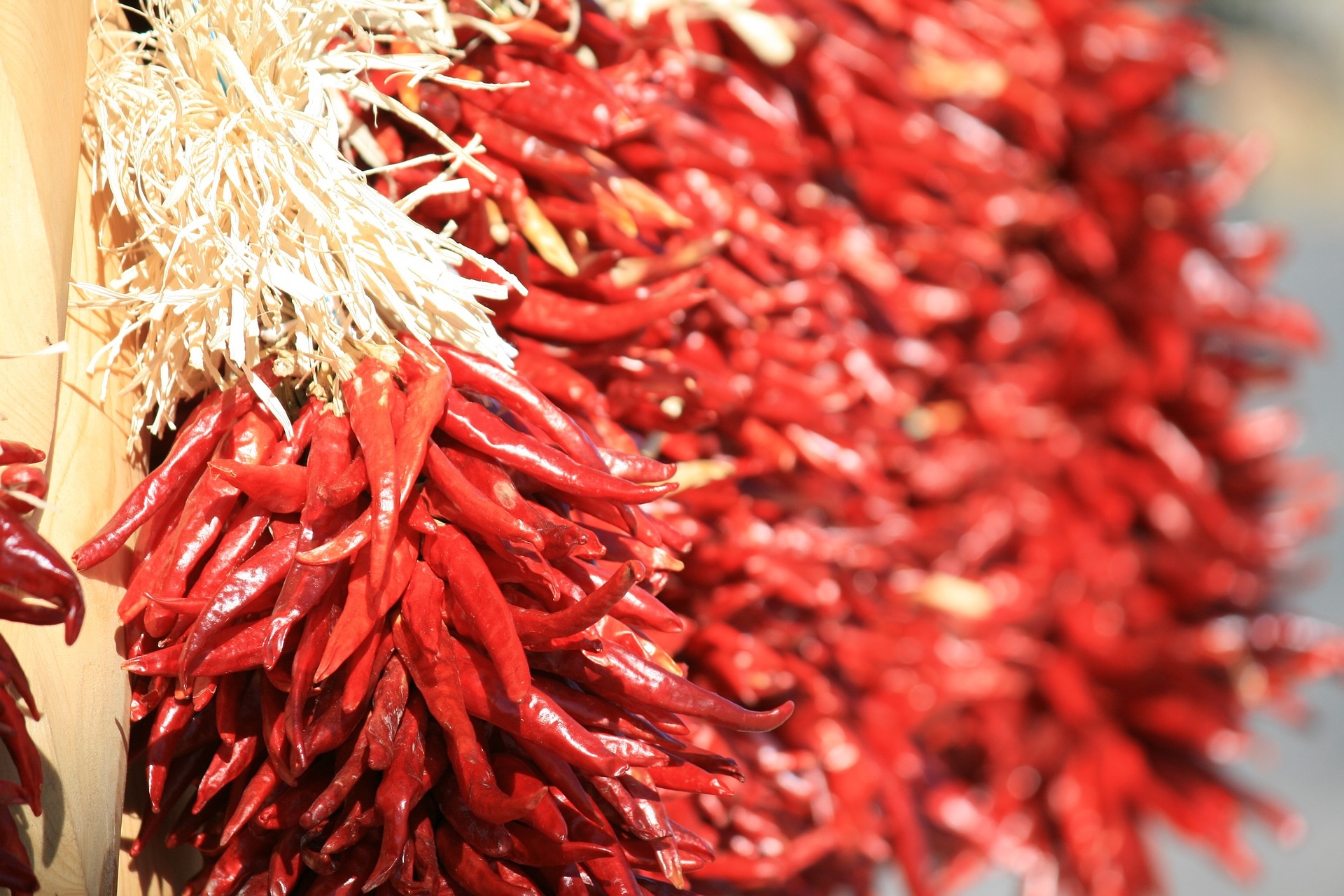

An original idea dedicated to deepening and spreading the “culture of spiciness”—the use of chili pepper in cuisine, cosmetics, as a remedy, and as a key element in popular tradition. Today, the Academy has over 2,000 members and, in addition to dozens of branches throughout Italy, boasts offices in Mexico City, Paris, and New York.
- Mr. Monaco, after 500 years since its arrival, are Italians rediscovering chili peppers?
- What makes this product truly special?
- But many believe chili pepper is bad for you…
- Some people have called it “the Viagra of the future.” Is chili really an aphrodisiac?
- How much should you eat?
- There’s a cedar and chili liqueur—where did this unusual pairing come from?
- A tip for easing spiciness if you overdo it?
Mr. Monaco, after 500 years since its arrival, are Italians rediscovering chili peppers?
It seems so, considering the great success of the Academy. In Diamante, every September, we organize the “Chili Pepper Festival”: a celebration of food, culture, and satire now in its sixth edition. Every year, the event grows with new activities and well-known guests. Everyone wants to join in: TV channels and newspapers feature us, and the number of tourists increases. All thanks to our spicy chili pepper.
What makes this product truly special?
It’s cheerful, fiery, explosive, eye-catching, intriguing, and above all, good for you. In the kitchen, it enhances dishes without overpowering them, actually bringing out and strengthening flavors. In cosmetics, mixed with clay, it makes a great beauty mask and is useful against cellulite. The alcohol extract strengthens hair. A study published in “Human Nutrition” highlighted its benefits on basal metabolism, and researchers at the University of Tasmania proved that capsaicin in chili peppers can boost calorie burn by up to 15%. So it’s a perfect ally for anyone on a weight-loss diet.
But many believe chili pepper is bad for you…
This is one of the reasons I founded the Academy—to dispel myths through documented facts. Chili pepper is a real treasure trove of beneficial substances. Besides capsaicin, capsanthin, and capsicin, it contains vitamins A, C, E, K2, PP, lecithin, malonic acid, potassium, copper, and iron. How could it be harmful? On the contrary, it has strong vasodilatory and anti-cholesterol properties and relieves pain from arthritis, arthrosis, back pain, and rheumatism. When eaten regularly, it can help prevent liver failure, cirrhosis, and prostatitis, and is an excellent decongestant for laryngitis and hoarseness. As early as 1857, the French Medical Academy acknowledged its effectiveness, even against all forms of hemorrhoids. Finally, new anti-cancer studies credit antioxidants with strengthening immunity against tumor developments—and chili pepper is one of the most powerful natural antioxidants.
Some people have called it “the Viagra of the future.” Is chili really an aphrodisiac?
Applied to the skin, it has a revulsive effect—it dilates the capillaries and warms the body. It acts as a vasodilator and is rich in vitamin E, known as “the fertility and sexual potency vitamin”. So, yes, it can be considered an aphrodisiac—though it has little in common with pricey delicacies such as oysters, truffles, caviar, or champagne, all traditionally famous for their stimulating effects. I like to call chili “the poor man’s drug”.
How much should you eat?
Opinions differ. Phytotherapy expert Jan Valnet advises not to exceed one gram per day, while chili expert Ettore Liuni claims the best dose is one gram of powder for every 10 kg of body weight. In my view, good sense should prevail—find your own tolerance with personal experience and taste.
There’s a cedar and chili liqueur—where did this unusual pairing come from?
It’s an effective digestive, since chili aids digestion. Palmiro Raffo, a restaurateur friend and member of the Academy, even created the world’s first “digestive dessert”: the “devil’s tart,” made with chili pepper jam. In his restaurant, Sabbia d’Oro, you have to book it in advance because it’s always in high demand. The recipe? That’s a secret he’s never shared, not even with me.
A tip for easing spiciness if you overdo it?
Never water—maybe a little red wine. The surest remedy is to eat a bite of bread with a sprinkle of salt. To remove spice from your hands, rub them with a ripe tomato first and then wash with soap and water.