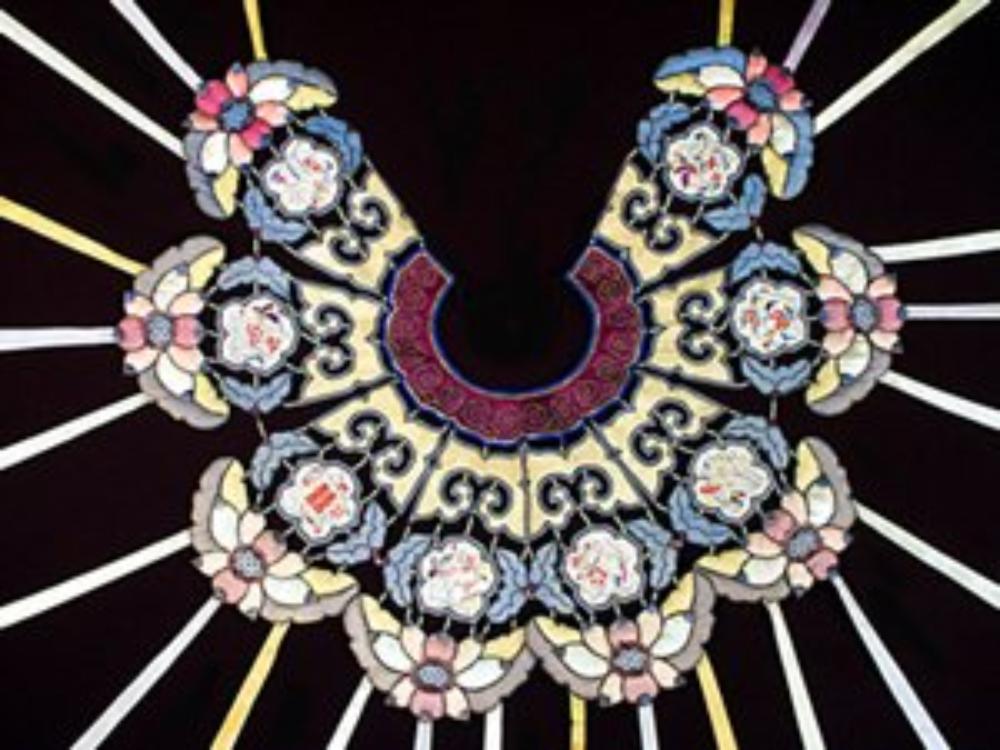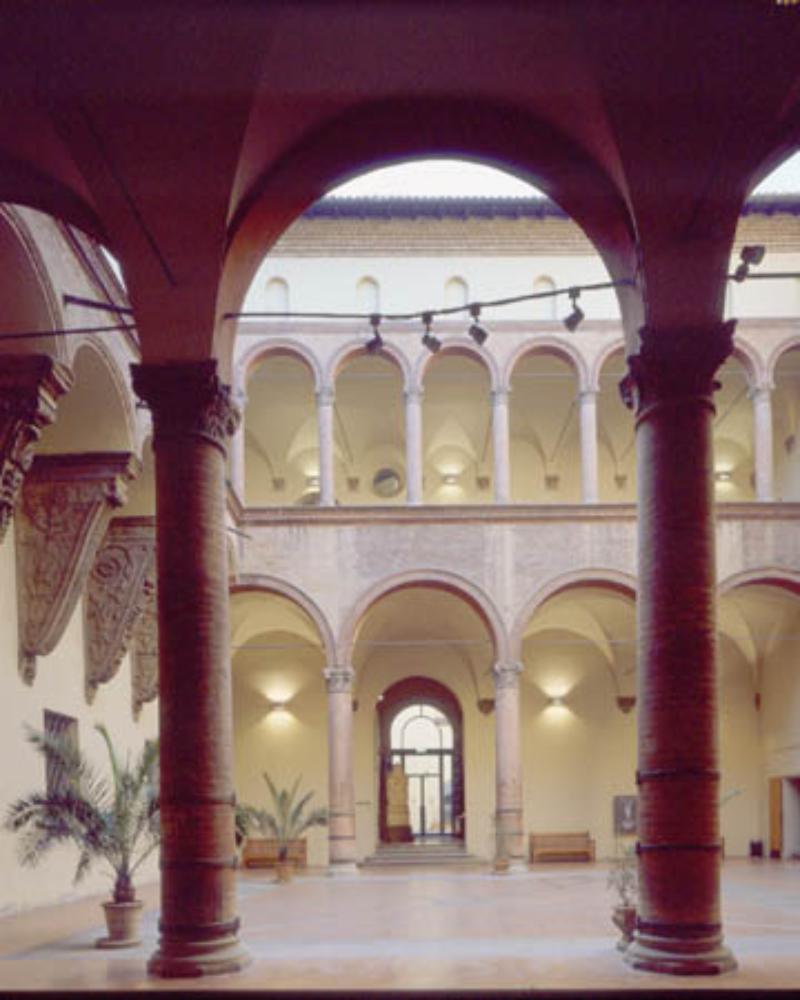


Since 1985 the Museum has been housed inside the Ghisilardi-Fava Palace. The first two rooms illustrate the history of the museum with the main collections that contributed to its formation: the Marquis Ferdinando Cospi’s “cabinet of curiosities”, set up in the Public Palace in 1675, and the “experimental” collection of General Luigi Ferdinando Marsili, formed within the Institute of Sciences (1714). Between 1742 and 1743, the two collections were transferred to the Poggi Palace and expanded with a donation from Benedict XIV. From these collections, enhanced over time by suppressed estates, bequests, and acquisitions, the materials selected to form the first civic museum (1881) were chosen. The works displayed in the two rooms result from a typological selection of the various collections: among the exotic items are ostrich eggs and coconuts adorned with engravings, objects of Oriental origin or taste. A wide space is dedicated to scientific instruments including a 16th-century night clock and engraved plates (1756). One room houses part of the exotic materials from the Palagi collection. The museum path continues with the medieval and early Renaissance core, consisting of works connected to the city’s history such as the ‘Statue of Boniface VIII’, created in 1301 for the Public Palace by goldsmith Manno Bandini from Siena with gilded copper plates on a wooden core, the ‘St. Peter Martyr’ by Giovanni di Balduccio, formerly in S. Domenico, and sculptures from the Merchants’ loggia. The culture of the University is documented by the funerary monuments of doctors, such as the one attributed to Jacopo Lanfrani, and those made by Pier Paolo delle Masegne and Andrea da Fiesole. Among other sculptural works, notable is the ‘Garganelli Plate’, the only sculptural work by Francesco del Cossa. The collection of bronze statuettes includes the model for Giambologna’s ‘Fountain of Neptune’, Bernini’s ‘Bust of Gregory XV’, and Algardi’s ‘St. Michael the Archangel’. Among the ivories are a ‘Triptych’ from the Embriachi workshop and samples from Sierra Leone (15th-16th centuries). Decorative arts are represented by examples of goldsmithing and medal making, glass, textiles, weapons, some from the Bentivoglio family, many from the Marsili collection; noteworthy is the tournament armor of the Cospi family (16th century). The musical instrument collection is regionally significant. In 1995, an important collection of illuminated Bolognese manuscripts from the 13th-16th centuries and a very rich ceramic collection composed of 300 pieces from the 13th to the 19th century of various productions were added to the exhibition route.
Information on Civic Museums of Ancient Art: Medieval Civic Museum of Bologna
Via Manzoni, 4,
40121 Bologna (Bologna)
051203916
[email protected]
https://www.comune.bologna.it/iperbole/museicivici/
Source: MIBACT