


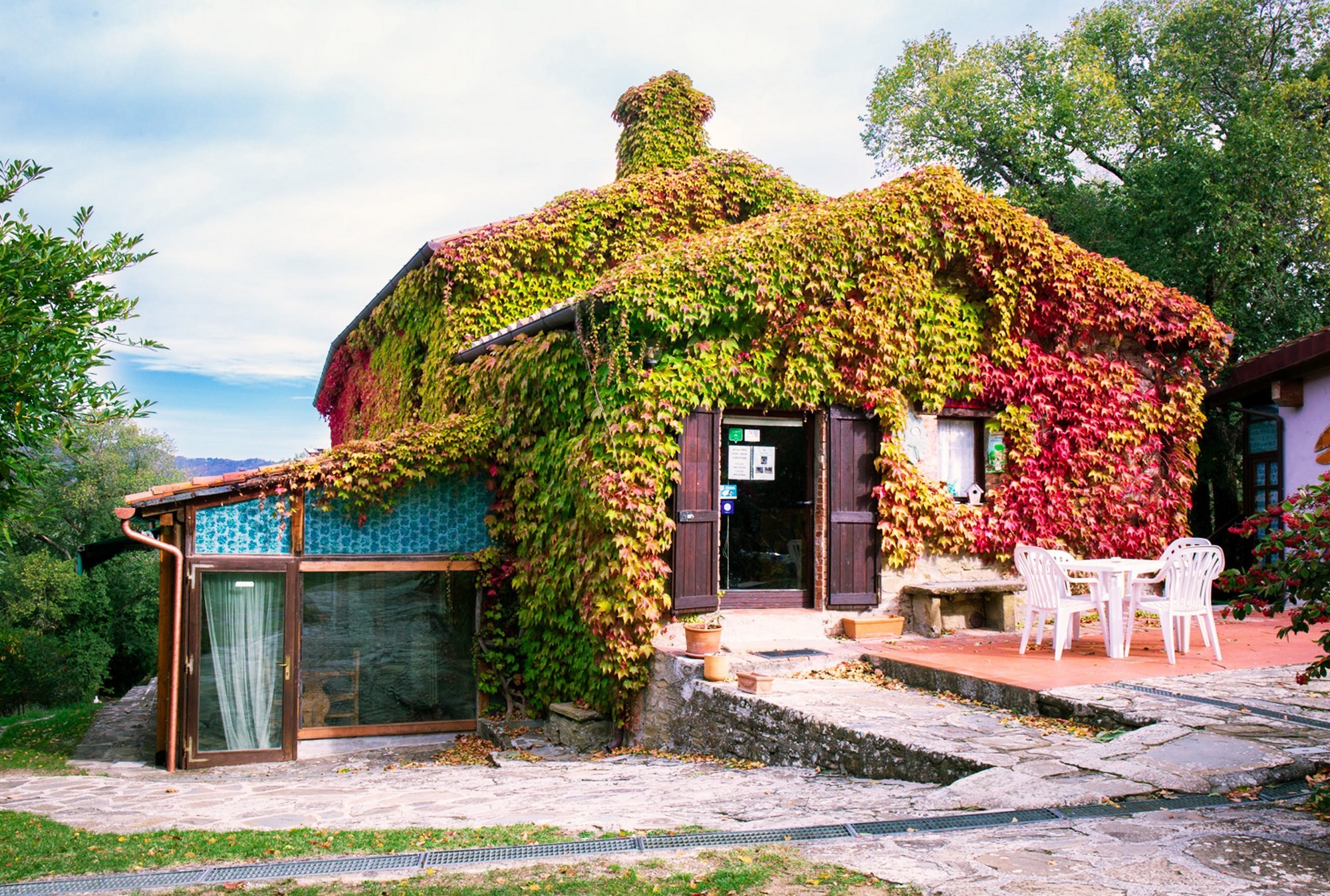

Between crowded art cities, quick weekend trips, and destinations visited a thousand times, there is another Italy waiting to be discovered. It is that of small villages, secondary roads, towns tied to extraordinary stories, and territories that out of season can offer even more charm. In this scenario, the camper becomes the ideal travel companion: it allows freedom of movement, the building of personalized stops, and reaching less trodden places without depending on rigid schedules or complicated connections.
- Why choose a camper to discover Italy’s villages
- A road trip itinerary between culture, literature, and small towns
- On the trail of Dario Fo: Sangiano and Porto Valtravaglia
- Dario Fo’s Umbria: Santa Cristina di Gubbio and Montone
- Pinocchio in Piedmont: Vernante, the village of murals
- Collodi and the Pinocchio Park: the most iconic stop of the trip
- How to organize this itinerary by camper
- Slow tourism, villages and off-season travel: why this trip works
- A less obvious Italy to discover street by street
- Frequently asked questions about campervan itineraries in Italy’s villages
- What are the best campervan itineraries in Italian villages?
- Why is the campervan ideal for visiting Italian villages?
- Which villages to visit tracing Pinocchio’s steps?
- Where are the places linked to Dario Fo?
- When is the best period to visit Italian villages by campervan?
- How much time is needed to do this campervan itinerary?
This camper itinerary through Italy’s villages, recommended by Assocamp, combines two very suggestive narrative threads: on one side the places connected to Dario Fo, on the other those linked to the world of Pinocchio and its author, Carlo Collodi. The result is an original, cultural, and relaxed road trip, perfect for those looking for ideas for a slower, widespread, and authentic tourism.
Why choose a camper to discover Italy’s villages
Visiting small Italian villages doesn’t just mean moving away from mass tourism, but also approaching a different way of traveling. In many cases, it’s precisely the connections, lack of information, or unfamiliarity with certain territories that hold back the departure. The camper, instead, reduces most of these obstacles and makes it easier to organize a flexible itinerary, with stops decided day by day and the possibility to change plans based on weather, season, or mood.
It is also an ideal solution for those who want to seasonally diversify their travels. Italian villages, away from the peaks of the high season, often show their most authentic side during the less crowded months: squares are more livable, shops more accessible, landscapes quieter. And for those who love food and wine, traveling by camper offers the advantage of building an itinerary among local flavors, markets, typical products, and panoramic stops without haste.
A road trip itinerary between culture, literature, and small towns
The basic idea is simple but very effective: starting from places connected to two protagonists of Italian culture and transforming these references into a journey among villages, landscapes, and atmospheres. On one side is Dario Fo, an unconventional artist, Nobel Prize in Literature, and a figure deeply tied to some places in Northern Italy and Umbria. On the other side is the world of Pinocchio, which crosses Collodi’s Tuscany but also surprises in Piedmont, in the small village of Vernante.
This is not a linear itinerary to be rapidly consumed, but a route to be adapted according to the time available. It can become a multi-day trip or a series of mini tours to be undertaken at different times of the year. The beauty, after all, is exactly this: using the camper not only as a means of transport but as a way to inhabit the journey.
On the trail of Dario Fo: Sangiano and Porto Valtravaglia
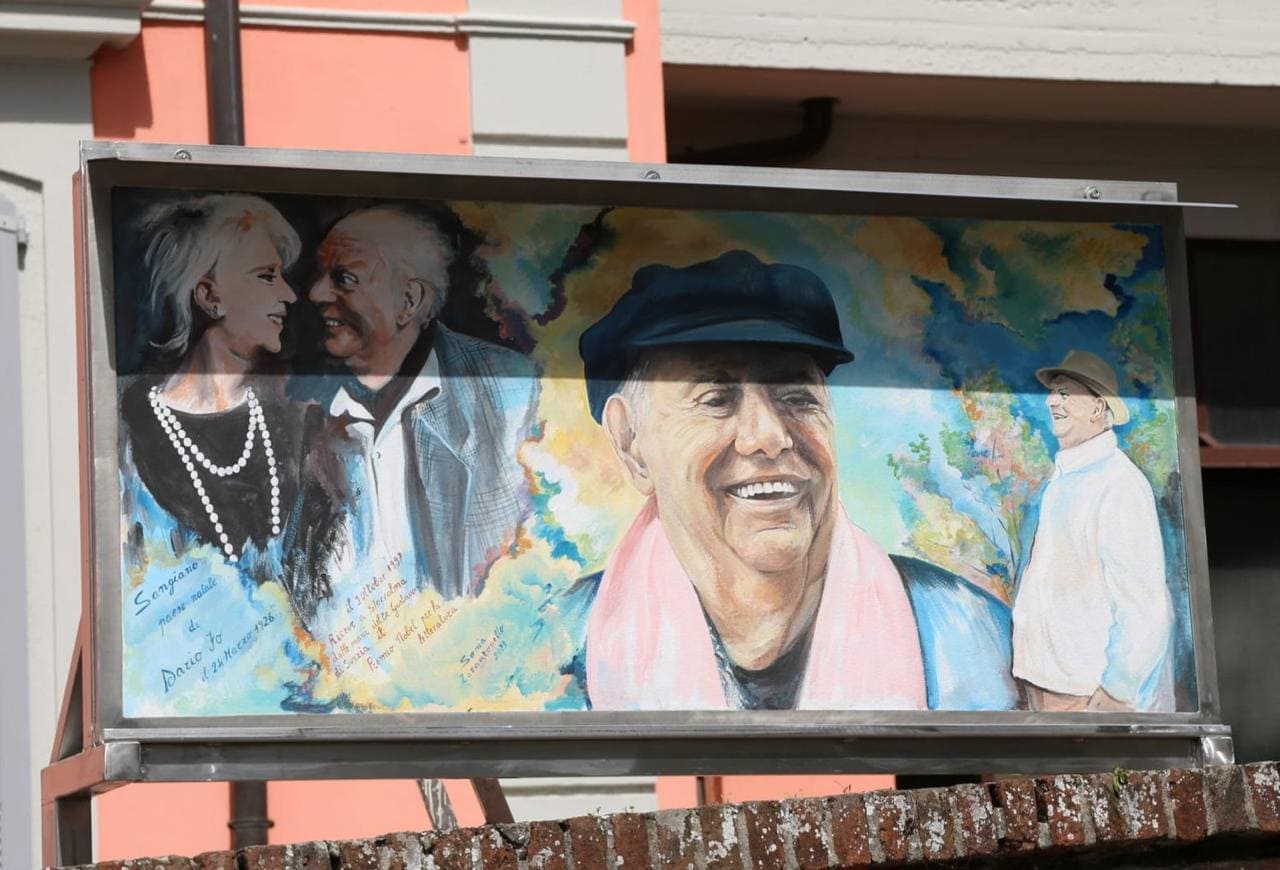
The first stretch of the itinerary leads to Lombardy, between Varese and Lake Maggiore. The ideal starting point is Sangiano, the village where Dario Fo was born. Here everything has a discreet, almost intimate dimension, and precisely this simplicity helps to better understand his origins. The birthplace, with its modest facade, tells of a childhood away from the spotlight, inside a popular and concrete Italy that would leave deep traces even in his poetics.
From Sangiano it’s worth continuing toward Porto Valtravaglia, overlooking Lake Maggiore. It is one of those places that surprise with the balance between landscape and memory. Here the Fo family later moved, and here the writer set memories and stories linked to his childhood, also reflected in the book Il paese dei Mezaràt. Visiting Porto Valtravaglia therefore means not only stopping in a pleasant and relaxing lakeside village, but also entering a narrative universe that mixes biography, imagination, and tradition.
The Lake Maggiore area is well suited for a camper trip. The scenic roads, small towns overlooking the water, and the possibility to alternate cultural and naturalistic stops make this part of the itinerary particularly enjoyable in spring and early autumn.
Dario Fo’s Umbria: Santa Cristina di Gubbio and Montone
The second segment dedicated to Dario Fo changes landscape and takes you to the heart of Umbria. Here the journey takes on a more introspective, almost meditative tone, without losing its cultural strength. An important stop is Santa Cristina di Gubbio, a hilltop village immersed in a suggestive natural setting. In this area, Dario Fo and Franca Rame spent a lot of time, dedicating themselves to theater, reflection, and a deeper connection with spirituality and the territory.
Nearby is the Free University of Alcatraz, founded by their son Jacopo Fo: a place that combines theater, art, wellness, ecology, and education. Even for those who do not attend courses or activities, this area represents an interesting stop to better understand the cultural and human legacy of the Fo family, set in a landscape that naturally invites slowing down.
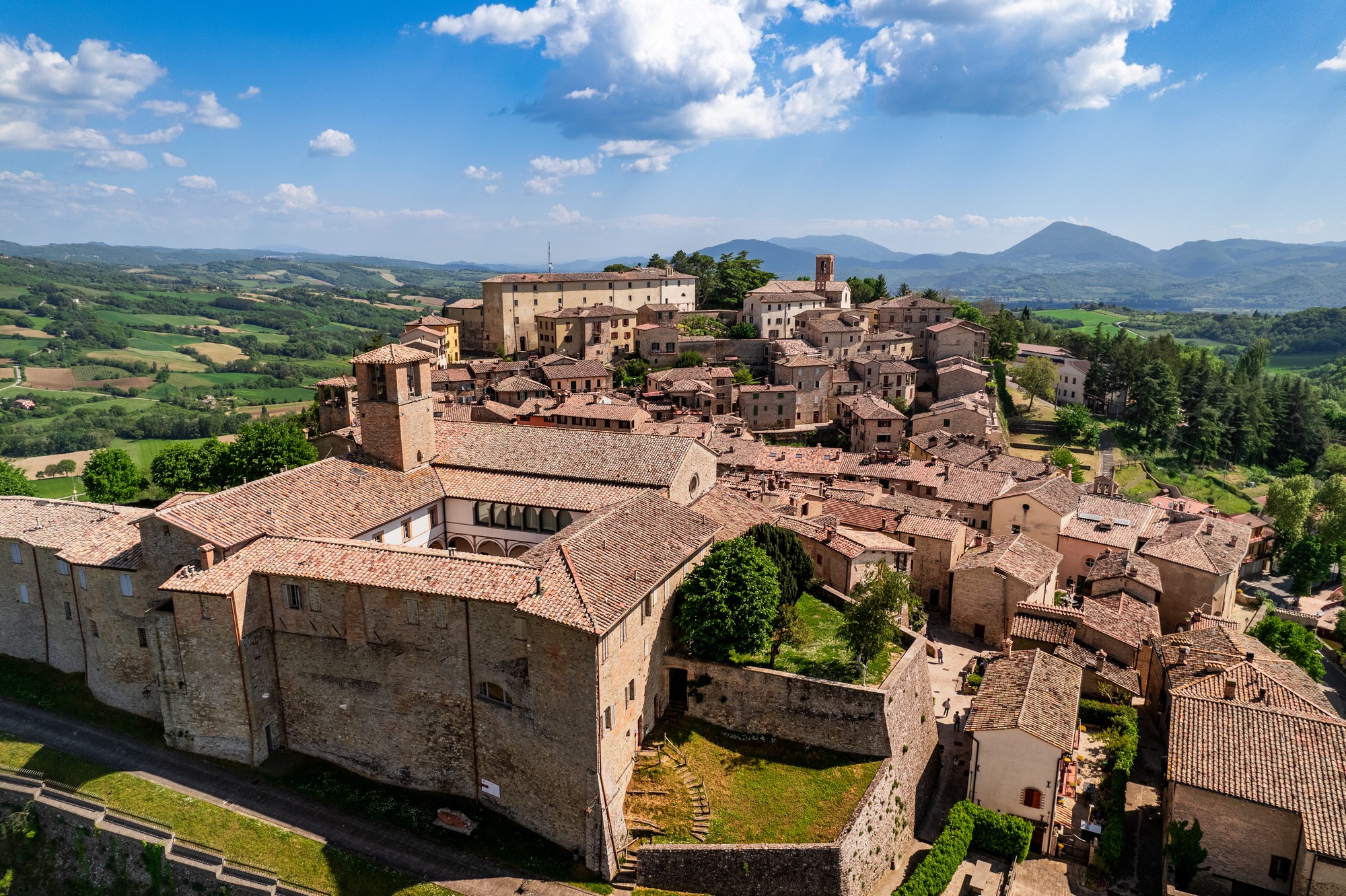
From here you can continue towards Montone, one of the most charming villages in Umbria. The medieval historic center, the walls, the alleys, and the view over the Tiber valley make it perfect for a slow and rewarding stop. It is also an excellent stop for those who love gastronomic tourism: cold cuts, truffles, and local specialties add a concrete and pleasant component to the trip, which always counts a lot in villages.
Pinocchio in Piedmont: Vernante, the village of murals
If the world of Dario Fo accompanies the traveler between Lombardy and Umbria, the world of Pinocchio instead invites you to look towards Piedmont and Tuscany. A surprising stop is Vernante, a small village in the province of Cuneo that many would not immediately associate with the famous puppet. Yet here opens one of the most curious chapters of this itinerary.
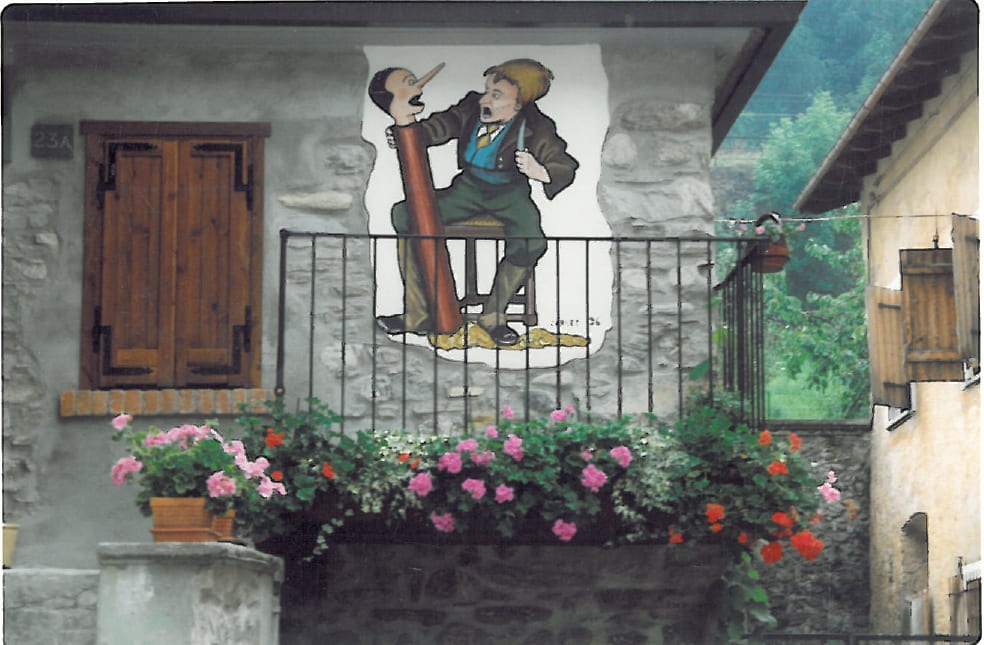
Vernante is in fact a true open-air museum. On the walls of the houses are dozens of murals dedicated to Pinocchio, created as a tribute to Attilio Mussino, the historical illustrator of the character, who spent the last years of his life here. Walking through the village means therefore crossing a visual story, with scenes that immediately recall the fairy tale’s imagery.
The visit can be enriched with the museum dedicated to Mussino and with a walk in the surroundings, where the alpine landscape adds a different atmosphere compared to the Tuscan stops. A short distance away are also the remains of the Turusela castle, accessible by a panoramic road that offers beautiful views of the surrounding mountains. For those traveling by camper, this area represents a highly charming detour, off the more obvious routes.
Collodi and the Pinocchio Park: the most iconic stop of the trip
The symbolic heart of the itinerary remains however Collodi, in Tuscany. Here the connection with Pinocchio is immediate and very strong. Carlo Lorenzini, author of the famous fairy tale, chose as his pseudonym precisely the name of this village, forever transforming it into a literary place even before a geographical one.
Arriving in Collodi by camper means entering a very particular setting: the village develops like a cascade of houses climbing the hill, with steep alleys, medieval glimpses, and a strong visual identity. It is a destination that appeals both to those traveling with children and to those who love places rich in cultural references.
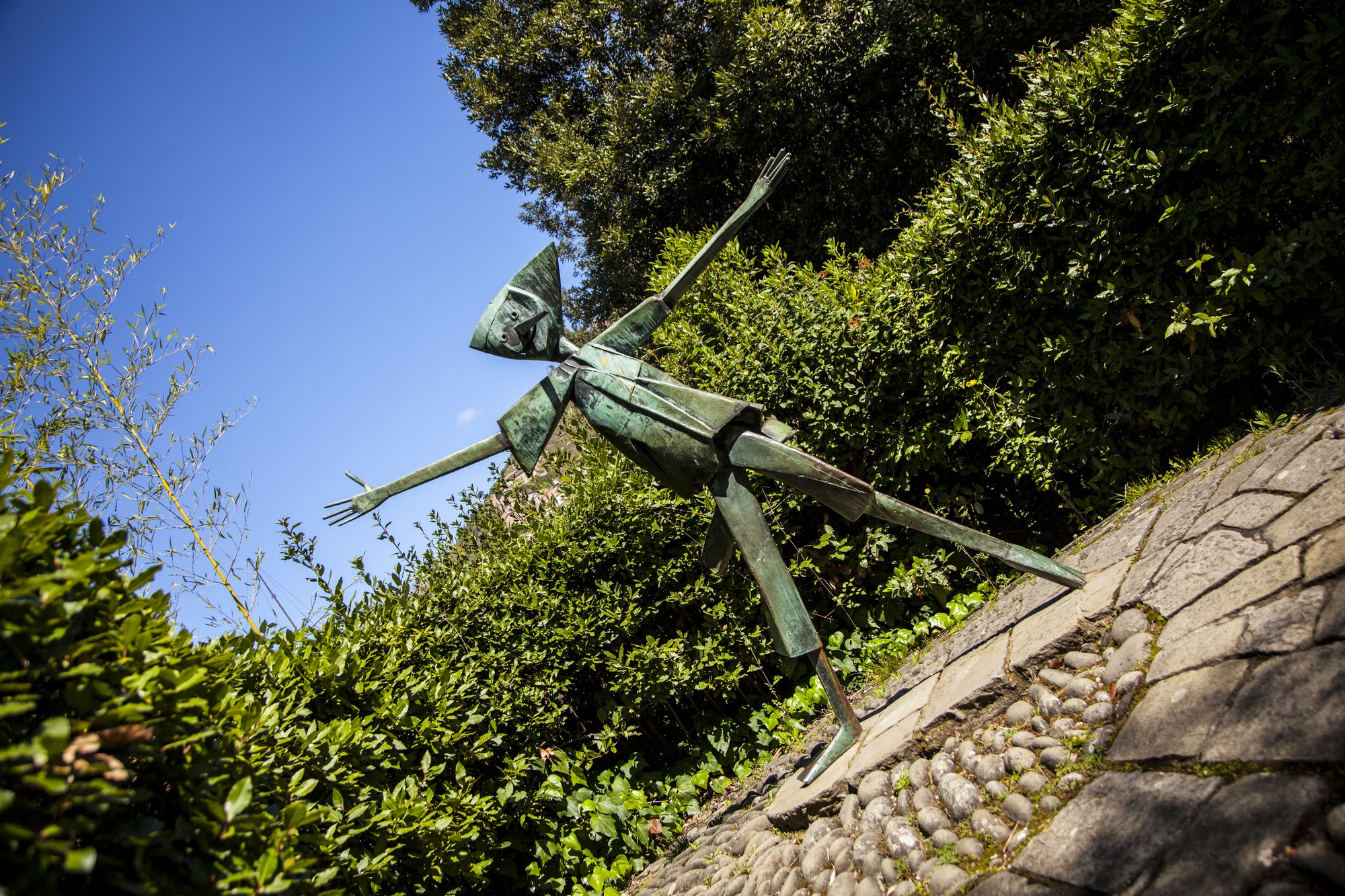
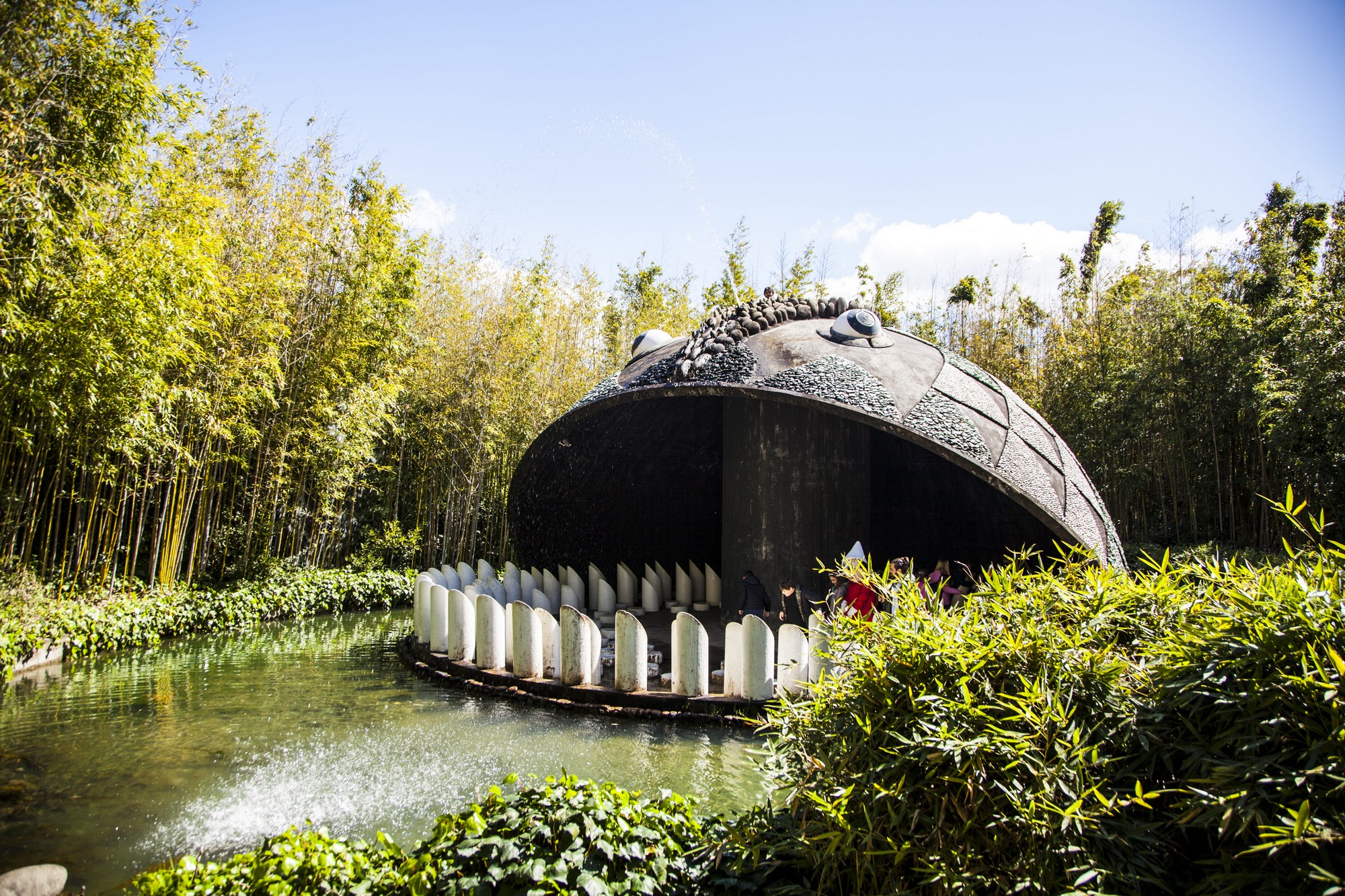
The most awaited visit is naturally to the Pinocchio Park, a theatrical and fairy-tale space where sculptures, installations, and settings recall the characters and the most famous episodes of the story. It is not just a theme park, but a symbolic place where art, narrative, and landscape merge in an original way.
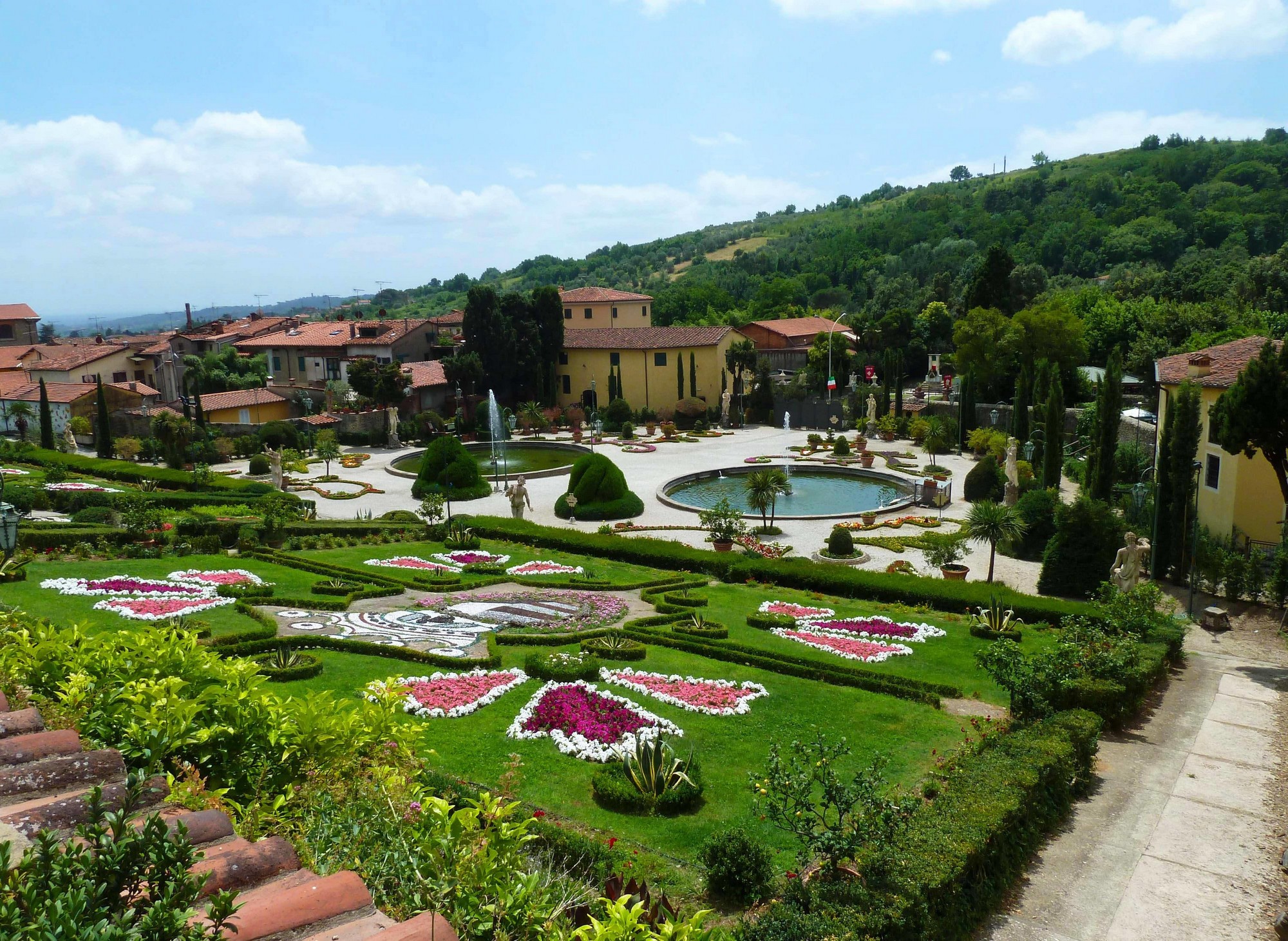
Next to the park, Villa Garzoni deserves a visit as well, with its famous Italian-style garden made of water features, staircases, statues, and elegant perspectives. It is one of those places that alone make the detour worthwhile and make the stop in Collodi even more complete. Nearby is also the famous Witches’ Oak, often linked in the imagination to the world of Pinocchio and the most mysterious suggestions of the fairy tale.
How to organize this itinerary by camper
One of the strengths of this route is its flexibility. There is no single way to approach it. Those with only a few days available can choose a specific area, for example the Lombard stretch or the Tuscan one. Those who want to build a larger trip can instead combine the various stops at different times, perhaps following the seasons and spreading the route throughout the year.
From a practical point of view, the camper allows you to easily adapt stops and also to stop in less central areas, maintaining great freedom in organizing. This makes the itinerary suitable not only for outdoor enthusiasts but also for those who want to have a first experience of traveling on the road without the obligation to follow too rigid schedules.
The best advice is not to turn this tour into a race from one stop to another. Its real strength is slowness. Stopping in a village, tasting a local product, exploring a historic center on foot, staying a bit longer in a place that surprises: this is what truly changes the quality of the trip.
Slow tourism, villages and off-season travel: why this trip works
Today more and more travelers are seeking authentic experiences, less crowded and more connected to the territory. In this sense, an itinerary by campervan through Italy’s villages perfectly responds to a new sensitivity in travel. It does not focus on the rapid consumption of the destination, but on the relationship with the place. It focuses not on the quantity of sights to see, but on the quality of time spent.
Moreover, routes like this help better distribute tourist flows, enhancing areas often left on the margins of major routes. This is also why travel by campervan can become an important tool for widespread tourism: it allows reaching small towns, encourages discovering local economies, and makes traveling off-season more natural.
The combination between Italian villages, cultural itineraries, slow tourism e campervan therefore has enormous potential not only for those who travel but also for the territories crossed.
A less obvious Italy to discover street by street
This journey between the places of Dario Fo and those of Pinocchio shows that Italy can surprise even far from the most obvious destinations. Sangiano, Porto Valtravaglia, Santa Cristina di Gubbio, Montone, Vernante and Collodi are not just stops to mark on a map, but opportunities to connect with different stories, landscapes and identities.
For those who love road trips, villages, culture, and a certain idea of freedom, the campervan remains one of the most fascinating solutions overall. And maybe this is the key: not just using the vehicle to move, but to change pace, see better, and allow oneself the pleasure of a quieter, more widespread and more genuine Italy.
Frequently asked questions about campervan itineraries in Italy’s villages
What are the best campervan itineraries in Italian villages?
Among the most charming campervan itineraries in Italian villages are the thematic routes that combine culture, landscape and local traditions. An example is the journey through places linked to Dario Fo and Pinocchio: Sangiano and Porto Valtravaglia on Lake Maggiore, Santa Cristina di Gubbio and Montone in Umbria, the village of Vernante in Piedmont and Collodi in Tuscany. These are ideal stops to discover small centers away from mass tourism.
Why is the campervan ideal for visiting Italian villages?
The campervan allows organizing a more flexible trip and reaching villages often poorly connected by public transport. It also enables easily changing itinerary, stopping in panoramic areas, and discovering lesser-known territories. For this reason, it is one of the most used means for slow tourism and discovering small Italian centers.
Which villages to visit tracing Pinocchio’s steps?
The places linked to Pinocchio’s story are mainly between Piedmont and Tuscany. The village of Vernante, near Cuneo, is famous for murals dedicated to the puppet and for the illustrator Attilio Mussino museum. In Tuscany is Collodi, the hometown of the writer Carlo Lorenzini, where it is possible to visit Pinocchio Park and the historic garden of Villa Garzoni.
Where are the places linked to Dario Fo?
Among the most interesting places linked to Dario Fo are Sangiano, his hometown in the province of Varese, and Porto Valtravaglia on Lake Maggiore, where he spent part of his childhood. In Umbria there is Santa Cristina di Gubbio, where the Fo family spent much time and where the Free University of Alcatraz founded by his son Jacopo Fo is located.
When is the best period to visit Italian villages by campervan?
The best times are spring and autumn, when villages are less crowded and the climate is ideal for traveling by road. These seasons also allow experiencing a more authentic atmosphere, with local events, festivals and particularly evocative natural landscapes.
How much time is needed to do this campervan itinerary?
The itinerary between the places of Dario Fo and Pinocchio can be organized in different ways. A complete trip takes about a week, but it is also possible to divide it into several weekends or mini-regional itineraries between Lombardy, Piedmont, Umbria and Tuscany.