

The archaeological complex uncovered by the bombings of 1943, which destroyed the Church of Santa Maria del Carmine ai Mannesi and the adjacent buildings, documents part of an insula (block) of the ancient city also occupied by a small thermal building.
It is a multi-level construction, quite complex, dating its main structures to the end of the 1st century AD, but it presents elements attributable to different phases, the oldest of which belong to the Republican age. Among these, of particular interest is a rectangular apsidal room, with a floor of black and white tiles, belonging to the lower level perhaps part of a residence.
Incorporated, during the Imperial age, into the foundations of a large building with vaulted rooms, the structure developed over at least two floors: the lower one, lit by skylights, was occupied by service rooms; the upper one housed the thermal complex, of which parts of the hydraulic conduits and a series of rooms with marble pools located in the southern wing of the building have been identified.
Among the subsequent alterations to be noted, for the late Imperial age, is the probable creation of a portico along the western facade and the adaptation to a mithraeum of two of the rooms on the lower floor, whose use is proven by the presence of a stucco relief depicting the god Mithras in the act of sacrificing the bull.
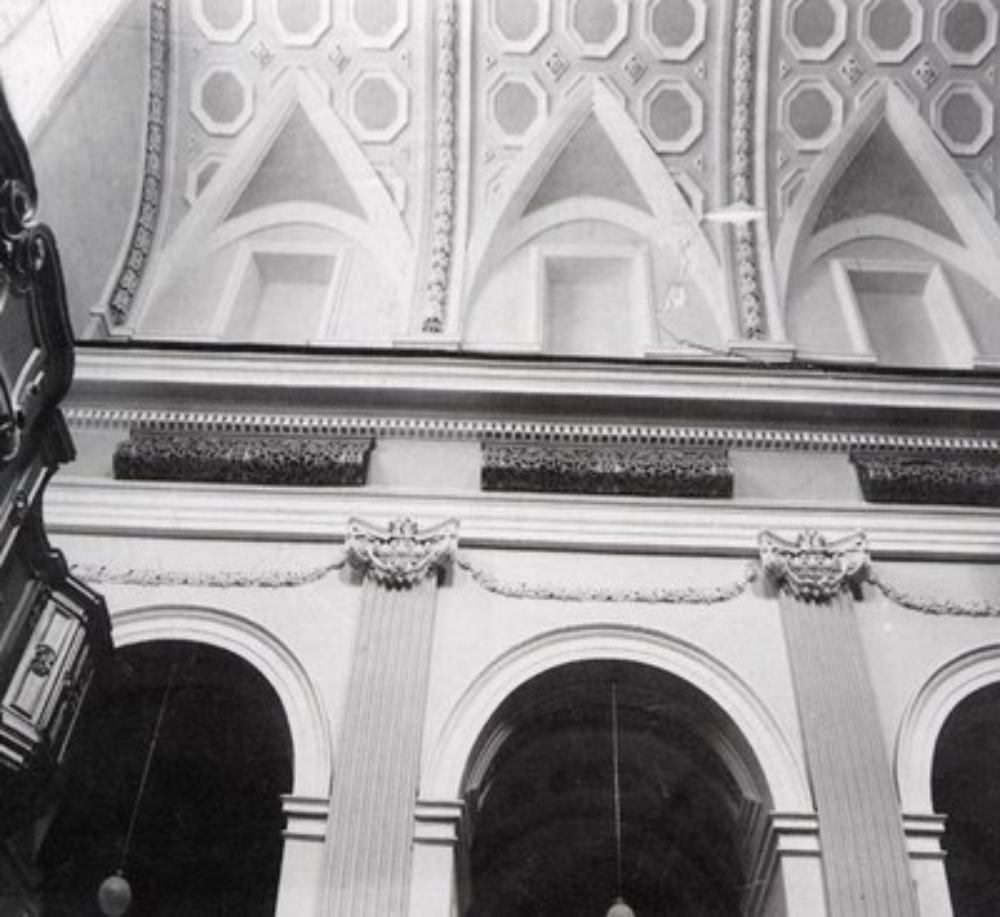
These transformations, deeper from the 5th century AD onwards, culminated in the medieval period with the incorporation of the Roman structures within the religious building later destroyed.