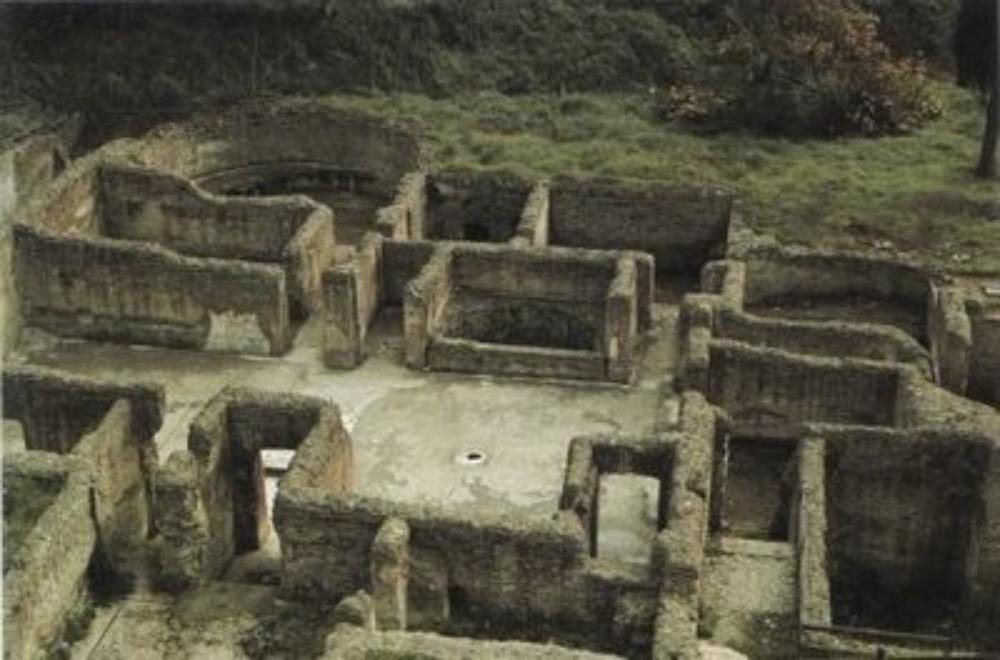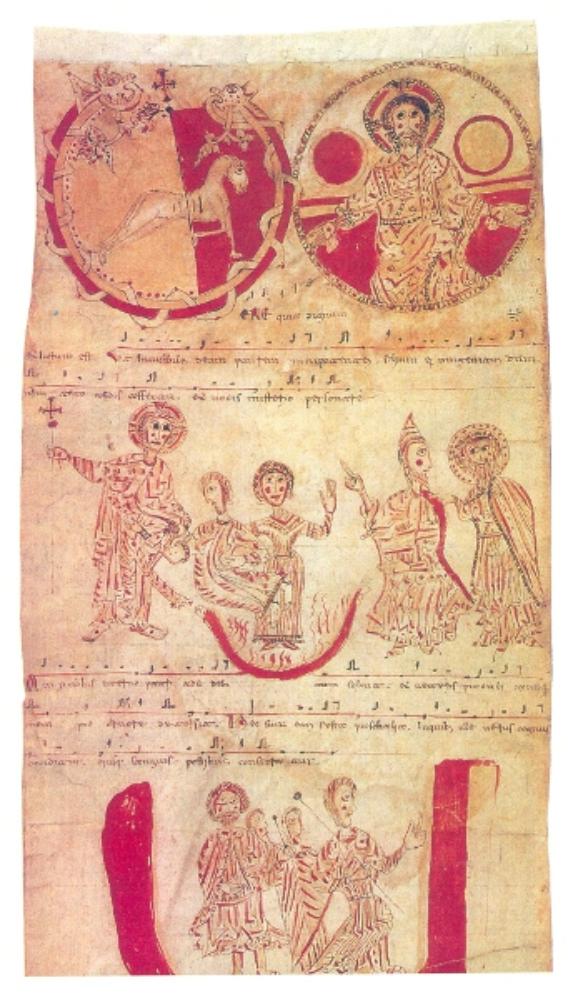


The Museum is housed in the former Churches of the Confraternity of the Holy Rosary and the Archconfraternity of San Prisco, located in the historic center of Mirabella Eclano. The museum area also includes some rooms formerly used as meeting places for the two lay associations, including the former Chapel of the Madonna del Gonfalone with the fine 18th-century majolica floor. In some rooms, beneath the flooring, during the renovation works of the buildings, traces of modern-era masonry (approximately 15th-17th century), circular grain pits, an ancient paved structure, and a trapezoidal kiln, possibly used for casting a bell (13th century), became visible through a transparent glass floor superstructure that can be walked on. The museum spaces are organized into eight sections: sect. no.1, 18th-century liturgical vestments; sect. no.2, confraternity insignia and ornaments from the 18th-19th centuries, a painting by M. Ricciardi from the 18th century, embossed brass basins for collecting offerings from the 15th and 16th centuries; sect. no.3, 18th-century Neapolitan workshop silverware, worked with embossing or chasing: pyxides, reliquaries, censers, boats, monstrances, chalices, etc. Noteworthy are the processional cross from 1682 and the reliquary bust of San Prisco; sect. no.4, chasuble and dalmatic from the second half of the 18th century; sect. no.5, altar cloths, missals, antiphonaries dated from the 16th to the 18th centuries; sect. no.6, documentary heritage: notarial acts, parish books, parish chronicles, papal and episcopal briefs, etc.; sect. no.7 houses the museum’s most significant work: the Exultet or Quintodecimo Scroll, one of the oldest hymns of the Roman rite Catholic liturgy. There are seven parchments, bound together, forming two codicological units, i.e., two distinct groups by artistic quality, period, and location. The parchments so joined form a scroll 3.62 m long with an average width of 22.5 cm. The text, written in Beneventan script, is enriched with watercolor miniatures. This type of liturgical scroll is an exceptional product, typical of medieval monastic and episcopal scriptoria from southern Italy, specifically the Beneventan-Cassinese cultural area. In this section, a significant selection of important parchments from the parish archive are also displayed, including a small parchment (165×120 mm) of the “relics preserved in the main altar of the Church of Santa Maria” of Mirabella, in 15th-century Gothic-Beneventan script. The exhibition space also contains three choir books (Psalter 1759, Antiphonary 1748, and Gradual 1736), published in Venice in the 18th century, with Gregorian notation. Particularly interesting is also the painting depicting the Madonna del Gonfalone; sect. no. 8 includes six bells, among which is an ancient Angevin bell, dated 1274.
Information on the Civic Museum of Sacred Art
Via Eclano, 20
83036 Mirabella Eclano (Avellino)
0825 447078
[email protected]
Source: MIBACT