

Ruvo di Puglia, in northern Bari, is a small town with over 25,000 inhabitants, featuring a charming historic center dating from the 16th to the 18th century. Situated on a hill, the Apulian town is part of the Alta Murgia National Park. It boasts several places of interest, starting from the Jatta National Archaeological Museum to the cathedral, located in the historic center.
The location (it is at 256 meters above sea level), the historic buildings, and points of interest place Ruvo di Puglia among the Apulian towns worthy of a thorough visit.
1 Jatta National Archaeological Museum
The Jatta National Archaeological Museum in Ruvo di Puglia is located in some rooms on the ground floor of the Palazzo Jatta. The archaeological museum, state-owned since 1991, represents the only example in Italy of a nineteenth-century private collection that remains unchanged from its original museographic conception. The artifacts preserved in the museum were collected by the archaeologist Giovanni Jatta in the early 1800s, later enriched by his nephew, who has the same name and surname.
The Jatta National Archaeological Museum consists of four rooms, one behind the other, like Russian nesting boxes. The collected material comes from various locations in Magna Graecia. Local ceramics (from the 6th to the 3rd century BC) and those of Greek origin from Corinth and Attica are well represented.
Information: Piazza Bovio, 35 – Ruvo di Puglia (Bari). Phone: 080.3216848
2 The Cathedral of Ruvo di Puglia
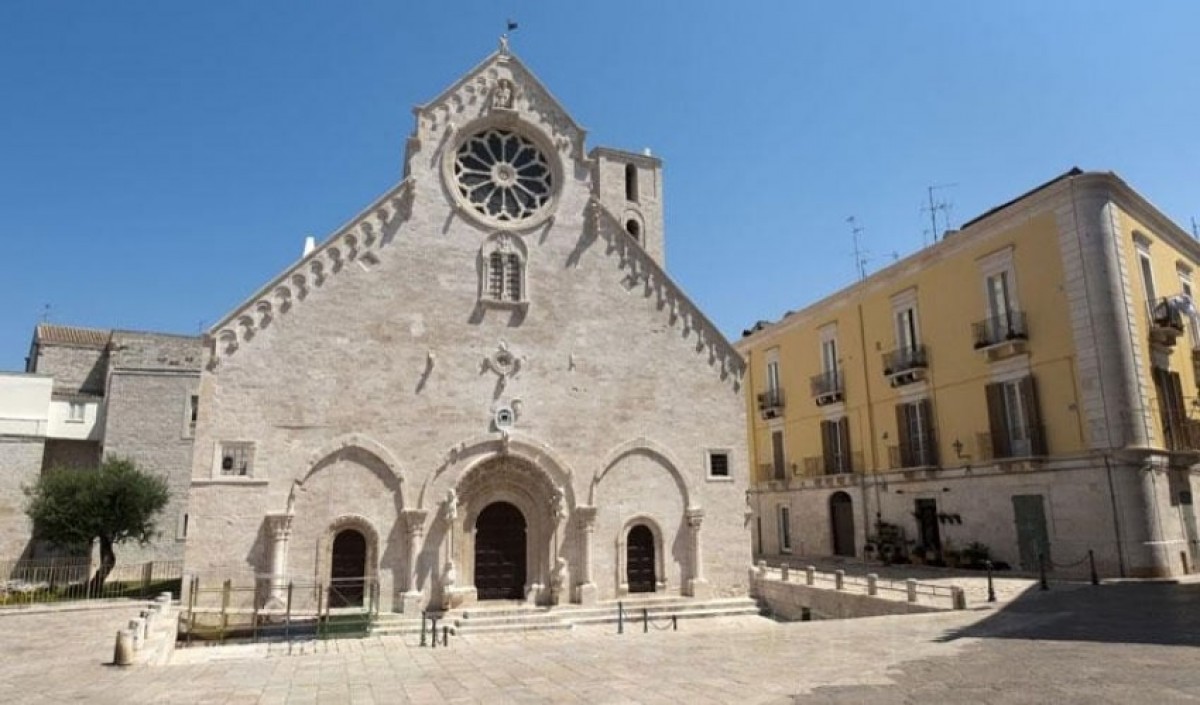
The Cathedral of Ruvo di Puglia is certainly one of the most well-known in the region. Dedicated to the Assumption of the Virgin Mary into Heaven, the cathedral is in the Apulian Romanesque style. Renovated several times between the twelfth and thirteenth centuries, the rose window is very prominent on the facade. The bell tower, attached to the cathedral, is located at the back of the place of worship, completely detached. Inside the bell tower, which has a square plan, there are three bells.
The interior of the cathedral features three naves, in the shape of a Latin cross. The altar has a structure on which the Tabernacle stands. The cathedral has undergone several restorations, especially in the 20th century when the chapels built over the centuries in the naves were demolished, restoring the ancient medieval origin of the place of worship. Beneath the cathedral, hypogeum environments dating back to the Roman era have been identified. The underlying area was discovered about a century ago during some works.
3 The historic center of Ruvo di Puglia
The historic center of Ruvo di Puglia is dotted with historic and well-preserved palaces. Alleys, narrow streets, and then squares well represent this surprising Apulian town which also owes its charm to its hilly position. The historic center is divided into four large tree-lined avenues called “Lo Stradone.” In Roman times, this village was a “municipium,” as well as a posting station along the Via Traiana. Over the centuries it was ruled by the Byzantines, Lombards, Swabians, and Normans, as well as different feudal lords, including the Carafa. Several palaces in the historic center date from the 17th century, including the Clock Tower. Very interesting are the Churches of San Domenico and San Michele Arcangelo, both in late Baroque style. In some parts of the historic center, the remains of the medieval walls are still clearly visible.

4 Grotto of San Cleto
Below the Church of the Purgatory are the remains of a Roman thermal complex from the first two centuries after Christ. Connected to these underground spaces is what is called the “Grotto of San Cleto” which is actually an ancient cistern carved into the stone, designated for collecting water. These places were also used by the inhabitants of Ruvo as places of refuge. In the 16th century, the church of the Madonna del Suffragio was built above the cistern and, nearby, in the same period, the church of San Michele Arcangelo was constructed, dedicated to the cult of the souls of Purgatory. The two churches were later united into a single two-nave church, giving rise to the Church of the Purgatory. The underlying hypogeum spaces were damaged by the earthquake in the early years of the 21st century. They have recently undergone restoration and were then reopened for worship.

5 Pinacoteca Cantatore
The Domenico Cantatore Art Gallery is located in the Dominican Convent built around 1560. The building stands in a strategic position outside the city walls, opposite the most beautiful gate of Ruvo, precisely Porta Noè. By decree of 7/8/1809, like all regular Orders, the Dominicans of Ruvo had to abandon their convent. Subsequently, the assets were seized by the State and the monastic structure and library, after a few years, passed to the Municipality. Later, at the request of the Bishop of the time and with a Royal Rescript of 1819, the Piarists took possession of the convent, entrusted with the education of the youth of Ruvo, or at least part of the young people coming from more or less wealthy families. With the law of 11/7/1866, the Piarists also had to leave the Convent, and the Municipality asked the Government to use the structure to establish a Gymnasium school. The convent later became the seat of the Technical School and subsequently the Female Elementary Schools (entrance via Madonna delle Grazie), the Male Elementary Schools and the Vocational Training for Agriculture “Domenico Cotugno” (entrance via Valle Noè). Currently, the ground floor houses the Cantatore Art Gallery, and the first floor houses the Civic Archaeological Museum.
Information about Pinacoteca “Cantatore” of Ruvo di Puglia: Via Madonna delle Grazie, 63 – Ruvo di Puglia (Bari) – Phone:
080.9507402
6 Where to eat in Ruvo di Puglia
The town of Ruvo di Puglia offers several places where you can eat according to Apulian traditions and, in particular, those of the Alta Murgia. A venue with a very extensive wine list (over 650 labels) is undoubtedly U.P.E.P.I.D.D.E., an acronym that embodies the essence of good eating. The venue features several rooms, including a private one, and offers Apulian cuisine prepared and served with great care. The place has exposed stone walls for a decor that is both rustic and refined. Excellent choice of à la carte dishes at a moderate price.
7 Where to stay in Ruvo di Puglia
In Ruvo di Puglia there is a good range of accommodations, including non-hotel options. The value for money of the lodging facilities is quite good and the location offers a good selection depending on your needs. Sleeping in Ruvo di Puglia, therefore, is recommended even for those who want to visit other towns of northern Bari or the capital itself, Bari.