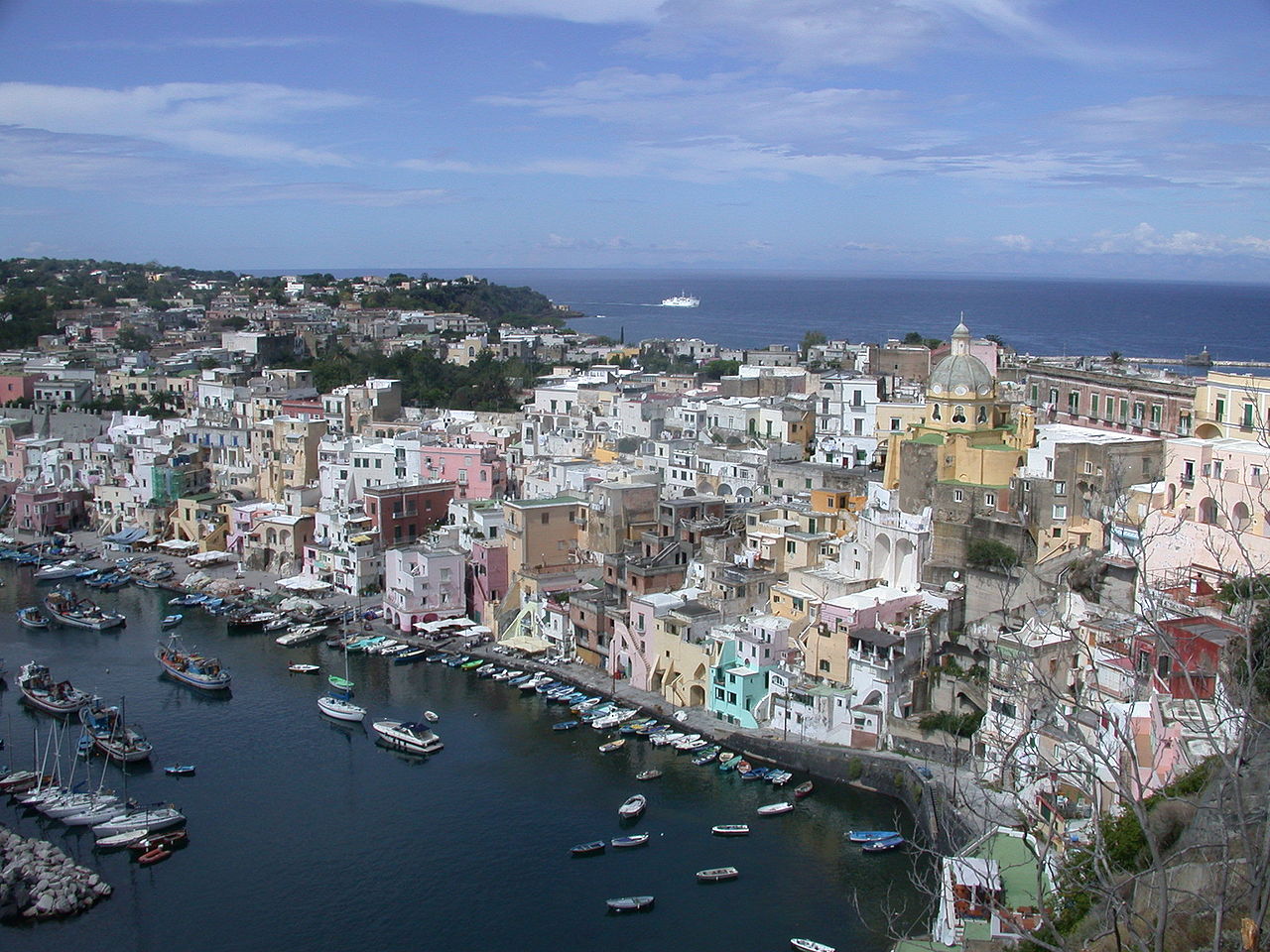


Il nome Maierà derives from the Hebrew toponym, M’arà, and means cave, (due to the presence of natural cavities throughout the territory), it is a town of about 1,300 inhabitants in the province of Cosenza, Calabria.
It is known as a Small Village of the Upper Tyrrhenian Coast of Cosenza and, because of its characteristic location, rests on “Slides” (Rocks), in a charming historical-natural setting, at 360 meters above sea level: the town is separated from the nearby and opposite town of Grisolia by the “Valley of the Mills,” where from the Old Square, it is still possible to admire what remains of the Stone Mills, once the center of Our Economy.
A popular legend tells that Maierà and Grisolia were separated by the will of God, to end the dispute that arose between a young man from Maierà and a young man from Grisolia, over the love of the same girl from Grisolia!
The narrow alleys of the Historic Center preserve several works of modern art, murals, and ceramic works curated by different artists (some of whom are Japanese artists…), testifying to the past meeting the modern age. In this regard, the Living Ceramics Project was conceived and realized.
Monuments and Churches of Maiorà
Imposing and beautiful to see, is the “Porta Grande o della Terra”, once the entrance to the ancient village. Nearby was the “Guardiola” from where, day and night, the Community was guarded.
Of remarkable value is the ”Chiesa Madre di Santa Maria del Piano”, also in the Historic Center of Maierà, built by the will of Carlo I d’Angiò, in 1534: the same church, under Alfonso di Loria, underwent a total transformation, in fact where the entrance was located the main altar was placed. It was expanded, with the baron having purchased ‘some sets of houses’. On the façade he had his and his wife’s coat of arms reproduced, still well preserved, although it has lost the original colors. Dedicated to Santa Maria del Piano, its feast is celebrated on July 2nd. Of historical importance is the “Grotta di San Domenico”: they are natural cavities and partly excavated by man. They were the dwelling of the Basilian Monk Community.
Dispersed in the Municipal territory, other Churches:
- Chapel of Our Lady of Mount Carmel: a small church built not far from the Historic Center. Near the Chapel, there are “Remains of a Court,” probably Lombard (Arch and Stone Walls).
- Church of San Pietro: small in size, it was once an integral part of the Basilian Abbey of San Pietro a Carbonara, one of the oldest Basilian abbeys on the Tyrrhenian coast. Inside it is possible to admire the altar and the wooden crucifix, works by a Son of Maierà!
- Church of Santa Maria (inside the Cemetery): the first construction dates back, perhaps, to the Norman era. It has a single rectangular nave and features a semicylindrical apse.
- Remains of the Basilian Church of San Giacomo: only a few ruins remain, identifiable in the perimeter walls and the niche of the saint. They are remains of the presence of Basilian monks.
- Remains of the Church of San Nicola.
The Way of the Cross installed in Vrasi is refined, with precious and delicate majolica, made by a local artist. Not to be missed is the “Park of Sculptures,” also in Vrasi, with stone sculpture installations created by a local artist. Interesting is the Expo Zona Sud space, which over the years hosts exhibitions and meetings with nationally and internationally renowned artists and intellectuals: with this initiative it reaffirms and emphasizes its role as an important cultural proposal space in the Riviera dei Cedri area.
The Chili Pepper Museum of Maierà
The Chili Pepper Museum (the only one in the world), located in the Palazzo Patrizio in the Historic Center of Maierà in the province of Cosenza – Calabria, was born from an idea of the Italian Academy of Chili Peppers led by Prof. Enzo Monaco and supported by the Municipal Administration of Maierà, just a few km from Diamante (Cs), where the “Chili Pepper Festival” is held every year.
Since July 2016, it has been part of the National Association of Small Museums. It is currently managed by the Municipal Administration, and the entrance fee per person is € 1.00 as a contribution to its maintenance.
- A Museum to tell six thousand years of history.
- A place to showcase the art, objects, and advertising inspired by the “little devil.”
- An essential reference for lovers of spicy scents and flavors.
The testimony and memory of a great love for Calabria that has made it a symbol of its cultural identity
It is equipped with various exhibition rooms, specifically:
- The Chili Pepper Path: Six thousand years of travels around the world told by maps, photographs, drawings, and historical testimonies;
- The plant, scents, and flavors: an overview of the varieties cultivated worldwide cataloged by Prof. Massimo Biagi in collaboration with the University of Pisa;
- The Advertising and Everyday Fantasy section: inside it is the collection of the most famous sauces from all over the world, donated to the Museum by General Carlo Spagnolo, as well as perfumes, shower gels, lighters, paintings, and advertising posters;
- The Satire section with the “Cartoons on the Ring” born from the spicy intuition of the famous cartoonist Gianfranco Passpartout, in addition to the absolute novelty with the “Walt Disney Pic” Collection made with the pyrography art of Mrs. Fiorella;
- The Ceramics & Chili Pepper section featuring the Pepita Cup as the main attraction, a captivating, curious, and stimulating cup.
Another curiosity is the Miniature Nativity Scene Pic made by the Tiscione family from San Gregorio Armeno (Na), the homeland of nativity scenes.
- The Kamasutra section with a collection of paintings created by Francesco Cirillo, as well as an interesting work called “Chili Pepper Spray” made by Emiliano Cirillo with spray cans used for some Murals in Diamante.
Inside it is located a marble work that portrays the twinning between the Chili Pepper of Diamante and the Sicilian Tomato of Villalba;
- The Pic Guests in Maierà;
- The Paintings Room and the TV projection of the Chili Pepper Supply Chain and Festival Images;
- The Book Room;
- The Companies & Gastronomy section with the display of products that are produced, processed, and marketed by them.
Inside you can find spicy Gadgets and Products to enjoy and to give as gifts. The Museum is Open from June 15 to September 15 from 6:00 pm to 10:00 pm.
Also during the “Chili Pepper Festival”, which takes place every year in Diamante (Cs), from 10:00 am to 1:00 pm and from 3:00 pm to 6:00 pm. Groups and parties can arrange the days and times of Visits on any other day, by calling the Italian Academy of Chili Peppers (tel. 098581130), or the Municipality of Maierà (tel. 0985889102). Signs will indicate the Museum with an unmistakable “logo,” a Fire Red Chili Pepper placed above a Capital.

What to eat in Maierà, Calabria
From the same little streets, every day, you can smell the “Fragrances of Our Gastronomy,” where homemade pasta reigns supreme: Fusilli tossed with Goat Meat Sauce, the ragù made from the same meat served with Roasted Peppers, accompanied by a fine glass of Maierà Red Wine, make up the typical Maierà menu, absolutely not to be missed!!
Also indispensable are: “Lagane” and Chickpeas with red pepper; Tagliatelle with porcini mushrooms picked from our woods; Pasta e Fagioli ‘ndufata; “cruschi” Peppers; Soups (wild chicory, escarole) with beans; “Grispeddre” stuffed with cod, anchovies, and dried peppers (usually prepared during the Christmas season); Chickens and Rabbits raised in home yards; “Baccalà” with fried peppers (a typical dish during the grape harvest); Black Pig (typical of our territory, now rediscovered) with all related products (sausages, soppressata, hams, capicolli, jelly… and spicy ‘nduja)!
Excellent cheeses as well. Typical sweets are made during the Christmas Period (“Chinule” and “Cannaritole” seasoned with Fig Honey) and during Easter (“Pizzatole”). The Maierà Red Wine is of excellent quality! Homemade liqueurs, on the other hand, delight our palates and those of our guests, with Cedar, Blueberry, Limoncello, Mandarin, and others.
The Ancient Customs of Maierà
The human components of Our population are represented by a “Dialect” that originates from Greek and Latin; however, it is not free from Arabic, Spanish, and French terms. Exclamations, sayings, and proverbs remain very common today.
The substratum of popular “Beliefs” can be traced back to Eastern and medieval cultures. Today some of them are laughed at, while others are still vividly remembered!
The “Uses” and “Customs” of Our population show ancient Traditions, some of which are unique to the place, others similar to those of neighboring countries.
The Festivals of Maierà
- Feast of Saint Joseph – March 19
- Feast of Saint Peter – June 27, 28 and 29
- Feast of Our Lady of Mount Carmel (patronal feast) – from July 8 to 16
- Feast of Saint Dominic – August 8
- Feast of Saint Lucy – December 13
During the summer period, Gastronomic Evenings are held to promote the typical products of Maierà, as well as Events with Shows and Exhibitions.
How to get to Maierà
from NORTH: Take the A3 motorway (SA-RC) exit at Lagonegro Nord, follow the SS18 state road, exit Maierà-Grisolia.
from SOUTH: Take the A3 motorway (SA-RC) exit at Falerna, follow the SS18 state road, exit Maierà-Grisolia.