

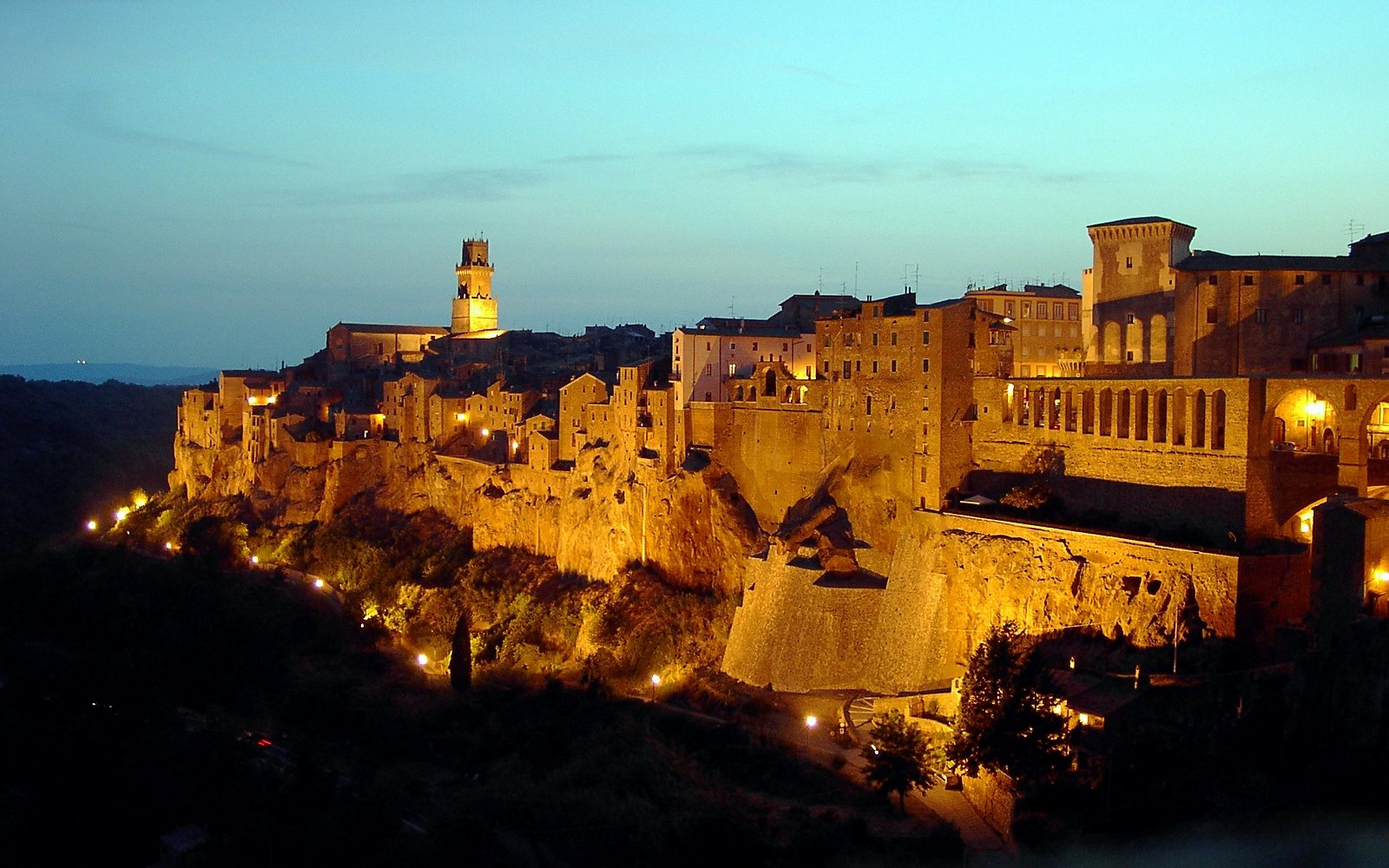

L’ancient village of Pitigliano, founded by the Romans, is perched on a tuff cliff, offering a particularly suggestive view at night, when illuminated from the bottom of the cliff upwards, it seems to be suspended in nothingness. Where Pitigliano is located. Pitigliano is located in Tuscany, in the Maremma area, in the province of Grosseto. It has about 3800 inhabitants.
What to see in Pitigliano
Pitigliano, little Jerusalem. Pitigliano is nicknamed little Jerusalem, due to the presence of a small Jewish community since the 16th century and a synagogue from the 1500s within the historic center. Also from the sixteenth century are the Cathedral of San Pietro and Paolo and the Church of Santa Maria and San Rocco. From the 1200s is, instead, the deconsecrated church of Sant’Antonio, now used for civil purposes.
The Palazzo Orsini, a noble family that ruled Pitigliano until the 1600s, when it was handed over to the Medici, was built on the remains of a Franciscan convent and today houses the Diocesan Museum. The museum displays works of silverware and goldsmithery, coins, wooden sculptures, paintings on panel and canvas, precious fabrics, stone materials, manuscripts, and ancient books. It preserves the 15th-century ceilings and decorations of Palazzo Orsini. Inside the courtyard is a characteristic Renaissance well. Outside the walls, characterized by the vaults of the ancient aqueduct of Pitigliano, nearby are the Shrine of Madonna delle Grazie and the Convent of San Francesco.
Things to see in Pitigliano. South of Pitigliano you can visit the open-air museum “Alberto Manzi,” a journey through art and nature, dedicated to the writer, educator, and television host of the RAI program “Non è mai troppo tardi.”