


La Pinacoteca di Brera was commissioned by Maria Teresa d’Austria in 1776 for educational purposes. It was intended to constitute a collection of exemplary works, aimed at training students. When Milan became the capital of the Italian Kingdom, the collection, by the will of Napoleon, was transformed into a museum that intended to display the most significant paintings from all the territories conquered by the French armies.
From the early 19th century, also following the suppression of many religious orders, the paintings requisitioned from Lombard churches and convents flowed into it, to which were added works of identical origin taken from the various departments of the Italian Kingdom.
The Pinacoteca di Brera gathers in 38 rooms masterpieces by Italian artists from the 14th to the 19th century and some of the greatest foreign artists. Among the most famous artists are Piero della Francesca, Mantenga, Raphael, Bramante, Caravaggio, Tintoretto, Bellini, Bronzino. In the entrance courtyard you can see the work of Canova representing the effigy of Napoleon.
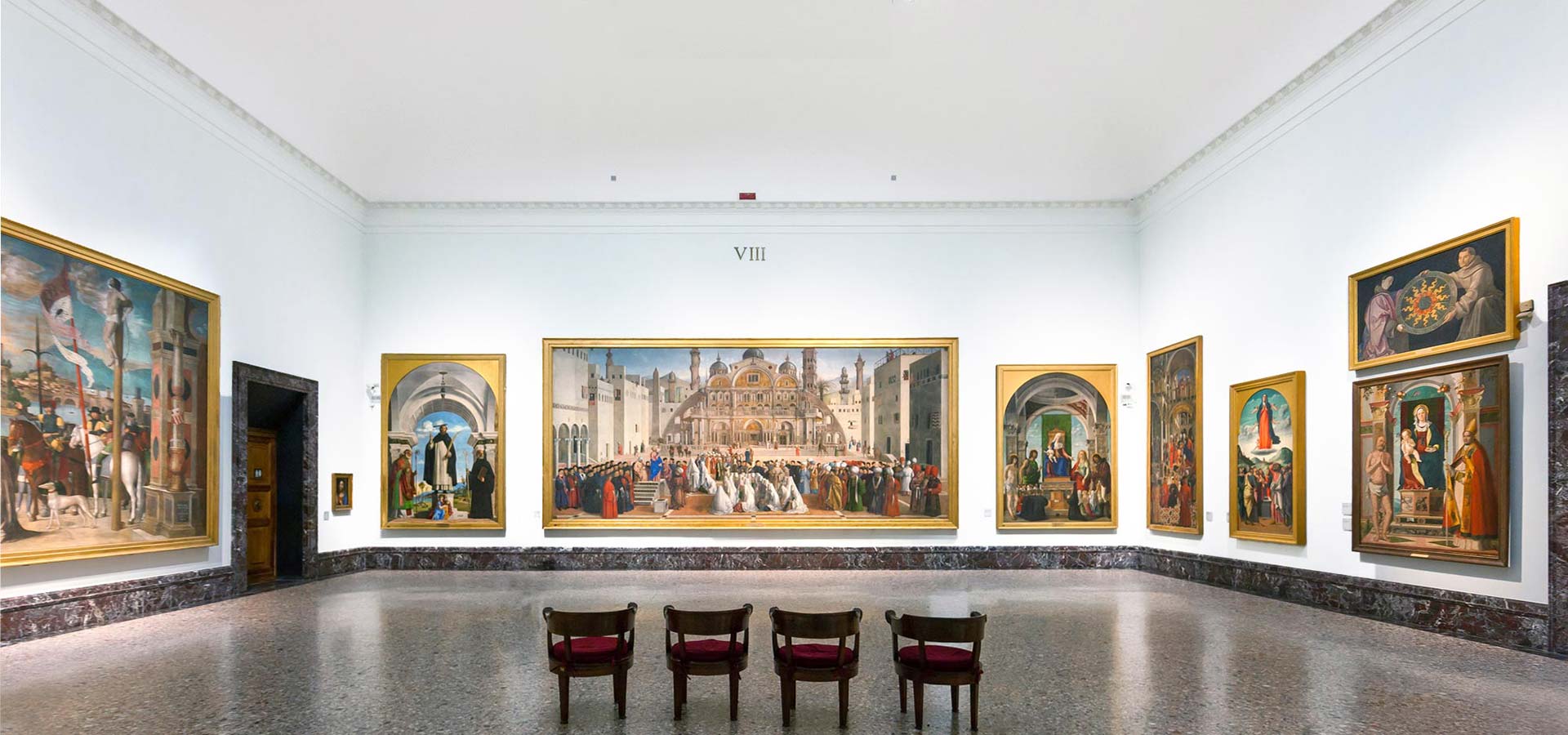
Among the most famous paintings kept here stands out the “Marriage of the Virgin” by Raphael, the “Dead Christ” by Mantegna, the “Pietà” by Bellini. In the center of the courtyard is the bronze of Napoleon I sculpted by Canova.