I riti pasquali e della settimana sono un vero carnet di tradizioni nel sud dell’Italia. Non fa eccezione la Puglia e il Salento. Nella Grecìa (accento sulla ì) salentina, nove piccoli centri a sud di Lecce che ancora conservano il grìko (lingua neo greca), la Passione di Cristo è un misto tra pathos e tradizione che si rinnova.
Volendo dirla tutta, al contrario di ciò che si immagina, la “Passione di Cristo” è molto profana e poco religiosa, eccezion fatta per la storia di Cristo e dei suoi ultimi giorni, cantata da uomini (oggi anche da donne) che per anni rinnovano il rito e il momento. A Zollino, nel cuore della Grecìa salentina, a metà strada tra Maglie e Lecce, la Passione di Cristo che si tiene la Domenica della Palme, è cantata in lingua grìka e prende il nome de “I Passiuna tu Crhistù“.
The “Passion of Christ”: the origins
On the origins of the “Passion of Christ” of Zollino and the entire Grecìa salentina there is no certainty. No written testimony helps to reconstruct the origins of the Passion song even if it is thought to date back at least to the nineteenth century. Moreover, “The Passion of Christ” or, if you prefer, “I Passiuna tu Christù“, is handed down orally and even the stanzas vary, from village to village, in number and text. Even the number of stanzas, in the same Zollino, are sometimes more numerous and other times, perhaps also for brevity (such as when they are sung by children), are in a reduced version.
The melody, instead, is almost always the same in the various centers of the Greek linguistic minority, except for the rhythm which changes depending on the Singers and the various centers of belonging.
The “Passion of Christ”: Palm Sunday
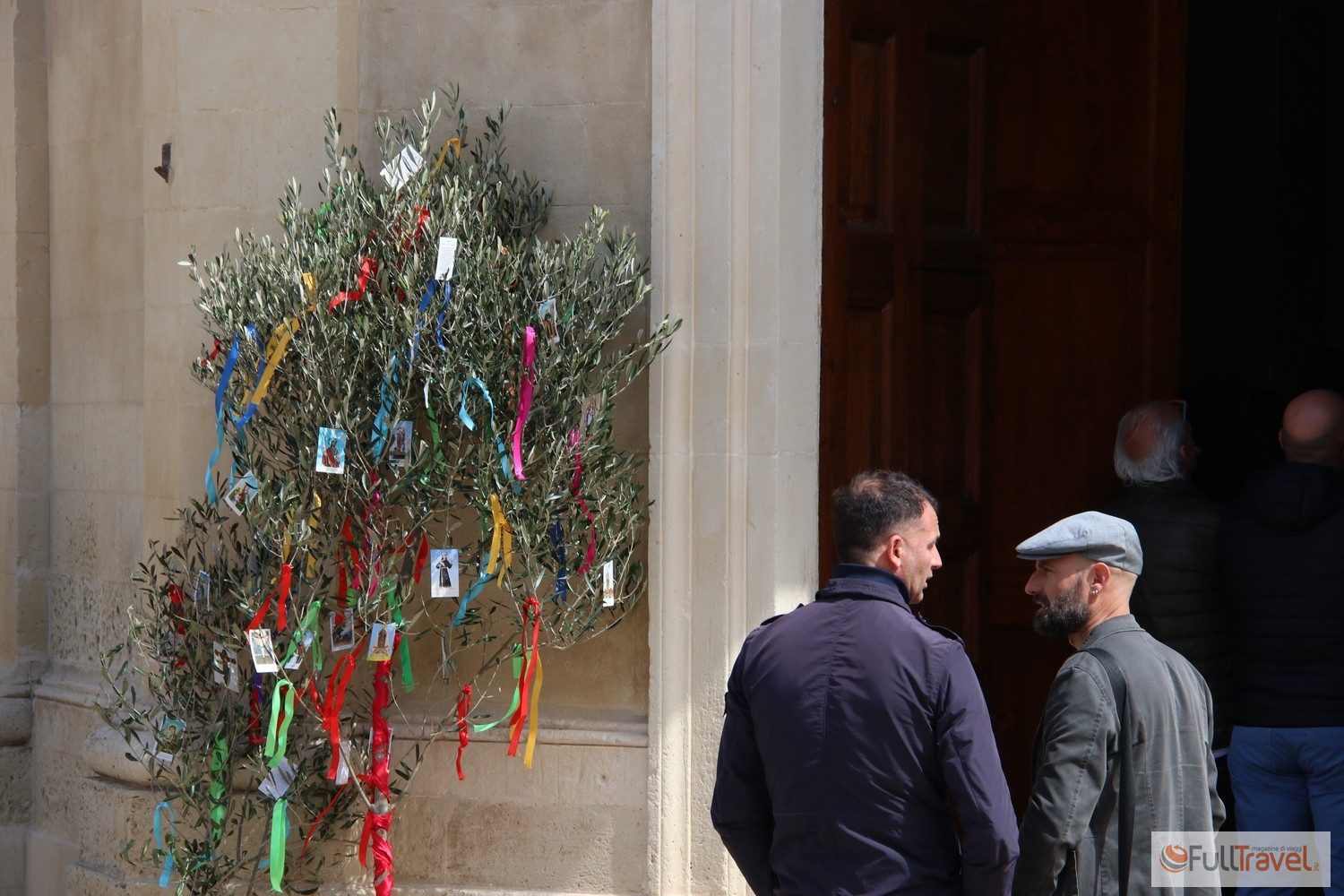
In Zollino “I Passiuna tu Christù” takes place on Palm Sunday, at the end of the 11:00 mass and, in recent years, it is sung first by children and then by adults (in the version first the women and then the men). A symbol of the Singers and of the Passion of Christ is the Palm (olive branches) adorned with some Holy Cards as a form of protection and respect for Christ. In front of the Singers a few baskets for collecting offerings, decorated with colored ribbons, symbolism often used in Salento. Before arriving at the churchyard, however, the song of the Passion was held at street intersections in order to gather more tributes which, obviously, cannot be missed (out of respect and, perhaps, also for superstition).
The Singers of the Passion
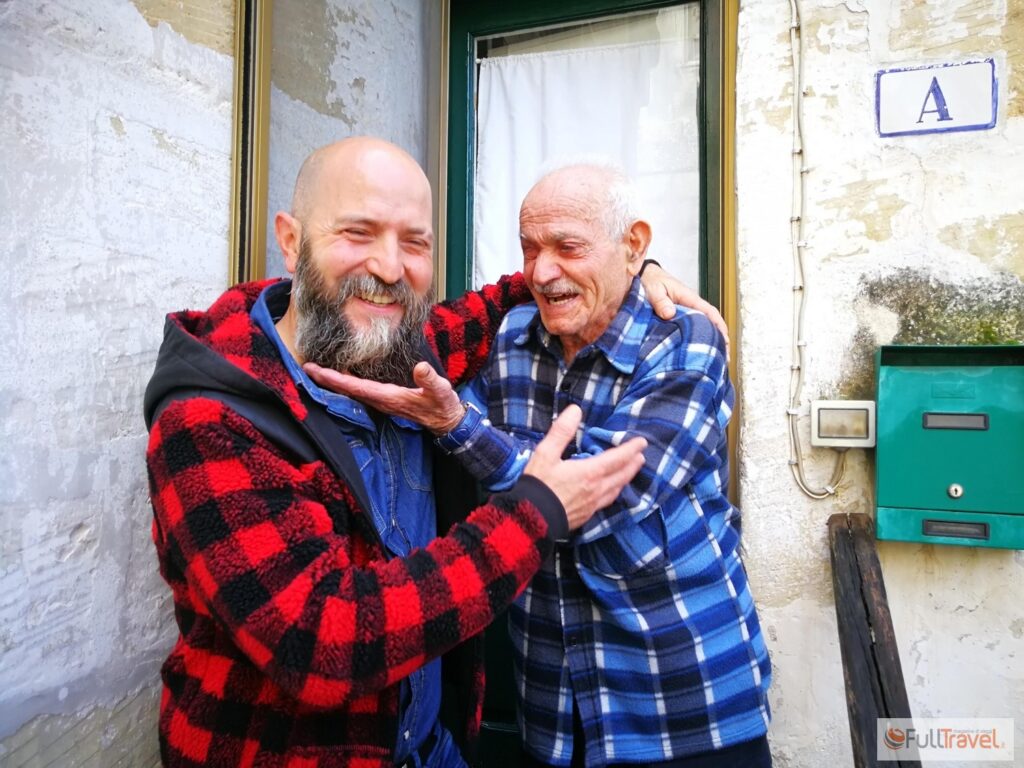
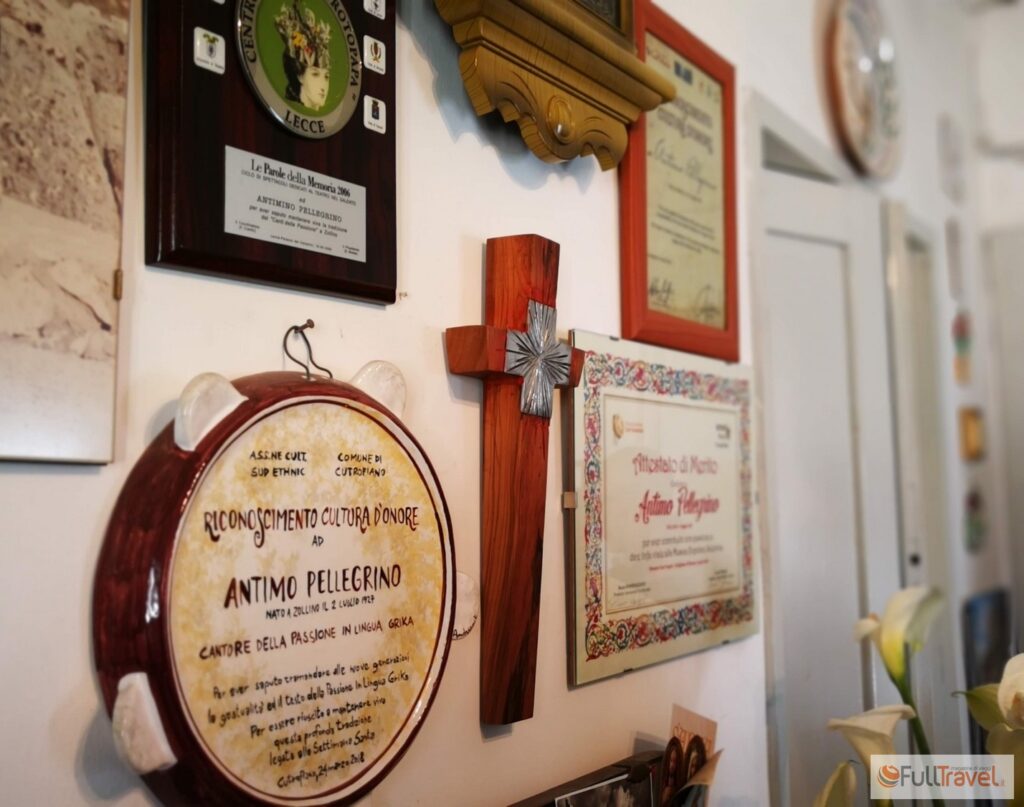
The formation of the Singers of the “Passion of Christ” is always the same: two male voices that alternate in the verses and an accordion player. In recent years, female voices have been added to the male voices, making the singing even more engaging. However, the singers are associated by gender. Therefore, a male singer pairs with another of the same sex and vice versa for females. The historic voices of Zollino are Antimo Pellegrino (still active) and Tommaso Lifonso. Among the older women is Concetta Caputo, but young Singers have begun to carve out space to carry on this ancient tradition. Among them, I like to remember Donato Tundo, Loreto Tondi, Maristella Maniglia, and Annunziata Tondi accompanied on the accordion by Mattia Manco.
The Song of Redemption
It is said that in past years the Catholic Church did not look “favorably” upon songs not “disciplined” by the followers of Christ, and even today the Passion Songs are held outside the churches, at most in the churchyard (as in the case of Zollino). The quarrel took place somewhat in the style of Don Camillo and Peppone, here in a Salento version.
The text of “The Passion of Christ” varies depending on who has sung it over the years, and even thorough research has failed to find a standard version of the song. The origins, however, leave no doubt. The Passion of Christ is a song of liberation and redemption of a farming people. Many Passion Singers awaited Easter to collect some offerings. Zollino, after all, is an agricultural center where (today) quality legumes are cultivated and where, until the ’90s, tobacco cultivation was the livelihood of most of the population.
For some years, from the late ’50s until 1975, the Passion of Christ of Zollino had been abandoned and seriously risked being forgotten. Thanks to Giovanni Pellegrino and the Theater Workshop, who spent a couple of years emigrated in Milan where he had the chance to get to know the theater of Dario Fo, since 1975 the tradition has been firmly upheld and new generations, wisely indoctrinated, continue in the intent to keep afloat what their fathers had woven.
The Passion of Christ, in this corner of Italy, is the redemption of humble people, peasants. A song of belonging that preserves an indescribable beauty. A wealth without glitter that sinks its treasures into the soul of unique and hospitable people.