


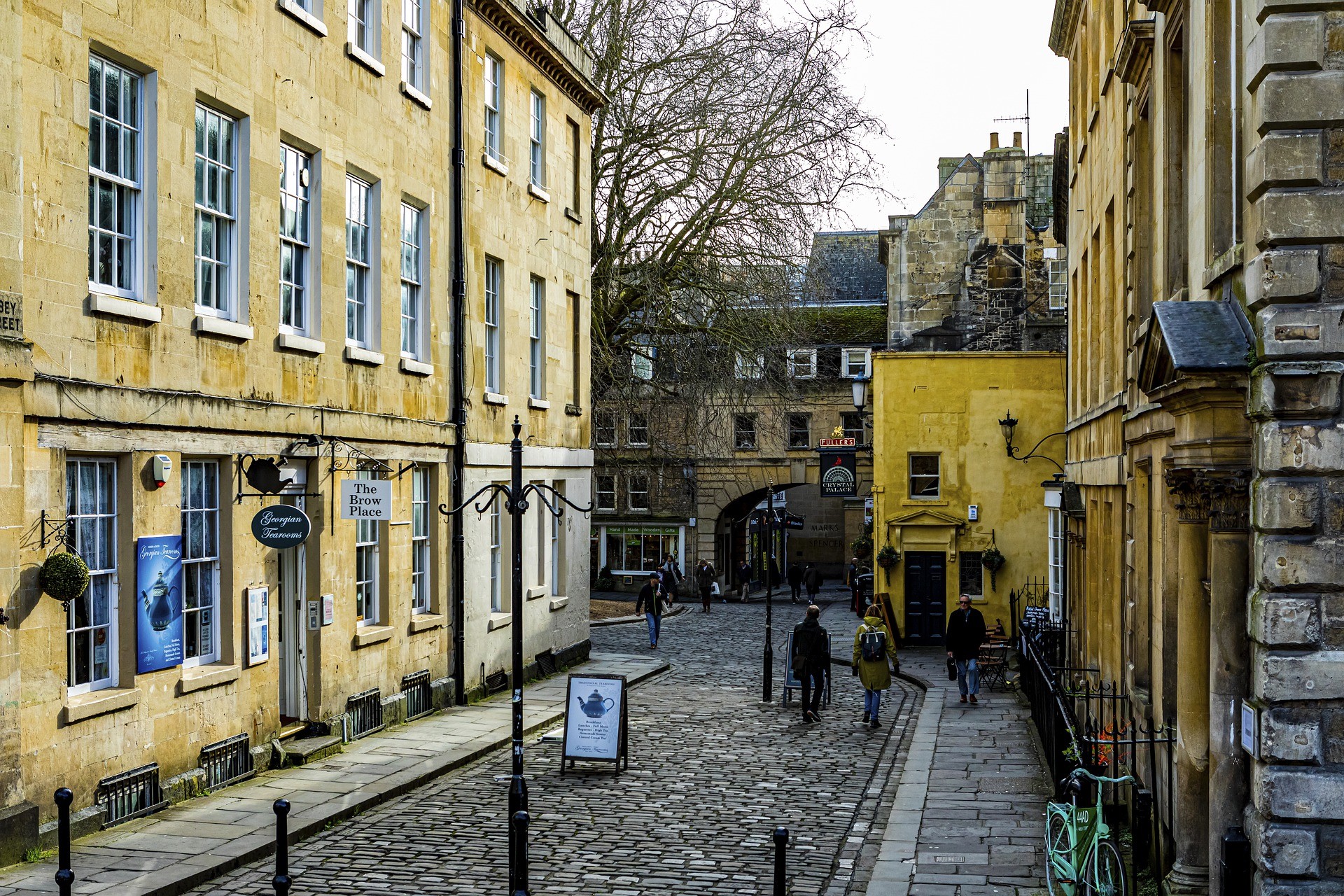

La cittadina di Bath, nel Somerset, è l’unica località termale di tutto il Regno Unito. Essa beneficia di una sorgente d’acqua custodita gelosamente nel ventre della Terra a circa duemila metri di profondità. Le proprietà salutari di quest’acqua erano note fin dall’epoca romana. La fonte fu trascurata per molti secoli finché la regina Anna all’inizio del Settecento si recò a Bath per curare la sua gotta, dando così l’impulso al rilancio della località e dei bagni termali. In breve tempo recarsi a Bath in villeggiatura diventò un must per le famiglie aristocratiche inglesi ed europee.
What to do and see in Bath, a UNESCO World Heritage Site
Today Bath is a beautiful place, a UNESCO World Heritage Site, where it is still possible to experience the refined atmosphere of eighteenth-century holidays. It offers many things to see, do, and try, and the very close distances allow you to reach anywhere on foot, thus allowing you to discover many picturesque corners at any moment. In short, it is the ideal destination for a relaxing weekend, but also for great inspiration.
1 The Roman Baths
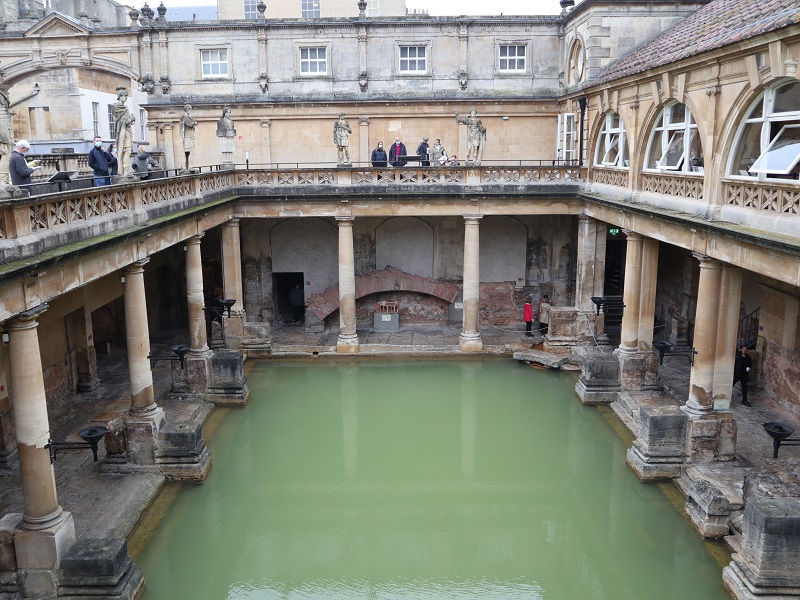
The Roman Baths are the most important monument in Bath. The best-known part is the large outdoor pool, but the visit route includes much more. In fact, the complex was very extensive and intricate. Thus we can see the remains of various thermal pools, hydraulic works that allowed the system to function, surrounding roads, and the temple dedicated to Minerva Sulis. Recently, a new area was opened, the gymnasium, where the ancient Romans practiced their sports activities.
Along the entire route, archaeological finds from excavation campaigns are displayed, grouped by thematic areas, which help to fully understand the monument through the stories of the men who built it, frequented it, or lived nearby. The most notable object is a bronze head of Minerva Sulis, preserved in excellent condition.
2 Bath Abbey
The other major city monument, just steps from the Roman Baths, is Bath Abbey. Its origins date back to the Saxon period, when a monastery was built on the site, later replaced in the 11th century by the Norman cathedral. The current abbey, in Gothic style, dates back to around 1500 and was restored by the great Victorian architect Gilbert Scott. The most notable feature is the stained glass windows, dating from the time of the restoration, which cover a large part of the walls, flooding the building with light.
One of them depicts the coronation of Edgar the Pacifist, the first king of England, which took place right at Bath Abbey in 973.

3 Georgian Bath
When Bath in the eighteenth century became the preferred holiday destination for the aristocracy, there was a need to create residences that met the expectations of illustrious guests. Thus, between 1734 and 1774 architects John Wood senior and junior created the sequence of buildings and public spaces that starts at Queen Square and culminates at the Royal Crescent, passing through Gay Street and The Circus. A common element is the local yellow limestone that characterizes the constructions. They are rows of single residences sharing a unified façade. So those who lived there had the illusion of the magnificence of their country house, despite only having a city apartment available.
The Crescent was the most exclusive and sought-after complex. Its name acquired the epithet Royal for having hosted on several occasions at number 16 the Duke of York Frederick, the second son of George III. To get an idea of what the Royal Crescent residences were like during the golden age, you can visit the house museum at number 1.
A house on Gay Street hosts the Jane Austen Centre, where, also through interactive experiences, the writer’s environment during the years she lived in Bath (not in the same residence, but in another on the same street) is recreated.
At the center of the eighteenth-century nobles’ holidays were balls, afternoon teas, and gambling. All this took place in the beautiful Assembly Rooms, near the Royal Crescent. Part of the building today houses a fashion museum, while the reception rooms, when not engaged for private events, are freely open to the public.

4 Pulteney Bridge and the Avon River
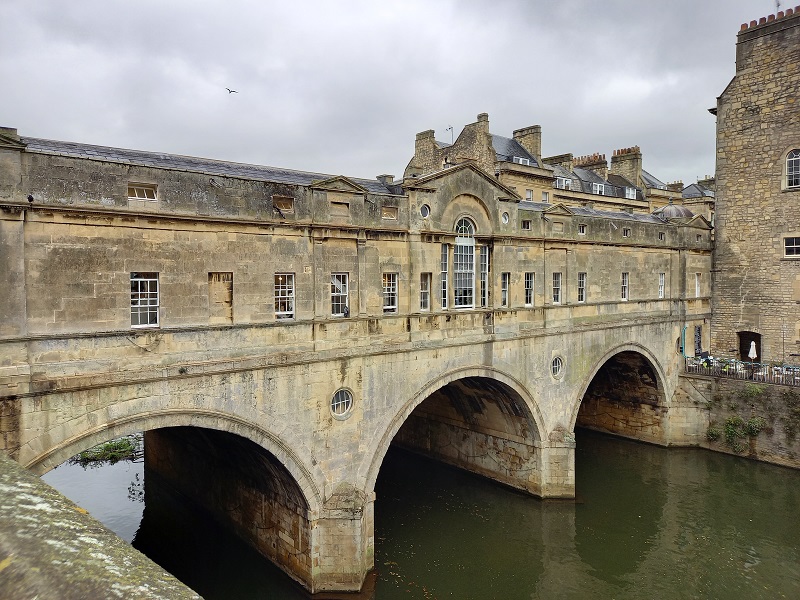
The Avon River is a fundamental part of Bath’s landscape. It is possible to explore it with river mini-cruises offered by some local operators, departing near Pulteney Bridge. For the more adventurous, there is also the possibility to rent canoes or SUP boards or even a narrowboat for navigation on the Kennet and Avon Canal.
The Avon is crossed, at a point in the heart of the city, by the Pulteney Bridge, an eighteenth-century bridge designed by the famous neoclassical architect Robert Adam. Since the two sides of the structure have enclosed spaces, which today host shops and cafés, Pulteney Bridge has historically been compared to the Ponte Vecchio of Florence. The comparison may be somewhat bold, but the Bath bridge is still very romantic and worth a visit.
5 Prior Park and the Bath skyline
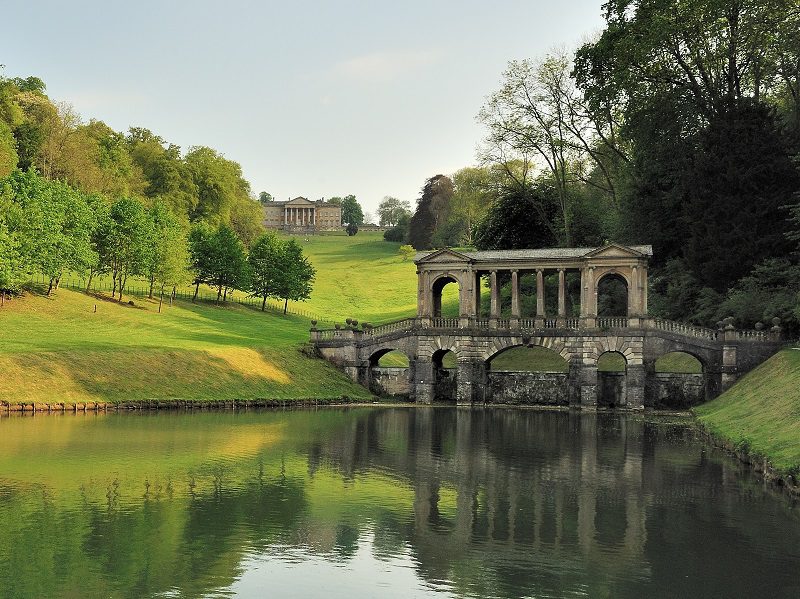
Just outside the historic center, on the other bank of the Avon, is the Prior Park Landscape Garden, a large monumental park designed by the poet Alexander Pope and gardener Capability Brown. The park was fundamental for the development of the English garden style, where the green of the natural environment alternates and integrates with architectural elements and small lakes. The main element of Prior Park is a Palladian-style bridge. There is also a Gothic-style temple, an artificial grotto, some lakes, and a small canal.
Five minutes from Prior Park you can access the Bath skyline, a circular hill walk about 10 kilometers long. Along this route you can admire woods, the remains of an Iron Age fort and a Roman settlement, and some follies, architectural whims without a specific function. But above all, the skyline offers breathtaking views over the city.
6 Thermae Spa
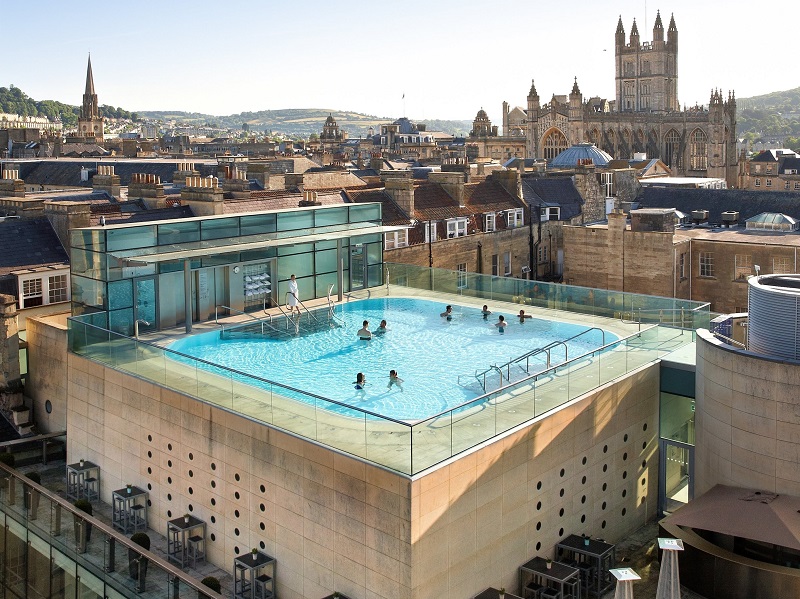
The tradition of thermal baths continues with the modern Thermae Spa, which uses the healing waters well known by the Romans and Georgian aristocrats. The Thermae are located in a building with exquisite contemporary design. The basic package (£37 – £42 on weekends) offers a two-hour experience starting from the panoramic heated pool on the third floor. Here you can relax and be pampered by various hydromassage jets while enjoying a 360-degree view of the city.
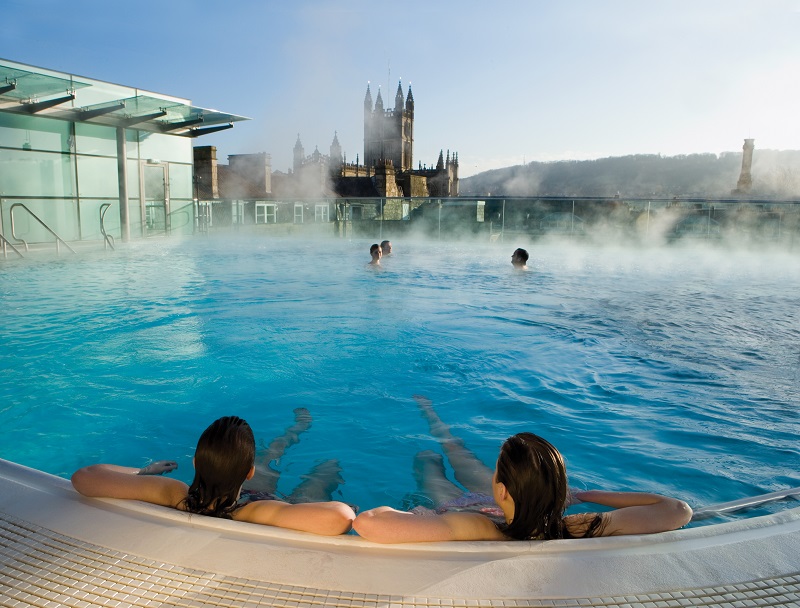
You can then continue with the rooms based on the alternation between hot and cold, moving from the rooms with aromatic Turkish baths to chromotherapy showers, from the infrared sauna to the ice room. And to finish, in the basement, there is the Minerva Bath, a large thermal pool that ideally takes us to the natatio of the Roman baths.
In front of the Thermae Spa is the Cross Bath, with a thermal pool enclosed in a suggestive neoclassical structure. The Cross Bath can be rented for private use for up to 10 people (cost starting from £400).
7 Shopping
The main boutique streets in Bath are Bath Street, Milsom Street, and Milsom Place, right in the city center. Bath is also quite renowned for shops selling furniture and home accessories. The home design district is Walcot Street, near Pulteney Bridge. Here you can find furniture, fabrics, ceramics, both with a vintage flavor and a contemporary taste.
The former Green Park station is being transformed into a district of offices and commercial activities. Under the arches, you can discover some unusual and particular shops like Resolution Records, a true sanctuary of vinyl records.
8 What to eat in Bath
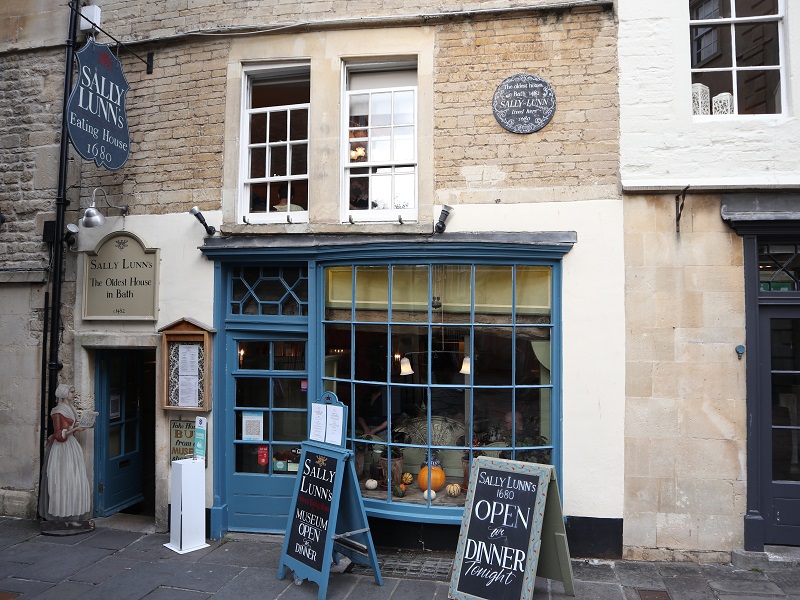
A gastronomic creation originates from Bath, the bunn, a kind of bun that can be cut in half and filled with sweet or savory fillings. The bunn was invented at the end of the seventeenth century by Sally Lunn and the recipe is still secret today. You can go and taste it in its suggestive café, located in the oldest house in Bath, dating back to 1482.
For those who want to try an aristocratic experience, the beautiful Pump Room of the baths is open for breakfast or afternoon tea. There are also numerous restaurants, often in historic buildings: for example, the Ivy Bath Brasserie offers traditional English cuisine in an elegant historic venue on Milsom Street.
9 Where to stay in Bath
Bath offers many opportunities to stay in Georgian style. The most prestigious is represented by the Royal Crescent Hotel, at number 16 of the Royal Crescent, the same residence where the Duke of York stayed. The attention to detail, quality of service, and the splendid rear garden make the Royal Crescent a destination by itself. Room rates start at about £400.

At the opposite end, but very functional for a weekend in Bath, is the Z Hotel. Located in a very central position, the Z Hotel in Bath, like all those of the same chain, is based on the concept of compact luxury. The rooms are not very large (and in most cases do not have a window), but they are equipped with everything needed. In short, a valid choice, especially if traveling alone, with a really competitive price, starting at £45.