


Pordenone, an elegant city in the Friuli Venezia Giulia region with a charming historic center: a relaxing walk under the arcades, among the longest in Europe and among buildings with beautifully frescoed facades, is the best way to discover the city. The history of Pordenone (formerly Portus Naonis) is still linked today to the Noncello, a watercourse that for centuries was navigable, determining the economic development of the city and helping to create a peculiar inclination for innovation, exchange, and dialogue.
- 1 The center of Pordenone
- 2 Corso Vittorio Emanuele II
- Pordenone places of interest
- 3 Cathedral of Pordenone
- 4 Town Hall
- The Museums of Pordenone
- 5 Civic Museum of Art of Pordenone (Palazzo Ricchieri)
- 6 Civic Museum of Natural History of Pordenone (Palazzo Amalteo)
- 7 Diocesan Museum of Sacred Art of Pordenone
- Archaeological Area of Pordenone
- 8 Western Friuli Archaeological Museum, Pordenone
- 9 Archaeological area Roman Villa of Torre, Pordenone
- What to see around Pordenone
- 10 Sesto al Reghena
- 11 San Vito al Tagliamento
- 12 Valvasone
- 13 Sacile
- 14 Maniago
- 15 Spilimbergo
- 16 What to eat in Pordenone
- 17 Where to stay in Pordenone
Dynamism and creativity are evident in architecture, artistic, musical, and literary production, as well as in all those international events such as “Pordenonelegge“, the “Giornate del Cinema Muto” and “Dedica Festival” that have made Pordenone a rich and original cultural reality in the Italian panorama and beyond.
1 The center of Pordenone
Pordenone is a beautiful, modern, curious, and fun city. It has a picturesque historic center that can be explored on foot to be seduced by the elegance of painted palaces and porticoes, by the poetry of the frescoes that reveal the history of the city. The center of Pordenone develops along two main arteries: Corso Garibaldi and Corso Vittorio Emanuele II. Along these two streets, there are numerous historic buildings. Pordenone is also the city that gave birth to Giovanni Antonio de Sacchis, who lived between 1484 and 1539, known as Il Pordenone, the greatest Friulian painter of the Renaissance.

2 Corso Vittorio Emanuele II
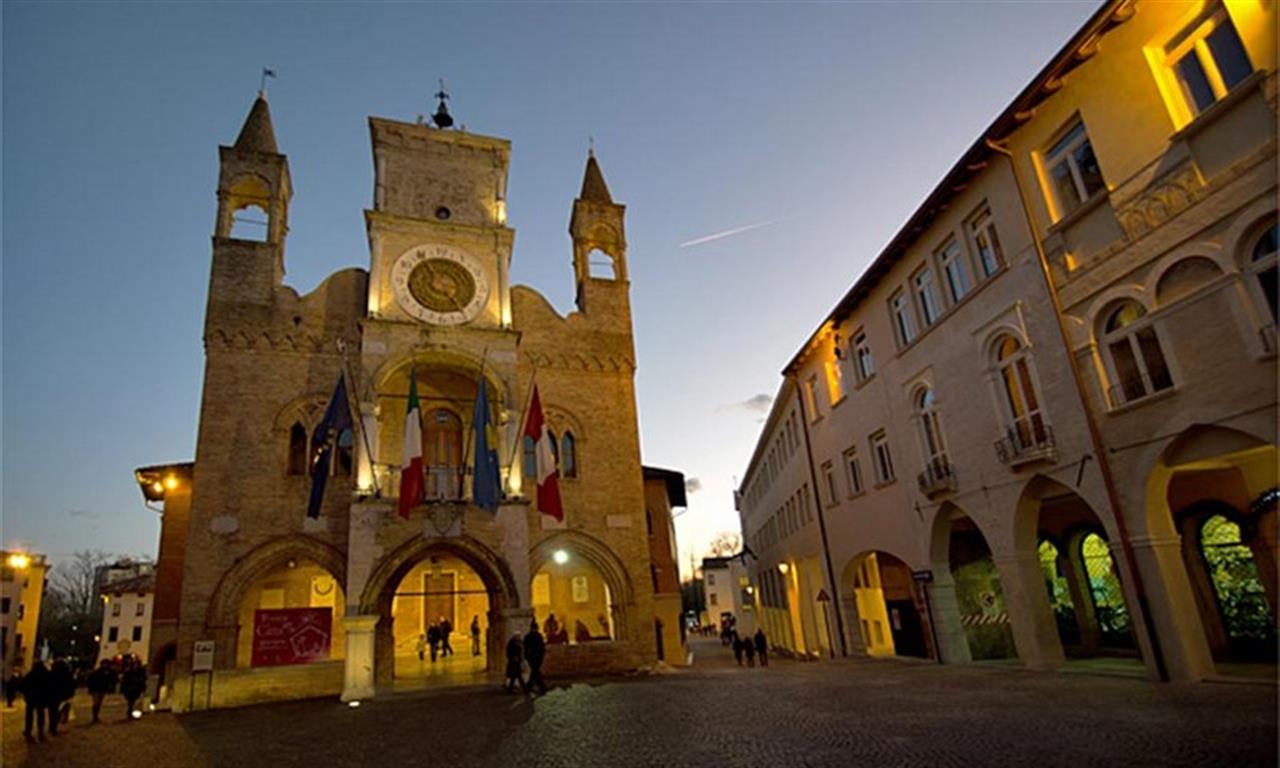
From the ancient Town Hall, with its original Gothic shapes, begins Corso Vittorio Emanuele II, the ancient Contrada Maggiore, an elegant street with long arcades and buildings of great artistic and architectural interest. In Pordenone, there are also well-kept shop windows and cozy cafés and picturesque alleys overlooking characteristic restaurants.

Pordenone places of interest
Places of interest in Pordenone not to be missed are the Cathedral, the Municipal Palace, and Palazzo Ricchieri, seat of the Art Museum.
3 Cathedral of Pordenone
Built between the late fourteenth and early fifteenth century, the Cathedral (Duomo) of Pordenone features an unfinished neoclassical façade highlighted by the Renaissance-style portal by Antonio Pilacorte. The Cathedral is located next to the Municipal Palace, another point of interest in Pordenone, and is dedicated to Saint Mark. Inside the sacred place, there are important artworks including the famous altarpieces by Pordenone, born Giovanni Antonio De’ Sacchis, dedicated to the “Madonna of Mercy”. The bell tower is 72 meters high and is considered one of the most beautiful in Italy (1347-1626).

4 Town Hall
The Town Hall of Pordenone is located at the end of the arcade of the main street. It features interesting and unique Gothic shapes. The Town Hall of Pordenone has been expanded over the years. The pinnacles and a small loggia were added only in 1542, while the origins of the building date back to 1291 with significant additions in 1365.
The Museums of Pordenone
5 Civic Museum of Art of Pordenone (Palazzo Ricchieri)
In 1949 Lucio Ernesto Ricchieri donated his palace to the city of Pordenone, to transform it into a cultural center. After restorations, made necessary by the poor condition of the building, in 1972 the Civic Museum of Art of Pordenone was inaugurated, the repository of many works destined to grow thanks to donations from collectors or the artists themselves. After being closed for several years for renovation works, in 1996, Palazzo Ricchieri was reopened to the public in a new guise, with a renewed setup of the exhibition rooms, hosting the most significant artworks of the Museum: paintings on panel or canvas, drawings, frescoes, wooden sculptures, furniture, goldsmith and ceramic objects, made from the Middle Ages to our days.
The wide entrance opens onto the public street, the portico, where carriages used to enter, which also led to the inner courtyard of the palace, where the stables, service rooms, and warehouses were located. A wide stone staircase leads to the two upper floors, where the family lived. On each floor there is a large hall, with windows overlooking the street and the inner courtyard, used as a hall of honor and representation to receive guests, and smaller side rooms, privately used by the family. Ascending the staircase, you can see, painted on the wall, the large coat of arms of the Ricchieri, divided into four parts with two silver eagles and two flowering garlands on a red background. The portraits below represent some of the most important characters of the family, who were leaders, politicians, merchants, and men of the church.
Civic Museum of Art of Pordenone Opening Hours: Tuesday to Saturday 3:30 PM / 7:30 PM Sunday 10:00 AM / 1:00 PM – 3:30 PM / 7:30 PM.
6 Civic Museum of Natural History of Pordenone (Palazzo Amalteo)
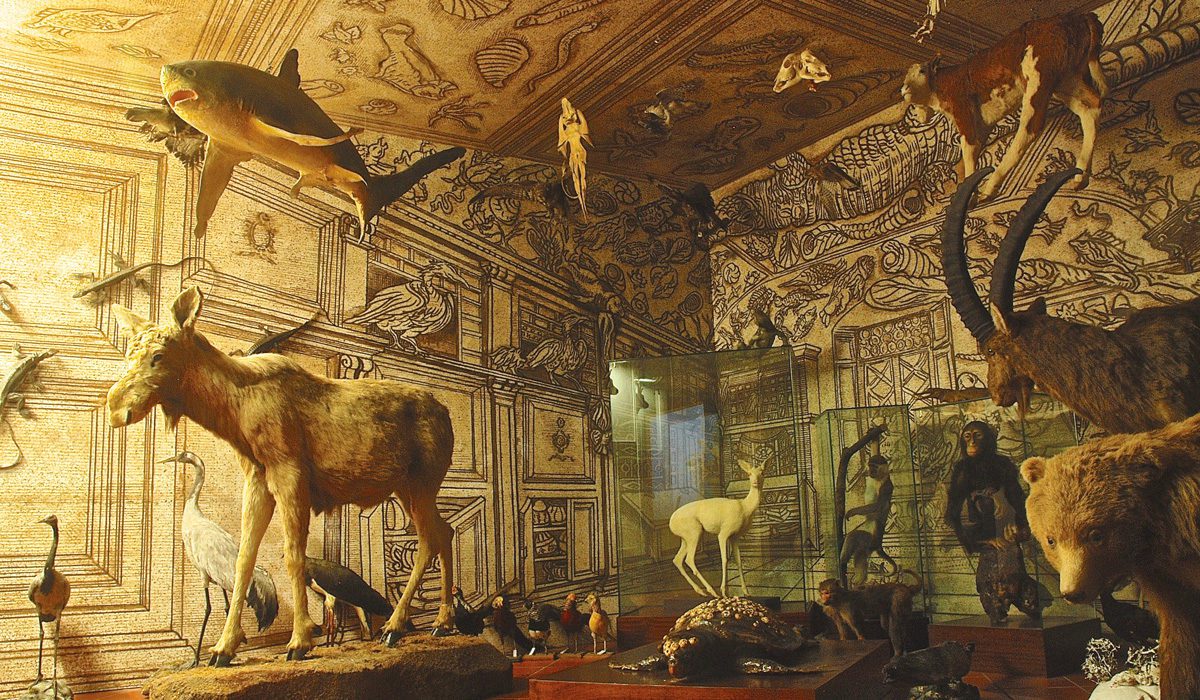
The Civic Museum of Natural History of Pordenone, founded in 1970 by bringing together the naturalistic and scientific heritage of the Silvia Zenari Naturalistic Society, is housed in the sixteenth-century Palazzo Amalteo. It includes the permanent exhibits of the bird rooms, which house collections of local species and the exotic ones of Oddo Arrigoni degli Oddi, among which the colorful hummingbirds, the dioramas room, with reconstructions of habitats and local environments, the Theatrum Naturae room and the wonder room. In the prehistoric section there are reconstructions of two different moments of the Italian Quaternary: a diorama in which the camp of Homo erectus found in Isernia has been faithfully reconstructed; a valuable painting and imposing reconstructions of a mammoth and a woolly rhinoceros. The Rimoli collection is interesting, the most complete collection of minerals of the Alpe Adria.
Opening hours of the Civic Museum of Natural History of Pordenone: Tuesday to Saturday 15:30/19:30 Sunday 10:00/13:00 -15:30/19:30.
7 Diocesan Museum of Sacred Art of Pordenone
The particular nature of the Diocesan Museum of Sacred Art of Pordenone has led to a dual arrangement: by subject (arranged chronologically) and by purpose, making room for evidence of sacramental practice and devotion. In the composition of paintings, statuary, furnishings, and various furnishings from the 7th century to the contemporary age, the work of artists of various stature (from sculptors Alvise Casella, Giovanni Martini, Orazio Marinali, to painters Pomponio Amalteo, Francesco Guardi, Nicola Grassi, Gianfrancesco da Tolmezzo, Michelangelo Grigoletti and others) an effort was made to privilege evidence of local origin, resorting to neighboring geographical areas to fill any iconographic gaps. Resulting from ancient deposits, donations, or custody assignments, the Diocesan Museum of Sacred Art of Pordenone presents its collections arranged clearly and elegantly.
Opening hours of the Diocesan Museum of Sacred Art of Pordenone: Tuesday 09:00/13:00; Wednesday and Thursday 09:00/13:00 /14:30/18:30; Friday 14:30/18:30 Saturday 09:00/12:30.

Archaeological Area of Pordenone
8 Western Friuli Archaeological Museum, Pordenone
Just three kilometers from the center of Pordenone, you will find the Western Friuli Archaeological Museum, opened to the public after the restoration of the Castle of Torre. It houses in its rooms numerous artifacts collected by the last member of the family residing in the manor, Count Giuseppe di Ragogna, during his activity as an archaeologist. The presented artifacts come from all over Western Friuli and reconstruct a broad historical overview, from prehistory to the Renaissance. The Western Friuli Archaeological Museum of the Municipality of Pordenone preserves some artifacts from the Palù of Livenza, those entered into the Museum since the 1970s, when the rediscovery of the site began and the first ceramics were recovered, others instead assigned for deposit since 2006.
Western Friuli Archaeological Museum Opening Hours: Friday and Saturday 3:00 pm – 6:00 pm, Sunday 10:00 am – 12:00 pm and 3:00 pm – 6:00 pm. July-August: Friday and Saturday 3:00 pm – 7:00 pm; Sunday 10:00 am – 12:00 pm and 3:00 pm – 7:00 pm.

9 Archaeological area Roman Villa of Torre, Pordenone
The uncovering of the Roman Villa of Torre is credited to Count Giuseppe di Ragogna who, between 1950 and 1952, excavated the structures of part of a vast residential-productive complex, located near the current course of the Noncello river, richly decorated with refined frescoed plasters and precious marbles. Information: opening for groups upon request at the Western Friuli Archaeological Museum (tel. 0434-541433). Free admission.

What to see around Pordenone
The itinerary of Pordenone and surroundings goes through San Vito al Tagliamento, Maniago, Spilimbergo, Valvasone, Sacile to reach Sesto al Reghena. The area is dotted with towns with centuries-old histories, still told today by the appearance and ancient style of the buildings.
10 Sesto al Reghena
After discovering the city of Pordenone, the visitor can start exploring its province beginning with the locality of Sesto al Reghena, whose streets tell a millennial story. Particularly interesting is the abbey of S. Maria in Sylvis, a true jewel of medieval architecture that houses a treasure of frescoes.
11 San Vito al Tagliamento
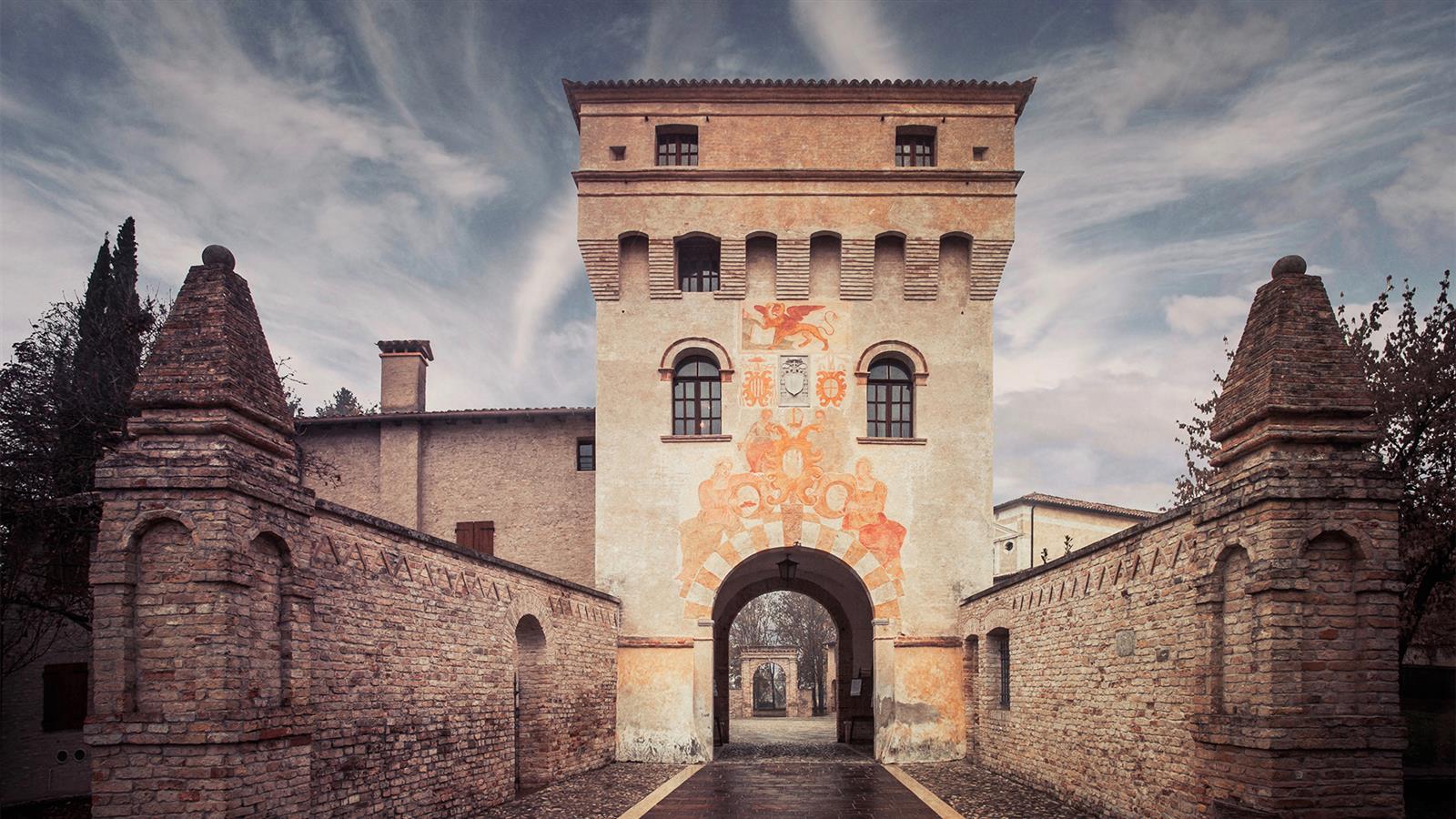
The journey continues in the town of San Vito al Tagliamento, along whose streets the centuries unfold, from the Roman era to the medieval age, well represented by the old city walls once defending the village and its towers. Also not to be missed is the Church of Santa Maria dei Battuti, a splendid example of Renaissance architecture.

12 Valvasone
Leaving San Vito, you can continue to Valvasone, one of the “Most beautiful villages in Italy”: developed all around the castle, the village is a network of medieval alleys and small squares. The arcades that embellish many of the numerous noble houses in the historic center, often decorated with coats of arms and statues, are splendid.

13 Sacile
In the province of Pordenone, the locality of Sacile definitely deserves a visit, nicknamed the Garden of the Serenissima. The town lies on the banks of the Livenza river and is structured in a maze of alleys, lanes and small bridges offering enchanting views. Absolutely not to be missed in Sacile are the Cathedral of San Nicolò, the Chapel of Madonna della Pietà, Piazza del Popolo, the Town Loggia and the Ragazzoni-Flangini-Biglia Palace.

14 Maniago
A true gem of the itinerary is Maniago, a town famous for the traditional production of blades and knives, an art that the local blacksmiths have cultivated and perfected since the 1400s.
15 Spilimbergo
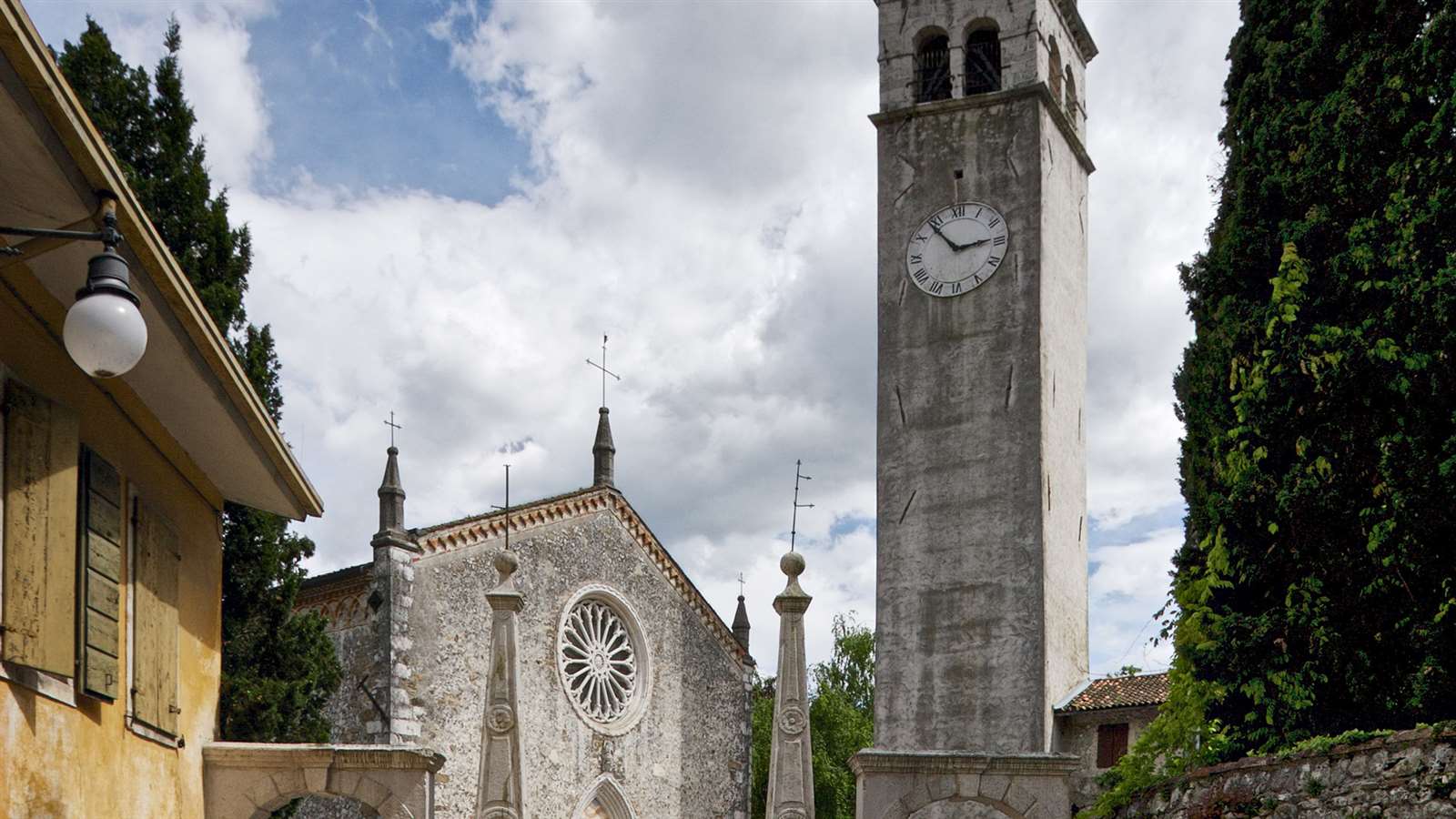
The last stop on the visit around Pordenone can be the splendid village of Spilimbergo. The town, known for its mosaic tradition and the famous Friuli Mosaic School, developed in the medieval and Renaissance periods and is surrounded by three city walls. Besides the walls, the castle and the Eastern Tower, the Painted House in the historic center deserves attention, frescoed in the 16th century with scenes from the life of Hercules. A visit to Pordenone and surroundings is more than a weekend idea, given the richness of attractions in the province’s towns.

16 What to eat in Pordenone
Pordenone reflects the influence of the entire region. The main dishes are cold cuts (pitina, salam tal aset), bean and barley soups, gnocchi, risottos, and orzotti. And then: frico and polenta (a classic of the entire region), musetto con la brovada (pig snout with turnips macerated in vinaccia) and cod. Among desserts, the “biscotto pordenone” is a must.

17 Where to stay in Pordenone
Pordenone is a quiet city boasting a fair hotel offering, as well as culinary options. It is not difficult to find good accommodation considering also the extra-hotel offers. In Pordenone, however, we recommend staying in a hotel to be searched among the dozens of hotels listed on our partner’s website, Booking.com.