

Origins of the Halloween Festival
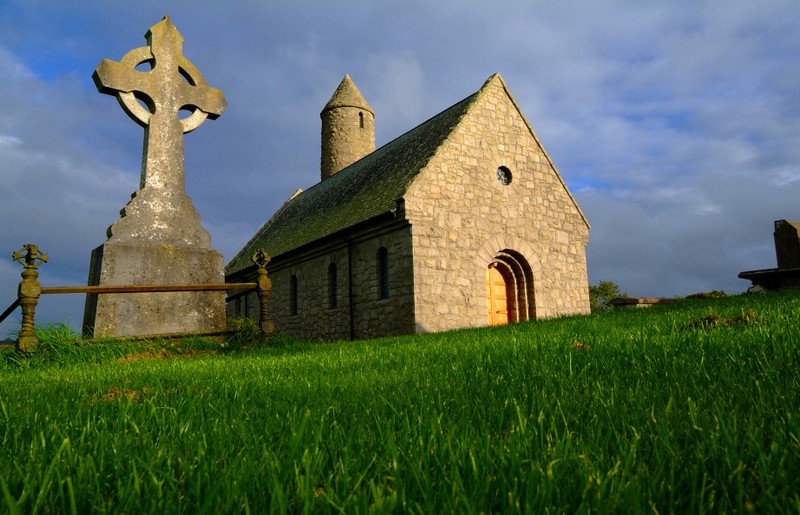
The Halloween festival has Celtic origins. It traces its roots back to ancient times, precisely when the western part of Europe (France, United Kingdom, and the Iberian Peninsula) was inhabited by the Celts. The stories of the legendary Druids, the adventures and feats of Asterix and Obelix, in fact, are well-known and part of our shared heritage. The ancient Celts (particularly the populations of Ireland and Wales) celebrated at this time the end of the harvest and began to create supplies for the winter months and to slaughter livestock. This is the history of Halloween.
Halloween Party: Carved Pumpkin with Candle
The Halloween tradition says that on October 31 the line between the world of the living and the dead fades away: the deceased unleash their wickedness, raiding the countryside and leaving scorched earth around them, causing diseases, casting the evil eye, spreading terror everywhere.
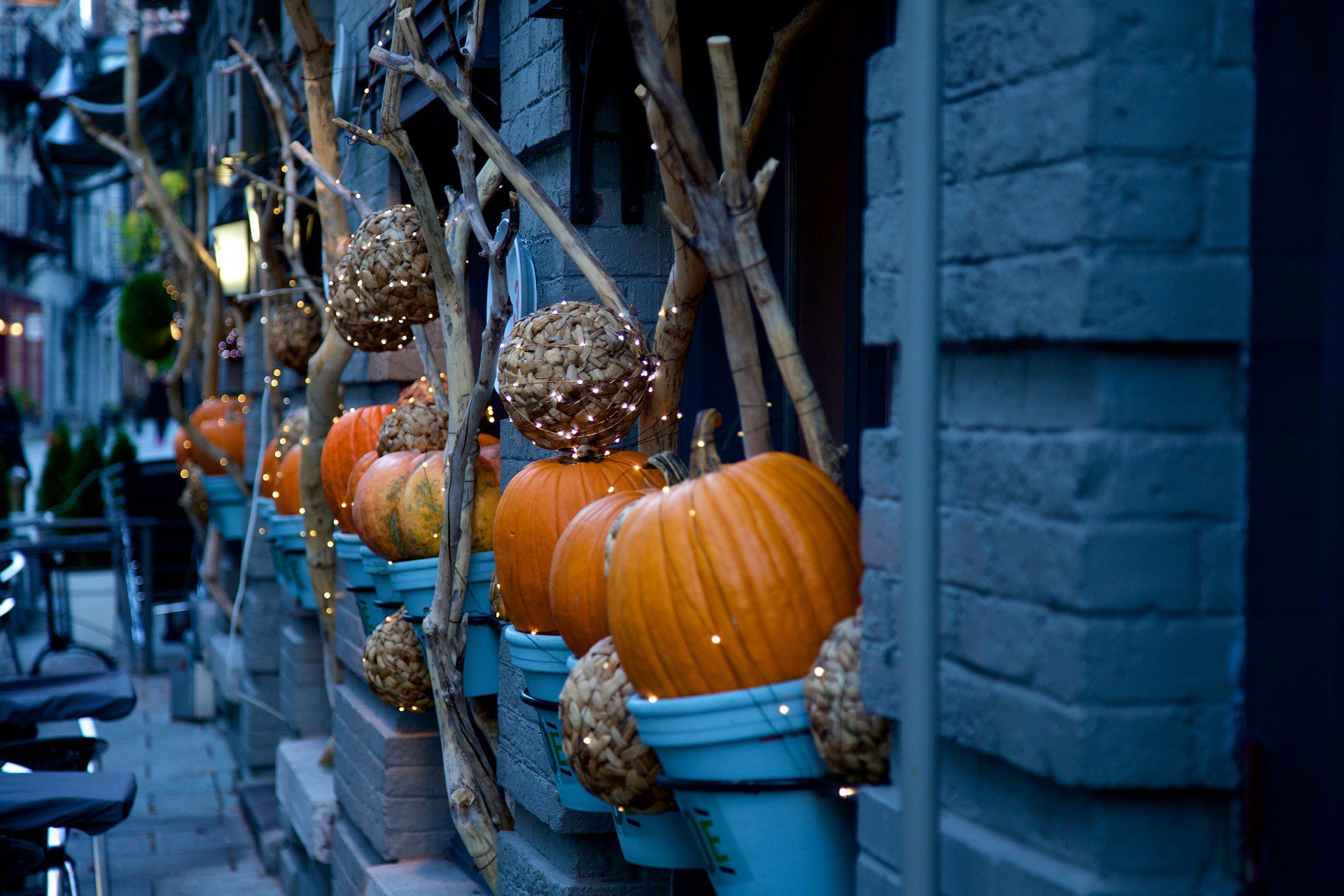
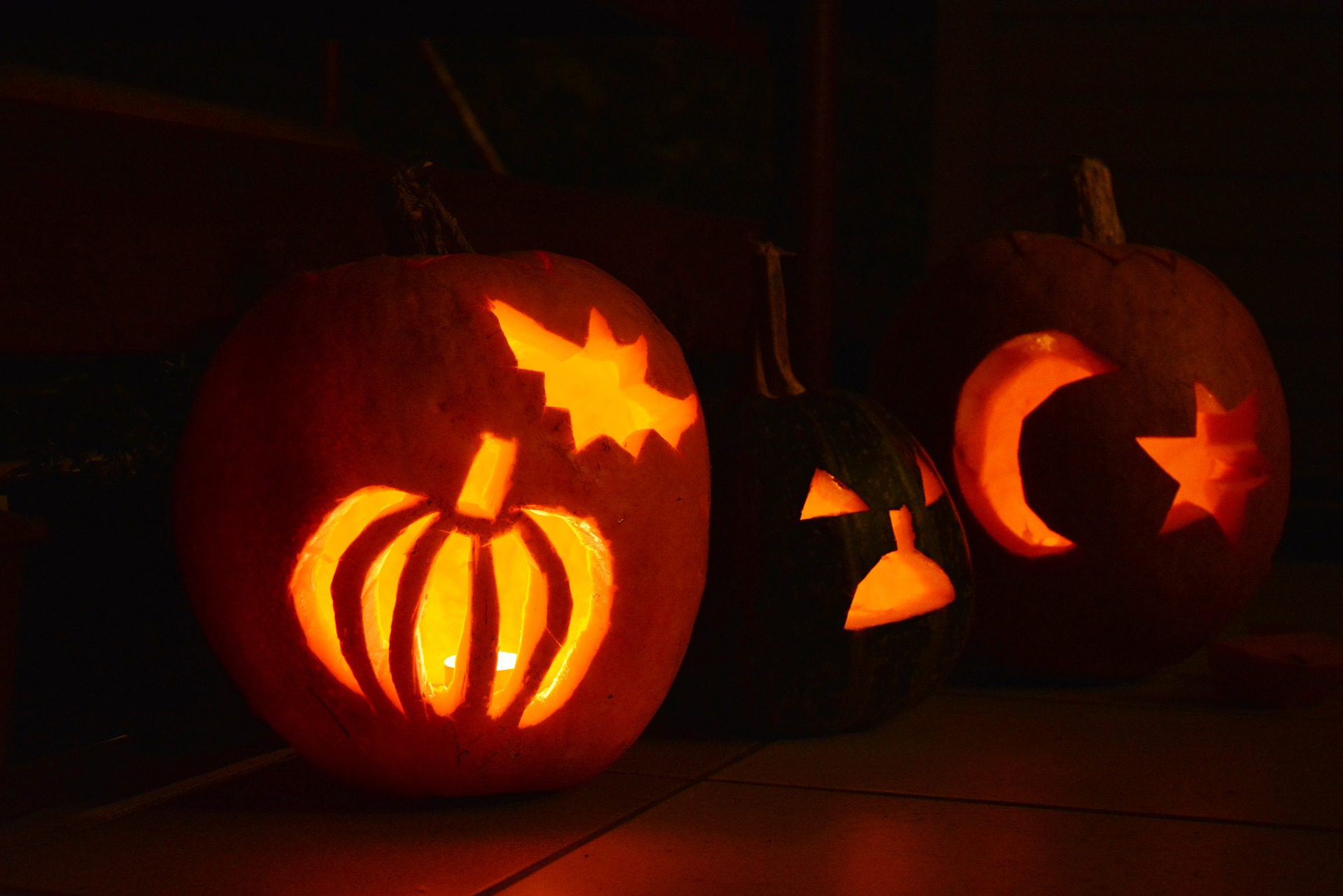
One of the most typical customs of Halloween is to place a carved pumpkin on the doorstep, shaped to resemble the comical or frightening face of the emblematic figures of this festival; inside it a candle is lit.
This custom also belongs to the Celtic world, where it was believed that the head was the most important and powerful part of our body, as it contains the spirit and knowledge. In this way, it was thought to ward off misfortunes and disasters, especially the deadly wrath of the deceased. In ancient times, the “head” of turnips was used for this purpose, but in America pumpkins were more available and gradually replaced turnips.
The heritage of traditions linked to Halloween night was exported precisely to the United States in the 19th century by Irish immigrants who, due to a severe famine, were forced to leave their magical and fairy-tale land to move across the ocean, in search of new opportunities and a bit of luck.
Halloween and its characters
Precisely because it is a holiday centered on the deceased and their supposed influences on the world of the living, Halloween is surrounded by an aura of dense mystery, characterized by an almost macabre, gloomy atmosphere, with magical, frightening figures endowed with evil and supernatural powers: thus, deformed, immense monsters with horrible and threatening features, demons ready to possess our souls, vampires waiting for darkness to swoop down on us and suck our blood, leaving us lifeless and agonizing; then there are fearsome witches roaming the suburbs always intent on deceiving us, preparing and administering brews and magical potions often with quite harmful properties.
Halloween and its rites
Halloween Party: Trick or Treat
The perhaps most well-known ritual is the famous “Trick or treating“: on Halloween evening, children dress up as typical characters of this holiday and usually go from house to house, from hallway to hallway, knocking on every door.
As soon as the door is opened for them, they threaten the homeowner with the famous phrase “Trick or treat“, ready to pounce on the poor unfortunate and unleash all their mischief if they do not hurry to fill them with gifts (candies, chocolates, cookies, and various sweets). Often, especially in recent years, this ritual involves the whole family, as it is not always wise to let children roam the neighborhood without the watchful presence of some adult.
Halloween-Spiele
Ein sehr häufiges Spiel ist das “Apfelangeln” (Dunking oder apple bobbing): Dabei wird eine Schüssel mit Wasser gefüllt, Äpfel hinein getaucht, und man versucht, sie mit dem Gesicht zu beißen, ohne die Hände zu benutzen, die normalerweise hinter dem Rücken gebunden sind. Eine Variante ist, sich auf einen Stuhl zu knien, eine Gabel im Mund zu halten und die Äpfel damit aufzuspießen (auch hier ist die Benutzung der Hände verboten).
Ein weiteres Spiel besteht darin, kleine Kuchen, die mit Melasse oder Sirup überzogen sind, an eine Schnur zu hängen und sie zu essen, ohne die Hände zu benutzen, während sie immer noch hängen. Natürlich wird das Gesicht mit der Flüssigkeit beschmiert, die die Süßigkeiten bedeckt, sodass man überall klebrig ist.
Eine typischerweise irische Beschäftigung ist Puicìnì, eine Art Wahrsagespiel: Eine geblendete Person wird an einen Tisch gesetzt, der mit verschiedenen kleinen Tellern mit unterschiedlichen Inhalten gedeckt ist. Die Person muss einen davon ertasten und wählen, und je nach Inhalt wird eine Vorhersage gemacht: Wenn sich Erde auf dem Teller befindet, wird ein Bekannter des Spielers innerhalb eines Jahres sterben; Wasser weist auf einen bevorstehenden Umzug in ein anderes Land hin, der Ring auf eine Heirat, Rosenkranzperlen kündigen an, dass der Spieler die Priester- oder Nonnenweihe empfängt, Münzen bedeuten Wohlstand und Wohlbefinden, Bohnen hingegen Armut.
Häufig erscheinen an Straßenecken und vor Geschäften Schauspieler, die immer als typische Halloween-Figuren verkleidet sind und vorgeben, Passanten und Kunden zu bedrohen und zu erschrecken. Oft postieren sie sich auch vor Privatwohnungen.