


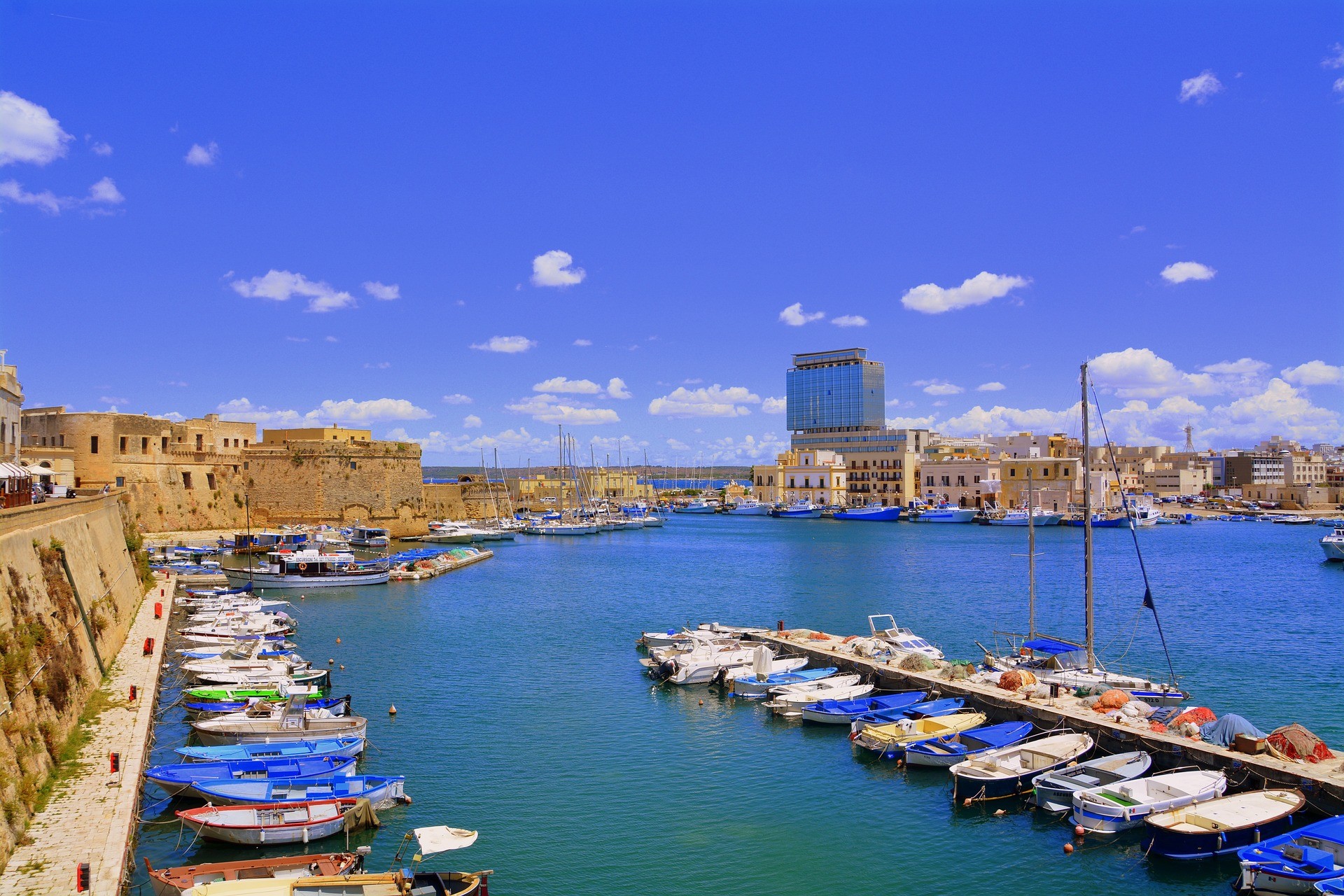

Benvenuti a Gallipoli, una splendida città situata nella regione del Salento, nel sud-est dell’Italia. Questa affascinante località è nota per le sue acque cristalline, le antiche mura e la ricchezza di storia e cultura che offre ai suoi visitatori. In questo articolo, vi guideremo attraverso le principali attrazioni e attività che Gallipoli ha da offrire, dalla sua affascinante storia alle avventure all’aria aperta e alle delizie culinarie.
- Main attractions of Gallipoli
- Purità Beach
- Historic Center of Gallipoli
- Cathedral of Saint Agatha
- The rich history of Gallipoli
- Cultural Experiences in Gallipoli
- Underground Oil Mills of Palazzo Granafei
- “Emanuele Barba” Civic Museum
- Diocesan Museum
- Outdoor activities and adventures in Gallipoli
- The Culinary Delights of Gallipoli
- The Best Time to Visit Gallipoli
- Tips for Planning a Trip to Gallipoli
- Guided tours and travel packages for Gallipoli
- Conclusions
Se state cercando una destinazione di viaggio che offra un mix perfetto di storia, cultura, avventura e gastronomia, Gallipoli è il posto che fa per voi. Continuate a leggere per scoprire cosa vedere e fare a Gallipoli e come pianificare al meglio il vostro viaggio in questa affascinante città.
Gallipoli è una città che ha molto da offrire ai suoi visitatori e, con un po’ di pianificazione e conoscenza, potrete sfruttare al massimo il vostro tempo in questa splendida località. Preparatevi a immergervi nella ricca storia e cultura di Gallipoli, esplorare le sue principali attrazioni e vivere esperienze indimenticabili in questa affascinante città.
Prevedi di visitare Gallipoli durante l’estate che viene? Ottima scelta: seppur conosciuta per essere una meta balneare dalla vita notturna molto movimentata, questa meravigliosa città pugliese ha talmente tante meraviglie da offrire da essere definita “la perla dello Ionio”. Tra attrazioni naturali, storiche e culturali, Gallipoli ti darà l’opportunità di vivere una vacanza davvero immersiva, dove le spiagge paradisiache tipiche della Puglia non sono l’unica cosa interessante. Anche se, naturalmente, rendono la tua estate ancora più magica.
Il tutto ha un che di magico, esaltato dalle mura, dai bastioni, da piazzette e vicoli affacciati sul mare, dai palazzi fortezza, dalla cattedrale-pinacoteca di Sant’Agata, tipica espressione del barocco salentino, e dalle tante chiese delle confraternite. Un miscuglio di colori, profumi, architetture che ricordano un po’ il Marocco e un po’ la Turchia. Del resto, Gallipoli fu, a partire dal XVII secolo, un porto di straordinaria importanza: da qui partivano circa 100mila litri d’olio al giorno e vi arrivavano spezie e sete dall’oriente. Curiosa, in prossimità del ponte, una fontana greco-romana che, sebbene ricostruita nel ‘500, è ritenuta la più antica d’Italia.
Scopriamo quindi cosa fare e vedere a Gallipoli!
Main attractions of Gallipoli
Gallipoli offers a wide range of tourist attractions that satisfy the tastes of all visitors. Below we list some of the main attractions that you should absolutely see during your stay in Gallipoli.
- The beaches of Gallipoli: the city is famous for its beautiful golden sand beaches and crystal-clear waters, ideal for a day of relaxation in the sun. Among the most famous beaches of Gallipoli are the Pietà Beach, located in the historic center, and the beaches of Baia Verde and Punta della Suina, a few kilometers from the city.
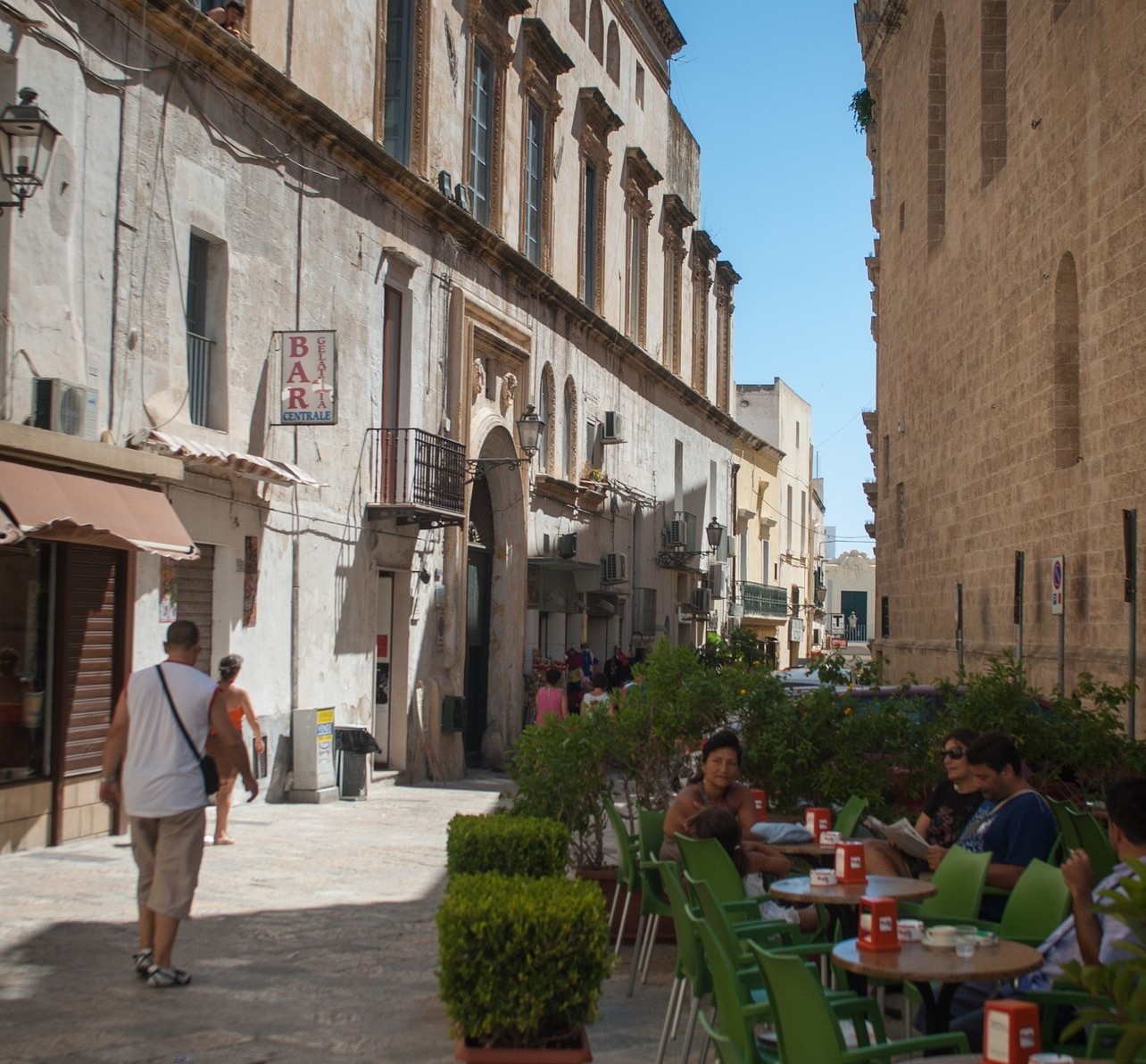
- The historic center of Gallipoli: the beating heart of the city, the historic center of Gallipoli is a maze of narrow streets and alleys that will make you lose track of time. Here you can admire the ancient city walls, visit churches and historic buildings and immerse yourself in the unique atmosphere of this place.
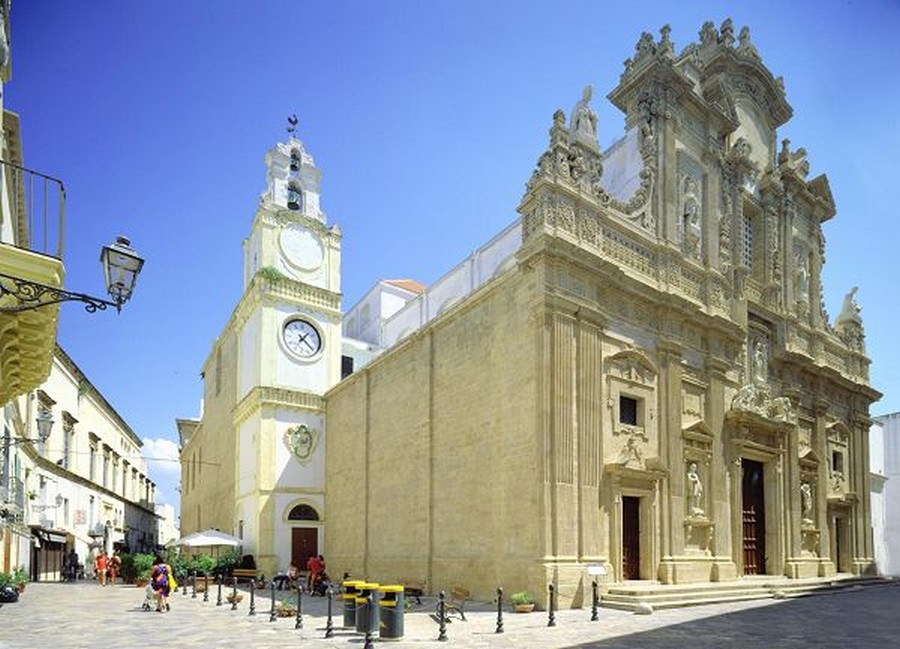
- The Cathedral of Sant’Agata: located in the historic center, the Cathedral of Sant’Agata is a masterpiece of Baroque architecture dating back to the 17th century. The interior of the church is rich in artworks and frescoes, including the famous “Jesus and the Samaritan Woman at the Well” by Giovanni Andrea Coppola.
- The Castle of Gallipoli: an imposing fortress located on the city’s seafront, the Castle of Gallipoli dates back to the 13th century and offers a panoramic view of the city and the sea. The castle also houses an interesting museum that tells the history and culture of Gallipoli.
Purità Beach
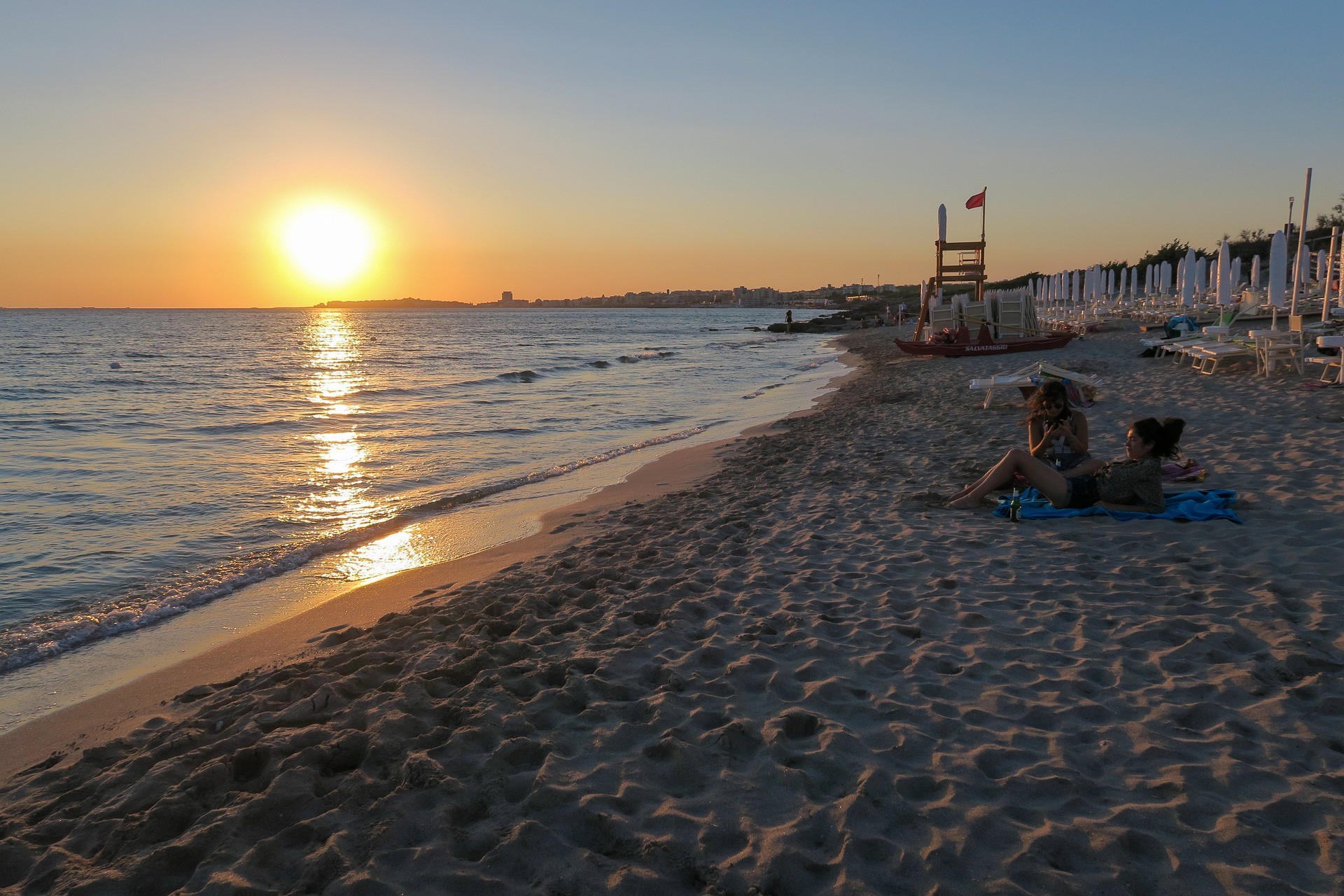
Let’s start with the obvious: Gallipoli is a seaside destination, the meeting place for thousands of young people who choose to come here every year to party, on the Apulian coast washed by the Ionian Sea. If you too dream of spending your holidays in Puglia in villages near the sea, we recommend looking for accommodation as close as possible to the beautiful Purità Beach.
This is the summer heart of the city, one of Gallipoli’s nerve centers, where people rush as soon as the weather gets nice. It is a not-too-big beach, with fine and golden sand and it is free, although there is the possibility to rent umbrellas and sunbeds on site.
You find it nestled between the bastions and towers of the old town, so the surrounding panorama is really worth it: probably, it is one of the most suggestive spots of the entire Gallipoli.

Historic Center of Gallipoli
Puglia is quite famous for the beauty of the historic centers of its towns: each village has its own, with common characteristics yet unique in its kind. Well, the historic center of Gallipoli is perhaps one of the most charming, as well as one of the most distinctive.
What makes it so interesting is that it is accessible only by crossing the Twelve-arched Bridge, which replaced the original drawbridge since the 1600s. From here, white streets, noble palaces, museum, library, and characteristic courtyard houses fill the old village, allowing you to experience the atmosphere of a bygone era.
Don’t forget to visit the wonderful and evocative Aragonese Castle, completely surrounded by the sea and connected to the mainland by the bridge. Very similar in structure and location to the Aragonese Castle on the island of Ischia, which is also linked to the village by a bridge.
Cathedral of Saint Agatha
Among the important churches in Gallipoli, there are several, and since they are historic buildings, they all feature incredible architecture worthy of a visit. If there is one that you simply cannot miss, it is the Cathedral of Saint Agatha. Known somewhat as the symbol of Gallipoli, this majestic cathedral has Romanesque origins and dates back more than four hundred years: we are talking about a seventeenth-century construction, perfectly preserved to this day.
And while outside you can admire stone statues of saints and niches, stepping inside you immerse yourself in a breathtaking Baroque setting, where the beauty of the high altar made with different shades of marble stands out.
The Cathedral is located in the historic center, but don’t worry: it is so imposing that you will have no trouble finding it, in fact: it will become like a compass for your journey.
The rich history of Gallipoli
The history of Gallipoli dates back thousands of years, when it was founded by the Greeks in the 7th century BC. Over the centuries, the city has been influenced by various cultures, including the Romans, Byzantines, Normans, and Aragonese, who left their mark on its architecture and traditions.
One of the most fascinating aspects of Gallipoli’s history is its strategic position on the sea, which made it an important port and commercial center over the centuries. Thanks to this privileged position, the city prospered and developed, becoming one of the most fascinating and historic locations in Salento.
Today, the history of Gallipoli is still very present in the city, with its numerous historic buildings, monuments, and places of interest that tell the story of this captivating place. From the ancient walls to the churches and palaces, the history of Gallipoli is a fascinating journey through time that will make you fall in love with this city.
Cultural Experiences in Gallipoli
In addition to its main tourist attractions, Gallipoli also offers a range of cultural experiences that will allow you to immerse yourself in the history and traditions of this fascinating city. Below we list some of the cultural experiences not to be missed during your stay in Gallipoli.
- Visit the museums of Gallipoli: the city is home to several museums that tell the history and culture of Gallipoli, including the “Emanuele Barba” Civic Museum, the Diocesan Museum of Gallipoli and the Sea Museum. These museums offer a comprehensive overview of Gallipoli’s history and traditions, making them unmissable for anyone wanting to deepen their knowledge of this fascinating city.
- Attend a theatrical performance: the Garibaldi Theatre is a charming historic theatre located in the center of Gallipoli, where you can attend theatrical shows, concerts, and other cultural events. A unique experience to immerse yourself in the artistic and cultural atmosphere of Gallipoli.
- Participate in local festivals and traditions: Gallipoli is famous for its festivals and celebrations, which take place throughout the year and offer visitors the opportunity to experience firsthand the traditions and culture of the city. Among the most famous festivals are the Feast of Saint Agatha, patron saint of Gallipoli, held in February, and the Good Friday Procession, a suggestive religious event that attracts thousands of visitors every year.
Underground Oil Mills of Palazzo Granafei
“Emanuele Barba” Civic Museum
The Museum was founded in 1823 by Canon Carmine Fontò who made his books public. Additional donations followed from Dominican and Franciscan convents. After a few years, the Museum was entrusted to Emanuele Barba (philosopher, doctor, teacher) who established a “Zoological Cabinet”. Today, the museum houses collections of weapons, clothing, fossils. It also displays the collection of the Gallipoli painter Giovanni Andrea Coppola. The museum also includes archaeological finds, sarcophagi, and Messapian vases with inscriptions, portraits of illustrious Gallipoli figures, and a numismatic collection.
Diocesan Museum
The first idea of a Diocesan Museum in Gallipoli came from a successful intuition of Bishop Mons. Aldo Garzia, who established in 1983 the Diocesan Center for Cultural Heritage of the then Diocese of Gallipoli, including the museum, the historical archive, and the episcopal library, assigning as a location the building of the ancient Gallipoli Seminary, which had lost its original function. The same bishop did similarly on June 24, 1984, for the then Diocese of Nardò. With the unification of the two dioceses, the Diocesan Museum also became a single entity with two distinct sections, one in Gallipoli and the other in Nardò.
The Gallipoli section is housed in an architecturally notable building, built by Mons. Serafino Brancone (1747-1759) in 1751 to provide the Diocese of Gallipoli with its own seminary. Nearly intact to this day, the building required a radical restoration and necessary adaptations to host the Museum. The restoration work began in 1999 and continued until 2004. The museum complex covers an area of about 900 square meters spread over three floors with fifteen exhibition rooms.

Outdoor activities and adventures in Gallipoli
For lovers of outdoor activities and adventures, Gallipoli offers a series of unique and unforgettable experiences. Below we list some of the best outdoor activities to try during your stay in Gallipoli.
- Boat excursions: one of the best experiences to enjoy in Gallipoli is a boat trip along the coast, which will allow you to admire the city from a unique perspective and explore the beautiful coves and hidden beaches of the area. You can choose from several options, from sailing boat excursions to catamaran trips.
- Snorkeling and diving: the crystal-clear waters of Gallipoli offer the opportunity to practice snorkeling and diving in a marine environment rich in life and colors. You can explore the seabed and admire the underwater flora and fauna, as well as discover ancient wrecks and submerged caves.
- Cycling and trekking: the countryside surrounding Gallipoli offers a series of routes for cycling and trekking, ideal for exploring the nature and landscapes of Salento. You can pedal among centuries-old olive groves and vineyards, or walk along panoramic paths that wind between the hills and the coast.
- Water sports: Gallipoli offers a wide range of water sports, including windsurfing, kitesurfing, paddle surfing, and kayaking, for those who wish to experience an adrenaline adventure on the crystal-clear sea waters.

The Culinary Delights of Gallipoli
The gastronomy of Gallipoli is a mix of flavors and traditions that reflect its history and geographical location. Salento cuisine is famous for its dishes based on fish and seafood, which perfectly combine with local ingredients and spices.
Among the typical dishes of Gallipoli we find the “pitta di patate“, a sort of savory pie made with potatoes, tomatoes, onions, and olives, and the “sagne ‘ncannulate“, a fresh pasta prepared with durum wheat flour and seasoned with tomato sauce and strong ricotta. Don’t forget to try the “pettole”, a local specialty made of fried leavened dough served with anchovies or cod.
As for sweets, Gallipoli offers a wide range of delicacies, including the “pasticciotto”, a typical Salento dessert made with shortcrust pastry and custard, and the “purceddhruzzi“, fried sweet dough balls covered with honey.
Finally, don’t forget to accompany your meals with a glass of local wine, such as Negroamaro or Primitivo, which perfectly complement the flavors of Salento cuisine.

The Best Time to Visit Gallipoli
The mild climate of Salento makes Gallipoli a perfect destination to visit all year round. However, the best time to visit Gallipoli depends on your preferences and interests. If you are looking for sun and beach, the summer months, from June to September, offer warm temperatures and sunny days ideal for relaxing on the beaches of Gallipoli and swimming in its crystal-clear waters. Keep in mind that during the summer months the city can be very crowded, so it is advisable to book accommodation and services in advance.
If you prefer to visit Gallipoli during a less crowded and more peaceful time, the spring months, from March to May, and autumn, from October to November, offer pleasant temperatures and a more relaxed atmosphere. Additionally, in spring and autumn it is possible to participate in cultural events and local traditions held during these months.
Finally, if you are interested in discovering the history and culture of Gallipoli, winter, from December to February, offers a quieter and more authentic city, with fewer tourists and the opportunity to experience local festivals, such as the Feast of Saint Agatha and the Good Friday Procession.

Tips for Planning a Trip to Gallipoli
Planning a trip to Gallipoli is an exciting and rewarding experience, but it is important to consider some factors to make the most of your time in this charming city. Below we list some useful tips for planning your trip to Gallipoli.
- Book your accommodations in advance: Gallipoli offers a wide range of accommodation options, including hotels, bed and breakfasts, vacation homes, and campsites. However, during the summer months and local festivals, the demand for accommodation can be high, so it is advisable to book in advance to secure the best possible lodging.
- Get information about transportation: Gallipoli is well connected with the rest of Salento and Italy through a network of buses, trains, and car rental services. Find out about the best means of transport to reach Gallipoli and get around the city and nearby areas, to make your trip as comfortable and enjoyable as possible.
- Gather information about attractions and activities: before leaving for Gallipoli, learn about the main attractions and activities the city has to offer so you can plan your itinerary and make the most of your time in the city. Keep in mind that some attractions, such as museums and monuments, may have seasonal opening and closing hours, so it is important to check in advance.

Guided tours and travel packages for Gallipoli
If you prefer to visit Gallipoli with an organized and guided experience, there are several options available, including guided tours and travel packages that include accommodation, transportation, guided visits, and activities.
The guided tours of Gallipoli offer an in-depth and informative experience of the main attractions and points of interest in the city, with expert guides who will help you discover the history, culture, and traditions of Gallipoli. You can choose from several options, including walking tours, bicycle tours, boat tours, and even food and wine tours.
Travel packages for Gallipoli, on the other hand, offer a complete and personalized experience, with accommodation, transportation, guided visits, and activities included in the price. This option is ideal for those who want a stress-free and well-organized vacation, with everything needed to enjoy an unforgettable experience in Gallipoli.
Conclusions
Gallipoli is a charming city rich in history, culture, outdoor adventures, and culinary delights that will make you fall in love with this fascinating location. We hope this article has provided you with all the necessary information to discover what to see and do in Gallipoli and to best plan your trip to this captivating city. Have a good trip and enjoy exploring Gallipoli!

, dove si annida una perla come Gallipoli, cittadina dal fascino antico e inossidabile, il cui borgo antico è adagiato su un'isoletta collegata da un ponte alla terraferma.)