


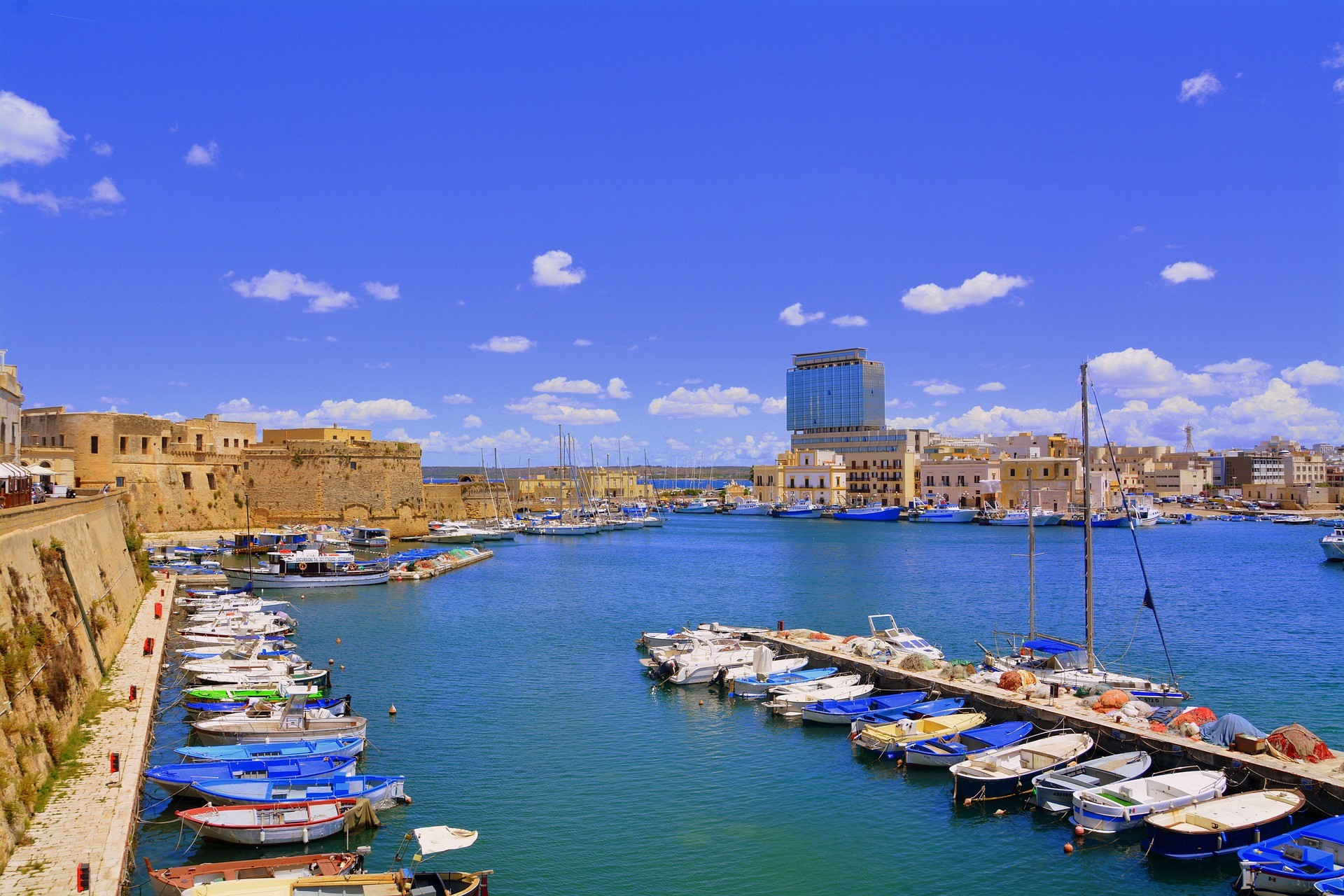

Benvenuti a Gallipoli, eine wunderschöne Stadt in der Region Salento, im Südosten Italiens gelegen. Dieser faszinierende Ort ist bekannt für sein kristallklares Wasser, die alten Mauern und den Reichtum an Geschichte und Kultur, den er seinen Besuchern bietet. In diesem Artikel führen wir Sie durch die wichtigsten Attraktionen und Aktivitäten, die Gallipoli zu bieten hat, von seiner faszinierenden Geschichte bis hin zu Outdoor-Abenteuern und kulinarischen Köstlichkeiten.
- Main Attractions of Gallipoli
- Purità Beach
- Historic Center of Gallipoli
- Cathedral of Saint Agatha
- The rich history of Gallipoli
- Cultural experiences in Gallipoli
- Hypogeal oil mills of Palazzo Granafei
- “Emanuele Barba” Civic Museum
- Diocesan Museum
- Outdoor Activities and Adventures in Gallipoli
- The culinary delights of Gallipoli
- The best time to visit Gallipoli
- Tips for planning a trip to Gallipoli
- Guided Tours and Travel Packages for Gallipoli
- Conclusions
Wenn Sie ein Reiseziel suchen, das eine perfekte Mischung aus Geschichte, Kultur, Abenteuer und Gastronomie bietet, ist Gallipoli der richtige Ort für Sie. Lesen Sie weiter, um zu entdecken, was Sie in Gallipoli sehen und unternehmen können und wie Sie Ihre Reise in dieser faszinierenden Stadt am besten planen.
Gallipoli ist eine Stadt, die ihren Besuchern viel zu bieten hat und mit etwas Planung und Wissen können Sie Ihre Zeit an diesem wunderschönen Ort optimal nutzen. Bereiten Sie sich darauf vor, in die reiche Geschichte und Kultur von Gallipoli einzutauchen, seine wichtigsten Sehenswürdigkeiten zu erkunden und unvergessliche Erlebnisse in dieser faszinierenden Stadt zu erleben.
Planen Sie, Gallipoli im kommenden Sommer zu besuchen? Gute Wahl: Obwohl es als Badeort mit lebhaftem Nachtleben bekannt ist, hat diese wunderbare Stadt in Apulien so viele Wunder zu bieten, dass sie als „die Perle des Ionischen Meeres“ bezeichnet wird. Zwischen natürlichen, historischen und kulturellen Attraktionen bietet Ihnen Gallipoli die Möglichkeit, einen wirklich eindringlichen Urlaub zu erleben, bei dem die paradiesischen Strände, die typisch für Apulien sind, nicht die einzige interessante Sache sind. Auch wenn sie natürlich Ihren Sommer noch magischer machen.
Das Ganze hat etwas Magisches, hervorgerufen durch Mauern, Bastionen, von denen Plätze und Gassen auf das Meer blicken, Festungspaläste, die Kathedrale-Galerie von Sant’Agata, ein typisches Beispiel des salentinischen Barock und die vielen Kirchen der Bruderschaften. Eine Mischung aus Farben, Düften und Architekturen, die etwas an Marokko und etwas an die Türkei erinnert. Immerhin war Gallipoli ab dem 17. Jahrhundert ein Hafen von außergewöhnlicher Bedeutung: Von hier aus wurden etwa 100.000 Liter Öl pro Tag verschifft und Gewürze sowie Seide aus dem Orient kamen an. In der Nähe der Brücke befindet sich eine griechisch-römische Fontäne, die, obwohl sie im 16. Jahrhundert wieder aufgebaut wurde, als die älteste Italiens gilt.
Entdecken wir also was man in Gallipoli sehen und unternehmen kann!
Main Attractions of Gallipoli
Gallipoli offers a wide range of tourist attractions that cater to the tastes of all visitors. Below we list some of the main attractions that you absolutely must see during your stay in Gallipoli.
- The beaches of Gallipoli: the city is famous for its beautiful golden sandy beaches and crystal-clear waters, ideal for a relaxing day in the sun. Among the most famous beaches of Gallipoli are the Purità beach, located in the historic center, and the beaches of Baia Verde and Punta della Suina, a few kilometers from the city.
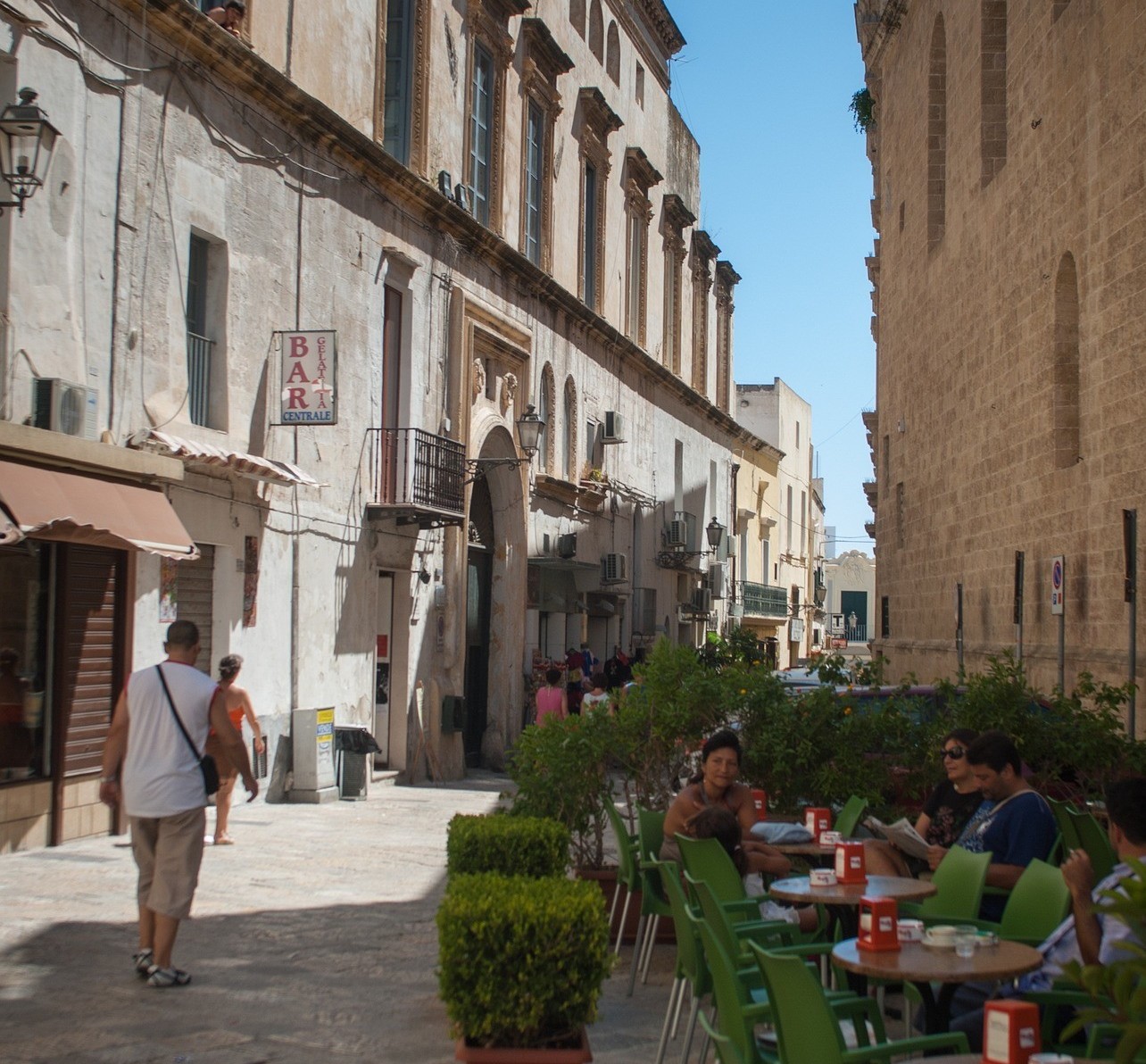
- The historic center of Gallipoli: the beating heart of the city, the historic center of Gallipoli is a maze of alleys and narrow streets that will make you lose track of time. Here you can admire the ancient city walls, visit churches and historic buildings, and immerse yourself in the unique atmosphere of this place.
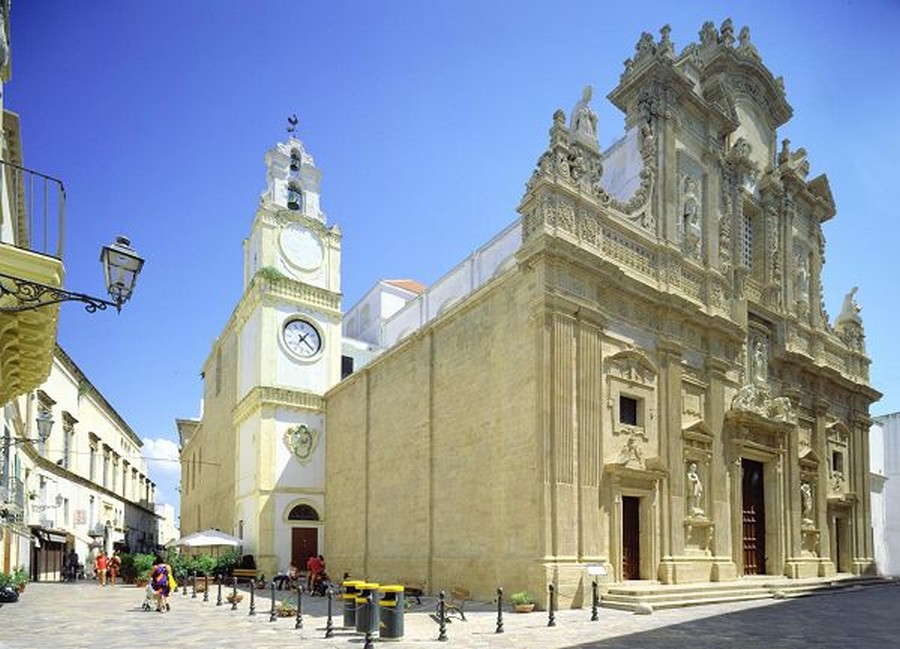
- The Cathedral of Sant’Agata: located in the historic center, the Cathedral of Sant’Agata is a masterpiece of Baroque architecture dating back to the 17th century. The interior of the church is rich in artwork and frescoes, including the famous “Jesus and the Samaritan Woman at the Well” by Giovanni Andrea Coppola.
- The Castle of Gallipoli: an imposing fortress located on the city’s seafront, the Castle of Gallipoli dates back to the 13th century and offers a panoramic view of the city and the sea. The castle also houses an interesting museum that tells the history and culture of Gallipoli.
Purità Beach
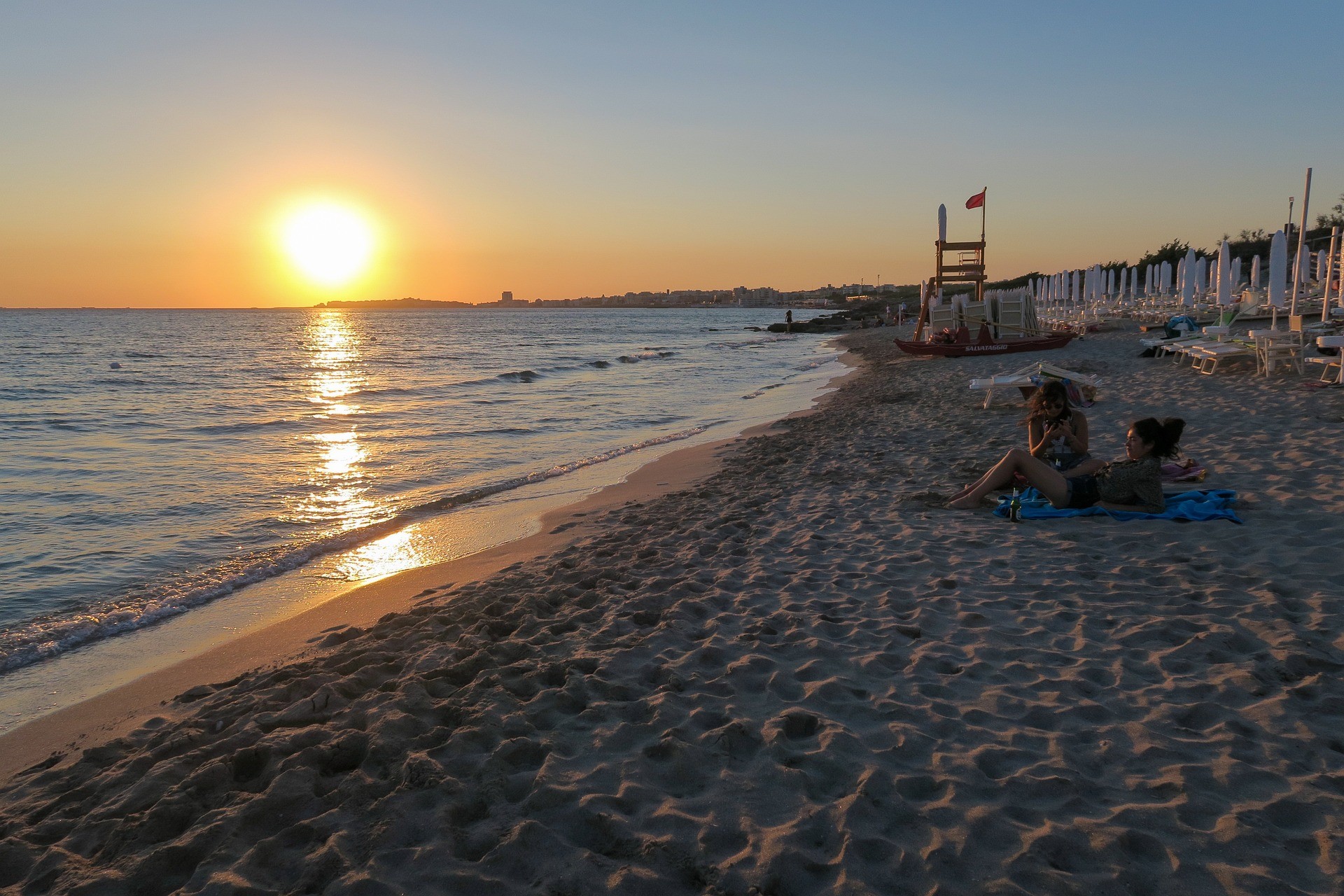
Let’s start with the obvious: Gallipoli is a seaside destination, the meeting point for thousands of young people who every year choose to come party here, on the Apulian coast bathed by the Ionian Sea. If you too dream of spending your holidays in Puglia in villages near the sea, we recommend you look for accommodation as close as possible to the beautiful Purità Beach.
This is the summer heart of the city, one of the nerve centers of Gallipoli, where people rush as soon as the weather gets nice. It is a not too big beach, with fine, golden sand and is free, although there is the possibility to rent umbrellas and sun loungers on site.
You will find it nestled between the bastions and turrets of the old city, so the surrounding view is really worth it: probably, it is one of the most evocative spots of the whole Gallipoli.

Historic Center of Gallipoli
Puglia is quite famous for the beauty of the historic centers of its towns: each village has its own, with common characteristics but still unique in its kind. Well, the historic center of Gallipoli is perhaps one of the most charming, as well as one of the most unique.
What makes it so interesting is that it is accessible only by crossing the Twelve-Arch Bridge, which has replaced the original drawbridge since the 1600s. From here, white alleys, noble palaces, a museum, a library, and characteristic courtyard houses fill the old village, allowing you to experience the air of a bygone era.
Also, don’t forget to visit the wonderful and evocative Aragonese Castle, completely surrounded by the sea and connected to the mainland by the bridge. Very similar in structure and location to the Aragonese Castle found on the island of Ischia, which is also connected to the village by a bridge.
Cathedral of Saint Agatha
There are several important churches in Gallipoli, and being historic buildings, they all feature incredible architecture worthy of a visit. If there is one you really can’t miss, it is the Cathedral of Saint Agatha. Known somewhat as the symbol of Gallipoli, this majestic cathedral has Romanesque origins and dates back more than four hundred years: we are talking about a 17th-century construction, perfectly preserved to this day.
And while outside you can admire stone statues of saints and niches, stepping inside you are immersed in a breathtaking Baroque setting, where the beauty of the main altar made with different shades of marble stands out.
The Cathedral is located in the historic center, but don’t worry: it is so imposing that you will have no trouble finding it; in fact, it will become a bit like a compass for your journey.
The rich history of Gallipoli
The history of Gallipoli dates back thousands of years, when it was founded by the Greeks in the 7th century BC. Over the centuries, the city has been influenced by various cultures, including the Romans, Byzantines, Normans, and Aragonese, who have left their mark on its architecture and traditions.
One of the most fascinating aspects of Gallipoli’s history is its strategic position on the sea, which made it an important port and commercial center over the centuries. Thanks to this privileged position, the city has thrived and developed, becoming one of the most charming and historic locations in Salento.
Today, the history of Gallipoli is still very present in the city, with its numerous historic buildings, monuments, and places of interest that tell the story of this captivating place. From the ancient walls to the churches and palaces, the history of Gallipoli is a fascinating journey through time that will make you fall in love with this city.
Cultural experiences in Gallipoli
In addition to its main tourist attractions, Gallipoli also offers a variety of cultural experiences that will allow you to immerse yourself in the history and traditions of this fascinating city. Below we list some of the cultural experiences not to be missed during your stay in Gallipoli.
- Visit the museums of Gallipoli: the city hosts several museums that tell the history and culture of Gallipoli, including the Civic Museum “Emanuele Barba”, the Diocesan Museum of Gallipoli, and the Sea Museum. These museums offer a comprehensive overview of the history of Gallipoli and its traditions, making them a must for anyone wanting to deepen their knowledge of this fascinating city.
- Attend a theatrical performance: the Garibaldi Theater is a charming historic theater located in the center of Gallipoli, where you can attend plays, concerts, and other cultural events. A unique experience to immerse yourself in the artistic and cultural atmosphere of Gallipoli.
- Participate in local festivals and traditions: Gallipoli is famous for its festivals and celebrations, which take place throughout the year and offer visitors the opportunity to experience first-hand the city’s traditions and culture. Among the most famous festivals are the Feast of Saint Agatha, patron saint of Gallipoli, held in February, and the Good Friday Procession, a suggestive religious event that attracts thousands of visitors every year.
Hypogeal oil mills of Palazzo Granafei
“Emanuele Barba” Civic Museum
The Museum was founded in 1823 by the canon Carmine Fontò who made his books public. To these first donations, others were added by Dominican and Franciscan convents. After a few years, the Museum was entrusted to Emanuele Barba (philosopher, doctor, professor), who established a “Zoological Cabinet.” Today the museum houses collections of weapons, clothing, and fossils. The collection of the Gallipoli painter Giovanni Andrea Coppola is also on display. The museum also includes archaeological artifacts, sarcophagi, and Messapian vases with inscriptions, portraits of illustrious Gallipoli figures, and a numismatic collection.
Diocesan Museum
The first idea of a Diocesan Museum in Gallipoli arose from a fortunate intuition by Bishop Mons. Aldo Garzia, who in 1983 established the Diocesan Cultural Heritage Center of the then Diocese of Gallipoli, comprising the museum, the historical archive, and the episcopal library, and assigned as its seat the building of the ancient Seminary of Gallipoli, which had lost its original function. Similarly, the same bishop did the same on June 24, 1984, for the then Diocese of Nardò. With the unification of the two dioceses, the Diocesan Museum also became a single entity, with two distinct sections, one in Gallipoli and the other in Nardò.
The Gallipoli section is housed in an architecturally valuable building, built by Mons. Serafino Brancone (1747-1759) in 1751 to provide the Diocese of Gallipoli with its own seminary. It has reached us almost intact, but to accommodate the Museum, the building needed a thorough restoration and necessary upgrades. The restoration work began in 1999 and continued until 2004. The museum complex covers an area of about 900 square meters spread over three floors with fifteen exhibition rooms.

Outdoor Activities and Adventures in Gallipoli
For lovers of outdoor activities and adventures, Gallipoli offers a series of unique and unforgettable experiences. Below we list some of the best outdoor activities to try during your stay in Gallipoli.
- Boat trips: one of the best experiences to live in Gallipoli is a boat trip along the coast, which will allow you to admire the city from a unique perspective and explore the splendid coves and hidden beaches of the area. You can choose from different options, from sailing boat trips to catamaran excursions.
- Snorkeling and diving: the crystal-clear waters of Gallipoli offer the opportunity to practice snorkeling and diving in a marine environment rich in life and colors. You can explore the seabed and admire the underwater flora and fauna, as well as discover ancient wrecks and submerged caves.
- Cycling and trekking: the countryside surrounding Gallipoli offers a series of routes for cycling and trekking, ideal for exploring the nature and landscapes of Salento. You can pedal through centuries-old olive groves and vineyards, or walk along panoramic trails that wind between the hills and the coast.
- Water sports: Gallipoli offers a wide range of water sports, including windsurfing, kitesurfing, paddle surfing, and kayaking, for those who want to live an adrenaline adventure on the crystal-clear waters of the sea.

The culinary delights of Gallipoli
The gastronomy of Gallipoli is a mix of flavors and traditions that reflect its history and geographical location. Salento cuisine is famous for its fish and seafood dishes, which perfectly combine with local ingredients and spices.
Among the typical dishes of Gallipoli are the “pitta di patate“, a kind of savory pie made with potatoes, tomatoes, onions, and olives, and the “sagne ‘ncannulate“, fresh pasta made with durum wheat flour and dressed with tomato sauce and ricotta forte. Don’t forget to try “pettole,” a local specialty made of fried leavened dough served with anchovies or salt cod.
As for desserts, Gallipoli offers a wide range of delicacies, including “pasticciotto,” a typical Salento pastry made with shortcrust pastry and custard cream, and “purceddhruzzi,” sweet dough balls fried and covered with honey.
Finally, don’t forget to accompany your meals with a glass of local wine, such as Negroamaro or Primitivo, which perfectly match the flavors of Salento cuisine.

The best time to visit Gallipoli
The mild climate of Salento makes Gallipoli a perfect destination to visit all year round. However, the best time to visit Gallipoli depends on your preferences and interests. If you are looking for sun and beach, the summer months, from June to September, offer warm temperatures and sunny days ideal for relaxing on the beaches of Gallipoli and swimming in its crystal-clear waters. Keep in mind that during the summer months the city can be very crowded, so it is advisable to book accommodation and services in advance.
If you prefer to visit Gallipoli in a less crowded and quieter period, the spring months, from March to May, and autumn months, from October to November, offer pleasant temperatures and a more relaxed atmosphere. Furthermore, in spring and autumn it is possible to participate in cultural events and local traditions that take place during these months.
Finally, if you are interested in discovering the history and culture of Gallipoli, winter, from December to February, offers a quieter and more authentic city, with fewer tourists and the possibility to experience local festivals, such as the Festa di Sant’Agata and the Processione del Venerdì Santo.

Tips for planning a trip to Gallipoli
Planning a trip to Gallipoli is an exciting and rewarding experience, but it is important to consider some factors to make the most of your time in this charming city. Below we list some useful tips for planning your trip to Gallipoli.
- Book your accommodation in advance: Gallipoli offers a wide range of accommodation options, including hotels, bed and breakfasts, holiday homes, and campsites. However, during the summer months and local festivals, the demand for accommodation can be high, so it is advisable to book in advance to secure the best possible lodging.
- Find out about transportation: Gallipoli is well connected with the rest of Salento and Italy through a network of buses, trains, and car rental services. Find out about the best means of transport to reach Gallipoli and move around the town and its surroundings, to make your trip as comfortable and enjoyable as possible.
- Gather information about attractions and activities: before leaving for Gallipoli, find out about the main attractions and activities the city has to offer, so you can plan your itinerary and make the most of your time in town. Keep in mind that some attractions, such as museums and monuments, may have seasonal opening and closing hours, so it is important to check in advance.

Guided Tours and Travel Packages for Gallipoli
If you prefer to visit Gallipoli with an organized and guided experience, there are various options available, including guided tours and travel packages that include accommodation, transportation, guided visits, and activities.
The guided tours of Gallipoli offer an in-depth and informative experience of the main attractions and places of interest in the city, with expert guides who will introduce you to the history, culture, and traditions of Gallipoli. You can choose from different options, including walking tours, bicycle tours, boat tours, and even food and wine tours.
Travel packages for Gallipoli, on the other hand, offer a complete and personalized experience, with accommodation, transportation, guided visits, and activities included in the price. This option is ideal for those who want a stress-free and well-organized vacation, with everything needed to enjoy an unforgettable experience in Gallipoli.
Conclusions
Gallipoli is a charming city rich in history, culture, outdoor adventures, and culinary delights that will make you fall in love with this fascinating place. We hope this article has provided you with all the necessary information to discover what to see and do in Gallipoli and to better plan your trip to this captivating city. Have a great trip and enjoy discovering Gallipoli!

, dove si annida una perla come Gallipoli, cittadina dal fascino antico e inossidabile, il cui borgo antico è adagiato su un'isoletta collegata da un ponte alla terraferma.)