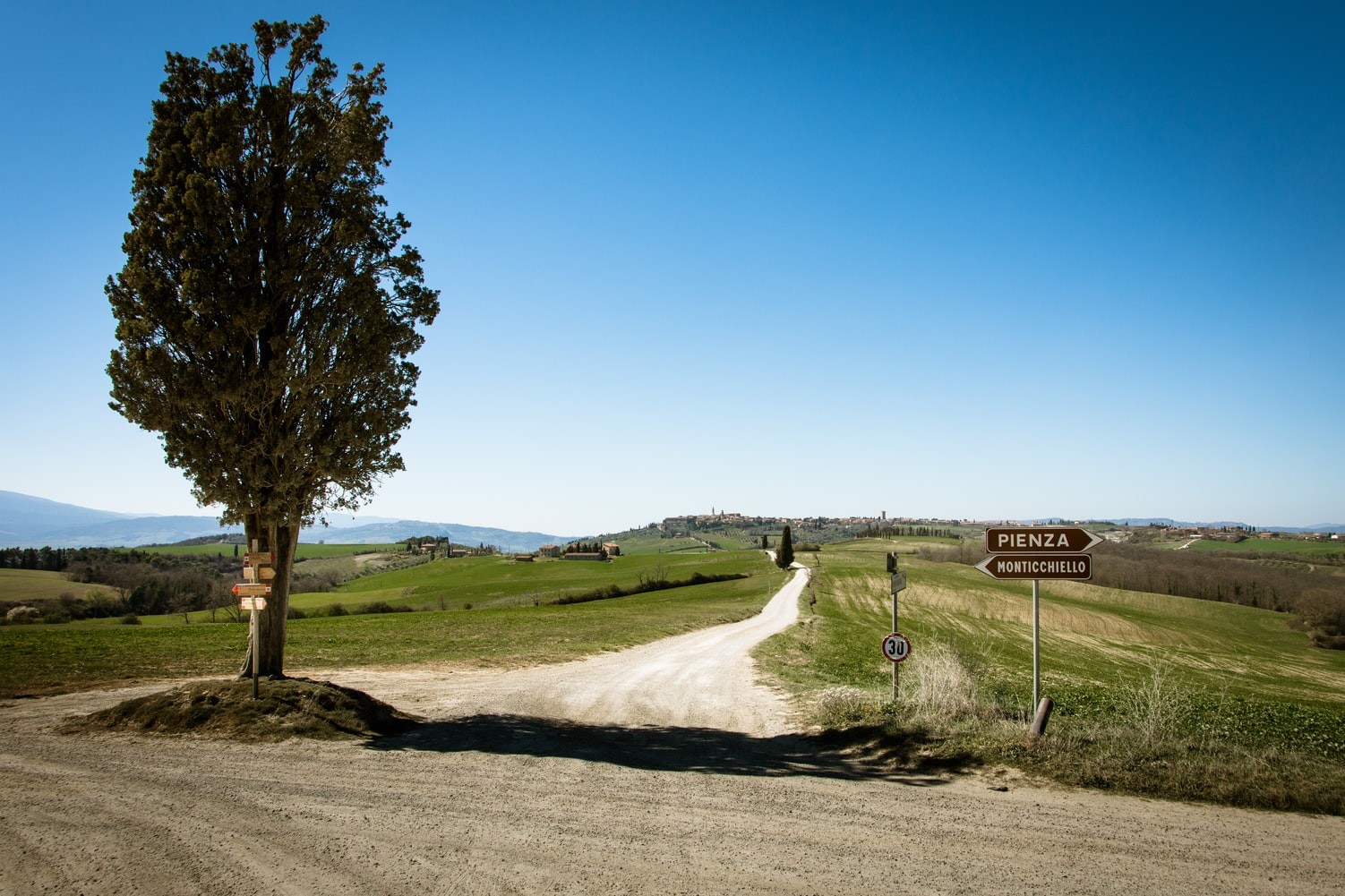


The story of Pienza, a Tuscan town with 2,000 inhabitants in the province of Siena, nestled between Val d’Orcia and Valdichiana, began in 1462. It was Pope Pius II, Enea Silvio Piccolomini by birth, who after a stop in his native Corsignano during a journey to Mantua—struck by the town’s poor and rundown state—decided to transform it by building his summer residence here.
- 1 The Ideal Renaissance City
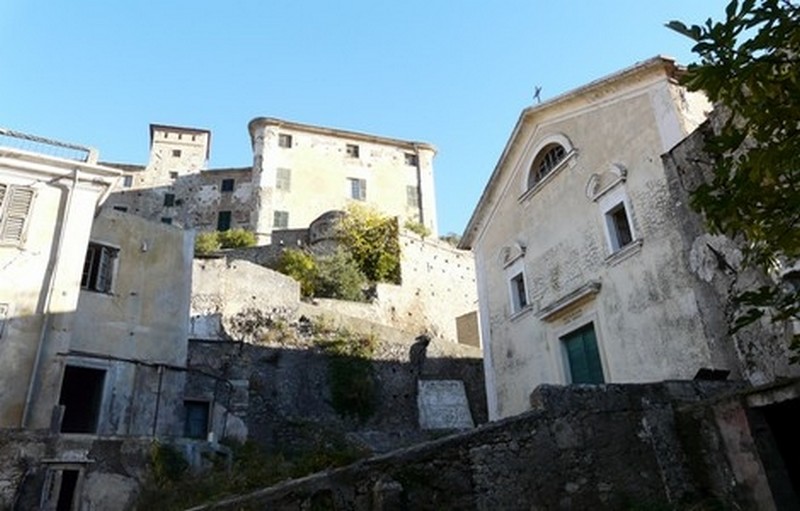
- 2 Medieval Buildings
- 3 Piazza Pio II
- 4 The Cathedral of Pienza
- 5 Palazzo Piccolomini
- 6 Palazzo Comunale or Palazzo Pretorio
- 7 Palazzo Vescovile or Palazzo Borgia
- 8 Diocesan Museum of Sacred Art of Pienza
- 9 Tepotratos Museum, Monticchiello, Pienza
- 10 Corso Rossellino
- 11 What to Eat in Pienza
- 12 Where to Stay in Pienza
He entrusted the project to Bernardo Rossellino, an architect and follower of Leon Battista Alberti.
Here are 10 things to do and see in Pienza, a UNESCO World Heritage Site.
1 The Ideal Renaissance City
Leon Battista Alberti was one of the main theorists of the ideal Renaissance city, characterized by harmony, balance and rational organization of space. The Pienza realized by Rossellino is among the first and best-preserved examples. Although work stopped in 1464 with the death of both the pope and the architect, the city remains an accomplished masterpiece, unchanged to this day.
Rossellino kept the structure of the medieval side alleys but defined the urban layout with a central street—today’s Corso Rossellino—which connects the two city gates, Porta del Giglio and Porta al Prado. During the renovation, the city walls were completely rebuilt. The hub of the town is Piazza Pio II, home to the Cathedral and the main palaces.

2 Medieval Buildings
About forty public and private medieval buildings were restored or rebuilt, bringing a distinct stylistic harmony: not only the cardinal’s residences, but also 12 residential buildings for the townspeople near Porta del Giglio.
The consistency of the project is clear: the perspectives of the streets and the lines of the paving integrate neatly with the verticality of the palaces, creating a harmonious whole. Despite differences in the appearance of the buildings, the Renaissance style prevails, supplanting the medieval one completely. In a true “ideal city” spirit, visual openings like the portico of Palazzo Piccolomini create a dialogue between the town and the surrounding landscape.
3 Piazza Pio II
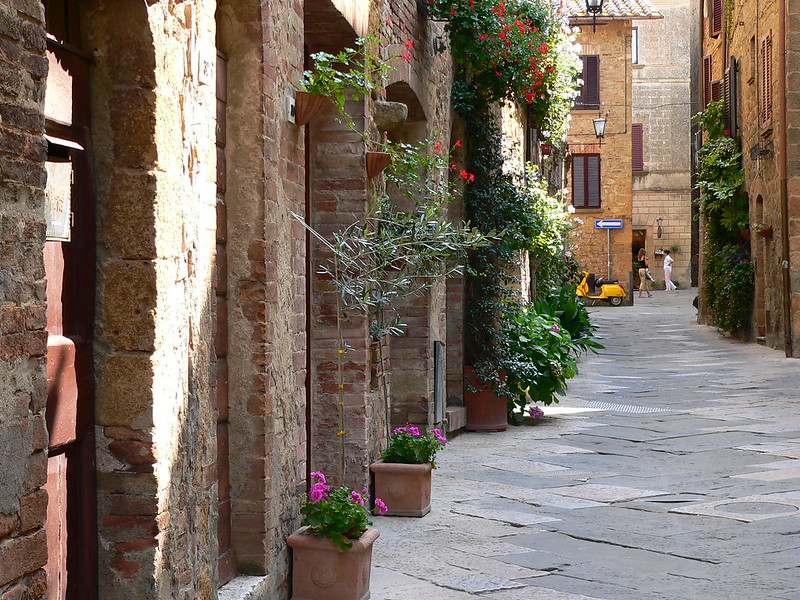
The heart of Pienza is Piazza Pio II, just off the main street. Its trapezoid shape was designed to accommodate all the main buildings in a small area, while still respecting the street axis and balancing the perspective convergence towards the horizon. This is accentuated by the pavement—a terracotta grid lined with travertine bands.

4 The Cathedral of Pienza
The Cathedral of Pienza stands in a scenic spot on the piazza. Its Renaissance exterior recalls the style of Leon Battista Alberti. The tympanum displays the emblem of the Holy See and the Piccolomini family. Influenced by the German Hallenkirchen and thinkers like Nicholas of Cusa, Pius II wanted the interior to reflect German Gothic elements—most notably, the beautiful stained glass. Inside, you can also admire paintings by Sienese artists such as Vecchietta, Matteo di Giovanni, and Sano di Pietro.

5 Palazzo Piccolomini
To the right of the Cathedral stands the papal residence, Palazzo Piccolomini. Inspired by Florence’s Palazzo Ruccellai by Alberti, its exterior features smooth rusticated stonework. The highlight is the hanging garden, defined by a three-tiered loggia and open to Val d’Orcia. The garden itself, laid out in a geometric pattern with rectangular flower beds, forms a link between architecture and nature. The piano nobile of Palazzo Piccolomini now houses a museum, offering period furnishings that tell the story of Pienza’s deep connection with the Piccolomini family.

6 Palazzo Comunale or Palazzo Pretorio
Opposite the Cathedral is the Palazzo Comunale (also called Palazzo Pretorio), distinguished by its ground-floor portico and sturdy crenellated tower, typical of Siena and Florence civic architecture.

7 Palazzo Vescovile or Palazzo Borgia
Directly across from Palazzo Piccolomini you’ll find the Palazzo Vescovile (also known as Palazzo Borgia, as the pope gave it to Cardinal Rodrigo Borgia) and the Casa dei Canonici, now home to the Cathedral Museum.

8 Diocesan Museum of Sacred Art of Pienza
The Diocesan Museum of Sacred Art in Pienza—originally the Cathedral Museum—was established in the early 1900s to display works from the Cathedral Treasury inside the Canons’ House. It reopened in May 1998 in its current form.

9 Tepotratos Museum, Monticchiello, Pienza
The long experience of the Teatro Povero di Monticchiello, spanning more than forty years, inspired TEPOTRATOS—a unique museum installation. Here, not only the traditions of rural theater and countryside life are represented, but their evolution and forward-looking vision are also explored. At the center, a spectacular upside-down oak—a symbol of roots reaching for the sky—illustrates the intersection of tradition and innovation. Visitors can enjoy an interactive and multimedia exhibition, blending ancient crafts with modern technology, where songs, performances, and traditional Tuscan customs are brought to life. The venue itself was once the granary of Monticchiello’s largest farm, now recovered for the community thanks to the Teatro Povero.
10 Corso Rossellino
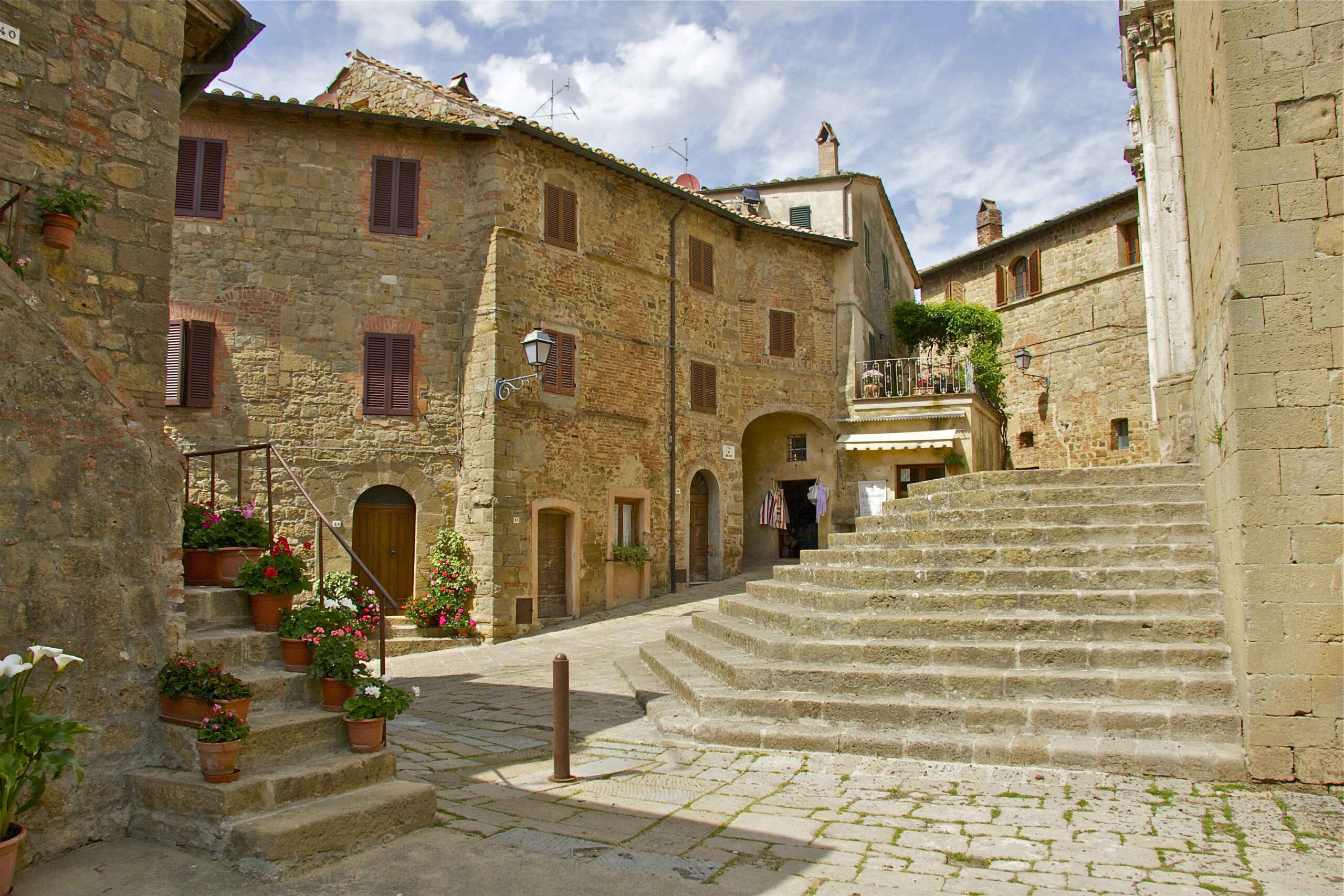
The main axis of Pienza’s urban design is today’s Corso Rossellino, lined with fine examples of noble architecture, many bearing the names of important families such as Ammannati, Gonzaga, and Jouffroy. The ancient Church of San Francesco, with its simple Franciscan Gothic style, also stands along the avenue. Corso Rossellino is a great spot for shopping, thanks to its many shops selling typical products, especially the famous pecorino cheese.

11 What to Eat in Pienza
Pientina cuisine is rich and rooted in local traditions. Don’t miss classics such as “bistecca alla fiorentina”, crostini al fegato (liver crostini), regional cured meats, and cheeses like the renowned “pecorino di Pienza”. Dishes based on game are also popular, as in many areas of Tuscany.

12 Where to Stay in Pienza
Pienza offers many accommodation options. As is typical in Tuscany, you’ll find both hotels and non-hotel stays. Sleeping in Pienza can suit any budget, depending on the type of lodging and the current tourist season.