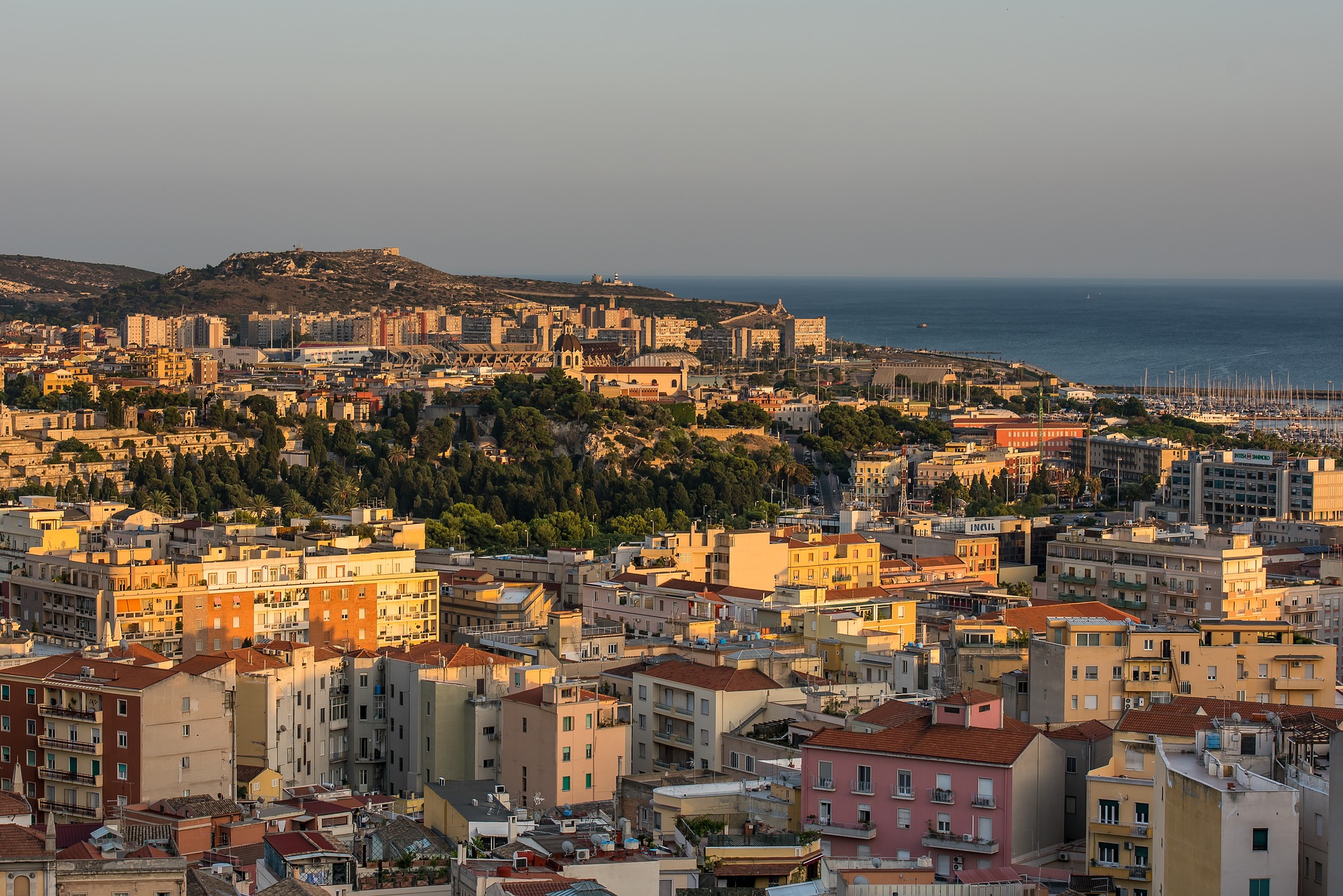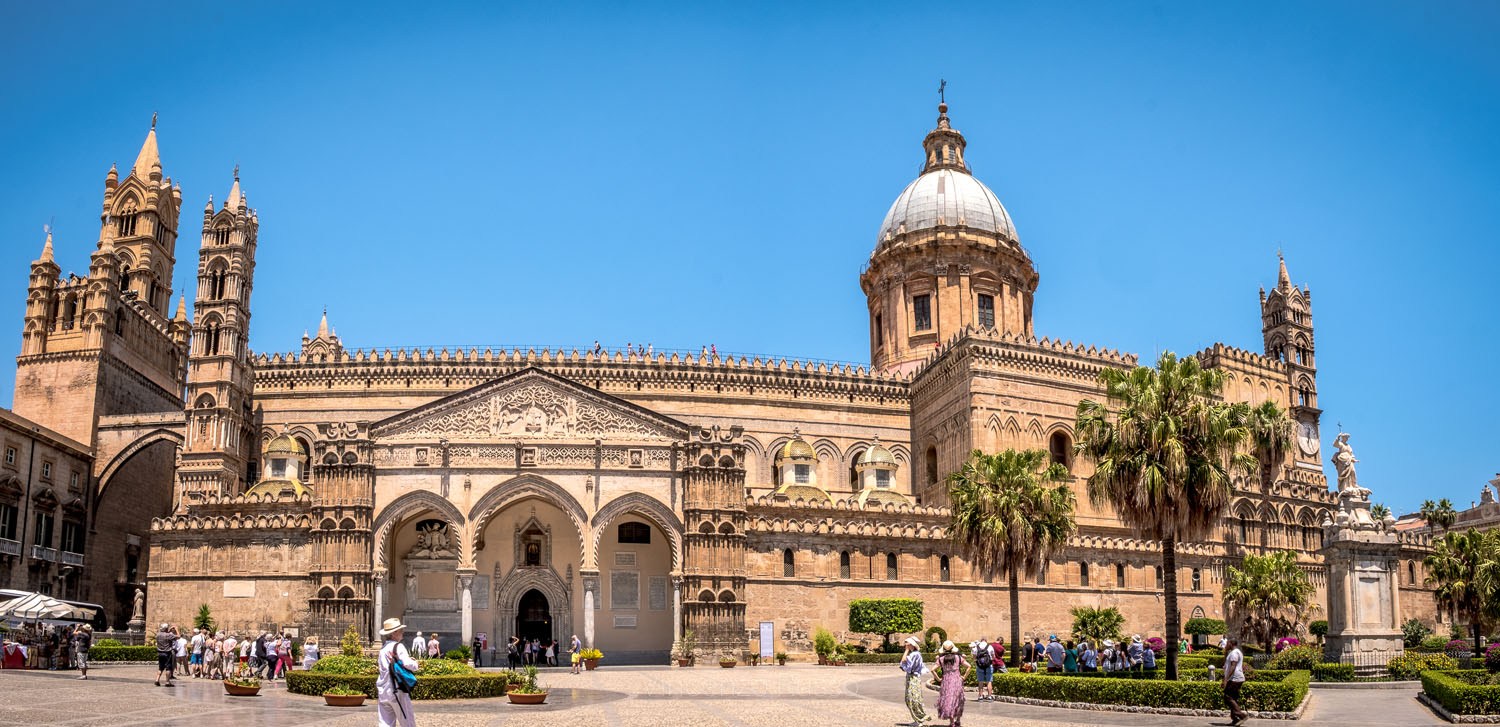


Ivrea sits on the hill of “La Serra”, dominated by the four towers of the Castello di Arduino, built in 1358 by Amadeus IV of Savoy and now used for events and exhibitions.
The ancient city of Eporedia is located in the Canavese area, a hilly region bordering the Gran Paradiso National Park, of which Ivrea is considered the capital. The Dora Baltea river, channeled through the so-called “Naviglio di Ivrea“, gently crosses the town and offers romantic and unexpected views.
Things to See in Ivrea
1 Strolling Through the Historic Center
The streets of Ivrea’s historic center, famous for hosting the spectacular Ivrea Carnival and the iconic Battle of the Oranges, invite visitors toward the Duomo di Santa Maria Assunta. The cathedral dates back to the 4th century AD, built on the ruins of an ancient Roman temple to Apollo. Head to Piazza Castello, once the site of the Monastero di Santa Chiara (1310), and today surrounded by the campanili of the Cathedral, the bishop’s palace, Palazzo Clerico, the Capitular Cloister, the library and Civic Museum. Also don’t miss the Teatro Giacosa (1834), in neoclassical style and restored in 1958 for the 150th anniversary of the Ivrea Carnival; and the Palazzo Civico, Ivrea’s city hall since 1758, with its distinctive depiction of a hemp plant on the central tower—a reference to the theory that the name “Canavese” comes from local hemp cultivation.
2 The Roman Amphitheater
Ivrea’s amphitheater was built in the mid-1st century AD, outside the city walls on the road to Vercelli. It could host between ten and fifteen thousand spectators. Today, the foundations—mainly from the elliptical exterior wall and side support walls (substructures used to support the upper building)—are still visible, along with underground passages that once held fighting animals. Excavated in the 1950s, the amphitheater revealed fresco fragments and long bronze strips that adorned the seating. The Romans built it by demolishing a pre-existing villa, whose remains can still be seen, alongside coins, amphorae, statue fragments, and painted plaster.
The road from the amphitheater leads to ancient Eporedia, along the old Vie delle Gallie, which connected Rome with the lands beyond the Alps. Eporedia was thus a strategic trade center, especially during the imperial age, growing beyond its walls—mainly to the east—where archaeological remains and medieval records bear witness to that expansion. To the north of Porta Praetoria, a commercial district has also been unearthed.
3 Discovering Ivrea: The Castle
The imposing Castello di Ivrea, in the old town’s highest part and called by Carducci the castle “with red towers”, is a mighty square-plan building with a large courtyard and four slender cylindrical towers—one severely damaged by lightning in 1676. Built in 1358 by Amadeus VI of Savoy for defensive purposes, the complex housed the main authorities of the medieval city: the municipality, bishopric, and church. Dramatically altered over the years, it served as a prison from 1750 to 1970, losing all its precious interiors.
At the end of 2017, the castle became municipal property under Italy’s cultural heritage federalism program—a result of collaboration between the State Property Agency, the Ministry of Culture and Tourism, and the Municipality of Ivrea. Today, it is at the center of preservation and revitalization plans and is part of a broader project to promote tourism and enhance the entire heritage of Ivrea.

4 What to Do in Ivrea: Carnival and the Battle of the Oranges
The Ivrea Carnival is recognized as a major Italian event with international appeal. Best known for its dramatic Battle of the Oranges held over three days across the main squares, the carnival is also a complex event with a rich historical-legendary backdrop, culminating in the Historical Parade and reflecting eras from the Middle Ages to the Napoleonic period, the 18th century, and the Italian Risorgimento. The festival’s iconic character, the Vezzosa Mugnaia—symbol of liberty and heroine of the celebration—is accompanied by a Napoleonic-style general and is the central female figure in Italy’s oldest carnival.