



What to See in Palermo in One Day
Palermo Cathedral
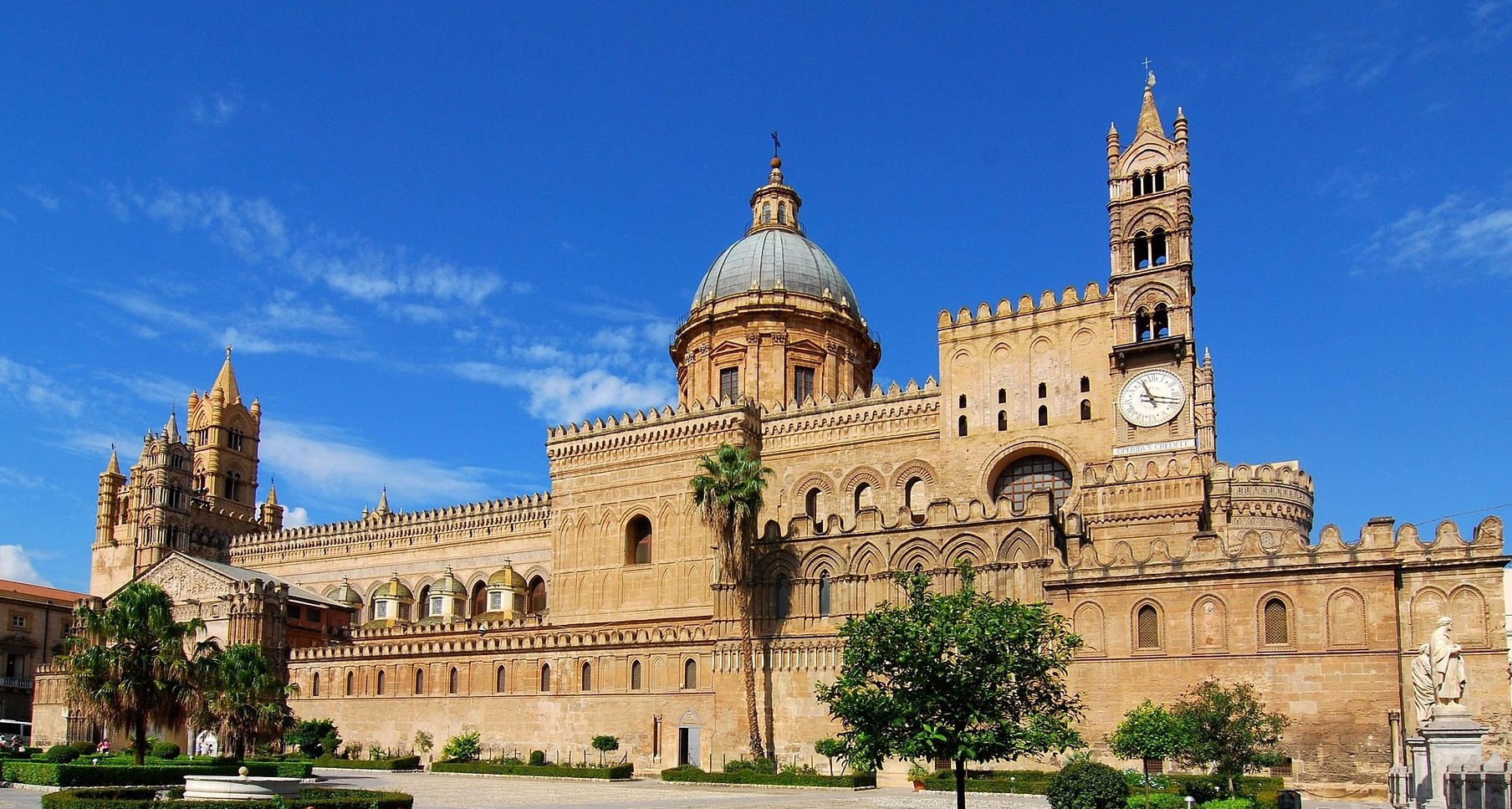
Built in 1184, the Palermo Cathedral stands as one of the city’s most imposing landmarks. Despite various modifications over the centuries, the cathedral retains its original structure, marked by spired towers and a striking interplay of mullioned windows, intertwined arches and ogival details. Inside, you’ll find the Cagini sculptures, the tombs of Henry I, Frederick II of Swabia, and Constance of Aragon, as well as the silver urn containing the relics of Saint Rosalia, the city’s patron saint.
Norman Palace
Heading along Corso Vittorio Emanuele, you’ll quickly reach the imposing Norman Palace, built in the 11th century and a symbol of the Swabian period’s height during Frederick II’s reign. Today, you can admire the palace from outside, while the stunning Palatine Chapel inside—famed for its gorgeous golden mosaics—is open to visitors.
Opposite the palace, and connected to it, you’ll see the Porta Nuova, built to celebrate the entry of Charles V into the city after his victory over the Turkish army in Tunis. Just a few streets from the Norman Palace lies the church of San Giovanni degli Eremiti (1130–1148), famous for its red domes—a distinctive feature of Arab-Norman architecture. The charming cloister, scented with jasmine, orange, and pomegranate in spring, is especially delightful.
Palermo’s Arab Quarter
Head east towards Kalsa, the city’s ancient Arab quarter, partly Baroque as well, and admire the beautiful church of Santa Teresa alla Kalsa and the 15th-century Palazzo Abatellis, home to the Sicilian Regional Gallery. Among other masterpieces, it houses the famed Madonna by Antonello da Messina.
Between the Kalsa and Vucciria districts, amidst a maze of narrow alleys, you’ll find Palazzo Gangi, where Luchino Visconti filmed the famous ball scene in The Leopard.
Teatro Massimo
Turning north-west, you’ll reach 19th-century Palermo, symbolized by the Teatro Massimo, inaugurated in 1897, twenty-two years after the foundation stone was laid.