


Calcata is a small village in the province of Viterbo in the Lazio region, just a few kilometers from Rome. In the 1930s, concerns about landslides on the tuff cliff forced residents to abandon the historic center and rebuild homes in the valley below. Calcata itself was at risk of demolition, but a special law from the Fascist era, originally drafted to aid towns in Sicily and Calabria struck by earthquakes, saved it. In 1927, during the Fascist era, Calcata was reassigned from the province of Rome to Viterbo. The town is around 50 kilometers north of Rome.
Known as the artists’ village, Calcata welcomes you with its distinctly unique atmosphere. This car-free village, perched atop a cliff—a hallmark of the Tuscia area—draws visitors not just for its beauty, but for the positive energy many claim it radiates.
The real appeal of Calcata lies in the positive energy it exudes, making this ancient village a place of harmony and balance for those sensitive enough to perceive it.
What to see in Calcata
1 The Medieval Village of Calcata Viterbo: a magical artists’ haven
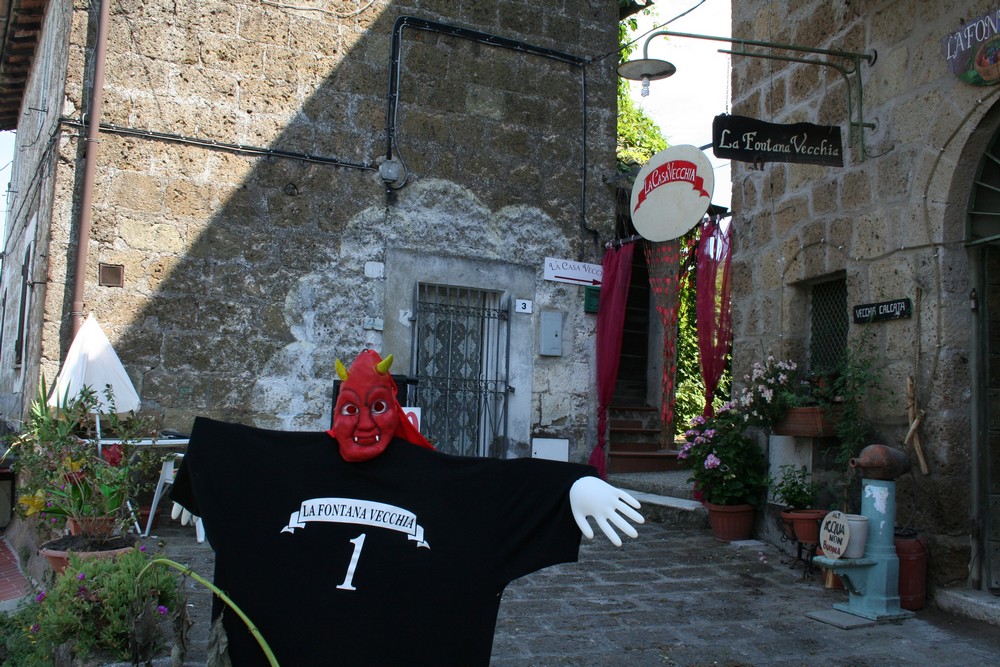
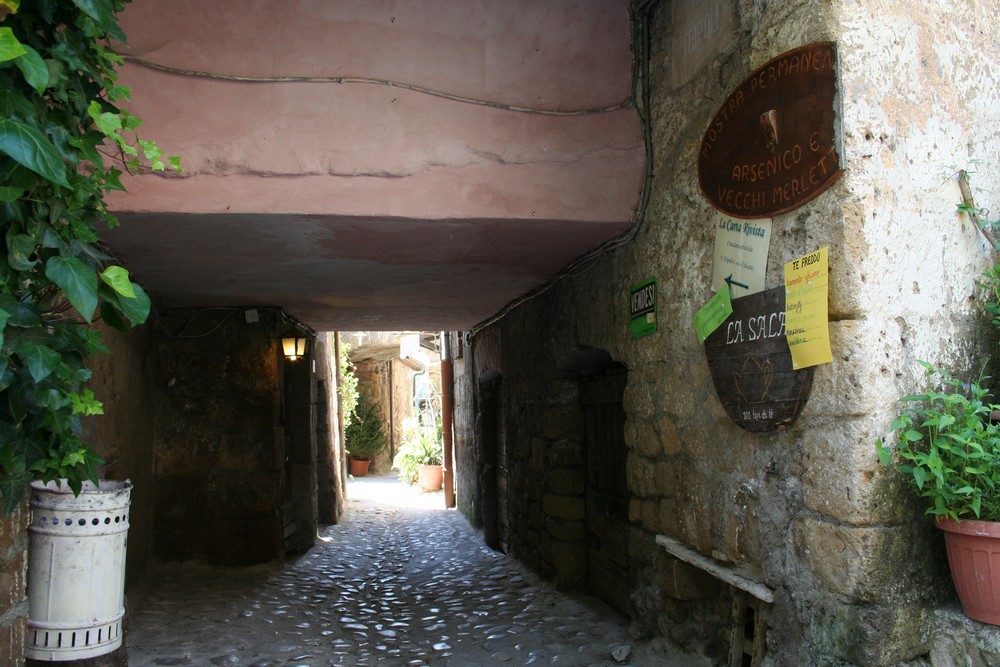
The historic village of Calcata Vecchia has become a magnet for artists and intellectuals, enchanted by its special atmosphere. Many converted ancient buildings into studios, turning the village into a true bohemian enclave. The medieval village is accessed through a “great gate” cut through the old castle walls, leading you to an old town with stone houses and caves carved into tuff. Discover steep stairways, colorful flowered balconies, cobblestone lanes, and picturesque alleys. Many homes originally served as stables and barns dating back to the 13th century; today, they house artisan shops and vibrant boutiques. In Piazza Vittorio Emanuele II stands the Baronial Palace of the Anguillara family, who ruled the fief until the 19th century, as well as the church of SS. Nome di Gesù.
In the past, the Baronial Palace of Calcata served as the elementary school, a medical clinic, and the post office. Today, the palace belongs to the Parco Valle del Treja and hosts civil wedding ceremonies, exhibitions, events, and conferences.

2 Calcata and the secret gate
From the cliff, which drops steeply into the valley, a hidden “secret gate“—an invisible path—once allowed villagers to descend for supplies safely during wartime. The Valle del Treja, a popular spot for picnics and nature walks, served as a backdrop in the 1960s for Italian western films, including movies of Franco Franchi and Ciccio Ingrassia, some films with Bud Spencer and Terence Hill, and scenes from Pasolini’s Decameron. The heart of Calcata even appears in the film “Amici miei” with Ugo Tognazzi. Still, the most remarkable feature is the positive energy that has made this ancient village a place of harmony and balance for those open to feel it. Nearby, you can also visit the Opera Bosco Museum of Art in Nature—an outdoor contemporary art trail across two hectares of woodland in the Valle del Treja gorge.

3 Chiesa del SS. Nome di Gesù (Church of the Most Holy Name of Jesus)
The Church of the Most Holy Name of Jesus in Calcata dates back to the 14th century. Completely renovated in the 18th century, it’s located in the historic village. Inside you’ll find 16th-century frescoes and artifacts.
4 The people of Calcata
According to the latest census, Calcata has about 90 residents, with one third being Romanian.
5 Where to eat in Calcata
In Calcata you’ll find several restaurants serving both local and national Italian cuisine. On Via degli Americani at number 7 is “Trattozero“, offering traditional dishes. On Via Garibaldi 9 is “Il Graal“, which also serves typical local cuisine. “Ristorante Opera” on Via della Pietà 2 features national dishes. Prices are mid-range: Il Graal is a bit more expensive, while Trattozero is the most affordable.
6 Where to stay in Calcata
You’ll find several charming accommodation options around the medieval village of Calcata. From holiday homes to farm stays and B&Bs and hotels, there’s something for every taste. Finding a place to stay in Calcata is easy.



 is a medieval village not far from Rome. The village attracts artists, hippies, and is known for its strong positive energy.)