


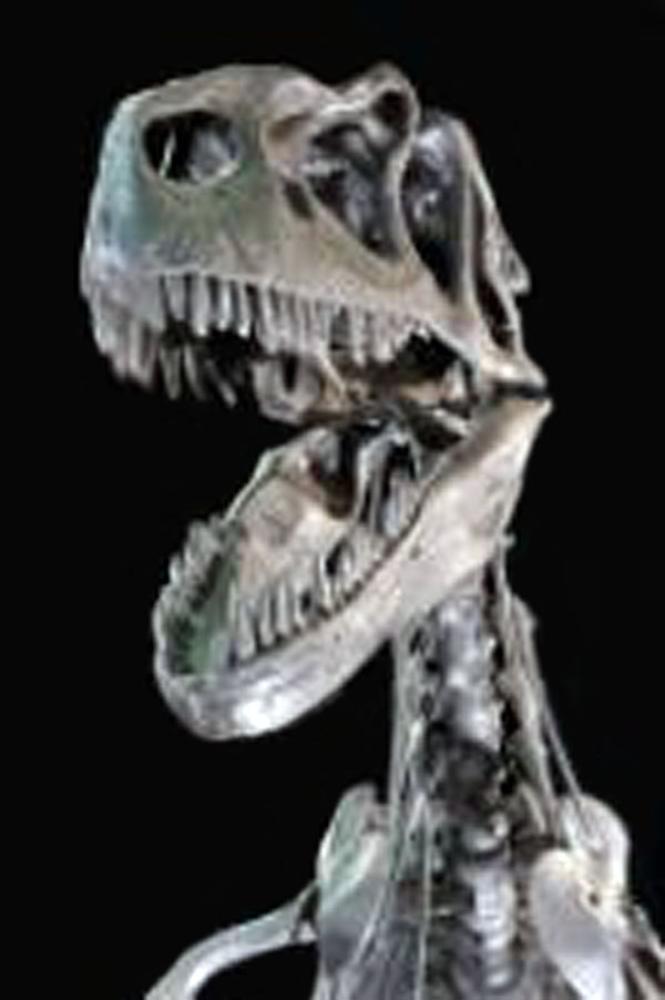

Born in the second decade of the 19th century as the Cabinet of Natural History, the museum actually has even older roots, as the first collection of naturalist remains arrived at the University of Modena dates back to the legacy of the Bishop of Modena Giuseppe Maria Fogliani (1786) from his own collection to the Rectorate. The most significant portion of the museum heritage was however established in the second half of the 19th century thanks to some important donations. The exhibition mostly displays animal fossils, vertebrates and invertebrates, but plant remains are not absent. The museum is distributed across three locations: the main office of the Department, in via dell’Università, houses the collections of fossil invertebrates and plants, as well as teaching and research activities; at via Berengario 14, the former seat of the Museum of Anatomy, are the Dinosaur Hall and collections of fossil vertebrates; while at the Foro Boario there is the premises for mounting Department exhibitions. Testimonies from the Neogene formations of the Tuscan-Emilian Apennines represent the most substantial part of the heritage and result from the research activities of several paleontology professors at the University of Modena and naturalists of the stature of Pietro Doderlein and Dante Pantanelli. Among them, for their interest, deserve mention the remains of marine reptiles from the Cretaceous and Mesozoic. Part of the skeleton of a whale recovered about thirty years ago completes the series of local pelagic-origin fossils. In 1926 the museum acquired the malacological Coppi collection, with specimens also originating from the Apennines of Modena. In 1946 the Bentivoglio fossils arrived (Upper Carboniferous plants) and later the Montanaro Gallitelli collections (fossils from all over the world). In the sixties, skeletons of a Camptosaurus and an Allosaurus from the Utah deposits were acquired, which together with a perfectly preserved Lower Jurassic Ichthyosaurus (Western Germany) donated by the Ligabue Foundation, preside over the “Dinosaur Hall”. Also notable is the collection of Eocene fish and fossil palms originating from the famous Bolca deposit in the Verona territory. Also very rich are the microfossil collections, in particular, the Di Napoli collection, one of the founders of the modern discipline of micropaleontology.
Information about University Museum of Paleontology
Via Università, 4,
41121 Modena (Modena)
0592056530
infomuseo@unimore.it
https://www.museopaleo.unimore.it
Source: MIBACT