

The archival material was then housed in the former Jesuit church of St. Teresa located in the Marina district where it had been transferred in 1883, after a multi-century and almost uninterrupted stay in the royal palace located in the Castle of Cagliari. Setting aside the idea of renovating the old church because it was absolutely unsuitable, it was decided to build a new archive in the area between the current Gallura and Sonnino streets. In 1921, the construction project was approved, which provided for two floors.
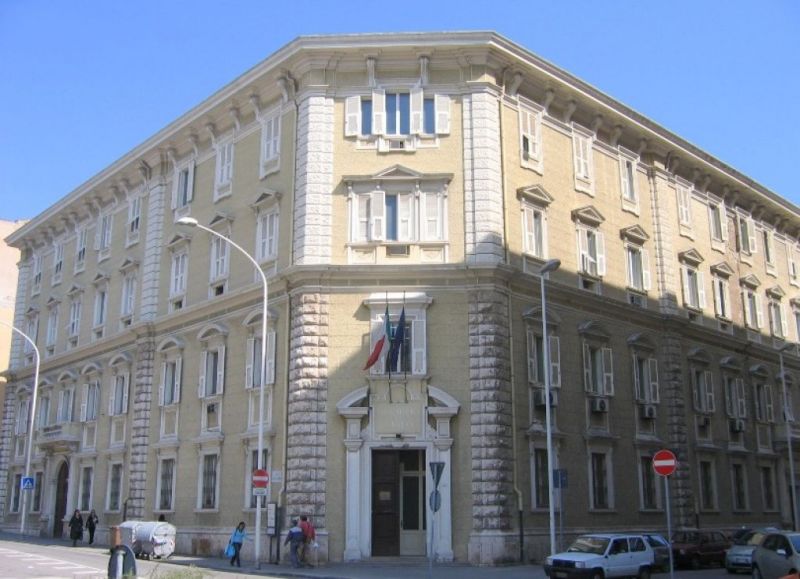
The work began quickly and during construction, the addition of two more floors was allowed for temporary use by the Civil Engineering offices. On October 30, 1927, the new headquarters was inaugurated. The building, designed according to the standards of good preservation of archival material, represented at that time one of the first and appreciated examples of post-unification archival architecture.
Stylistically adhering to the eclectic architecture canons, it still presents itself articulated on four floors separated in pairs by a string course; it is enriched by rustic and rough ashlar pilasters framing windows with curved pediments on the first floor and triangular ones on the second.
Above the entrance door stands a broken curved pediment resting on two pilasters. The State Archive of Cagliari has an ancient history, linked to the role the city played as the capital of the Regnum Sardiniae (1323-1847), passing through Catalan-Aragonese (14th-15th centuries); Spanish (16th-18th centuries) and Piedmontese (18th-19th centuries) dominations, etc.