

Velvets, damasks, satins, lampas, brocatelles, taffetas, and printed cottons with traditional or Oriental-inspired patterns reveal not only the soul of a city of merchants and travelers but also offer a fascinating itinerary for visitors.
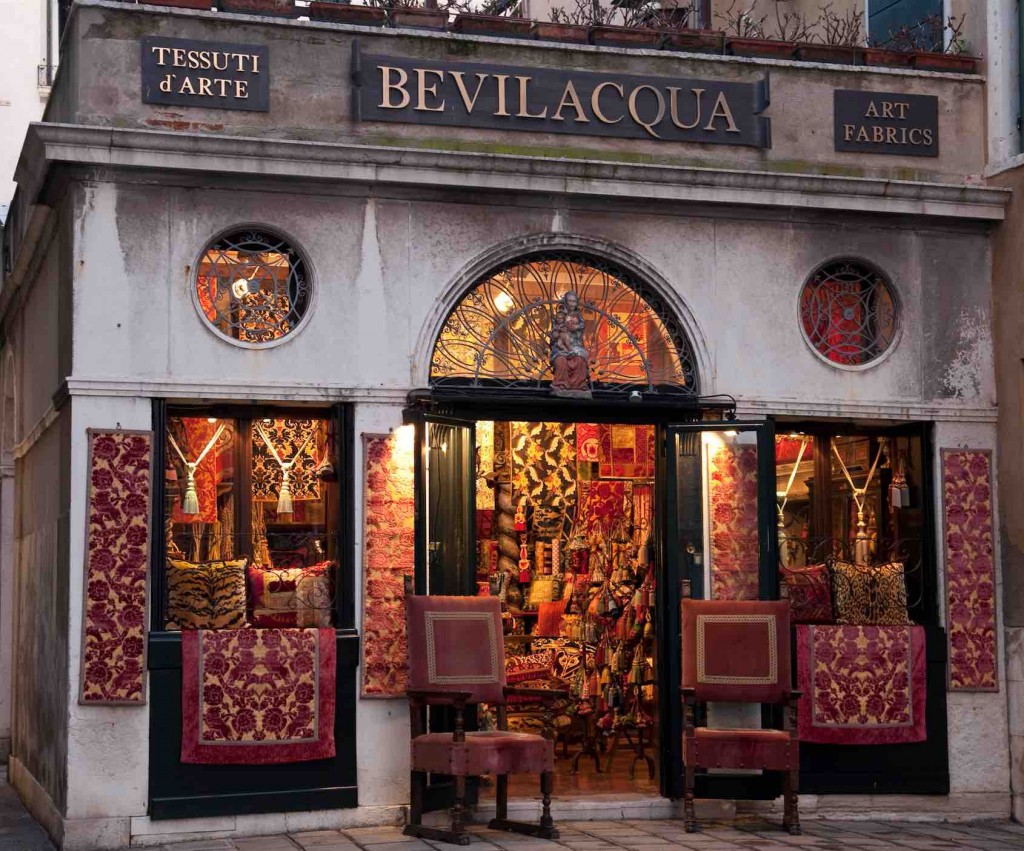
In the San Marco district, for example, you can admire and purchase sumptuous damasks and brocades at the ateliers of Mario Bevilacqua and his wife Paola. Their creations include covers for cushions, bedspreads, and elegant evening bags.
A short stroll away is Palazzo Corner Spinelli, previously home to the Lorenzo Rubelli showroom—a prestigious brand that has produced fabrics of every kind, from wool to viscose, since 1858. Rubelli is famed for exclusive damasks, like the silk organzine or the golden Mocenigo damask, used to decorate one of the Doge’s rooms in Palazzo Ducale. Today, the company’s showroom and historic archive are located at the family’s 19th-century home, Cà Pisani Rubelli in Piscina San Samuele.
Cà Pisani Rubelli is a prime example of late 14th-century Venetian Gothic, located in the Contrada di San Samuele. Following several phases of careful renovation and restoration, Rubelli has completed its new project by opening a textile shop and showroom on the ground and first floors, while the upper floor houses the historic archive and rooms furnished with Donghia and Rubelli Casa collections.
The new shop and showroom spaces stand out for their refined elegance. Architects Leo Schubert and Verdiana Durand de la Penne—who led the project—have both reimagined the palace’s original layout and created new spaces, satisfying all technical and regulatory requirements without sacrificing aesthetics. In addition to installing a protective barrier against high water, they undertook innovative restoration work using desalination washes, effectively eliminating moisture and salt to preserve the ancient brickwork.
On the upper floor, accessible by appointment, is the Rubelli historical archive, safeguarding around 7,000 textile and paper documents.