
Velluts, damasks, satins, lampas, brocades, taffetas and printed cottons with traditional patterns or inspired by the East, besides revealing the soul of a city of merchants and travelers, also give life to a fascinating tour itinerary.
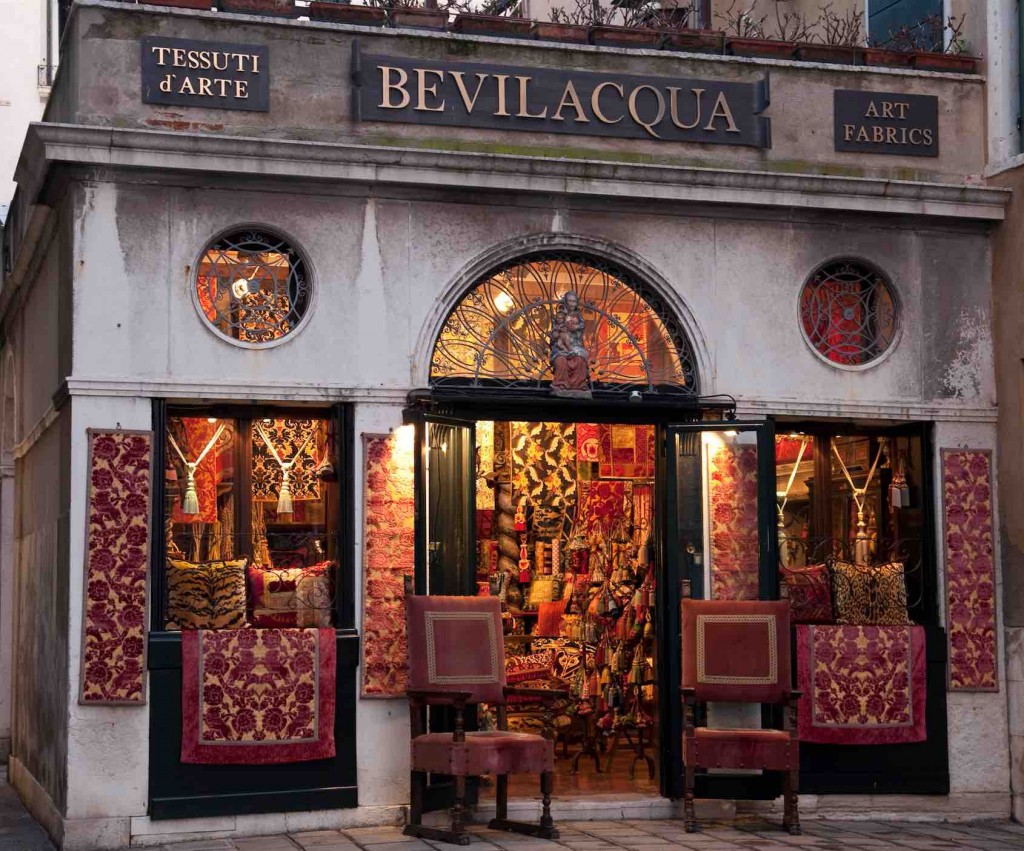
In the San Marco district, for example, in the ateliers of Mario Bevilacqua and his wife Paola you can admire and purchase sumptuous damasks and brocades, which also cover cushions, bedspreads and evening bags. P
A few minutes’ walk, and here is Palazzo Corner Spinelli, where until recently was the Lorenzo Rubelli showroom, a historic brand, producing fabrics since 1858 with every type of yarn, from wool to viscose, and boasting exclusive damasks, such as the silk organzino or the Mocenigo gold damask, with which a room of the Doge‘s apartment in Palazzo Ducale was upholstered. The company’s showroom and historical archive are now located in the family nineteenth-century house at Cà Pisani Rubelli in Piscina San Samuele.
Ca’ Pisani Rubelli is a significant example of late 14th-century Venetian Gothic style and stands in Contrada di San Samuele. After a series of renovation and restoration interventions, carried out in several phases and fully respecting the building, Rubelli completed its project by hosting on the ground and first floors the shop and textile showroom and, on the upper floor, the historic archive and rooms furnished with Donghia and Rubelli Casa furniture and accessory collections.
The new spaces of the shop and textile showroom are characterized by refinement and elegance. The architects Leo Schubert and Verdiana Durand de la Penne – commissioned for the project – managed to reinterpret the original spaces of the small palace and create new ones through interventions dictated by technical and regulatory requirements, without ever losing sight of the aesthetic aspect. In addition to creating a protective basin against high waters, an innovative intervention was carried out to restore the masonry through desalinating washing, ensuring premises free of humidity and salts and preserving the ancient bricks.
On the upper floor, visitable by appointment, the Rubelli historic archive that holds about 7000 textile and paper documents.