

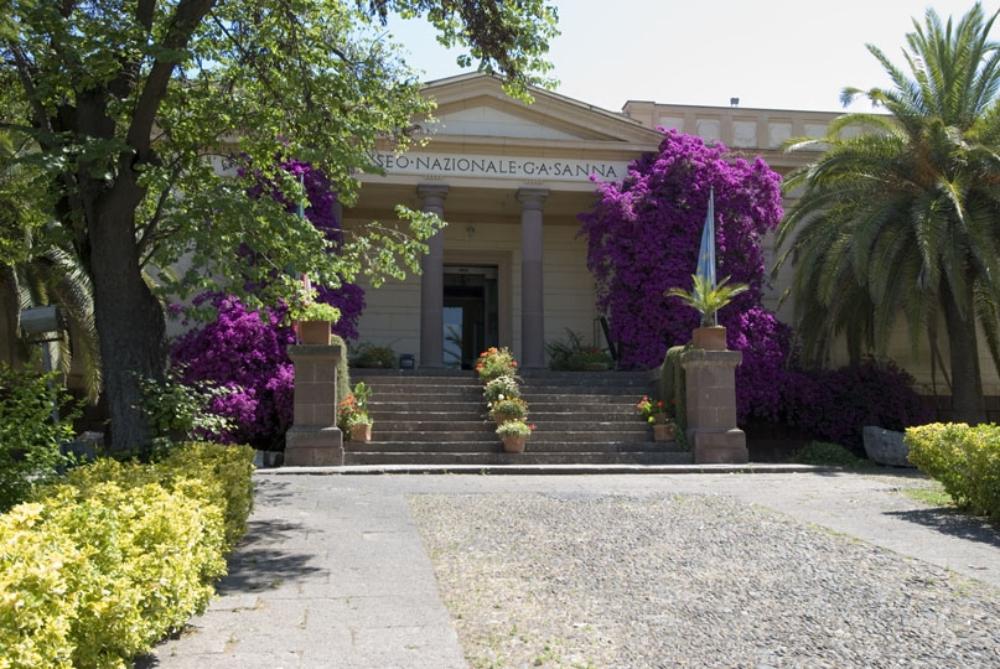


It is the main museum institution of central-northern Sardinia in terms of size and importance of its collections. Established in 1878 as the Royal Antiquarian Museum, it became the “Royal Museum of Antiquities and Art G.A. Sanna” in 1931, finding an adequate exhibition venue in a specially constructed building. Along with the donation of archaeological and historical-artistic collections from the Sassari senator and entrepreneur, other private collections (Chessa, Dessì, Clemente, etc.) and materials from excavations carried out by the local Superintendent were added over the years. The need for new spaces led to the construction of new pavilions, and in 1973 the museum was reopened to the public with a new layout. In recent years, the cultural offer has greatly expanded: in 2000 the medieval and modern section was inaugurated, and in 2011, after more than twenty years of closure due to material degradation issues, the ethnographic section was reopened.
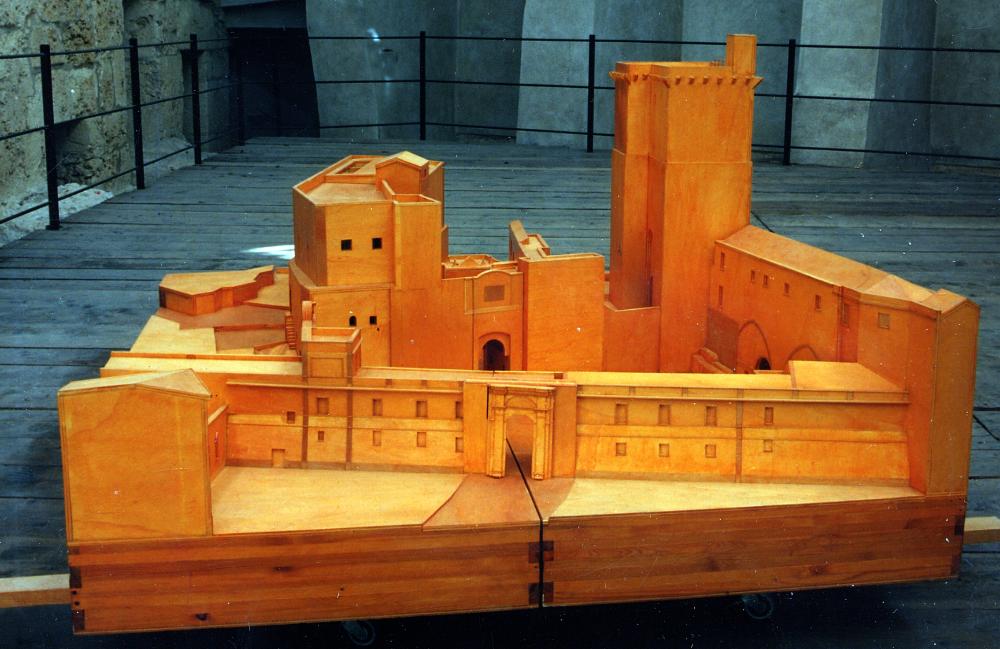
The museum is currently divided into two sections, archaeological and ethnographic. The archaeological section traces the history of the territories of the provinces of Sassari, Nuoro, Gallura, and Ogliastra from the Lower Paleolithic (500,000 BC) to the 18th century through the phases of prehistory, the Nuragic age, Phoenician-Punic, Roman, medieval, and modern periods. The chronological exhibition alternates with a topographical one, which explores particularly significant sites and contexts (the sanctuary of Monte d’Accoddi, the pre-Nuragic hypogeic tombs, the city of Turris Libisonis). The route is enriched by useful educational supports including models, monument casts, and a hologram of the architectural phases of the sanctuary of Monte d’Accoddi. The ethnographic section includes a collection of Sardinian folk-ethnographic objects that is the oldest of its kind on the island. It consists of textiles, jewelry, baskets, clothes, and traditional furnishings from the last three centuries, mostly belonging to the Clemente collection. Pending the expansion of the exhibition spaces, only one room has been set up so far, dedicated to traditional Sardinian costumes (second half of the 19th century – first half of the 20th century), arranged by geographical area.
Information about the National Archaeological and Ethnographic Museum “Giovanni Antonio Sanna”
Via Roma, 64
07100 Sassari (Sassari)
0703428203
[email protected]
https://www.museosannasassari.beniculturali.it/index.php
Source: MIBACT