
Italy is one big movie set. There’s hardly a corner of the country that hasn’t featured in a film, helping make those places famous and familiar to audiences everywhere. Exploring these locations—often closer and easier to reach than you think—can be the perfect idea for a weekend escape or an unusual day trip, experiencing landmarks and landscapes from a fresh perspective, with all the charm and stories hidden behind the magic of cinema. From Venice to Brescello, Tuscany to the Sassi di Matera and the Aeolian Islands, here is a quick guide to Italy’s must-see film destinations.
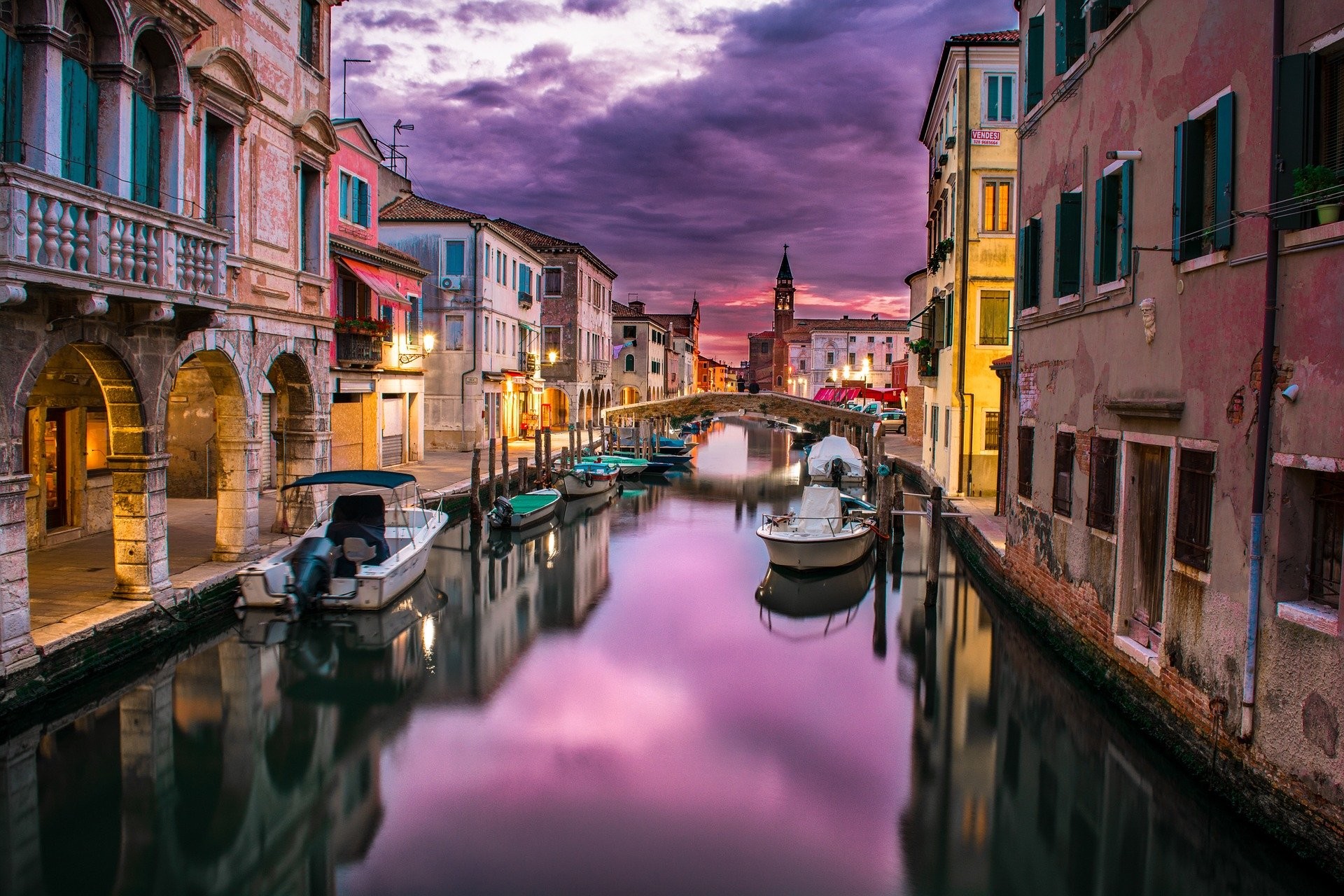
- Venice has long been a favorite set for countless films: romantic dramas (like Summertime starring Katharine Hepburn or The Anonymous Venetian by Enrico Maria Salerno), intense stories (Death in Venice by Visconti), spy thrillers (From Russia with Love), comedies (Venice, the Moon and You by Dino Risi, with Alberto Sordi and Nino Manfredi). And then there are adventure epics, such as Indiana Jones and the Last Crusade, the third chapter in the series, which Steven Spielberg shot in the late 1980s with the backdrop of Basilica di Santa Maria della Salute. This baroque masterpiece, built in 1630 as thanks for the city’s deliverance from the plague, houses major works by Titian and Tintoretto.
- For more than fifty years, Brescello—a small town along the Po River in Reggio Emilia—has been known as the village of Peppone and Don Camillo, the famous rivals-turned-friends from Giovannino Guareschi’s novels, brought to life by Gino Cervi and Fernandel on the big screen. The town remains much as it was when film crews set up scenes in front of the town hall, parish church, in Piazza Matteotti, or along the riverbanks. Walking through its lanes, admiring the bronze statues of the two characters in the square, or visiting the interior of the Chiesa di Santa Maria Nascente—which holds the “talking Christ” crucifix—it’s hard not to feel transported into the stories. Highlights also include the museum, outside which you’ll spot a true relic sure to excite even those who haven’t seen the films: the iconic tank driven by mayor Peppone with Don Camillo’s help.
- Countless movies have been shot in Tuscany. Filmmakers from Italy and beyond have used its landscapes for classics that truly mark the history of cinema. Notably, Franco Zeffirelli’s “Brother Sun, Sister Moon” used the skyline of San Gimignano and its rolling countryside to represent Assisi, birthplace of Saint Francis. Strolling the village, admiring its monuments and hidden corners, browsing local artists’ studios and workshops, is the best way to feel its poetic charm.
Arezzo was the evocative setting for Roberto Benigni’s multi-award-winning “Life is Beautiful”. The early part of the film—radiant and serene—captures the warmth of Arezzo’s old town, where the family lives before the trials of World War II. Other significant scenes, showcasing a fairytale Tuscany, were shot in Cortona, Montevarchi, and Castiglion Fiorentino.
- Matera, in Basilicata, with its striking Sassi districts, has been and remains a favorite for film directors worldwide. Recent productions include The Nativity Story by Catherine Hardwicke and Mel Gibson’s acclaimed The Passion. The movie list shot here is long (from La Lupa by Lattuada to The Gospel According to Matthew by Pasolini; Christ Stopped at Eboli by Rosi; Allonsanfan by the Taviani brothers; and The Star Maker by Tornatore). Each is a reason to discover how unique and spectacular this relatively unknown city is. The two districts, Caveoso and Barisano—both UNESCO World Heritage Sites—have been beautifully restored. Today, they’re like an open-air museum, letting visitors experience the tough lives of workers and artisans up to the 1950s, or even stay in atmospheric inns and B&Bs carved out of the stone houses.
- Sicily too has long inspired cinema. Its landscapes, colors, and people gave rise to cult masterpieces like La Terra Trema and The Leopard by Visconti, Il giorno della civetta by Damiani, The Godfather (Part I) by Ford Coppola, and more recent hits like The Postman by Radford (with Massimo Troisi), The Stolen Children by Amelio, Cinema Paradiso by Tornatore, and the second part of the witty Dear Diary by Nanni Moretti. Here, the stunning setting for the main characters’ escape—ironically addicted to TV though fleeing civilization—is the glorious Aeolian Islands: Lipari, Salina, Stromboli, Panarea, and the remote Alicudi.