


The neighbors of Hungary are respectable nations, marking a very interesting cross-section of Central-Eastern Europe: Slovakia to the north; Serbia and Croatia to the south; Austria and Slovenia to the east; Ukraine and Romania to the west.
The inland territory of Hungary is largely flat, known as the Pannonian Plain, a factor that might make it monotonous and boring if it were not for the Danube (truly the Father of Waters, like the Mississippi in the United States) cutting it into two distinct sectors and nurturing an economy ranging from agriculture to tourism.
West of the river lies the Transdanubia region, characterized by most of the country’s mountainous terrain. Peaks that barely exceed one thousand meters, such as the Bakony Forest north of Lake Balaton; the Vértes group; the Pilis group, and others reaching as far as Visegrád, where the river makes a generous bend.
Hungary’s giant is the Kékes, 1014 meters, located in the Mátra Mountains, nestled in a belt of Pre-Carpathian hills in the north of the country. The Danube, besides forming the border with Slovakia, flows from north to south for 420 kilometers, representing a unique and irreplaceable natural, scenic, and economic resource.
The second largest river is the Drava, which marks the southern border with Croatia; while the Tisza winds its waters through the heart of the vast Pannonian Plain.
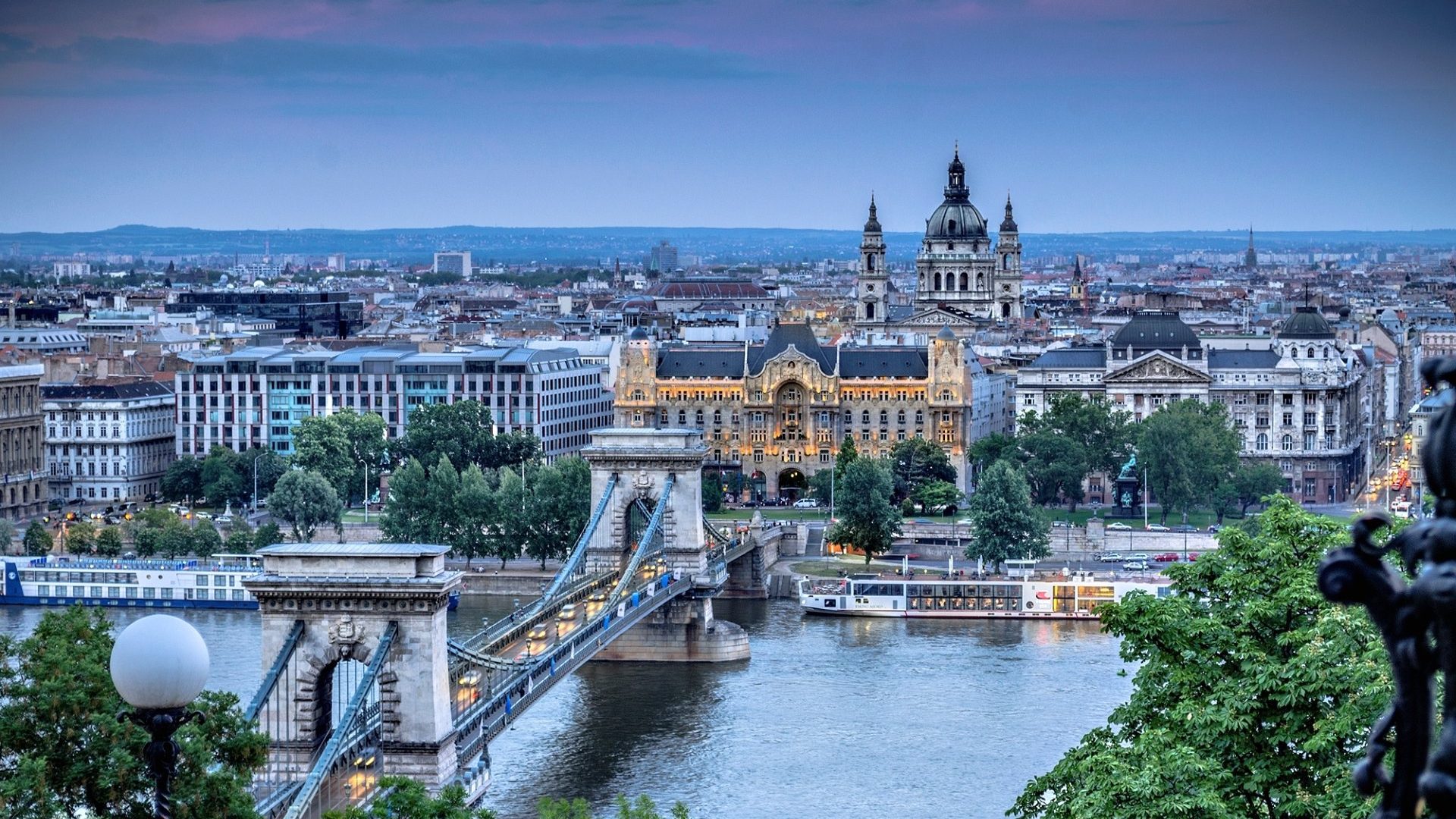
Hungary also boasts the largest lake in Central Europe: Balaton, at the foot of the Bakony Forest. Just over ten million people live in Hungary, almost all of Magyar ethnicity, with about 60% concentrated in urban areas. Starting with the capital, the magnificent Budapest, resting on the banks of the Danube and founded in 1873 from the union of the settlements of Buda on the western bank and Pest on the eastern bank. Smaller centers are Debrecen, Miskolc, Szeged, and Kecskemét.
Hungary Overview
- Country: Hungary
- Area: 93,030 km²
- Capital: Budapest
- Population: 10 million inhabitants
- Language: Hungarian
- Religion: majority Catholic and minority Protestant
- Government: parliamentary republic
- Major cities: Budapest, Debrecen, Miskolc, Szeged, Pécs, Győr, Székesfehérvár; Esztergom
Practical Information about Hungary
- Currency: Hungarian Forint (1 euro = approx. 275 forints)
- International dialing code: +36
- International vehicle tag: H
- Driving side: right
- Entry documents: Identity Card or Passport
- Required vaccinations: No
- Electric current: 220 Volt/50Hz
- Measurement system: metric decimal
- Time zone: same as Italy
- Fixed-date public holidays: January 1: New Year; March 15: National Day commemorating the 1848 Revolution; March-April: Easter; March-April: Easter Monday; May 1: Labor Day; August 20: Constitution Day and St. Stephen’s Day, founder of the state; December 25: Christmas; December 26: St. Stephen’s Day
- Climate: Continental temperate zone. Temperatures differ considerably across the four seasons. The coldest month is usually January, the warmest months are June, July, August.
- Average temperatures: annual average ranging from 0°C to 25°C.
- Transport: National airline Malev; and many others: Alitalia, Air France, Olympic, Swissair, Sky Europe, etc. Trains: MAV, German Railways and Austrian Railways
- Airports: Budapest Ferihegy