

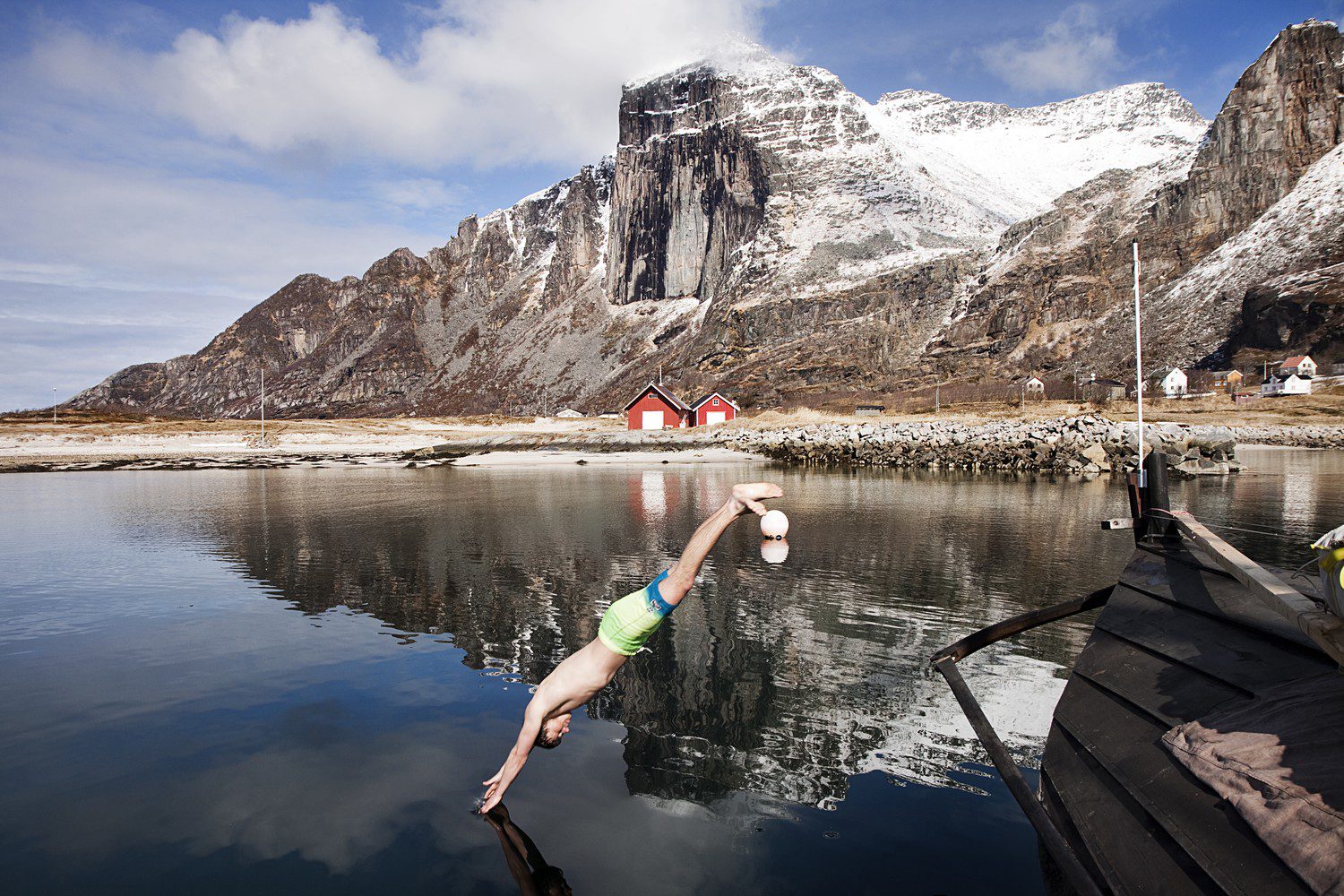
The orographic formation of Norway (it is a predominantly mountainous country), the latitude, the climate, nature, the traditions of the Lapland people (the Sami) make it one of the most spectacular lands of the old continent.
Norway: What to See and What to Do
Norway is a very fitting destination, to be discovered in all its aspects, ranging from the jagged west coast (a privilege to admire it from the legendary Hurtigruten, the postal boat from Bergen, south coast, to Kirkenes, in the Arctic Ocean) to the more inland regions.
From lively cities like Oslo, the capital, Bergen or Trondheim to the rarefied, almost timeless atmospheres of North Cape. Without, of course, overlooking a wonderful archipelago, like the Lofoten Islands, where the sharp scent of cod hanging to dry and an interplay of bleak-colored environments dominate.
Given the immense natural beauty of their country (which also includes the Svalbard Islands and the Jan Mayen Island), it’s no surprise that Norwegians love outdoor life so much and that everyone, tourists included, is granted the ancient “allemannsretten”, the right of self-determination and free access to all natural areas.
When to Go to Norway: Recommended Period
Norway is also a country for all seasons.
If you arrive in spring, you can admire the apple blossoms along the Hardangerfjord or along the beautiful cycling routes.
The summer is particularly evocative at the Arctic Circle, with the phenomenon of the midnight sun, salmon fishing, and sailing or kayak excursions among the islands.
The autumn offers plenty of berries and mushrooms, a dazzling range of colors, and still some good opportunities for trips among waterfalls and glaciers.
Finally, the winter is an experience like no other: we are in the homeland of telemark, the free-heel skiing technique; crazy snowmobile races in the pristine tundras of Finnmark; and a phenomenon that never ceases to fascinate, the northern lights.
Winter in Norway at the Lofoten Islands
The Lofoten Islands have much more to offer than the midnight sun and the charm of the long summer days. Towards the end of the autumn period, the waters of Tysfjord are populated by over 500 orca specimens, which, greedy for herrings, follow these fish on their winter migration.
A handful of snowy islands and islets off the coast of northern Norway, pods of orcas, spectacular northern lights, and a thousand activities: here are the magical Lofoten even in winter!
The Lofoten Islands offer much more than the midnight sun and the charm of the long summer days. Towards the end of the autumn period, the waters of Tysfjord are populated by over 500 orca specimens, which, greedy for herrings, follow these fish on their winter migration. Taking part in a photographic safari is a must: from a boat, a rubber dinghy, or even in the water snorkeling, watching the orcas’ maneuvers will be a breathtaking experience.
After this unique and thrilling excursion, you can enjoy an excellent fish dinner in one of the numerous first-class restaurants of the Lofoten Islands and stay overnight in the typical “rorbu”, fishermen’s cottages converted into accommodations, right on the water. Winter in the Lofoten Islands is never too harsh: the sea does not freeze thanks to the Gulf Stream influence, but the mountains are covered by a white blanket of snow. The polar night lasts only a few weeks, but the dark sky is illuminated, on cold and clear winter nights, by the colorful flickers of the northern lights.
Summer Holidays in Norway’s Telemark
Besides a beautiful and sunny summer, the Telemark county has much to offer: from lively summer life along the picturesque coasts to fascinating discoveries of traditional culture and the majestic inland nature.
White towns and fishing villages follow one another nonstop along the coast, usually well sheltered by a myriad of islets. Comfortable inlets and protected harbors have been so important for ships and fishing boats that they have become notable centers of commerce and culture along the coast. In summer, the market squares of the towns abound with cultivated fruits and berries, vegetables, and the ever-present fresh fish — unless you prefer to catch it yourself.
Many of the white wooden houses are linked to truly interesting stories: some were homes of famous personalities, others have become museums, others welcoming restaurants. In summer, the towns host festivals and traditional cultural events that create a lively atmosphere for both residents and tourists.
If you move from the coast inland, green valleys and mountains, fish-rich lakes, silent forests, and a variety of possible excursions on peaks and plateaus await you. Morgedal in Telemark is known as the “cradle” of skiing. From the nearby coast, you can undertake a long journey inland along the Telemark canal on the old Victoria boat: this canal has received an important recognition from Europa Nostra for its state of conservation and the faithful manner in which it has been restored. Fishing, shipowners, timber trade, and intense exchange with the rest of Europe have contributed to making Southern Norway a wealthy, well-organized, and hospitable region.
Midnight Sun
If in Italy the midnight sun may seem like a misprint or a marketing gimmick, for the inhabitants of Northern Europe it is not at all.
The skeptical visitor has the chance to discover, beyond this phenomenon, wonderful landscapes and natural beauty. In Norway, it’s even possible to stay in a lighthouse or look for holes on a golf course. Spending a few days in Norway is like fulfilling a wish.
The landscapes, the people, the events, the unusual houses, the villages far from the big centers, make this country one of the favorite destinations for discerning tourists. North Cape, for example, is a place that preserves a very special charm so much so that it attracts many Italian travelers.
A completely original feature of this country is the possibility to stay in a Lighthouse. In Norway, there are over 19 lighthouses available for those who want to stay in close contact with nature. Staying in a lighthouse means a unique experience especially for those who need absolute relaxation, for couples in love, or for the soul seeking some solitude.
The fjords, the sea, the islands, the forests, the villages with white and red wooden houses, have a unique charm particularly suited to the free spirit of the traveler. But Norway also offers more. Sports enthusiasts, particularly golf fans, can choose from over one hundred clubs dedicated to this sport.
In Oslo, there are ten golf courses. Here is the Oslo Golfklubb, a historic Norwegian club founded eighty years ago. Those in Bergen can choose the Meland Golfklubb. On the Lofoten Islands, in a peculiar setting, there is another golf course and at North Cape is the northernmost golf course in Europe.
For a fairytale holiday, you must board one of the cruise ships sailing along the fjords. In summer, a stop at the Geiranger fjord is not to be missed, rightly defined as the most beautiful fjord in Norway. Here you will find vertical walls more than seventeen hundred meters high from the sea below. Then the waterfalls of Fiaren, Brudesloret and the Seven Sisters make the journey in these places the “most beautiful in the world.” A cruise in Norway is ideal during the summer periods. Just book.
Norway Factsheet
- Country: Norway
- Area: 385,199 km²
- Capital: Oslo
- Population: 4.7 million inhabitants
- Language: Norwegian
- Religion: the majority belong to the Protestant church, Evangelical Lutheran denomination
- Government system: Constitutional monarchy
- Major cities: Oslo, Bergen, Trondheim, Stavanger, Lillehammer
Norway Information
- Currency: Norwegian Krone (8.3380 euro)
- International dialing code: +47
- International vehicle code: N
- Driving side: right
- Entry documents: Identity Card or Passport
- Vaccination required: No
- Electricity: 220 volts 50 hertz
- Measurement system: metric decimal system
- Time zones: same as Italy
- Fixed-date holidays: January 1: New Year; March-April: Easter Monday; March-April: Easter; May 1: Labor Day; May 17: National Day; 40 days after Easter: Ascension; 50 days after Easter: Pentecost; December 25: Christmas; December 26: St. Stephen’s Day
- Climate: Summers are generally quite mild considering the latitude, especially in the south and inland, but variable. Along the coast, rain or wind are more common. In winter, the climate is very harsh and cold. The cold but dry air gives a boost of vigor and is more pleasant than in many other parts of the world; the sky is often clear. Given the northern latitude, snowfall is abundant from mid-November to April even at low altitude
- Average temperatures: winter around -12° and summer around 19°
- Transport: national airlines SAS Braathens, Norwegian Air Shuttle, SAS and Widerøe; all airlines have direct flights to Norway: Air France, Austrian Airlines, British Airways, Finnair, Germanwings, KLM, Lufthansa and SN Brussels Airlines, Sterling, Ryanair and many others. Trains from all destinations: Deutsche Bahn, also Trenitalia, Artesia, etc.
- Airports: Oslo, Bergen, Torp and other cities