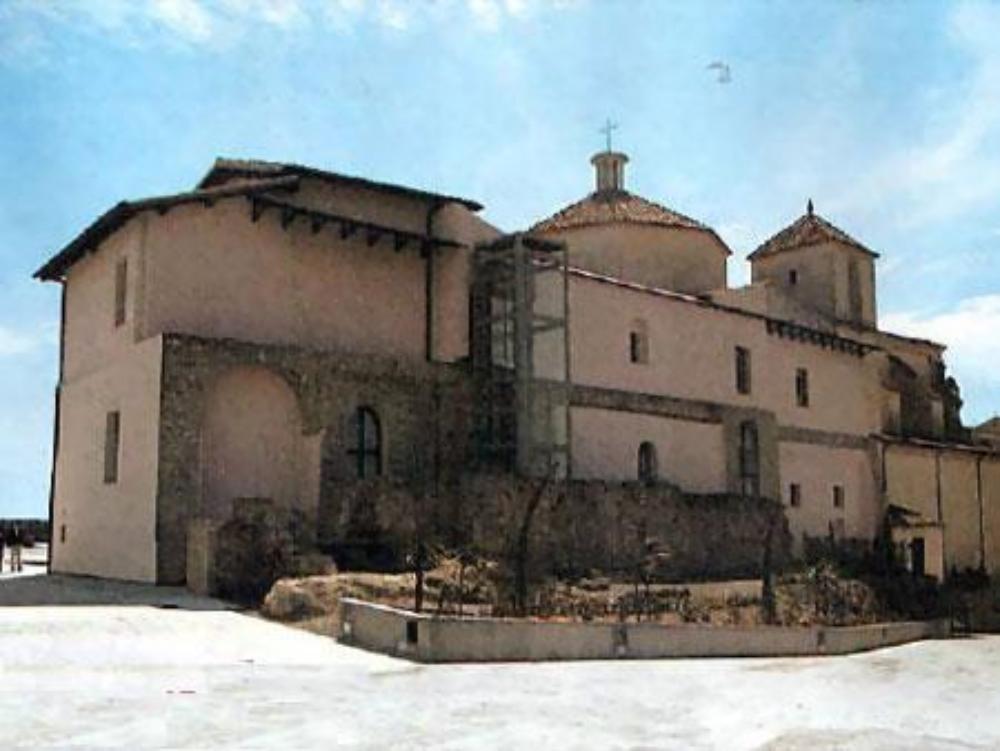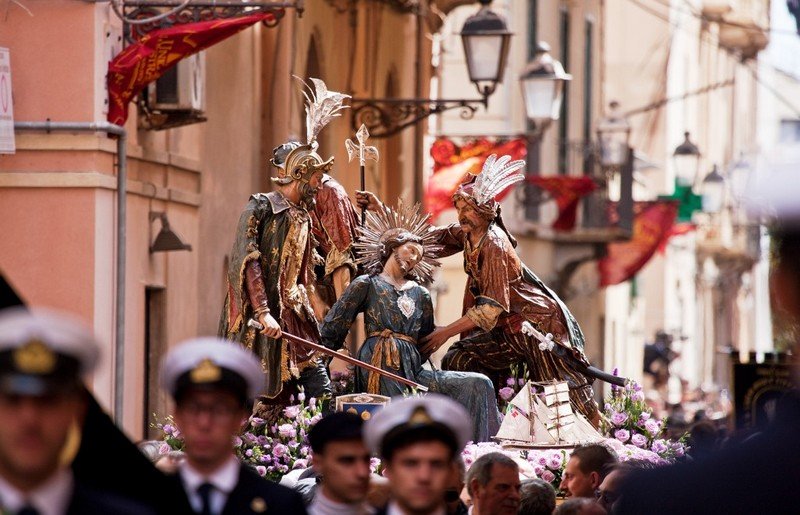


Here, the groups become the protagonists, for twenty-four hours, of a very intense and awaited ceremony: the procession is indeed about two kilometers long; it passes through streets lined with noble palaces, religious buildings, humble fishermen’s houses, and resembles a gigantic and colorful serpent, following the Sacred Groups to the sound of the bands, one for each group.
Their statues are nothing short of magnificent: ancient, eighteenth-century craftsmanship; all made of wood, canvas, and glue, they represent the life, passion, and death of Christ.
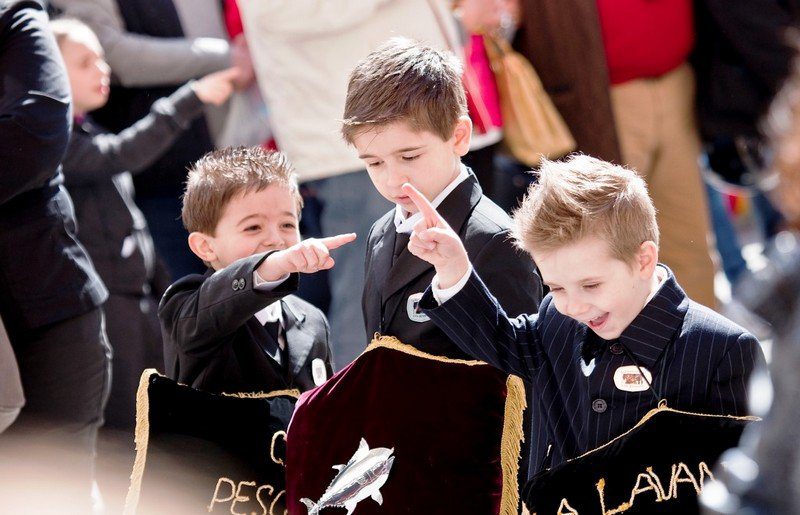
These vare, as they are called locally, are entrusted to the care of the so-called ceti (the ancient city guilds) and parade until the following day, carried on the shoulders of men who perform the l’annacata, a peculiar rhythmic step imposed on the entire group.
But it is at night that the procession experiences its most evocative moments, with the shadows of the statues cast by the candlelight on the houses overlooking the sea. On Saturday morning, amidst lines of hooded people and faithful, the groups return to the church of Purgatory, while a shower of rose petals floods the crowd around the sorrowful Madonna.